
Event technology companies handle large volumes of sensitive customer, payment, and operational data every day. As cybersecurity threats continue to evolve, maintaining strong security controls has become essential for building client trust and protecting critical information. This is where the best SOC 2 compliance providers for event tech firms play a vital role. These providers help organizations achieve and maintain SOC 2 compliance by implementing robust security frameworks, streamlining audit preparation, and ensuring adherence to industry best practices.
Moreover, SOC 2 compliance demonstrates a company’s commitment to data security, availability, confidentiality, and privacy. As a result, event technology businesses can strengthen their reputation, meet customer expectations, and gain a competitive advantage in the market. However, selecting the right compliance partner can be challenging due to the wide range of available options.
To simplify the decision-making process, we have compiled a list of the top 12 SOC 2 compliance providers for event tech firms. In this guide, we evaluate each provider based on its features, strengths, pricing, and overall value to help you choose the best solution for your organization’s compliance journey.
Top 12 Best SOC 2 Compliance Providers for Event Tech Companies

Vanta is one of the most widely recognized names in compliance automation, and it has earned that reputation by making SOC 2 certification dramatically faster for technology companies. Founded in 2018, Vanta built its platform around continuous monitoring and automated evidence collection, which means event tech companies no longer need to scramble to gather documentation at audit time. Instead, Vanta connects directly to the cloud infrastructure, SaaS tools, and code repositories that event platforms depend on, and continuously checks controls against SOC 2 Trust Services Criteria.
For event tech companies, Vanta’s appeal lies in its breadth of integrations. Whether your platform runs on AWS, uses Stripe for payment processing, stores data in Snowflake, or manages HR through Rippling, Vanta pulls evidence automatically across all of those touchpoints. As a result, your compliance program stays current without constant manual intervention. Furthermore, Vanta provides a real-time Trust Center, a public-facing security portal that you can share with enterprise clients and event organizers to demonstrate your compliance posture proactively.
Features
- Automated evidence collection across 300+ integrations covering cloud, HR, MDM, and developer tools
- Continuous control monitoring with real-time alerts when systems drift out of compliance
- Pre-built SOC 2 policy templates and customizable control library
- Built-in risk assessment and vendor risk management workflows
- Public Trust Center for sharing compliance status with enterprise prospects
- Employee security training module with automated reminders and completion tracking
Pros
- Exceptionally fast time-to-audit, with many companies achieving readiness in 2–4 weeks
- Massive integration library reduces manual evidence collection to near zero
- Trust Center differentiates event tech vendors during enterprise sales cycles
- Clean, intuitive UI that non-security professionals can navigate confidently
- Strong customer success team with dedicated onboarding support
Cons
- Premium pricing places it out of reach for early-stage startups with tight budgets
- Customization for highly niche or legacy infrastructure can require additional configuration
- Some users report that the vendor risk management module requires more manual input than expected
Pricing: Vanta starts at approximately $7,500 per year for early-stage companies and scales based on employee count and the number of frameworks.
2. Drata
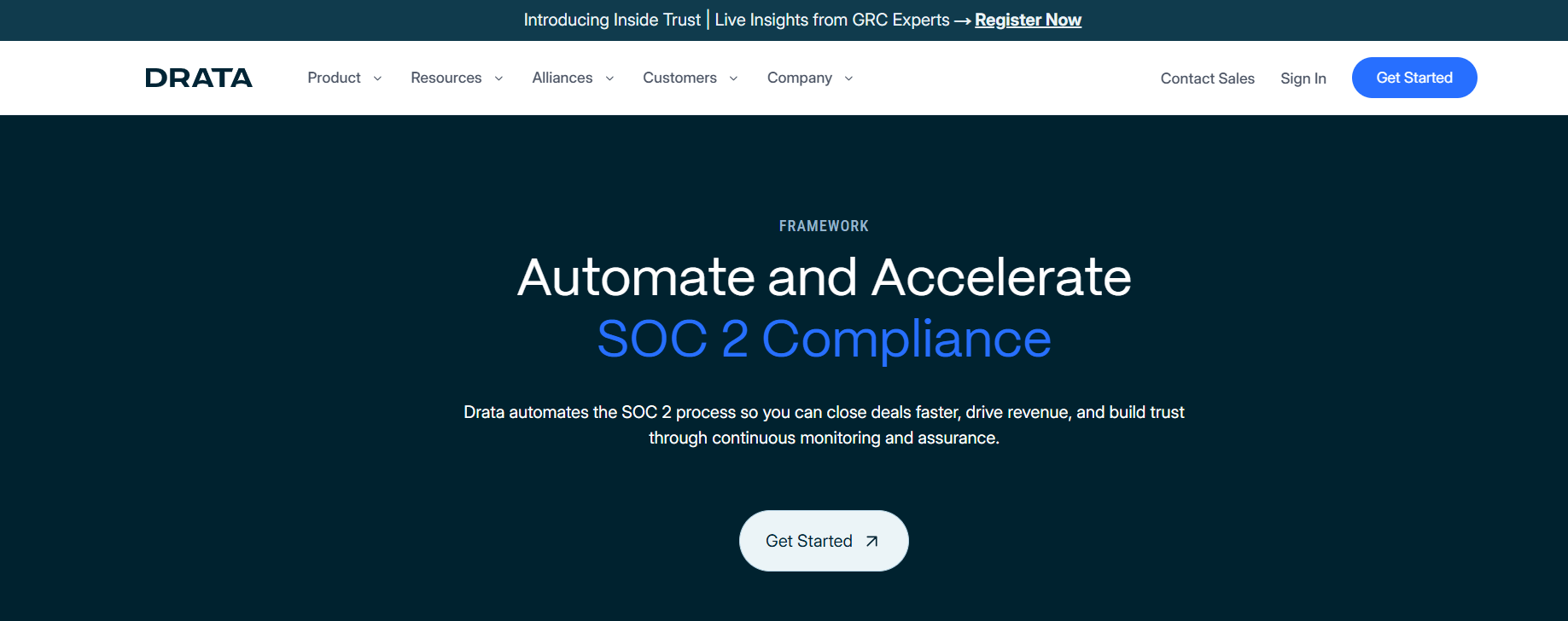
Drata entered the compliance automation market with a strong focus on deep integrations and a highly visual compliance dashboard that gives security teams an immediate, at-a-glance view of their SOC 2 readiness. For event tech companies, this visibility is invaluable, particularly when your engineering team is simultaneously building product features and maintaining compliance controls. Drata’s platform actively monitors your cloud environment, endpoint devices, and people operations, flagging gaps before they become audit findings.
What sets Drata apart from many competitors is its emphasis on workflow automation. Rather than simply collecting evidence, Drata automates entire compliance workflows, from policy acknowledgment and security training enrollment to access reviews and vendor assessments. Event platforms that handle large volumes of attendee data across multiple cloud environments will especially appreciate Drata’s ability to track controls across complex, distributed infrastructure. Additionally, Drata’s growing partnership network means it works seamlessly with many of the auditing firms and security advisory firms that event tech companies tend to engage.
Features
- Automated control monitoring with 120+ native integrations across cloud, identity, and endpoint tools
- Compliance dashboard with per-control health scores and remediation guidance
- Multi-framework support for SOC 2, ISO 27001, HIPAA, PCI DSS, GDPR, and CCPA
- Vendor risk management with automated questionnaire distribution and tracking
- Security awareness training with out-of-the-box curriculum and completion tracking
Pros
- Visual compliance dashboards make it easy for non-technical stakeholders to understand security posture
- Supports multi-framework compliance, which is valuable for event tech companies serving global clients
- Responsive customer support with dedicated CSM for mid-market and enterprise customers
Cons
- Pricing is comparable to Vanta and may be steep for bootstrapped startups
- Some integrations require additional configuration to pull granular evidence accurately
- The mobile experience is less refined than the desktop platform
Pricing: Drata’s pricing starts at around $10,000 per year and scales based on employee count, number of frameworks, and integrations.
3. Sprinto
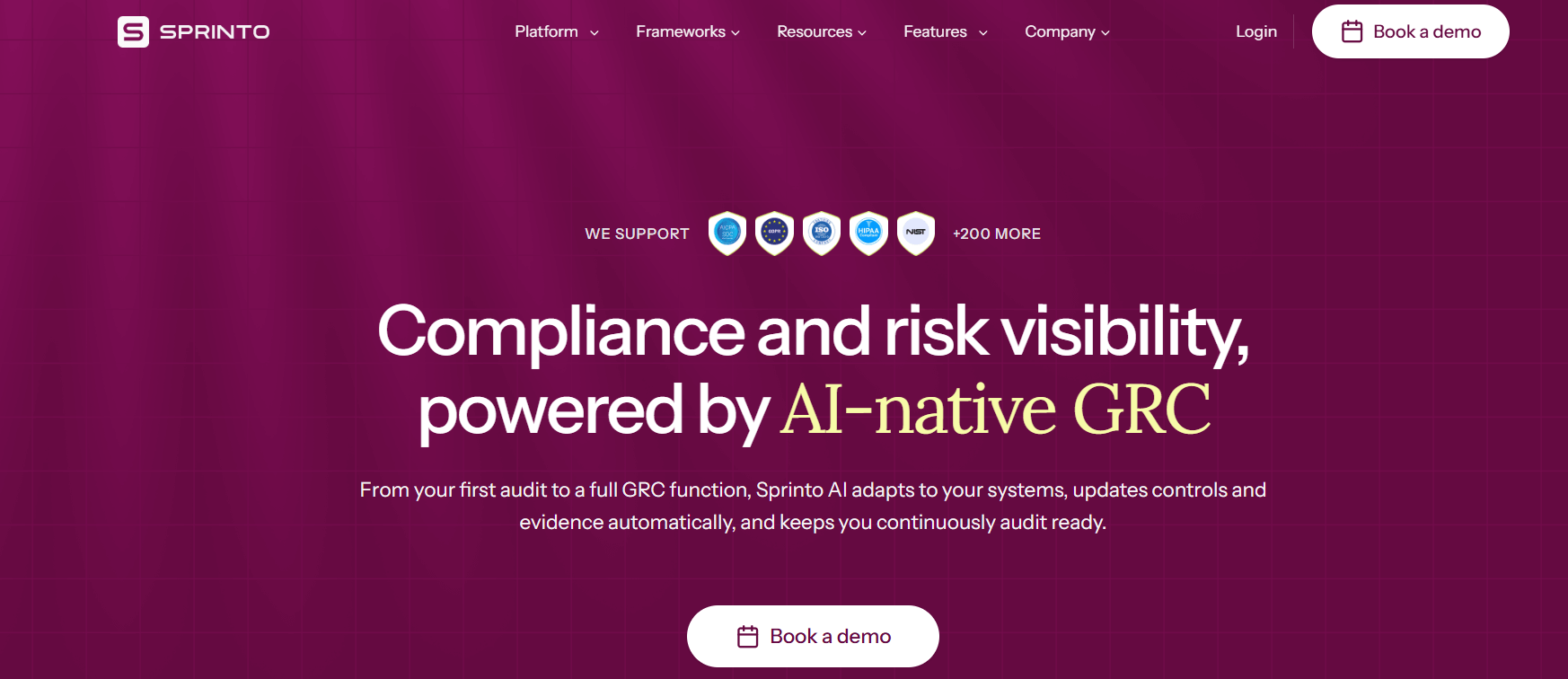
Sprinto has rapidly gained recognition as a compliance automation platform that combines powerful automation with a highly guided, step-by-step compliance program. This guided approach makes Sprinto an excellent choice for event tech companies that are pursuing SOC 2 for the first time and want structured guidance rather than a blank-canvas platform. Sprinto actively leads users through each phase of the compliance journey, from scoping their environment to completing their first audit, while automating evidence collection in the background.
One of Sprinto’s most compelling attributes for event tech companies is its cloud-native architecture that integrates seamlessly with AWS, GCP, and Azure environments. Since most modern event platforms run on public cloud infrastructure, Sprinto’s ability to monitor cloud configurations, IAM policies, and data storage controls in real time provides substantial coverage. Additionally, Sprinto offers a curated network of auditors who already understand the platform, which further reduces audit timelines and miscommunication during the review process.
Features
- Guided compliance program with step-by-step workflows for SOC 2, ISO 27001, HIPAA, GDPR, and SOC 1
- Automated cloud configuration monitoring for AWS, GCP, and Azure
- Continuous control tests that run automatically and flag failures in real time
- Pre-built policy library with customizable templates a
- Employee onboarding compliance workflows covering security training and policy sign-off
- Slack and Jira integrations for surfacing compliance alerts within engineering workflows
Pros
- Guided workflows make SOC 2 accessible to companies without dedicated compliance teams
- Embedded auditor network dramatically shortens the time from readiness to completed audit
- Strong cloud infrastructure monitoring aligns well with event tech infrastructure
- Slack and Jira integrations keep engineering teams in the loop without leaving their existing tools
Cons
- The auditor network, while helpful, can feel limiting if a company already has a preferred audit firm
- Reporting customization is less flexible than some enterprise-grade competitors
- Customer support response times can vary during peak audit season
Pricing: Sprinto starts at approximately $6,000–$8,000 per year for SOC 2
4. Secureframe
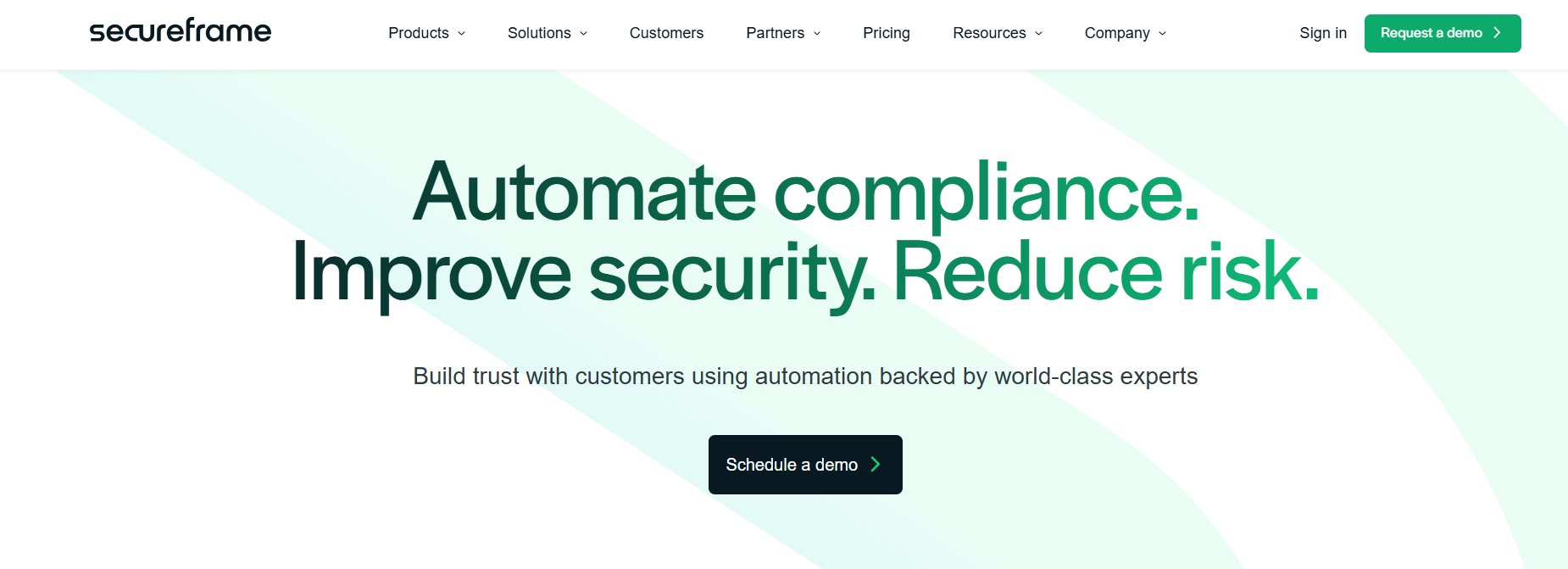
Secureframe delivers compliance automation with a strong emphasis on speed and simplicity, helping technology companies achieve SOC 2 certification faster than traditional approaches. Event tech companies will find Secureframe particularly appealing because it combines automated evidence collection with dedicated compliance manager support, meaning you get both software efficiency and human expertise throughout the compliance journey. This hybrid model is especially valuable during initial scoping, when teams often struggle to map their technical environment to the right SOC 2 controls.
Moreover, Secureframe has built a strong reputation for its personnel compliance features, which are often a weak spot in event tech environments where teams scale rapidly around major events or conference seasons. The platform automates background check tracking, security training enrollment, and device management compliance, ensuring that the people layer of SOC 2 receives the same rigor as the technical controls layer. Secureframe also provides a vendor risk management module that tracks third-party risk across the supply chain of tools and services that event platforms typically rely on.
Features
- Automated evidence collection with 200+ integrations covering cloud, identity, and SaaS tools
- Dedicated compliance managers who guide companies through each stage of certification
- Personnel compliance tracking for background checks, training, and device management
- Automated access reviews with role-based permission mapping
- Multi-framework support for SOC 2, ISO 27001, HIPAA, PCI DSS, and GDPR
- Readiness report generation to communicate compliance status to stakeholders and auditors
Pros
- Dedicated compliance managers add human expertise on top of automation, reducing guesswork
- Personnel compliance features are among the strongest in the market
- Multi-framework support is well-suited for event platforms expanding into regulated markets
Cons
- Dedicated compliance manager availability can vary during high-demand periods
- Some advanced features require higher-tier plans, increasing cost for smaller teams
Pricing: Secureframe pricing begins at approximately $7,500 per year and scales with company size and framework selection.
5. Tugboat Logic (OneTrust)
Tugboat Logic, now integrated into the OneTrust platform, offers a compliance automation solution that blends deep security posture management with the broader privacy and governance capabilities of the OneTrust ecosystem. For event tech companies that already manage GDPR compliance, cookie consent, or privacy rights requests through OneTrust, incorporating SOC 2 automation into the same platform creates significant operational efficiencies. The combined platform allows teams to manage security, privacy, and governance in a single unified dashboard.
Tugboat Logic’s native strength lies in its intuitive gap assessment engine, which rapidly identifies the controls an organization needs to implement based on its current security posture and the scope of its SOC 2 engagement. This is particularly useful for event tech companies that may have existing security measures in place but have never formally mapped them to SOC 2 criteria. The platform then guides teams through building their evidence library and policy documentation in a structured, auditor-ready format. Furthermore, the OneTrust ecosystem adds layers of risk management, vendor assessment, and regulatory intelligence that go well beyond basic SOC 2 tooling.
Features
- Gap assessment engine that maps current security posture to SOC 2 Trust Services Criteria
- Integrated policy management with 70+ pre-built policy templates
- Evidence collection and organization aligned to auditor expectations
- Multi-framework support including ISO 27001, HIPAA, NIST CSF, and PCI DSS
- Regulatory intelligence engine that tracks evolving compliance requirements globally
Pros
- Unified platform for SOC 2, privacy, and governance eliminates the need for multiple point solutions
- Gap assessment engine provides immediate clarity on compliance readiness
- Strong enterprise governance features for larger, more complex event organizations
- Comprehensive vendor risk management integrates well with event tech supply chains
Cons
- The combined OneTrust platform can feel heavyweight for startups focused solely on SOC 2
- Some users report a steeper learning curve compared to more focused compliance tools
Pricing: Tugboat’s Pricing is typically structured around modules selected and company size, with enterprise contracts negotiated directly. Expect a minimum investment of $10,000+ per year.
6. Thoropass
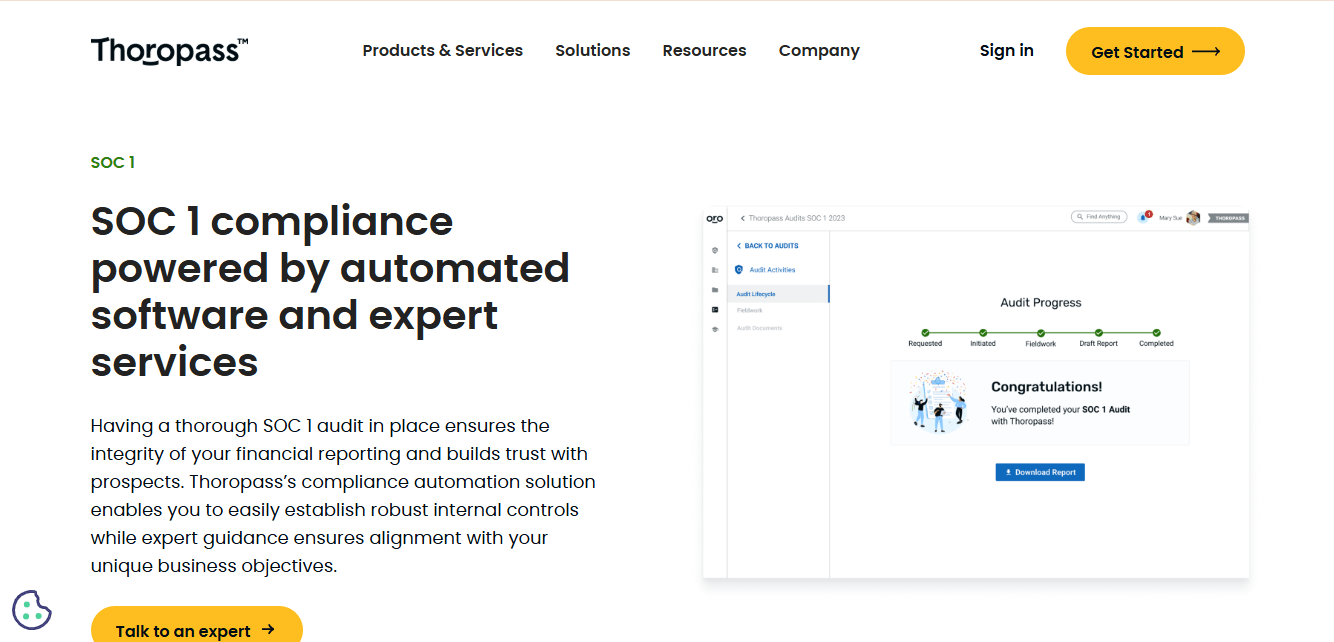
Thoropass, formerly known as Laika, differentiates itself in the SOC 2 compliance market by offering an end-to-end solution that combines compliance software with in-house audit services. This means event tech companies can use Thoropass both to automate their compliance program and to engage licensed auditors directly through the same platform, eliminating the friction of coordinating between separate compliance tooling and external audit firms. For event tech companies looking to streamline the entire certification lifecycle, this integrated model offers clear advantages in both speed and cost predictability.
Thoropass particularly excels at helping companies manage the human and organizational dimensions of compliance. The platform provides robust employee onboarding workflows, security training modules, and personnel compliance tracking that event tech organizations, which often experience rapid headcount fluctuations around event seasons, find especially valuable. Additionally, Thoropass supports continuous compliance monitoring, meaning that once a company achieves SOC 2 Type II, the platform continues to monitor controls and maintain audit readiness throughout the year.
Features
- Integrated compliance software and in-house audit services on a single platform
- Security awareness training with phishing simulations and completion tracking
- Multi-framework support for SOC 2, ISO 27001, HIPAA, GDPR, and PCI DSS
- In-platform communication with licensed auditors throughout the audit process
- Compliance calendar and deadline tracking to keep audit timelines on track
Pros
- End-to-end model eliminates the need to manage compliance software and auditors separately
- In-house auditors provide consistent expectations and reduce audit preparation surprises
- Continuous monitoring ensures ongoing compliance between annual audits
- Competitive pricing given the inclusion of audit services in the package
Cons
- Companies with existing preferred audit firms may find the bundled audit model restrictive
- Integration library, while growing, is not yet as broad as competitors
Pricing: Thoropass pricing starts at approximately $9,000–$15,000 per year depending on scope, framework selection, and whether audit services are included.
7. Strike Graph
Strike Graph takes a distinctive risk-first approach to SOC 2 compliance, positioning itself as the compliance platform that helps companies build security programs that are tailored to their actual risk profile rather than forcing them through a one-size-fits-all framework. For event tech companies that operate in diverse environments, from ticketing and payments to virtual event streaming and attendee engagement, this risk-centric model helps ensure that compliance efforts address the most material security risks rather than generating documentation for its own sake.
Strike Graph’s platform allows security teams to map risks to controls, then map controls to framework requirements. This bottom-up approach gives event tech companies a much clearer understanding of why each control exists and what risk it mitigates, a distinction that matters enormously during audits and customer security questionnaires. Furthermore, Strike Graph supports a multi-framework model that allows teams to satisfy SOC 2, ISO 27001, and other frameworks simultaneously using a shared control library, which reduces duplication for event tech companies that need to demonstrate compliance across multiple certification schemes.
Features
- Risk-first compliance methodology that maps risks to controls and controls to frameworks
- Shared control library that satisfies multiple frameworks simultaneously
- Third-party risk management with vendor assessment questionnaire workflows
- Multi-framework support for SOC 2, ISO 27001, HIPAA, GDPR, and NIST CSF
- Customizable compliance reports for internal stakeholders and external auditors
Pros
- Risk-first approach produces more meaningful compliance programs that reflect real security posture
- Multi-framework control mapping eliminates duplication across certification programs
- Transparent pricing model with fewer surprise costs compared to some larger competitors
- Strong auditor network with established relationships that accelerate the audit process
Cons
- Risk-first methodology requires more initial setup time than more guided, templated platforms
- Less brand recognition may raise questions from enterprise clients unfamiliar with the platform
Pricing: Strike Graph uses a transparent, risk-based pricing model starting at approximately $24,000 per year for its full platform.
8. Scytale
Scytale has quickly established itself as one of the most user-friendly and comprehensive compliance automation platforms in the market, with particular strength in guiding technology companies through multiple compliance frameworks simultaneously. For event tech companies, Scytale’s ability to support SOC 2 alongside GDPR, ISO 27001, HIPAA, and PCI DSS in a single workflow is a major operational advantage, particularly as event platforms increasingly serve clients in regulated industries such as healthcare, finance, and government events.
Scytale’s dedicated compliance success managers play a central role in the platform’s value proposition. Rather than leaving companies to navigate compliance requirements independently, Scytale assigns experts who provide personalized guidance at every stage, from initial scoping to post-audit remediation. This human layer, combined with robust automation, makes Scytale an excellent choice for event tech companies that want more than software and prefer a partnership model throughout their compliance journey. The platform also places strong emphasis on seamless integrations with the tools that modern engineering and operations teams already use.
Features
- Dedicated compliance success managers assigned to each customer
- Pre-built control library with customizable controls aligned to SOC 2 Trust Services Criteria
- Employee security training and policy acknowledgment workflows
- Vendor risk management with automated questionnaire distribution
- Security questionnaire automation for responding to customer due diligence requests
Pros
- Dedicated compliance success managers provide white-glove support throughout the certification journey
- Multi-framework support is among the most comprehensive in the market
- Intuitive interface reduces time-to-value and accelerates compliance readiness
- Strong auditor partnerships shorten the path from readiness to certified
Cons
- Pricing is positioned at the higher end of the market, which may challenge early-stage startups
- Some integrations require manual configuration for less common infrastructure environments
- The platform is newer than some competitors, so enterprise-scale case studies are still accumulating
Pricing: Scytale pricing starts at approximately $7,000–$10,000 per year depending on the number of frameworks and company size. Custom enterprise pricing is available. Scytale offers a free demo and trial period for prospective customers.
9. Hyperproof
Hyperproof stands out in the SOC 2 compliance market by focusing heavily on the operational side of compliance management, specifically the ability to track, organize, and demonstrate compliance across multiple frameworks simultaneously through a single, unified operations hub. For larger event tech companies that maintain complex compliance programs covering SOC 2, ISO 27001, GDPR, and potentially PCI DSS, Hyperproof’s GRC (Governance, Risk, and Compliance) orientation provides a level of depth and structure that pure automation tools often lack.
Hyperproof’s core architecture revolves around linking controls, risks, and evidence in a traceable, structured way that supports both internal audit processes and external audit requirements. This makes it particularly valuable for event tech companies that have grown past the startup phase and need enterprise-grade compliance infrastructure that scales with their organizational complexity. The platform provides robust workflow management, task assignment, and stakeholder accountability features that help compliance teams coordinate across engineering, legal, HR, and finance departments, all of which contribute evidence to a SOC 2 audit.
Features
- Unified compliance operations hub for managing multiple frameworks simultaneously
- Control-evidence-risk linkage for traceable, structured compliance documentation
- Workflow management with task assignment, deadlines, and stakeholder accountability
- Automated evidence collection with integrations for cloud, SaaS, and identity tools
- Multi-framework support for SOC 2, ISO 27001, HIPAA, PCI DSS, GDPR, NIST, and FedRAMP
- Audit management tools with auditor collaboration features and evidence packaging
Pros
- GRC-grade depth and structure suits larger, more complex event tech organizations
- Control-evidence-risk linkage produces highly defensible compliance documentation
- Robust multi-framework support handles complex compliance portfolios efficiently
- Workflow management and task assignment features drive cross-departmental accountability
- Excellent audit management tools that reduce friction during external audit engagements
Cons
- The GRC-oriented approach introduces a steeper learning curve for teams new to compliance
- Less automation out-of-the-box compared to more automation-first platforms like Vanta
- Pricing is premium and typically better suited to mid-market and enterprise companies
Pricing: Hyperproof pricing starts at approximately $12,000 per year for mid-market plans and scales based on user count, frameworks, and integrations. Enterprise pricing is available upon request. A free demo is available through the Hyperproof website.
10. AuditBoard
AuditBoard is a leading GRC and audit management platform that brings enterprise-grade rigor to the SOC 2 compliance process. While AuditBoard serves a broader market that includes internal audit, risk management, and ESG reporting, its compliance automation capabilities are well-suited for larger event tech companies that need a comprehensive governance infrastructure rather than a lightweight certification tool. AuditBoard’s platform enables organizations to manage SOC 2 alongside a full spectrum of compliance and risk programs in a single environment, reducing the fragmentation that often results from using multiple point solutions.
For event tech companies that have matured beyond startup-stage compliance needs, AuditBoard offers sophisticated workflow automation, cross-functional collaboration tools, and an audit management engine that supports both internal and external audit processes. The platform’s ability to manage risk registers, control testing schedules, issue tracking, and remediation workflows simultaneously makes it a natural choice for organizations that take a holistic, program-based approach to compliance. Additionally, AuditBoard’s analytics and reporting capabilities provide compliance teams with the insights they need to communicate risk posture effectively to boards, investors, and enterprise clients.
Features
- Enterprise GRC platform integrating SOC 2, internal audit, risk management, and ESG in one system
- Automated control testing scheduling and execution workflows
- Issue tracking and remediation management with cross-team task assignment
- Risk register with quantified risk scoring, heat maps, and mitigation planning
- Analytics dashboards with board-level compliance and risk reporting
- Integrations with Jira, ServiceNow, Workday, and major cloud providers
Pros
- Enterprise GRC depth provides unmatched scope for organizations with complex compliance needs
- Sophisticated analytics and reporting support board-level risk communications
- Broad multi-framework support covers even the most complex compliance portfolios
- Strong integration ecosystem including enterprise tools like ServiceNow and Workday
Cons
- Enterprise focus and pricing make it unsuitable for early-stage or growth-stage startups
- Implementation requires significant setup time and typically external consulting support
- Overkill for event tech companies focused solely on SOC 2 without broader GRC requirements
Pricing: AuditBoard pricing is available upon request and is customized based on modules selected, user count, and organizational complexity.
11. Compliancy Group
Compliancy Group occupies a unique position in the compliance market by delivering a Compliance Coach model that pairs software automation with dedicated compliance coaches who provide hands-on guidance throughout the certification process. While Compliancy Group is best known for its HIPAA compliance expertise, it has expanded its platform to cover SOC 2, making it a compelling choice for event tech companies that serve healthcare conferences, medical device industry events, or pharmaceutical company meetings where both SOC 2 and HIPAA compliance are required simultaneously.
The Compliance Coach model distinguishes Compliancy Group from purely self-serve platforms. Each customer receives a dedicated compliance coach who reviews their environment, identifies gaps, guides policy implementation, and prepares them for audits. This level of personalized engagement is particularly valuable for event tech organizations that do not have a dedicated CISO or security team and need structured human guidance to navigate the complexity of SOC 2 requirements. Furthermore, Compliancy Group’s platform tracks compliance activities across all relevant frameworks and generates audit-ready reports that simplify the evidence presentation process.
Features
- Dedicated compliance coaches assigned to each customer for personalized guidance
- Compliance tracking dashboard covering SOC 2, HIPAA, GDPR, and other frameworks
- Policy template library with customizable documents aligned to compliance requirements
- Gap assessment tools that identify missing controls and documentation
- Audit-ready report generation for evidence presentation to auditors
- Employee security training with completion tracking and automatic reminders
- Risk assessment tools with guided risk scoring and mitigation documentation
- Incident management workflows for documenting and responding to security events
Pros
- Dedicated compliance coach model provides white-glove support ideal for under-resourced teams
- Dual HIPAA and SOC 2 capability is a significant advantage for health-focused event tech companies
- Policy templates and guided workflows reduce the complexity of starting from scratch
- Affordable pricing relative to the level of personalized support included
- Compliance coaches develop deep familiarity with client environments over time
Cons
- Automation capabilities are less sophisticated than pure-play platforms like Vanta or Drata
- Integration library is narrower, which may require more manual evidence collection
- Less suitable for companies with complex cloud environments that benefit from deep automation
Pricing: Compliancy Group pricing starts at approximately $4,800–$9,600 per year depending on selected frameworks and company size. The Compliance Coach model is included in standard plans. A free consultation is available for prospective customers.
12. Aprio
Aprio is a top-20 public accounting and advisory firm that provides SOC 2 audit and consulting services with a deep specialization in technology companies and cloud-based businesses. Unlike the software-first platforms covered earlier in this guide, Aprio operates as a professional services provider, meaning it delivers SOC 2 readiness consulting, gap assessments, policy development, and audit execution through experienced CPA and security professionals rather than through a SaaS automation platform. For event tech companies that prefer direct professional engagement over software-driven processes, Aprio represents one of the most respected options in the market.
Aprio’s event tech relevance stems from its extensive experience auditing SaaS companies, cloud platforms, and digital infrastructure providers, categories that overlap significantly with the event tech ecosystem. Aprio’s auditors understand the technical architectures common in ticketing systems, event management software, and virtual event platforms, and they bring that context to each engagement. Furthermore, Aprio’s advisory practice can help event tech companies design SOC 2-ready control environments before the audit begins, reducing the risk of material findings and shortening the certification timeline. For companies that need both readiness support and an audit from a recognized CPA firm, Aprio provides both under one roof.
Features
- Full-service SOC 2 audit execution by licensed CPA professionals
- Cloud and SaaS infrastructure expertise covering AWS, Azure, and GCP environments
- SOC 1, SOC 2, and SOC 3 report issuance by a recognized AICPA-licensed firm
- ISO 27001 certification consulting and gap assessment services
- Cybersecurity advisory services including penetration testing coordination
- Multi-industry experience covering fintech, health-tech, SaaS, and event technology
Pros
- Recognized CPA firm adds significant credibility to issued SOC 2 reports in enterprise sales cycles
- Deep SaaS and cloud expertise aligns well with event tech infrastructure environments
- Combined readiness consulting and audit execution reduces the coordination burden
- Comprehensive advisory services address gaps that pure automation platforms cannot fill
- Experienced auditors provide substantive feedback that improves overall security posture
Cons
- Professional services model is significantly more expensive than SaaS automation platforms for ongoing compliance
- No continuous monitoring capability — compliance posture between audits requires separate tooling
- Scheduling and availability constraints typical of professional services engagements
Pricing: Aprio’s SOC 2 audit and advisory fees vary based on engagement scope, company size, and infrastructure complexity. Readiness assessments typically start at $15,000–$25,000, while full SOC 2 Type II audits range from $20,000 to $50,000 or more. Pricing is provided via custom quote.