Micro-SaaS companies run lean by design, often with a founder or two handling product, support, and sales at once. That leanness works well until an enterprise prospect asks for a SOC 2 report before signing a contract, and suddenly compliance becomes urgent. Consequently, finding the right SOC 2 Audit Partners for Micro-SaaS companies stops being a someday task and becomes a real business decision with real deadlines attached.
Choosing well matters because most compliance guides are written for funded scale-ups with dedicated security teams, not for a two-person startup watching every dollar. As a result, many founders end up overpaying for enterprise-grade platforms or, just as often, underestimating what a legitimate audit actually requires. To avoid both mistakes, this article breaks down twelve providers that fit the realities of a small, resource-constrained team: fast onboarding, transparent pricing, and genuine hand-holding for a first-time audit.
Top 12 Best SOC 2 Audit Partners for Micro-SaaS companies.
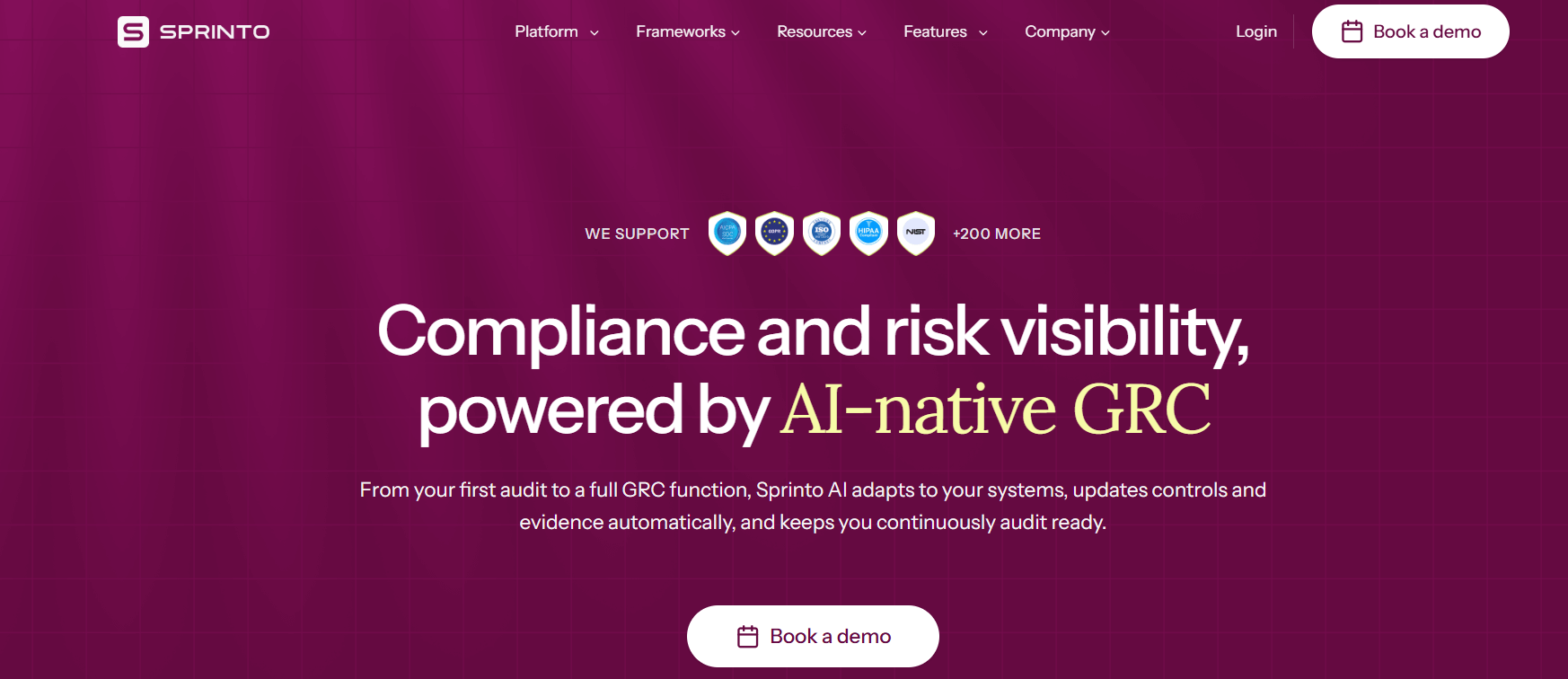
Sprinto positions itself as one of the leanest SOC 2 audit partners for micro-SaaS companies that need to move fast without hiring a dedicated compliance hire. Rather than handing founders a dashboard full of red flags, Sprinto automates both technical and operational controls end to end, and it pairs that automation with a dedicated compliance manager who chases down evidence on your behalf. Because the platform bundles audit coordination, policy templates, and continuous monitoring into a single subscription, a two- or three-person founding team can realistically reach audit-ready status in a matter of weeks instead of months.
Features
- Adaptive Automation, which continuously checks cloud, identity, and code-repository integrations and immediately alerts the exact teammate responsible for a failing control.
- Bundled audit and penetration-testing options, so founders avoid stitching together separate vendor contracts.
- Pre-built policy and control libraries mapped to SOC 2, ISO 27001, HIPAA, GDPR, and other frameworks.
- A dedicated compliance manager who works alongside lean teams instead of leaving them to self-serve.
- AI-assisted security-questionnaire automation that speeds up enterprise sales cycles once the report is in hand.
Pros
- Consistently cited as the most affordable entry point among full-featured automation platforms.
- Requires minimal manual effort, which matters when a founder is also the engineer, support agent, and salesperson.
- Strong fit for cloud-native micro-SaaS companies that already run on AWS, GCP, or Azure.
Cons
- Offers less integration depth than Vanta or Drata for companies with unusually complex tech stacks.
- Renewal pricing can rise noticeably in year two once a company adds headcount or frameworks.
Pricing
Independent comparisons place Sprinto in the $5,000–$8,000 per year range for early-stage startups..

Vanta remains the largest compliance automation platform on the market, and that scale translates into real advantages for a micro-SaaS company that wants an auditor-friendly, well-documented path to a report. With more than 16,000 organizations on the platform and over 400 integrations, Vanta gives small teams instant access to an ecosystem of auditors who already know how to read Vanta’s evidence exports. Consequently, fieldwork tends to move faster because the auditor spends less time learning a new tool.
Features
- An Agentic Trust Platform that drafts policies and pre-fills security questionnaires automatically.
- The deepest integration catalog in the category, covering cloud infrastructure, HR systems, and developer tools.
- A built-in Trust Center that lets prospects self-serve security documentation instead of emailing the founder.
- Continuous control monitoring with real-time alerts when a control drifts out of compliance.
Pros
- Broad auditor familiarity shortens fieldwork and reduces back-and-forth during the audit itself.
- The largest integration library on the market, which matters as a micro-SaaS company’s stack grows.
- Strong brand recognition that enterprise procurement teams already trust.
Cons
- Modular, per-framework pricing can produce sticker shock at renewal time.
- Costs more than lighter alternatives, which can strain a bootstrapped micro-SaaS budget.
Pricing
Entry-level engagements typically start around $10,000–$15,000 per year, with reported ranges extending well beyond $100,000 for larger, multi-framework programs. Because of that spread, budget-conscious founders should request a scoped quote before assuming Vanta fits a micro-SaaS budget.
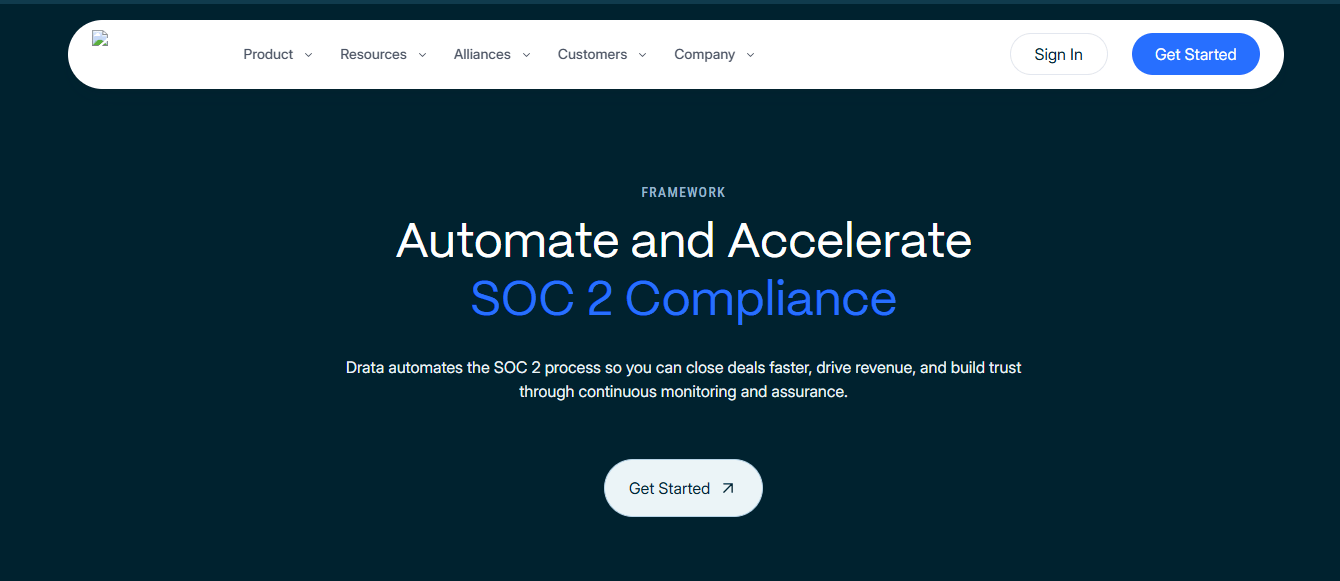
Drata built its reputation on deep technical automation, and it remains a strong choice among SOC 2 audit partners for micro-SaaS companies whose founders are comfortable working the way the platform expects. Rather than offering unlimited customization, Drata pushes teams toward a standardized, opinionated workflow, which paradoxically makes onboarding faster for teams that don’t want to reinvent their compliance program from scratch.
Features
- Automated evidence collection across cloud, code, and identity providers with minimal manual screenshotting.
- A flat per-framework pricing model that can be more predictable than usage-based competitors.
- Trust Center and vendor-risk modules bundled into the core platform.
- Strong support for expanding into ISO 27001, HIPAA, and PCI DSS as a company scales.
Pros
- Clean, intuitive interface that non-technical founders can navigate without extensive training.
- Solid, fast-closing auditor network with growing adoption among CPA firms.
Cons
- Less flexible than competitors for companies with unusual infrastructure or custom workflows.
- Additional frameworks add $3,000–$10,000 per framework, which adds up quickly for a growing catalog of certifications.
Pricing
Reported annual pricing spans roughly $7,500 to $100,000-plus, with onboarding fees between $10,000 and $25,000 for more complex engagements and renewal increases of 10–50 percent.
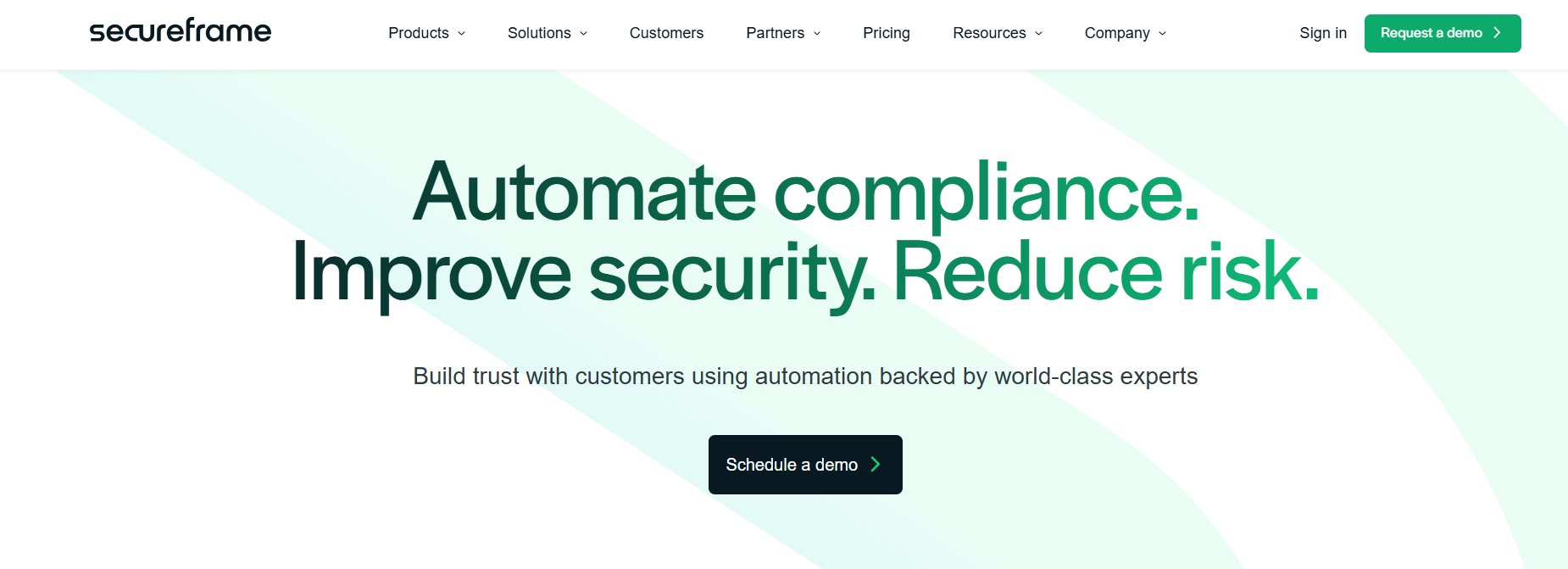
Secureframe leans into hand-holding, which makes it a comfortable choice for a first-time founder who has never been through a SOC 2 process before. The platform bundles advisory support directly into its packages, so instead of learning everything from a help center, a micro-SaaS team gets a human who explains what each control means and why it matters.
Features
- Guided implementation with advisory support included in most plan tiers.
- Broad framework coverage, including CMMC and government-focused frameworks that few competitors support.
- Automated evidence collection paired with a structured, phase-by-phase readiness checklist.
- AI-assisted questionnaire responses that reduce the time spent on enterprise security reviews.
Pros
- More guidance and hand-holding than most competitors, which shortens the learning curve for solo founders.
- Strong framework breadth, useful for a micro-SaaS company anticipating future certifications.
Cons
- Pricing tends to run slightly higher than Sprinto for equivalent scope.
- The extra advisory layer can feel like unnecessary overhead for a team that already understands compliance basics.
Pricing
Small-team engagements generally cost $7,500 to $12,000 per year, with custom quotes reaching $12,000–$20,000 or more for larger deployments.
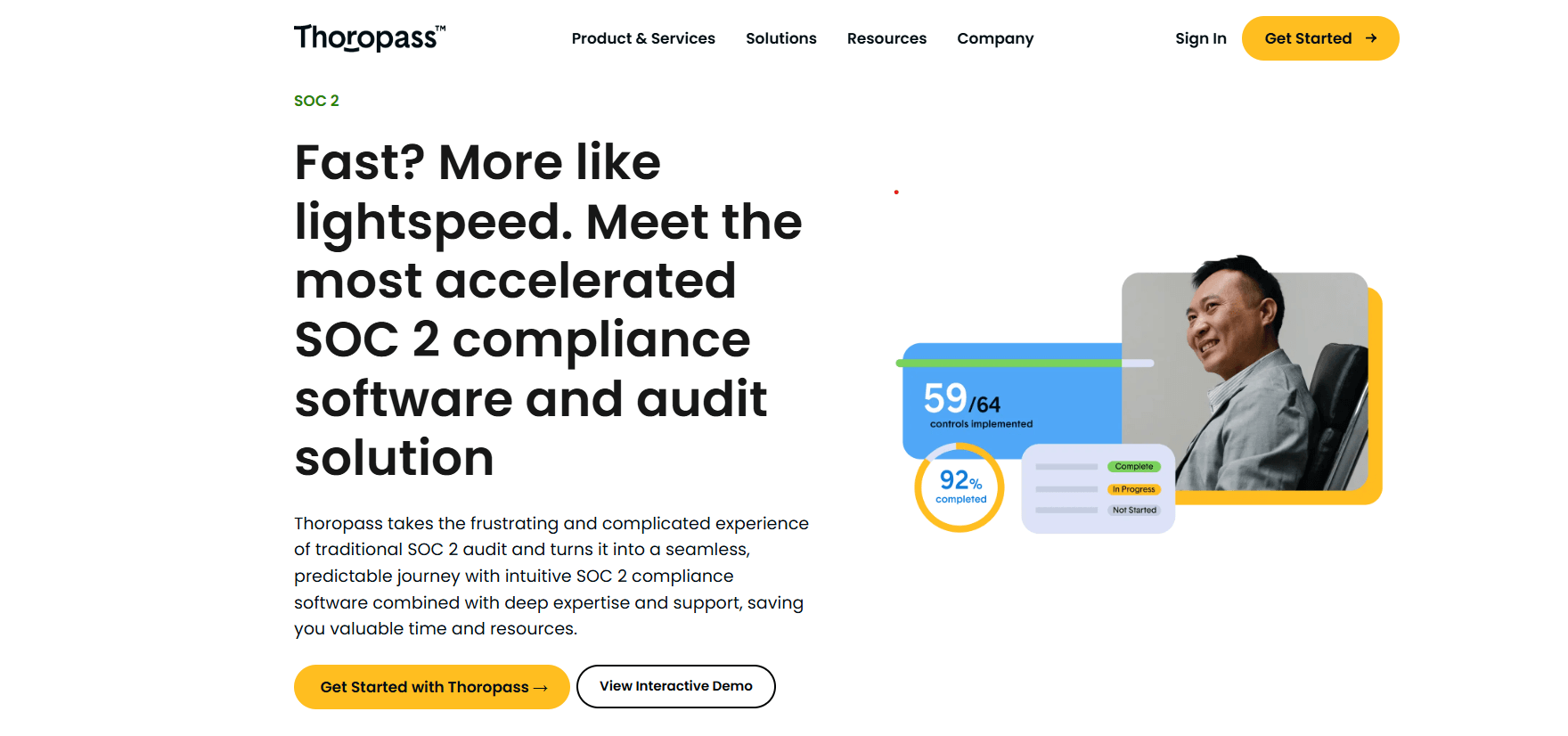
Thoropass, formerly known as Laika, solves a very specific headache: coordinating between a compliance software vendor and a separate CPA audit firm. By bundling its own in-house CPA practice with its automation platform, Thoropass lets a micro-SaaS founder sign a single contract instead of juggling two vendor relationships during a first audit.
Features
- An in-house CPA arm that issues the SOC 2 report without involving a third-party auditor.
- A detailed audit trail that logs every evidence submission and auditor interaction for transparency.
- Combined software-plus-audit pricing, which simplifies budgeting for a first-time engagement.
- Support for SOC 2, ISO 27001, HIPAA, and PCI DSS under one umbrella.
Pros
- One vendor relationship instead of two, which appeals to founders who would rather not manage separate contracts.
- Transparent audit trail that strengthens accountability throughout fieldwork.
Cons
- The bundled model can make it harder to compare pricing against platforms that separate software and audit fees.
- Locks a company into Thoropass’s in-house auditors rather than an independent CPA firm of the founder’s choosing.
Pricing
Marketplace listings show the platform starting around $5,800–$8,700 per year.
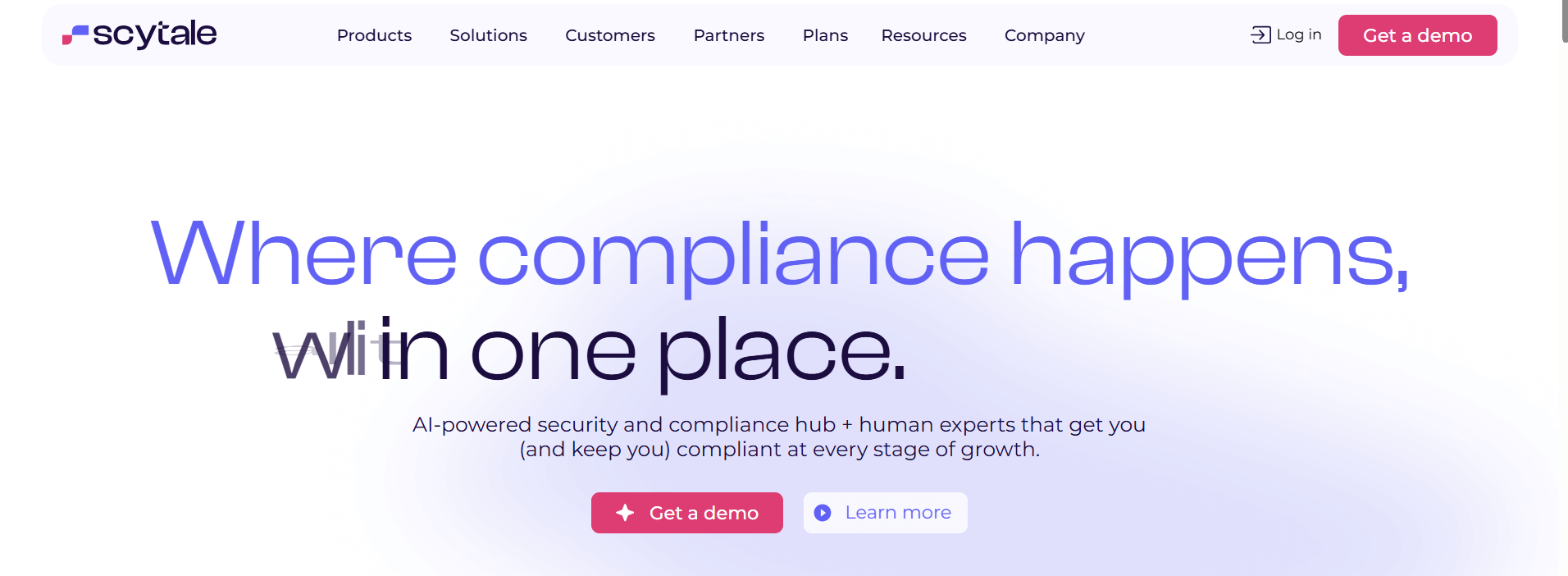
Scytale markets itself as an AI-native compliance partner built to eliminate the tedious, manual side of SOC 2 readiness. For a solo founder who wants a guiding hand throughout the process rather than a self-serve dashboard, Scytale’s combination of automation and hands-on customer success makes it one of the more approachable SOC 2 audit partners for micro-SaaS companies with no internal compliance staff.
Features
- Support for 60-plus compliance frameworks, which is unusually broad for a platform this size.
- AI-powered evidence collection that reduces manual screenshotting and spreadsheet tracking.
- A dedicated customer success manager assigned to each account during readiness.
- Low-cost audit-services add-ons that keep first-year costs contained.
Pros
- Excellent framework breadth for a micro-SaaS company that expects to pursue ISO 27001 or HIPAA later.
- Strong, personalized guidance that reduces the learning curve for first-time compliance teams.
Cons
- Smaller integration catalog than Vanta or Drata.
- Less brand recognition among large enterprise procurement teams, which can occasionally slow trust-building.
Pricing
Platform pricing starts near $7,500 per year, and Scytale’s audit-services listings show fees as low as roughly $4,200.
Insight Assurance has earned a strong small-business reputation, with the majority of its reviewers describing themselves as startups. The firm leans into modern collaboration tools like Slack and demonstrates fluency with cloud-native environments, which resonates with micro-SaaS teams that don’t want to translate their workflow into legacy audit processes.
Features
- A small-business-first engagement model, with the majority of client reviews coming from startups.
- Modern, Slack-based communication throughout the readiness and fieldwork stages.
- Familiarity with cloud environments and common compliance automation platforms.
- SOC 1, SOC 2, and related attestation services delivered by a licensed CPA team.
Pros
- Excellent communication and clarity, according to independent G2 reviews.
- Genuinely comfortable working with lean, cloud-native startup teams rather than only large enterprises.
Cons
- Published pricing is not available, so founders must request a custom quote before budgeting.
- Smaller firm size means limited capacity during high-demand audit windows.
Pricing
Insight Assurance does not publish standard rates; founders should expect a scoped quote comparable to other boutique CPA firms, generally in the same range as Prescient Assurance for similarly sized engagements.
Johanson Group is a boutique CPA firm that specializes almost exclusively in SOC examinations, and it has built a reputation for hands-on partner involvement rather than delegating engagements entirely to junior staff. That personal touch makes Johanson Group a natural fit among SOC 2 audit partners for micro-SaaS companies going through their very first audit, since a first-timer often benefits most from direct access to a senior partner rather than a large, rotating audit team.
Features
- Specialization exclusively in SOC examinations, rather than SOC 2 as one line item among many services.
- Direct partner involvement throughout scoping, fieldwork, and reporting.
- Fixed-fee engagement structures that provide budget certainty from the outset.
- Experience across a wide range of SaaS verticals, from fintech to healthtech.
Pros
- Personalized attention well suited to organizations that value partner-level access over firm size.
- Strong reputation for clear communication with first-time SOC 2 organizations.
Cons
- As a boutique firm, Johanson Group has less bandwidth than national firms during peak scheduling periods.
- Limited public information on multi-framework bundling for companies planning to add ISO 27001 or HIPAA later.
Pricing
Johanson Group generally quotes fixed-fee engagements tailored to scope; founders should expect pricing broadly in line with other boutique CPA firms once Trust Services Criteria and system complexity are confirmed.
A-LIGN has built its brand on speed and predictability, and its proprietary A-SCEND compliance management platform tells clients exactly what to do next to avoid getting stuck mid-audit. For a well-prepared micro-SaaS company that already has its controls in reasonably good shape, A-LIGN delivers a fast, efficient, and highly predictable path to a finished report.
Features
- The proprietary A-SCEND platform, guiding clients step by step through evidence submission.
- Technology-enabled, high-volume audit delivery without sacrificing report quality.
- Multi-framework capability, supporting SOC 2 alongside ISO 27001, PCI DSS, HITRUST, and FedRAMP.
- A single-provider model for companies planning to pursue multiple certifications over time.
Pros
- Predictable, well-managed timelines that suit companies with hard deadlines from enterprise prospects.
- Multi-framework depth that reduces the need to switch auditors as a company scales.
Cons
- Best suited to companies that arrive already well prepared; less hand-holding for true first-timers.
- Larger firm structure means less of the boutique, partner-level intimacy some micro-SaaS founders prefer.
Pricing
A-LIGN does not publish standard rates; as a larger, technology-enabled firm, its fees generally sit at or above the mid-range of the boutique CPA firms on this list, reflecting its broader multi-framework capability.
BARR Advisory, founded in 2014 and headquartered in Kansas City, has grown into one of the few U.S. firms accredited for both ISO 27001 certification and SOC 2 audits. Operating on a remote-first structure across more than 20 countries, BARR pairs consistent, fixed-rate pricing with a team holding CPA, CISA, CISSP, and CIPP credentials, which gives micro-SaaS founders confidence that the same rigor applies regardless of company size.
Features
- Dual accreditation for ISO 27001 certification and SOC 2 attestation under one firm.
- Adaptive audit methodology that reportedly cuts client-side effort by roughly 75 percent.
- Fixed-rate pricing with reports sometimes delivered up to 40 percent ahead of schedule.
- A remote-first team offering consistent global access to senior auditors.
Pros
- High client satisfaction, reflected in a reported net promoter score of 89 and strong retention.
- Rare combination of boutique-style attention with the credentials and reach of a larger, global firm.
Cons
- Serving both startups and Fortune 1000 clients means scheduling priority can occasionally favor larger engagements.
- Full pricing is not published; founders need a scoped conversation to get an accurate quote.
Pricing
BARR Advisory offers fixed-rate, quote-based pricing; founders should expect costs broadly comparable to other national boutique firms, with the final figure shaped by scope, Trust Services Criteria, and desired turnaround.
Scrut Automation blends governance, risk, and compliance (GRC) functionality with cloud security posture management (CSPM), which gives technically minded founders unusually deep visibility into their infrastructure. Because every framework, module, and user sits inside a single bundled subscription, a growing micro-SaaS company avoids the per-framework fees that inflate costs on some competing platforms.
Features
- Integrated cloud security posture management, surfacing misconfigurations alongside compliance gaps.
- A single bundled subscription that covers unlimited frameworks and users without add-on fees.
- A dedicated compliance manager who reportedly gets teams audit-ready in under three months.
- Risk-register and vendor-risk tooling built directly into the core platform.
Pros
- Deep technical visibility that appeals to engineering-led founding teams.
- Bundled pricing avoids the per-framework surcharges common elsewhere in the category.
Cons
- The interface can feel complex for non-technical stakeholders such as HR or legal contributors.
- Reporting features are comparatively limited next to more mature platforms.
Pricing
Reported annual pricing runs from roughly $15,000 to $40,000.
Prescient Assurance, the licensed CPA arm of Prescient Security, has built a reputation among boutique auditors for combining competitive pricing with genuinely fast turnaround. Because the firm has already built working relationships with Vanta, Drata, and Secureframe, it slots in smoothly as the audit partner behind any of the automation platforms listed above, which is exactly the kind of pairing many micro-SaaS founders look for.
Features
- AICPA peer-reviewed CPA attestation across SOC 1, SOC 2 Type I and Type II, ISO 27001, HIPAA, PCI DSS, and more.
- Verified integrations with major GRC platforms, which shortens fieldwork when evidence is already organized.
- Bundled penetration-testing services for teams that want technical validation alongside the attestation.
- Global auditor coverage across the US, Europe, and Asia-Pacific time zones.
Pros
- Frequently praised for responsive, Slack-based communication during fieldwork.
- Competitive, often fixed-fee pricing relative to larger regional and national firms.
Cons
- As a boutique firm, capacity can tighten during peak audit season, so early scheduling matters.
- Less brand recognition than Big Four or Top-25 accounting firms, which occasionally raises questions from enterprise buyers unfamiliar with the name.
Pricing
SOC 2 Type II engagements are typically estimated at $10,000–$30,000, with SOC 2 Type I running roughly $5,000–$35,000 depending on scope.