Serverless computing has changed how engineering teams ship code, but it has also changed what auditors expect to see as proof of security. Because functions execute and vanish in milliseconds, a static screenshot or a quarterly spreadsheet can no longer demonstrate that access controls, encryption, and logging actually hold up in practice.
As a result, choosing the right SOC 2 vendors for serverless computing platforms has become one of the most consequential decisions a growing company can make, since these platforms must pull evidence directly from ephemeral, event-driven infrastructure rather than from fixed servers that sit still long enough to inspect. Furthermore, the best vendors in this space do more than check a box; they continuously monitor AWS Lambda, Azure Functions, Google Cloud Functions, and similar services, translating constantly shifting configurations into audit-ready evidence in real time.
Consequently, this article breaks down the top twelve options on the market today, comparing their integrations, automation depth, and pricing so that founders, CTOs, and compliance leads can shortlist with confidence instead of guesswork.
Top 12 Best SOC 2 Vendors for Serverless Computing Platforms
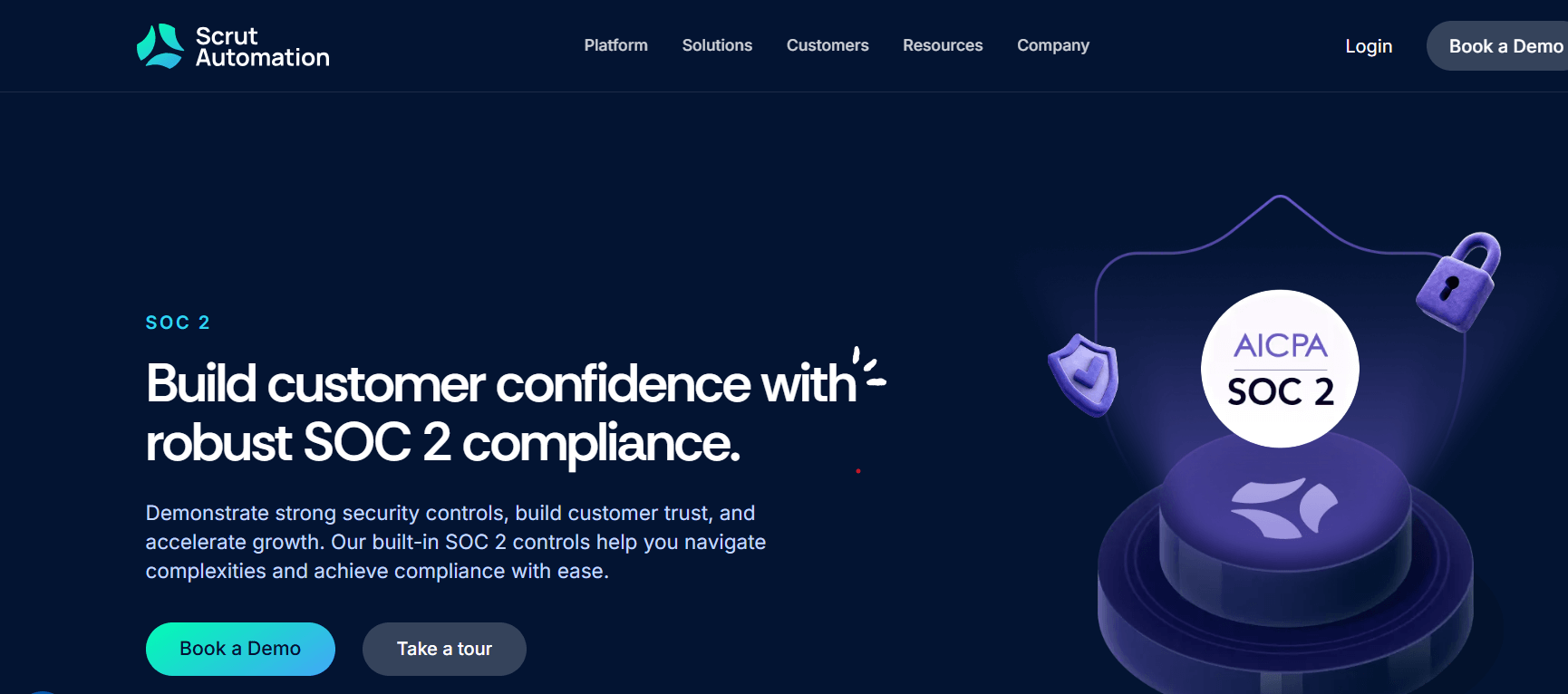
Scrut Automation is a cloud-native platform that has become one of the more framework-flexible SOC 2 vendors for serverless computing platforms, particularly for organizations juggling multiple regulatory obligations at once. Its automatic mapping of a single piece of evidence across dozens of overlapping frameworks reduces redundant work for teams that need SOC 2 alongside ISO 27001, HIPAA, or PCI DSS.
Features
- Supports 60-plus compliance frameworks with automated control-to-clause mapping
- Multi-entity management for organizations running several subsidiaries or products
- Audit Center that lets external auditors collaborate directly inside the platform
- Continuous configuration monitoring across cloud, identity, and HR systems
Pros
- Exceptionally broad framework coverage for teams anticipating multiple certifications
- Consolidates compliance workflows into a single dashboard
- Strong risk register and vendor management functionality
Cons
- Pricing can run higher than expected for smaller, budget-constrained teams
- Customization options are somewhat limited relative to enterprise GRC suites
Pricing: Scrut Automation uses quote-based pricing tailored to company size, framework count, and integration scope, and prospective buyers should expect a custom proposal rather than a fixed public rate.
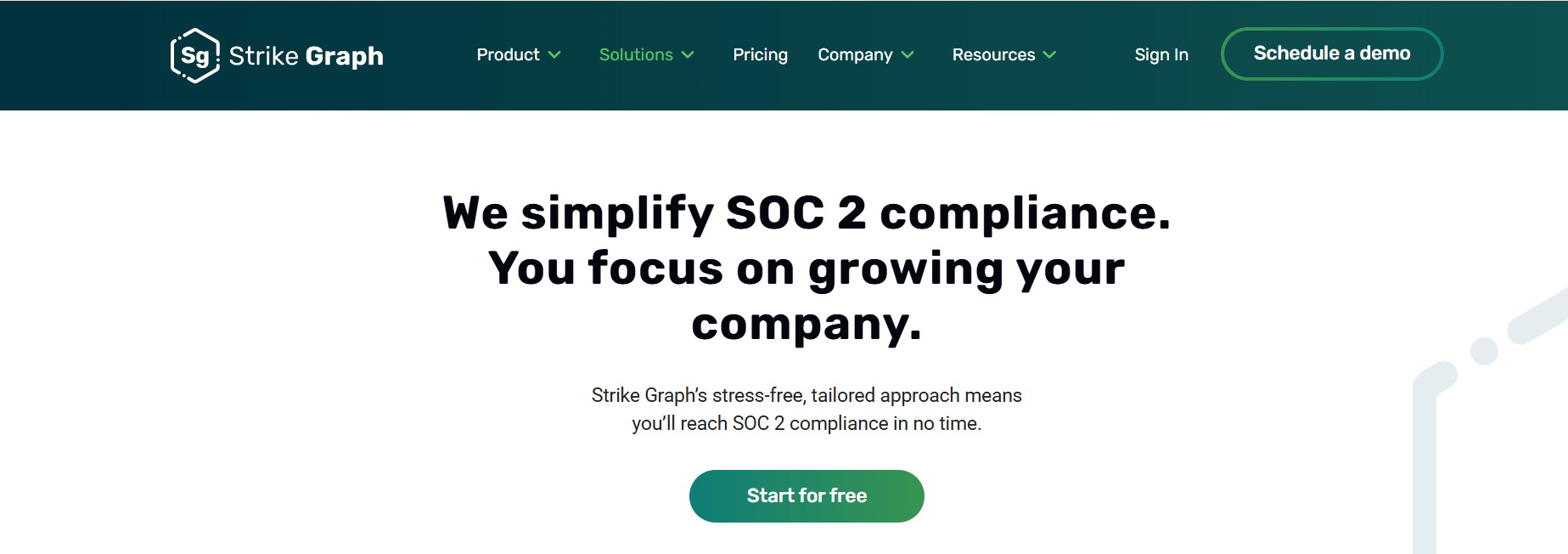
Strike Graph stands out among SOC 2 vendors for serverless computing platforms for one simple reason: it is one of the only vendors in this category that publishes its pricing openly rather than hiding behind a quote request. The AI-native platform also bundles adjacent security tooling, including vulnerability scanning and SBOM support, directly into its compliance workflow.
Features
- Publicly listed pricing tiers, an uncommon transparency advantage in this market
- Supports 25-plus frameworks, including SOC 2, ISO 27001, DORA, NIS2, and TISAX
- Built-in annual penetration testing, vulnerability scanning, and SBOM generation
- Optional in-platform audit services for teams that want a single end-to-end vendor
Pros
- Transparent, published pricing simplifies budgeting for early-stage teams
- Bundled security tooling reduces the number of point solutions a serverless team must manage
- Reviewers consistently praise responsive account management and support
Cons
- Interface has been described by some reviewers as dated compared with newer entrants
- Additional frameworks are billed separately, which can add up for multi-framework programs
Pricing: Strike Graph publishes tiered pricing, with reported entry points around $10,000, a mid tier near $21,500, and an upper tier around $35,000 per year, plus roughly $2,000 to $8,000 for each additional framework.
Hyperproof leans further into enterprise governance, risk, and compliance than pure-play SOC 2 automation tools, which makes it one of the more comprehensive SOC 2 vendors for serverless computing platforms operated by larger, risk-conscious organizations. Rather than focusing solely on evidence collection, Hyperproof centralizes risk registers, control libraries, and audit workflows in one place.
Features
- Centralized GRC workspace covering compliance, risk management, and audit preparation together
- Customizable control libraries that map across multiple frameworks and business units
- Collaboration tools that streamline cross-team evidence gathering
- Reporting dashboards aimed at security leadership and board-level visibility
Pros
- Well suited for organizations that need broader risk management beyond SOC 2 alone
- Intuitive interface that reviewers say simplifies audit coordination
- Strong fit for companies scaling multiple frameworks and business units simultaneously
Cons
- Custom pricing model makes upfront cost comparison difficult
- Can feel like more platform than a small, single-product serverless startup actually needs
Pricing: Hyperproof uses custom, quote-based pricing determined by organization size and the scope of GRC requirements, so interested teams should contact sales directly for a tailored proposal.
Trustero markets itself as an AI-driven compliance-as-a-service option, giving budget-conscious teams an accessible entry point among SOC 2 vendors for serverless computing platforms. Its AI assistant helps translate raw cloud configuration data into control language that auditors recognize, which can shorten the learning curve for first-time compliance owners.
Features
- AI-guided workflows that translate cloud and serverless configuration data into control evidence
- Compliance-as-a-service structure aimed at lean teams without dedicated GRC staff
- Separate, modular SOC 2 Type 2 audit add-on for teams progressing beyond Type 1
- Continuous monitoring dashboards for tracking control status over time
Pros
- One of the lower published entry prices in the category
- AI assistance can reduce the learning curve for non-specialist compliance owners
- Modular pricing lets teams add Type 2 audit support only when they are ready
Cons
- Less brand recognition, which can matter when enterprise customers ask which tool a vendor uses
- Fewer publicly documented case studies at large enterprise scale
Pricing: Trustero is reported to start around $5,000 per year for the base platform, with the SOC 2 Type 2 audit sold as a separate add-on rather than bundled into the core subscription.
Strac Comply represents a newer generation among SOC 2 vendors for serverless computing platforms, one that goes beyond evidence collection to actively operate the security controls an auditor expects to see working. By bundling data loss prevention, SaaS security posture management, and OAuth governance alongside SOC 2 control mapping, Strac Comply appeals to serverless teams whose real exposure lives across dozens of connected SaaS integrations rather than a single cloud account.
Features
- Combines DLP, DSPM, and SSPM capabilities directly with SOC 2 control mapping and audit reporting
- Third-party OAuth governance to monitor which connected apps can access sensitive data
- Secure file-sharing and vendor risk questionnaire tooling built into the same platform
- Pen test orchestration alongside continuous evidence collection
Pros
- Goes beyond passive monitoring by actively enforcing several of the controls it tracks
- Particularly relevant for serverless teams with sprawling SaaS and OAuth footprints
- Positions SOC 2 as one of several frameworks handled from the same operational base
Cons
- Newer entrant with a shorter public track record than legacy compliance automation vendors
- Pricing details are less widely published than for more established platforms
- Smaller auditor network compared with category veterans like Vanta or Drata
Pricing: Strac Comply has not published a universal rate card at the time of writing; the vendor offers tiered SaaS pricing scoped to company size and requires a direct quote for exact figures.
OneTrust Certification Automation, previously known as Tugboat Logic, rounds out this list of SOC 2 vendors for serverless computing platforms by offering a path for organizations that already rely on OneTrust for privacy management and want security certification handled inside the same ecosystem. It suits larger, multi-product companies that need SOC 2 evidence to sit alongside broader privacy and third-party risk programs.
Features
- Native integration with the broader OneTrust privacy, ethics, and third-party risk suite
- Automated evidence collection mapped to SOC 2 and adjacent frameworks
- Policy and questionnaire management shared across security and privacy teams
- Enterprise-grade reporting suited to board and regulator visibility
Pros
- Strong fit for enterprises that already run OneTrust for privacy or vendor risk management
- Single-vendor consolidation reduces tool sprawl for larger compliance teams
- Deep reporting capability aimed at cross-functional stakeholders
Cons
- Onboarding and configuration can take longer than lighter-weight, engineering-first tools
- Pricing skews toward larger contracts rather than startup-friendly entry tiers
Pricing: OneTrust Certification Automation is quoted directly by the sales team, with contract size generally scaling alongside the breadth of OneTrust modules a company already licenses.

Vanta is the most widely adopted name among SOC 2 vendors for serverless computing platforms, and it earns that position through sheer integration breadth. The platform connects natively to AWS, Google Cloud, and Azure, pulling configuration data from Lambda, API Gateway, IAM, and CloudTrail to build continuous evidence trails without engineers touching a spreadsheet. Vanta also maintains a large auditor marketplace, which shortens the gap between platform readiness and a signed SOC 2 report.
Features
- Over 400 prebuilt integrations spanning cloud providers, identity tools, HR systems, and code repositories
- Continuous, automated control testing rather than periodic manual checks
- Built-in Trust Center for sharing real-time security posture with prospects
- Cross-mapping across 35-plus frameworks, including ISO 27001, HIPAA, and PCI DSS
- Native support for AWS Lambda-based evidence collection and serverless IAM monitoring
Pros
- Fastest onboarding of any major platform, often live within days
- Deepest integration catalog in the category, which matters for polyglot serverless stacks
- Large, vetted auditor network simplifies finding a compatible CPA firm
Cons
- Costs rise noticeably as headcount and framework count grow
- Some users report shallow test depth on niche or custom integrations
Pricing: Vanta’s Core/Essentials tier generally starts around $7,500 to $10,000 per year for small teams, with published AWS Marketplace pricing offered as a starting cost; mid-market and multi-framework contracts commonly land between $20,000 and $56,000 annually depending on employee count and add-on frameworks.

Drata is frequently shortlisted alongside Vanta by growth-stage teams, and for good reason: it delivers a nearly identical automation experience while emphasizing control reuse across multiple frameworks. This makes Drata one of the more efficient SOC 2 vendors for serverless computing platforms that plan to stack ISO 27001, HIPAA, or CMMC on top of an initial SOC 2 report, since a control satisfied once can automatically apply across every relevant framework.
Features
- Supports 30-plus frameworks, including SOC 2, ISO 42001, NIST 800-53, DORA, and FedRAMP-in-scope programs
- AWS Marketplace listing covers 200-plus applications and 45-plus AWS services
- Centralized Audit Hub that reduces back-and-forth with external auditors
- Custom framework builder for organizations with bespoke control requirements
Pros
- Strong control-reuse engine saves significant time on multi-framework programs
- Clean, modern interface that engineering teams tend to prefer
- Growing auditor adoption that increasingly rivals Vanta’s network
Cons
- Can generate false positives when asset exceptions are not carefully configured
- Entry pricing sits above some lighter-weight competitors
Pricing: Drata’s published platform fee starts near $7,500 for a single-framework program, with real-world contracts observed between $9,649 and $60,000 per year and a reported median near $24,869; enterprise deals can exceed $100,000 annually.
Secureframe positions itself as the more hands-on option among SOC 2 vendors for serverless computing platforms, pairing automation software with dedicated advisory support. Teams that lack an in-house compliance lead often gravitate toward Secureframe because its consultants help translate serverless-specific risks, such as function-level IAM sprawl, into concrete remediation steps rather than leaving engineers to interpret dashboards alone.
Features
- 300-plus integrations covering cloud infrastructure, identity providers, and HR platforms
- Fundamentals and Complete pricing tiers that scale with company size and framework count
- Built-in employee security training and policy template library
- Notable strength in CMMC support for teams serving defense or government customers
Pros
- White-glove onboarding is the most hands-on of the major platforms
- Strong first-time SOC 2 guidance for teams new to the audit process
- Broad framework coverage beyond SOC 2, useful as compliance needs expand
Cons
- Pricing tends to run higher than Drata or Sprinto at comparable company size
- Heavier onboarding process can feel slower for teams that already know what they need
- Advisory-heavy model may be more support than lean engineering teams require
Pricing: Secureframe’s Fundamentals tier typically starts around $7,500 to $20,000 per year for smaller teams.
Scytale blends AI-driven automation with dedicated compliance experts, which places it among the more supported SOC 2 vendors for serverless computing platforms run by lean SaaS teams. Its AI agent, nicknamed Scy, guides users through evidence collection while human GRC specialists manage policy customization and respond to auditor questions, effectively combining software speed with consultative depth.
Features
- Automates up to roughly 90 percent of evidence collection across cloud and SaaS integrations
- Cross-maps controls across more than 35 frameworks to avoid duplicated work
- Dedicated GRC experts assigned to walk teams through the full SOC 2 lifecycle
- Continuous control monitoring with user access reviews and vendor risk management built in
Pros
- Strong balance of automation and human guidance for teams without a compliance hire
- Useful for CTOs who want to stay focused on product rather than documentation
- Broad framework cross-mapping reduces repeated evidence work
Cons
- Pricing is quote-based and not published, which complicates budget planning upfront
- Smaller public integration catalog than category leaders like Vanta and Drata
- Less brand recognition in North America compared with more established platforms
Pricing: Scytale uses custom, quote-based pricing packaged according to company size and framework scope, so prospective buyers should request a tailored quote rather than expect a published rate card.
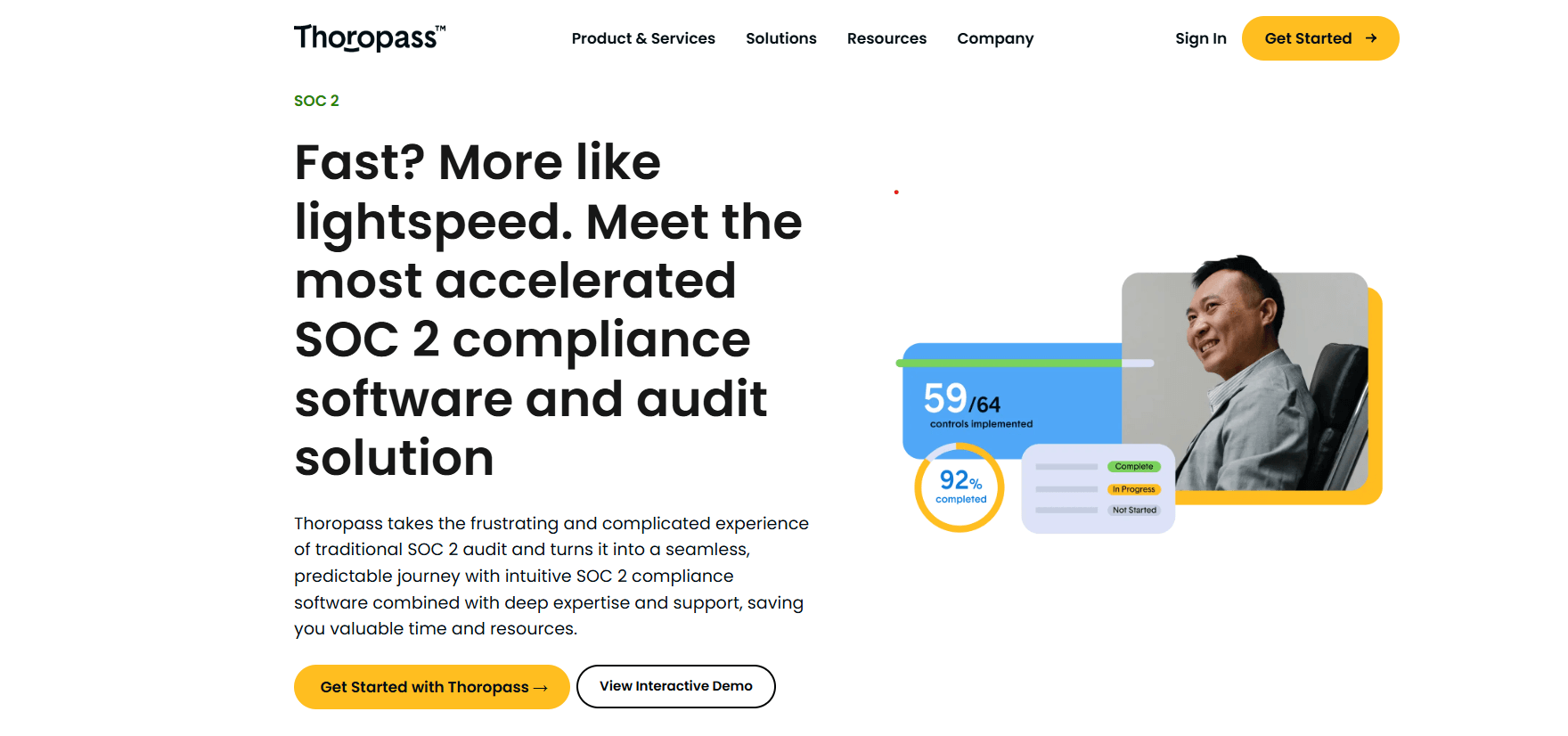
Thoropass, formerly known as Laika, differentiates itself among SOC 2 vendors for serverless computing platforms by bundling the compliance software and the CPA audit into a single connected contract. Its First Pass AI feature accelerates evidence review, while an in-house audit team eliminates the friction of coordinating between a separate GRC tool and an external auditing firm.
Features
- Connected audit model with in-platform auditors, removing the need to source a separate CPA firm
- 200-plus integrations spanning cloud infrastructure, HR, and identity systems
- Coverage across SOC 2, ISO 27001, HIPAA, PCI DSS, HITRUST, and GDPR
- First Pass AI for faster evidence triage and control mapping
Pros
- One vendor, one invoice for both the platform and the audit itself
- Vendor claims 25 to 50 percent savings compared with hiring a separate audit firm
- Approachable interface with responsive customer support noted by reviewers
Cons
- Customization is more limited than pure-automation competitors
- Bundled pricing can be harder to compare directly against unbundled platforms
Pricing: Thoropass’s marketplace floor sits near $14,500 per year for a combined platform-and-audit subscription, though real-world contracts commonly range from $20,000 to $45,000 annually, with a reported median deal size around $30,728.
12. Sprinto
Sprinto has built a reputation as one of the more budget-friendly SOC 2 vendors for serverless computing platforms, particularly for engineering-led startups that want prescriptive, opinionated automation rather than an open-ended toolkit. The platform automates both technical and operational controls end to end, which suits lean teams running entirely on managed serverless services with little internal compliance bandwidth.
Features
- 200-plus native integrations, including 45-plus AWS services relevant to serverless stacks
- AI-native GRC workflows with tiered alerts and validated, continuous control monitoring
- Support for SOC 2, ISO 27001, HIPAA, GDPR, and custom frameworks built from reused controls
- Entity billing options for international teams, including India-based DPDP Act workflows
Pros
- Among the most affordable options for a first SOC 2 Type 1 or Type 2 program
- Automates both technical checks and operational tasks with minimal manual follow-up
- Popular with startups that want a prescriptive, low-friction implementation path
Cons
- Some users note reporting and evidence-comparison friction inside the platform
- Less brand recognition among enterprise auditors compared with the two market leaders
Pricing: Sprinto’s entry pricing frequently comes in under $7,500 per year for small, single-framework programs, with Series A-stage contracts commonly ranging between roughly $7,000 and $15,000 annually before add-on frameworks.
Pingback: Top 12 Best SOC 2 Certification Providers for Edge Computing Startups - vizajobs.com - Remote Jobs
Pingback: Top 12 Best SOC 2 Vendors for Series C and Later Companies