If you run a computer vision company, you probably can’t treat SOC 2 as optional anymore. Enterprise security teams often ask for a SOC 2 report before they approve access to camera feeds, uploaded media, or customer datasets. Choosing among SOC 2 compliance vendors for computer vision companies also takes more than picking from a generic “best GRC software” list. Your environment includes image and video ingestion, model training pipelines, inference APIs, GPU infrastructure, and other systems that don’t fit neatly into a standard SaaS compliance template.
This guide evaluates 12 vendors that computer vision, machine learning, and AI SaaS companies commonly consider for SOC 2. We’ll look at what each vendor offers, how well it fits a computer vision stack, what it costs when pricing is available, and who should and shouldn’t choose it.
Why Computer Vision Companies Need SOC 2 Compliance
Computer vision companies handle complex and often sensitive data, including images, videos, camera feeds, metadata, and training datasets. This makes strong security controls especially important.
SOC 2 also helps companies meet enterprise procurement requirements, as retailers, hospitals, manufacturers, and security firms may require a current SOC 2 report before working with a vendor.
The infrastructure adds another layer of complexity. Computer vision platforms often use cloud storage, GPUs, model repositories, MLOps pipelines, CI/CD systems, and edge devices, all of which require proper access controls and monitoring.
Finally, companies need clear controls for the entire visual-data lifecycle, from collection and storage to access, retention, and deletion. SOC 2 can also help companies demonstrate that they protect the infrastructure supporting their models and AI pipelines.
Top 12 Best SOC 2 Compliance Vendors for Computer Vision
1. Vanta
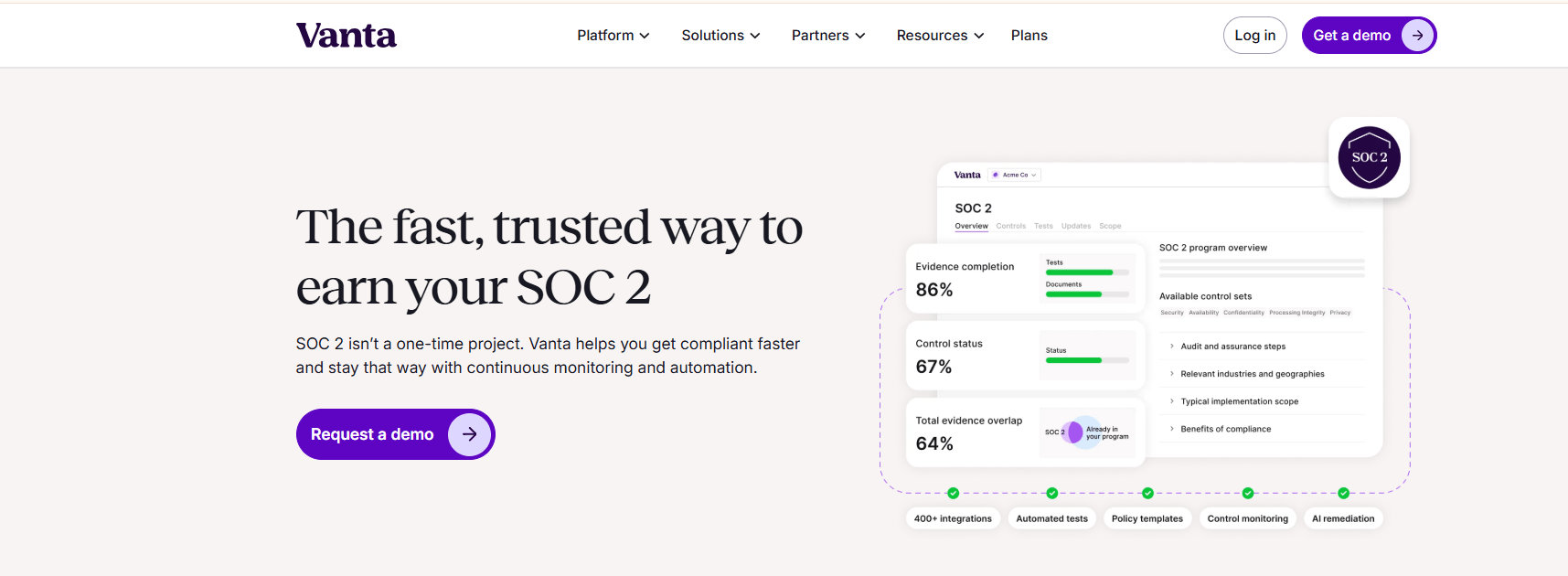
Vantaautomates SOC 2 compliance by collecting evidence, monitoring controls, and helping teams stay audit-ready across their cloud, identity, code, and device environments.
Why It Fits Computer Vision Companies: Vanta connects deeply with AWS, GCP, Azure, GitHub, and Okta—the systems that typically support training data, model repositories, GPU infrastructure, and development environments.
Key SOC 2 Features
- Automated evidence collection: Pulls compliance evidence directly from 400+ connected tools, reducing manual screenshots and evidence gathering.
- Continuous control monitoring: Checks security controls regularly and flags issues such as access or configuration problems before an audit.
- Policy management: Uses AI to help create policies and provides guidance when teams need to fix compliance gaps.
- Trust Center: Gives prospects a central place to review your security and compliance information during procurement.
- Vendor risk management: Helps assess and track third-party vendors that may access your infrastructure or data.
Pros
- 400+ integrations
- Frequent automated monitoring
- Large auditor network
- Strong enterprise reputation
Cons
- No public pricing
- Costs can increase as you add frameworks or modules
- Custom infrastructure may have integration gaps
Pricing
- Reported annual contracts: ~$7,500–$56,781
- Reported median: ~$20,000/year
- Typical mid-market estimates: $15,000–$35,000/year
- Audit fees are separate
Best For: Computer vision startups and scale-ups using mainstream AWS, GCP, or Azure infrastructure.
Verdict: Best for companies that want one of the broadest integration libraries and strong automated evidence collection. Consider alternatives if you need transparent pricing or have highly customized infrastructure.
2. Drata
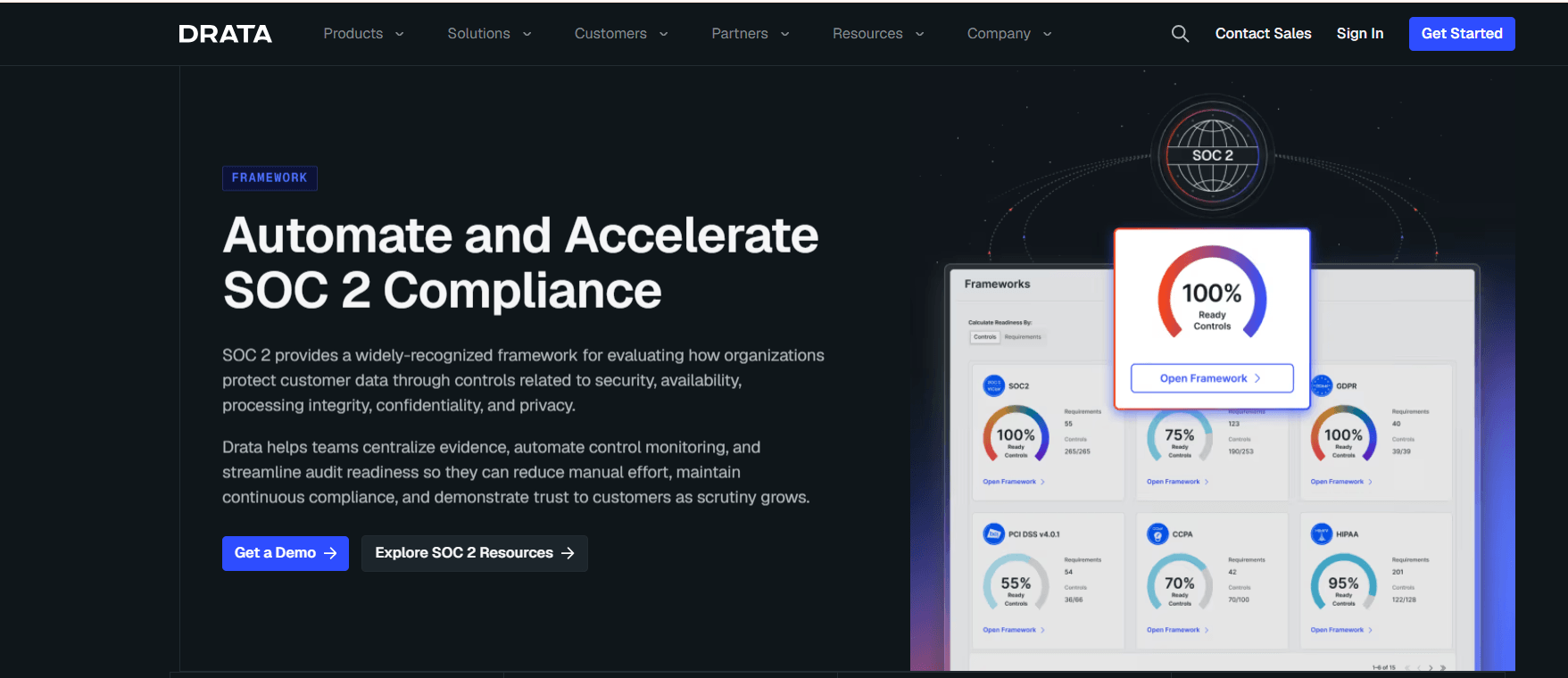
Drata automates evidence collection and continuous control monitoring, with strong support for companies that expect to add multiple compliance frameworks.
Why It Fits Computer Vision Companies: Computer vision companies may start with SOC 2 and later need ISO 27001 or HIPAA as they enter international markets or healthcare. Drata makes it easier to reuse the same controls across these frameworks.
Key SOC 2 Features
- Automated evidence collection: Connects to your existing systems and automatically gathers evidence required for SOC 2.
- Continuous monitoring: Checks controls throughout the year and alerts teams when something falls out of compliance.
- Cross-framework mapping: Lets companies reuse controls across SOC 2, ISO 27001, HIPAA, and other frameworks instead of building separate processes.
- Risk management: Provides a central place to identify, assign, and track security risks.
- Trust Center: Helps companies share security and compliance information with prospects during enterprise sales.
Pros
- Strong multi-framework support
- Easy-to-use interface
- Broad auditor network
- Active product development
Cons
- No public pricing
- Renewals may increase
- Trust Center costs extra
- Can require more setup for non-standard environments
Pricing
- Reported starting point: ~$7,500/year
- Typical SOC 2 Type II: $20,000–$45,000/year
- Enterprise programs can exceed $100,000/year
- Audit fees are separate
Best For: Computer vision companies planning to add ISO 27001, HIPAA, or other frameworks within the next 12–18 months.
Verdict: A strong choice if your compliance program will expand beyond SOC 2. If you only need SOC 2, you may not need all of its multi-framework capabilities.
3. Secureframe
Secureframe combines compliance automation with a guided approach that helps teams build policies, monitor controls, and prepare for audits.
Why It Fits Computer Vision Companies: Its access management and employee offboarding features can help companies prove that engineers and other employees no longer have access to sensitive training datasets, model repositories, or production systems.
Key SOC 2 Features
- Continuous monitoring: Connects to cloud, identity, HR, and developer tools to identify compliance issues as they occur.
- Access management: Tracks employee access and highlights unnecessary or outdated permissions.
- Offboarding automation: Helps verify that employees lose access to company systems when they leave.
- Policy management: Provides templates and workflows for creating policies and tracking employee training.
- Cross-framework mapping: Allows one control to support requirements across SOC 2, ISO 27001, and HIPAA.
Pros
- Guided onboarding
- Strong access-management automation
- Broad integrations
- Useful policy templates
Cons
- Some UI/UX complaints
- Occasional integration sync issues
- No transparent pricing
Pricing
- Estimated range: ~$7,500–$80,000+/year
- Common mid-market estimate: $14,000–$20,000/year
- Audit fees are separate
Best For: First-time SOC 2 teams without a dedicated compliance employee.
Verdict: Best for teams that want more guidance during their first SOC 2. More experienced compliance teams may prefer a leaner platform.
4. Sprinto
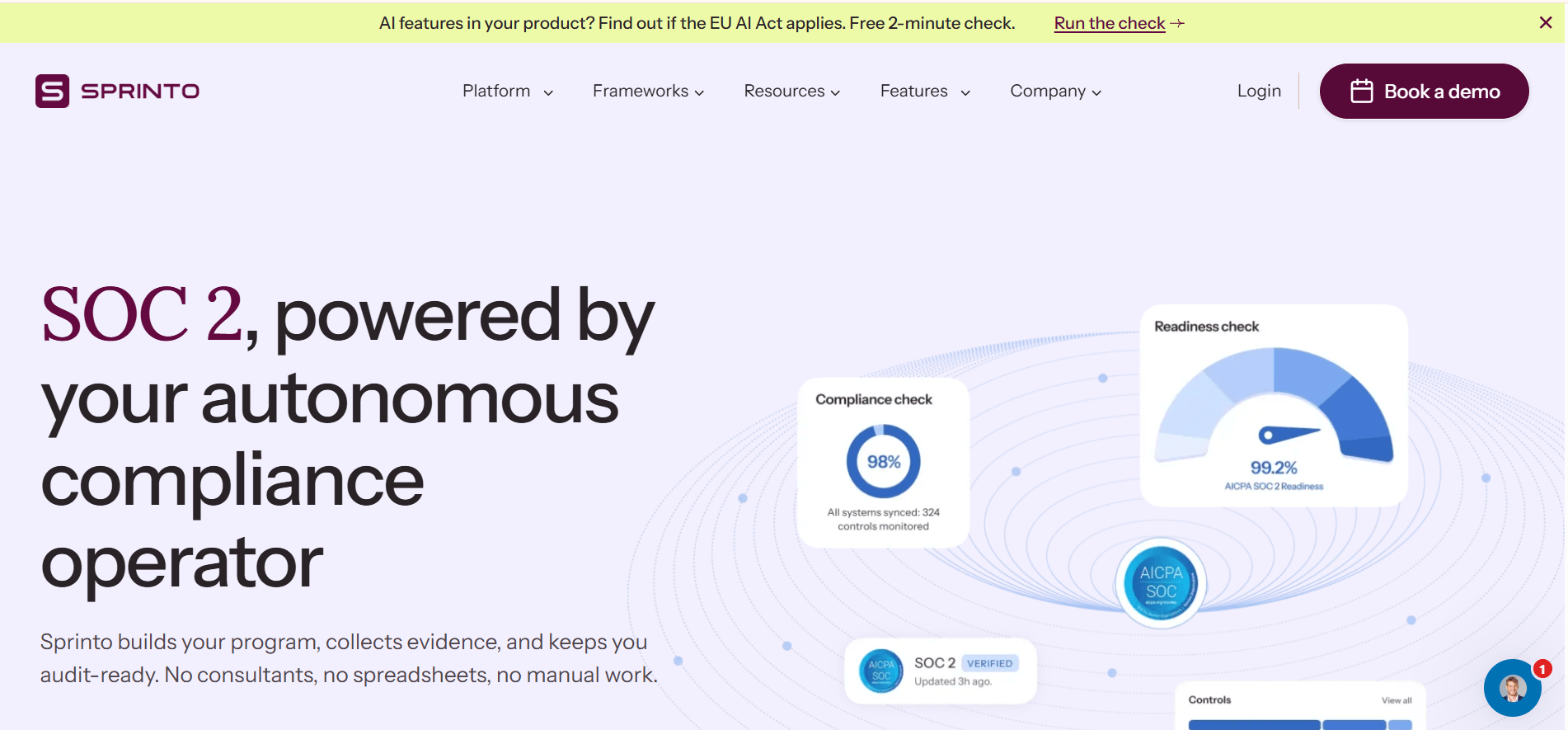
Overview: Sprinto automates compliance testing, evidence collection, risk management, and employee security workflows. It bases pricing on company headcount rather than individual platform users.
Why It Fits Computer Vision Companies: Computer vision companies can have large annotation, data-operations, support, and engineering teams. A headcount-based model can make it easier to give these teams access without paying separately for every user.
Key SOC 2 Features
- Automated evidence collection: Pulls evidence from existing tools, reducing manual work for engineering and compliance teams.
- Continuous control monitoring: Checks your environment against SOC 2 requirements and highlights problems that need attention.
- Risk management: Helps teams document security risks, assign owners, and track remediation.
- Vendor assessments: Provides workflows for evaluating third-party security risks.
- Security training: Automates employee training and tracks completion for audit evidence.
- AI assistance: Automates parts of evidence review and compliance workflows.
Pros
- No per-user pricing
- Good fit for cloud-native companies
- Strong startup reputation
- Relatively fast implementation
Cons
- Sales-led pricing
- Reported renewal increases
- Additional frameworks can increase costs
Pricing
- Not publicly listed
- Audit fees are separate
Best For: Engineering-led computer vision startups with large non-engineering teams.
Verdict: Sprinto is a good option for SOC 2 compliance for computer vision companies that want to avoid per-seat pricing. Look elsewhere if you need a public rate card.
5. Thoropass
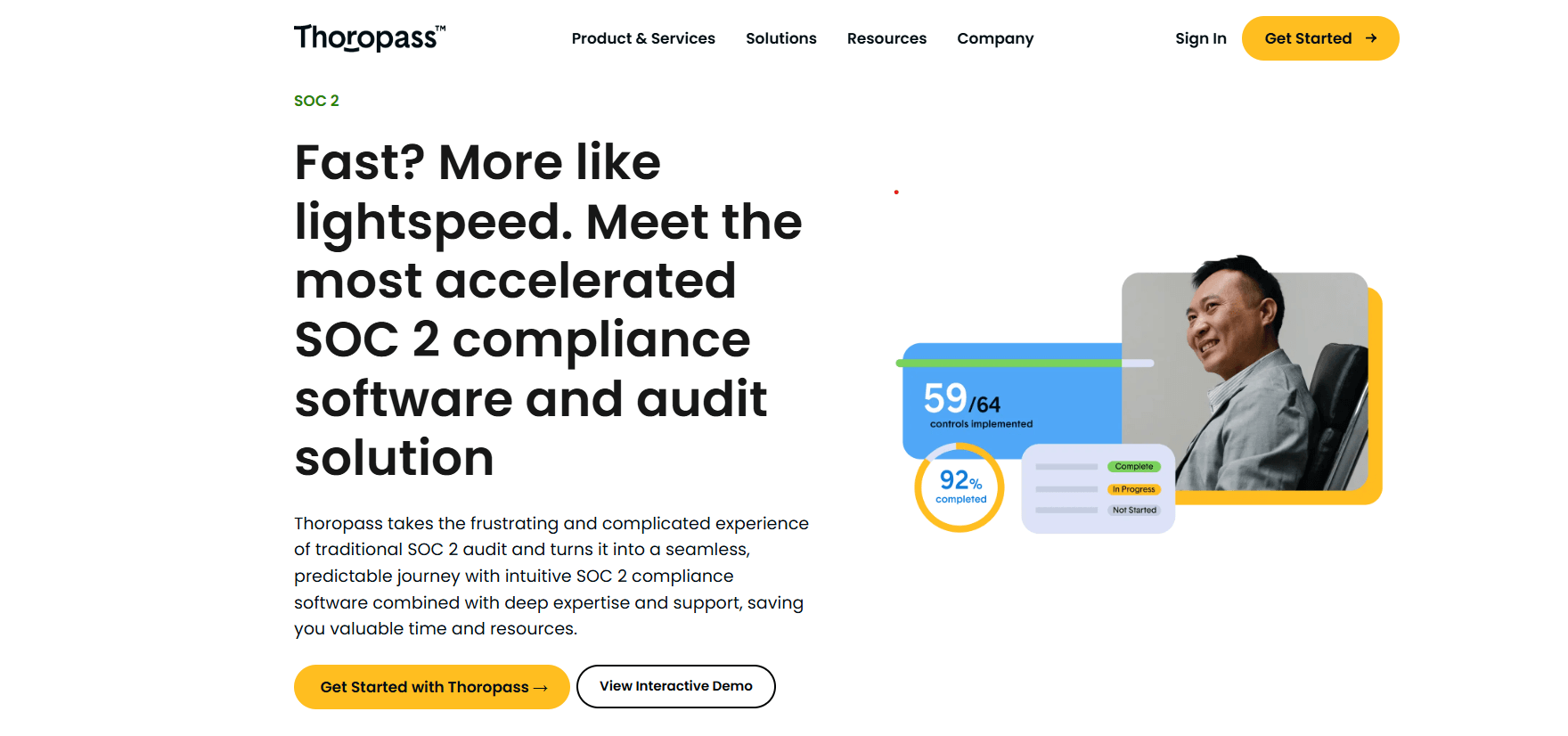
Thoropass combines compliance software with audit services, allowing companies to manage SOC 2 readiness and the examination through one provider.
Why It Fits Computer Vision Companies: Startups without an internal compliance function can avoid coordinating between a compliance platform and a separate auditor. This can simplify the first SOC 2 audit for a growing computer vision company.
Key SOC 2 Features
- Compliance automation: Collects evidence and monitors controls across connected systems.
- Audit management: Keeps evidence, requests, issues, and audit activity in one workflow.
- Integrated audit services: Provides access to SOC 2 auditors through the same vendor relationship.
- Risk and vendor management: Helps teams track security risks and third-party vendors.
- Security testing: Offers penetration testing and other security services alongside compliance.
Pros
- Combines software and audit
- Fewer vendor handoffs
- Strong multi-framework support
- Simplifies the audit process
Cons
- Less flexible if you already have an auditor
- Bundling may add unnecessary cost for companies with existing CPA relationships
- May offer more than a startup needs for simple compliance
Pricing
- Pricing depends on company size, scope, and audit requirements
- Third-party estimates commonly place annual programs around $15,000–$30,000+
- Audit fees vary by scope
Best For: Pre-Series A through Series B computer vision startups getting their first SOC 2.
Verdict: Thoropass is a strong SOC 2 compliance firm for computer vision companies that want one provider to handle both compliance preparation and the audit.
6. Strike Graph
Strike Graph combines compliance automation, risk management, framework mapping, and audit preparation. It stands out by publishing pricing for its main plans instead of requiring every buyer to start with a sales conversation.
Why It Fits Computer Vision Companies: Early-stage computer vision companies can estimate their compliance software costs before committing. Its security testing and SBOM capabilities also support companies building a stronger security program around their AI infrastructure.
Key SOC 2 Features
- Automated evidence collection: Connects to cloud and business systems and keeps evidence organized for audits.
- Continuous evidence validation: Uses automated checks to identify missing or outdated evidence.
- Cross-framework mapping: Reuses controls and evidence when companies add frameworks such as ISO 27001 or HIPAA.
- Security testing: Offers penetration testing, vulnerability scanning, and SBOM support.
- Security questionnaires: Uses existing compliance information to help teams respond to customer security requests.
Pros
- Published pricing
- Free entry tier
- Useful security testing
- Cross-framework capabilities
Cons
- Smaller integration library than Vanta or Drata
- Some users find the interface less polished
- Additional frameworks and security services can increase costs
Pricing
- Launch: Free
- Certify: Starts at $10,000/year
- Scale: Starts at $21,500/year
- Enterprise: Starts at $35,000/year
- Additional services may cost extra
Best For: Early-stage or budget-conscious computer vision companies that want predictable software costs.
Verdict: Strike Graph is one of the better options for companies that want SOC 2 compliance for computer vision companies without entering a quote-only buying process.
7. Scytale
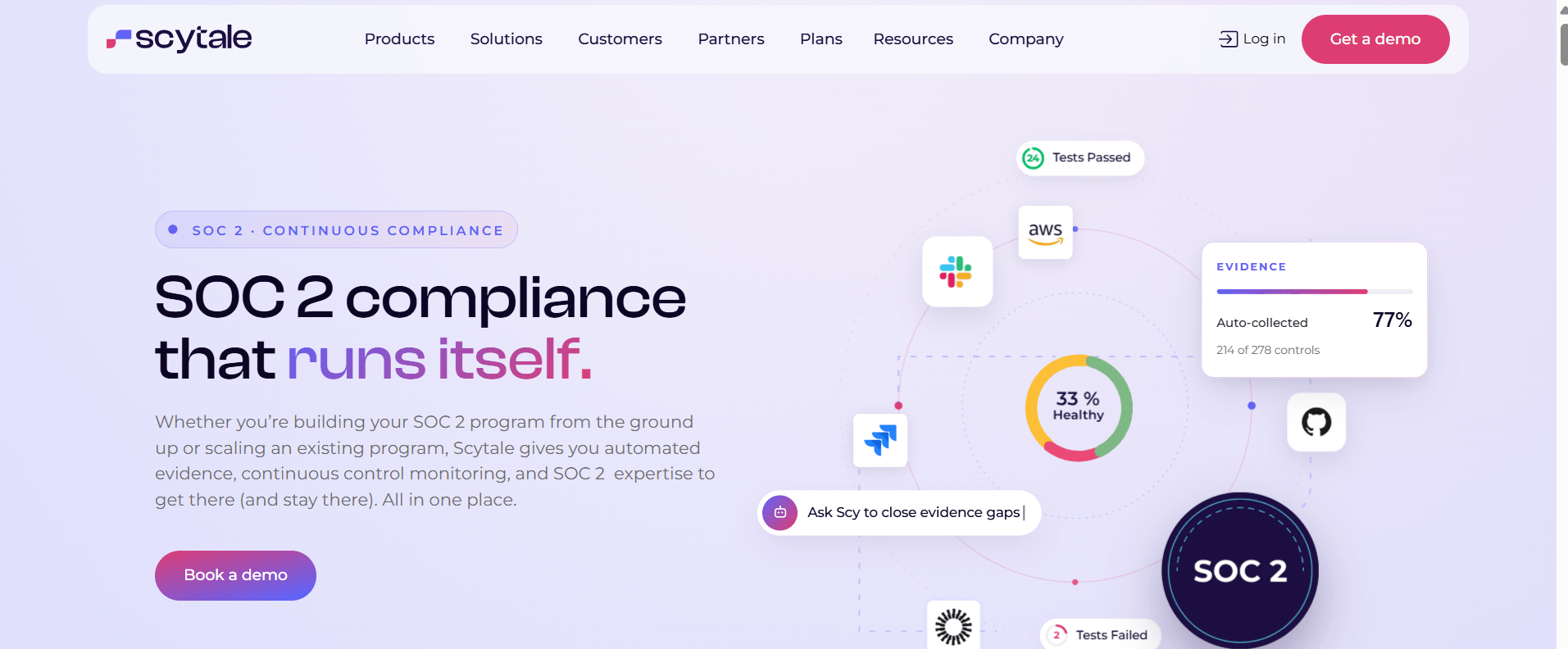
Scytale combines compliance automation with access to human compliance experts, giving companies both software and guidance through the SOC 2 process.
Why It Fits Computer Vision Companies: A small computer vision company without a CISO or compliance specialist can get help understanding how SOC 2 controls apply to its training pipelines, cloud infrastructure, and data-access processes.
Key SOC 2 Features
- Automated evidence collection: Pulls evidence from connected systems and reduces manual compliance work.
- Continuous monitoring: Helps teams identify control failures throughout the year.
- Compliance advisory: Gives teams access to compliance experts who can explain requirements and help close gaps.
- Questionnaire automation: Uses AI to speed up responses to customer security questionnaires.
- Trust Center: Gives prospects access to security and compliance information.
Pros
- Human expert support included
- Strong user ratings
- Broad framework coverage
- Good for first-time teams
Cons
- Smaller integration library than Vanta or Drata
- Advisory model may be unnecessary for experienced teams
- Pricing is not public
Pricing
- Estimated starting price: ~$7,500/year
- Advisory tiers reportedly start around $10,000/year
- Estimated year-one cost including audit: $30,000–$55,000 for a 50-person company
Best For: Computer vision startups completing their first SOC 2 without an internal compliance lead.
Verdict: Scytale is a strong choice if you want SOC 2 compliance for computer vision companies with a human expert available to guide the process.
8. Hyperproof
Hyperproof is a GRC and compliance-operations platform designed for organizations managing several frameworks and ongoing audit programs.
Why It Fits Computer Vision Companies: It becomes more valuable as a computer vision company moves beyond its first SOC 2 and starts managing requirements such as ISO 27001, HIPAA, NIST, or government frameworks.
Key SOC 2 Features
- Automated evidence collection: Pulls evidence into a centralized compliance workspace.
- Cross-framework mapping: Lets teams reuse controls across multiple frameworks.
- Risk management: Provides structured workflows for identifying and monitoring security risks.
- Third-party risk management: Helps companies assess and monitor vendors.
- Audit management: Tracks audit requests, observations, evidence, and remediation in one system.
Pros
- Strong multi-framework capabilities
- Unlimited users
- Deep audit-management workflows
- Good fit for established GRC teams
Cons
- Steeper learning curve
- More expensive than startup-focused platforms
- Not the fastest option for a first SOC 2
Pricing
- Not publicly listed
- Reported starting point: ~$12,000/year
- Vendr median annual contract: ~$40,355
- Enterprise deployments can exceed $100,000/year
Best For: Mid-market and enterprise computer vision companies with dedicated security or GRC teams.
Verdict: Hyperproof is best for companies that have moved beyond basic SOC 2 compliance for computer vision companies and now need a broader GRC operating system.
9. Scrut Automation
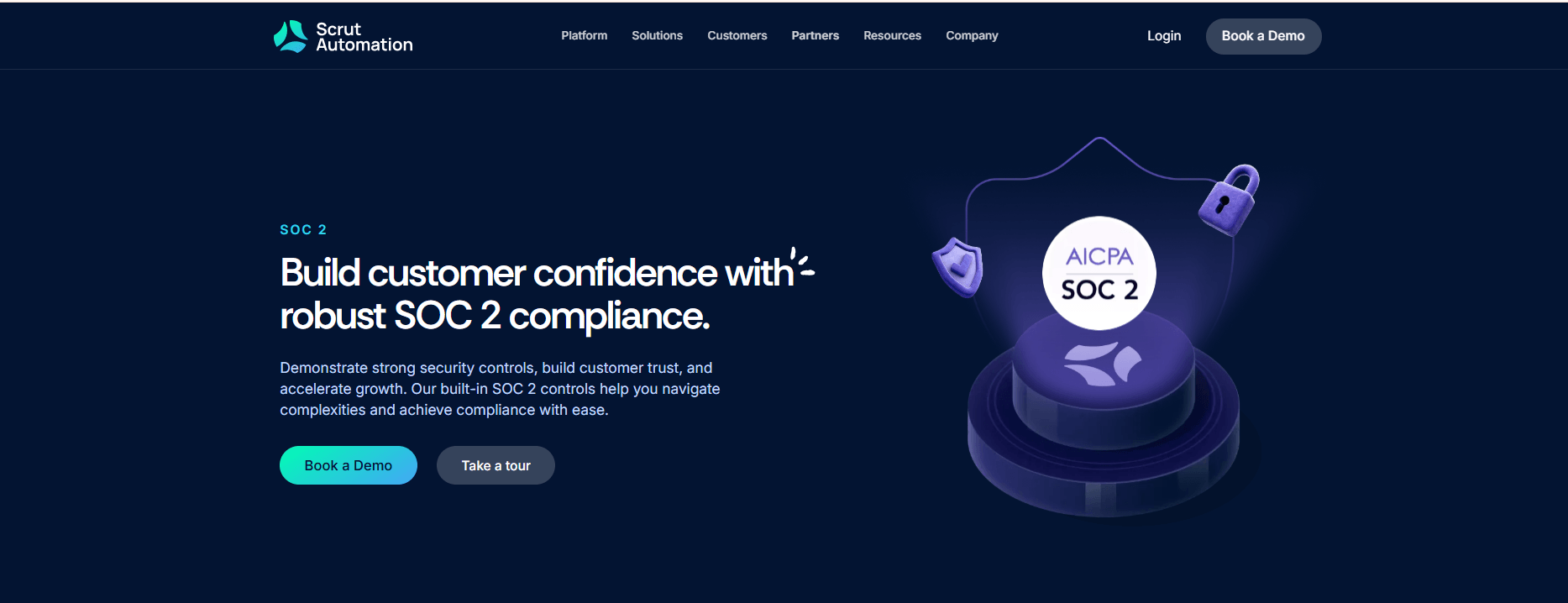
Scrut Automation combines compliance, risk management, vendor management, and continuous monitoring in one platform. Its multi-framework approach makes it particularly useful for companies with expanding compliance requirements.
Why It Fits Computer Vision Companies: Computer vision companies serving healthcare, retail, and security markets may need SOC 2 alongside ISO 27001 or HIPAA. Scrut can help them manage these requirements without creating separate compliance processes.
Key SOC 2 Features
- Automated evidence collection: Collects evidence from cloud infrastructure, applications, and third-party systems.
- Continuous monitoring: Checks connected systems and alerts teams when controls need attention.
- Multi-framework support: Maps controls across SOC 2, ISO 27001, HIPAA, GDPR, and other standards.
- AI assistance: Helps with remediation guidance and customer security questionnaires.
- Risk management: Centralizes risk registers, vendor assessments, and compliance tasks.
Pros
- Strong multi-framework value
- Broad integration catalog
- AI-assisted workflows
- Good fit for growing compliance programs
Cons
- Exact pricing requires a sales conversation
- Less advantage for companies needing only SOC 2
- Setup can be complex
Pricing
- Not publicly listed
- Estimated single-framework SOC 2: ~$15,000–$20,000/year
- Estimated multi-framework programs: ~$13,000–$22,000/year
- Audit fees are separate
Best For: Computer vision companies planning to add ISO 27001, HIPAA, or another framework soon.
Verdict: Scrut is particularly attractive for companies building a SOC 2 compliance program for computer vision companies alongside other frameworks from the beginning.
10. OneTrust
OneTrust formerly Tugboat Logic, brings SOC 2 readiness and audit workflows into OneTrust’s broader privacy, risk, and GRC ecosystem.
Why It Fits Computer Vision Companies: Computer vision companies that already manage privacy requirements around images, videos, or other personal data can consolidate privacy, security, and compliance workflows within OneTrust.
Key SOC 2 Features
- Policy management: Helps create and manage security policies required for compliance.
- Evidence management: Organizes evidence and tracks it throughout the audit process.
- Audit workflow: Helps teams manage observations, requests, evidence, and auditor interactions.
- Questionnaire automation: Helps teams respond to recurring customer security questionnaires.
- Cross-framework mapping: Connects SOC 2 requirements with ISO 27001, HIPAA, PCI DSS, GDPR, and other frameworks.
Pros
- Strong privacy and compliance ecosystem
- Mature audit workflows
- Good multi-framework capabilities
- Useful for existing OneTrust customers
Cons
- Can be expensive for SOC 2 alone
- Heavier than startup-focused platforms
- Pricing is increasingly enterprise-oriented
Pricing
- Current pricing is quote-based
- Current enterprise deployments can cost significantly more
- Audit fees are separate
Best For: Computer vision companies already using OneTrust for privacy, third-party risk, or broader GRC.
Verdict: OneTrust makes the most sense when it already forms part of your compliance stack. For companies seeking SOC 2 alone, a dedicated SOC 2 compliance provider may offer a simpler and more affordable path.
11. Oneleet
Oneleet takes a security-first approach to compliance. It combines SOC 2 readiness with penetration testing, code security, attack-surface monitoring, and vCISO support.
Why It Fits Computer Vision Companies: Computer vision companies can expose sensitive inference APIs, model-serving infrastructure, and image-processing systems to real security risks. Oneleet connects compliance work with hands-on security testing.
Key SOC 2 Features
- Penetration testing: Tests applications and infrastructure for vulnerabilities rather than relying only on documentation.
- Code security: Scans code for vulnerabilities before they reach production.
- Attack-surface monitoring: Identifies exposed assets and services that attackers could target.
- Device compliance: Monitors security settings across company devices.
- vCISO support: Provides security leadership for companies without an internal security executive.
- Audit management: Helps coordinate the SOC 2 audit process.
Pros
- Security-first approach
- Penetration testing included
- Code and attack-surface monitoring
- vCISO support
- Strong fit for security-conscious AI companies
Cons
- Less flexible if you already have security testing providers
- Bundled services may cost more than compliance-only software
- Pricing is quote-based
Pricing
- No public pricing
- Custom quotes based on company size, frameworks, and scope
- SOC 2 audit fees vary based on audit type and scope
Best For: Computer vision companies that want SOC 2 to improve their actual security posture, not simply produce an audit report.
Verdict: Oneleet is one of the strongest SOC 2 compliance firms for computer vision companies when security testing matters as much as the compliance report.
12. Comp AI
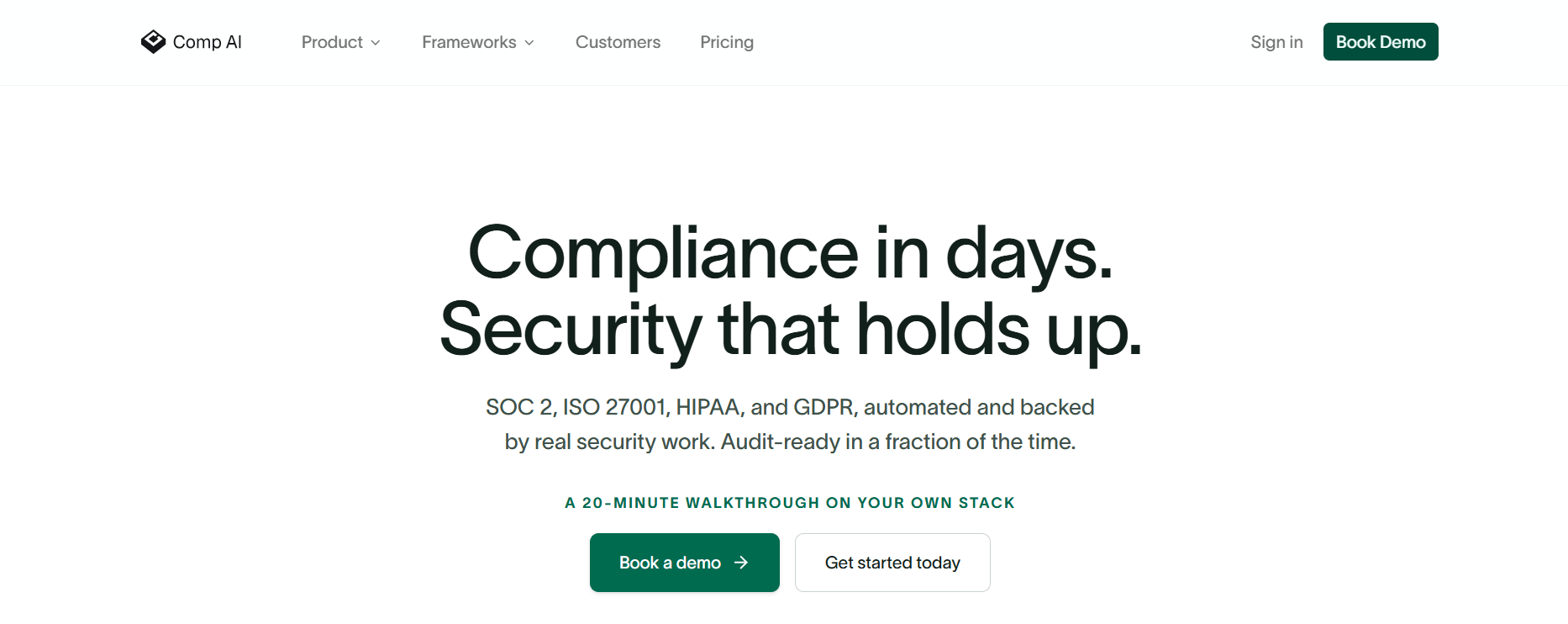
Comp AI is an open-source compliance automation platform. Its core code is published under the AGPLv3 license, allowing companies to inspect the evidence-collection and monitoring code and, where appropriate, self-host the platform.
Why It Fits Computer Vision Companies: Comp AI suits engineering-led computer vision teams that prefer to inspect the technology behind their compliance tools rather than rely entirely on a closed platform. Its published pricing also gives early-stage companies a more predictable way to budget for SOC 2 compliance for computer vision companies.
Key SOC 2 Features
- Automated evidence collection: Connects to company systems and continuously checks evidence needed to maintain SOC 2 controls.
- Multi-framework control mapping: Maps controls across 25+ frameworks, including SOC 2, ISO 27001, HIPAA, PCI DSS 4.0, and GDPR.
- Open-source compliance engine: Publishes its core agents and checks on GitHub, allowing technical teams to inspect how the platform performs its compliance checks.
- AI-assisted policy generation: Uses AI to help teams create policies and reduce the manual work involved in preparing their compliance documentation.
- Bundled audit and penetration testing: Its Pro plan includes a third-party SOC 2 audit and penetration testing, potentially reducing the number of separate vendors a startup needs to manage.
Pros
- Published pricing
- Open-source core
- Self-hosting option
- Pro plan bundles SOC 2 audit and penetration testing
- Good fit for technical teams
Cons
- Much newer than Vanta, Drata, and Secureframe
- Smaller independent review base
- Reported integration count differs from the vendor’s marketing claim
- Enterprise features require custom pricing
Pricing
- Starter: From $199/month
- Enterprise/self-hosted deployments: Quote-based
Best For: Budget-conscious, engineering-led computer vision startups that want transparent pricing and an open-source compliance platform.
Verdict: Comp AI is an interesting option for SOC 2 compliance for computer vision companies that value pricing transparency and the ability to inspect the technology behind their compliance platform. Choose a more established provider if integration depth, a larger customer base, and long-standing auditor relationships matter more than open-source transparenc