

Embedded finance startups live in a peculiar compliance gray zone. On one side, they build and sell software, which means enterprise buyers expect a polished SOC 2 report before they’ll even open a contract negotiation. On the other side, these companies move money, hold customer funds, or plug directly into a sponsor bank’s regulatory perimeter, which means a generic SaaS-style audit rarely satisfies the people who actually control the deal. As a result, founders who search for SOC 2 vendors for embedded finance startups quickly run into a wall: most “best compliance software” roundups are written for ordinary B2B SaaS companies, not for teams issuing cards, moving deposits, or underwriting loans inside someone else’s banking license.
This gap matters more than it first appears. Sponsor banks, card networks, and enterprise buyers each read a SOC 2 report differently, and each one expects evidence that goes well beyond access control screenshots and uptime logs. Consequently, choosing among SOC 2 vendors for embedded finance startups requires a sharper set of questions than a typical vendor comparison would suggest.
This article evaluates twelve SOC 2 vendors for embedded finance startups that span both software and audit firms, since most fintech infrastructure teams end up needing one of each: a platform to collect and organize evidence continuously, and a licensed CPA firm to issue a report that banks, card networks, and enterprise buyers will actually trust.
Top 12 Best SOC 2 Vendors for Embedded Finance Startups
1. Vanta

Vanta is the most widely adopted platform among SOC 2 vendors for embedded finance startups, and it built its reputation on getting first-time compliance teams to an audit-ready state quickly. The platform continuously tests controls against live infrastructure, pulls evidence automatically from cloud providers, HR systems, and code repositories, and then hands that evidence package to an auditor through Vanta’s own partner network. Because embedded finance products typically touch payment rails, banking partners, and card networks, Vanta’s broad integration library and its Trust Center feature help startups demonstrate security posture to bank partners and enterprise customers without constant manual back-and-forth.
Features
- Continuous, automated control monitoring across cloud, identity, and HR systems
- Over 375 pre-built integrations, including AWS, GCP, and common fintech tooling
- Built-in access to a network of partner CPA auditors
- Public-facing Trust Center for sharing security posture with banking partners
- Support for overlapping frameworks such as ISO 27001, PCI DSS, and GDPR
Pros
- Fastest onboarding curve among major SOC 2 vendors for embedded finance startups
- Large integration catalog reduces manual evidence gathering
- Strong brand recognition that banking and payments partners already trust
Cons
- Framework customization is less flexible than some competitors
- Costs climb quickly once a startup adds frameworks, users, or vendor risk modules
Pricing
Vanta does not publish list pricing; most early-stage fintech teams report annual contracts starting in the low five figures, rising with headcount, frameworks, and add-on modules such as vendor risk management.
Hicomply is built specifically around the multi-framework reality of fintech, rather than treating SOC 2 as a standalone product. It maps the significant control overlap between SOC 2 and PCI DSS, then layers in ISO 27001 and NIST CSF as an embedded finance company expands internationally or takes on additional regulatory obligations, which makes it one of the more purpose-built SOC 2 vendors for embedded finance startups on this list.
Features
- Native SOC 2-to-PCI-DSS control mapping designed for card-data-adjacent products
- Automated evidence collection from cloud infrastructure, identity providers, and development tools
- A staged framework roadmap that starts with SOC 2 and layers on PCI DSS, ISO 27001, and privacy frameworks
- Centralized policy management with approval workflows and renewal reminders
A public Trust Center for sharing security posture with sponsor banks and enterprise buyers
Pros
- Purpose-built for the SOC 2-plus-PCI-DSS combination that most embedded finance products eventually need
- Additive framework approach reduces duplicated evidence work as compliance scope grows
- Fintech-specific messaging suggests deeper product-level attention to payments use cases than generalist tools
Cons
- Fewer independent, third-party case studies are available to verify time-to-audit claims
- No published pricing, so cost must be requested directly
Pricing
Hicomply does not publish pricing publicly; prospective customers must request a custom quote based on framework scope and company size.
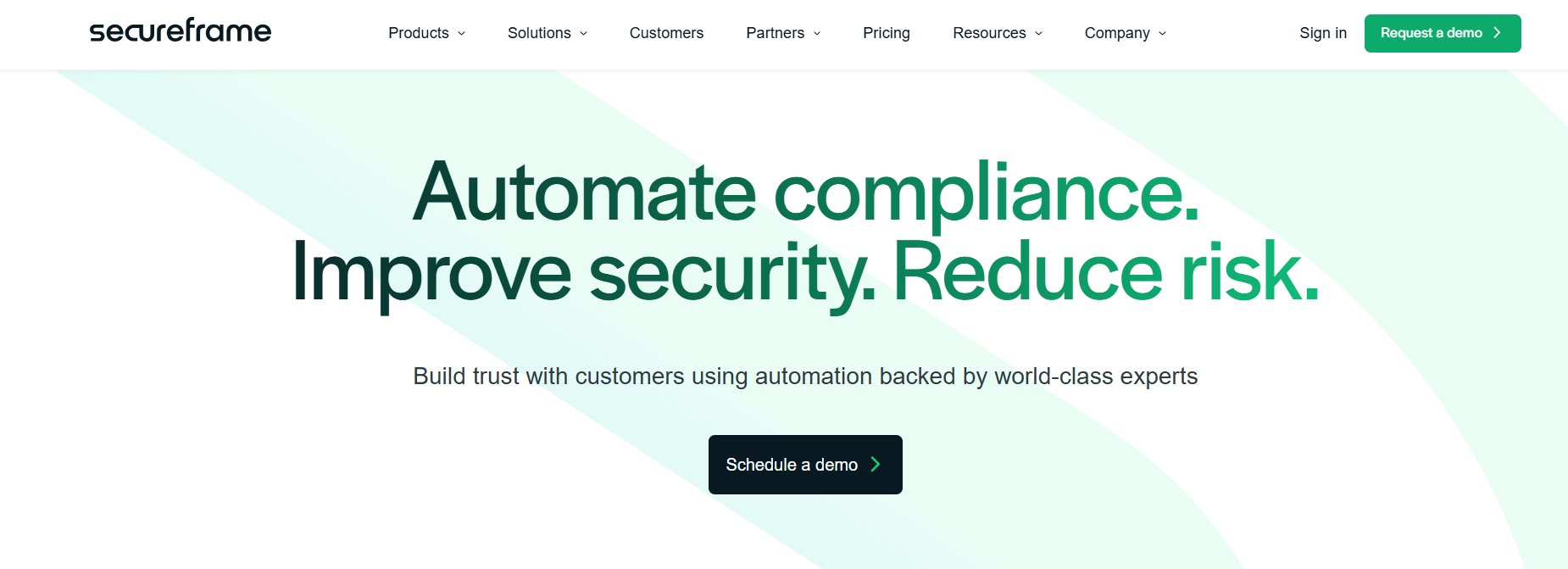
Secureframe emphasizes intuitive design and broad framework coverage, supporting more than 35 compliance standards from a single dashboard. For embedded finance startups juggling SOC 2 alongside PCI DSS and state money-transmitter requirements, Secureframe’s unified workspace reduces the number of separate tools a lean compliance or engineering team must manage.
Features
- More than 300 integrations that automatically pull and map evidence
- Daily automated compliance tests across cloud infrastructure
- Built-in employee onboarding workflows for policy acknowledgment and training
- AI-assisted evidence review that checks whether artifacts match control intent
- Evidence-expiration tracking to keep testing windows current
Pros
- Clean, approachable interface that non-technical teams can navigate
- Wide framework library supports future expansion beyond SOC 2
- Guided onboarding reduces the learning curve for first-time compliance owners
Cons
- Software and audit fees are billed as two separate line items
- Some advanced customization options require higher-tier plans
Pricing
Secureframe keeps pricing private and quote-based.
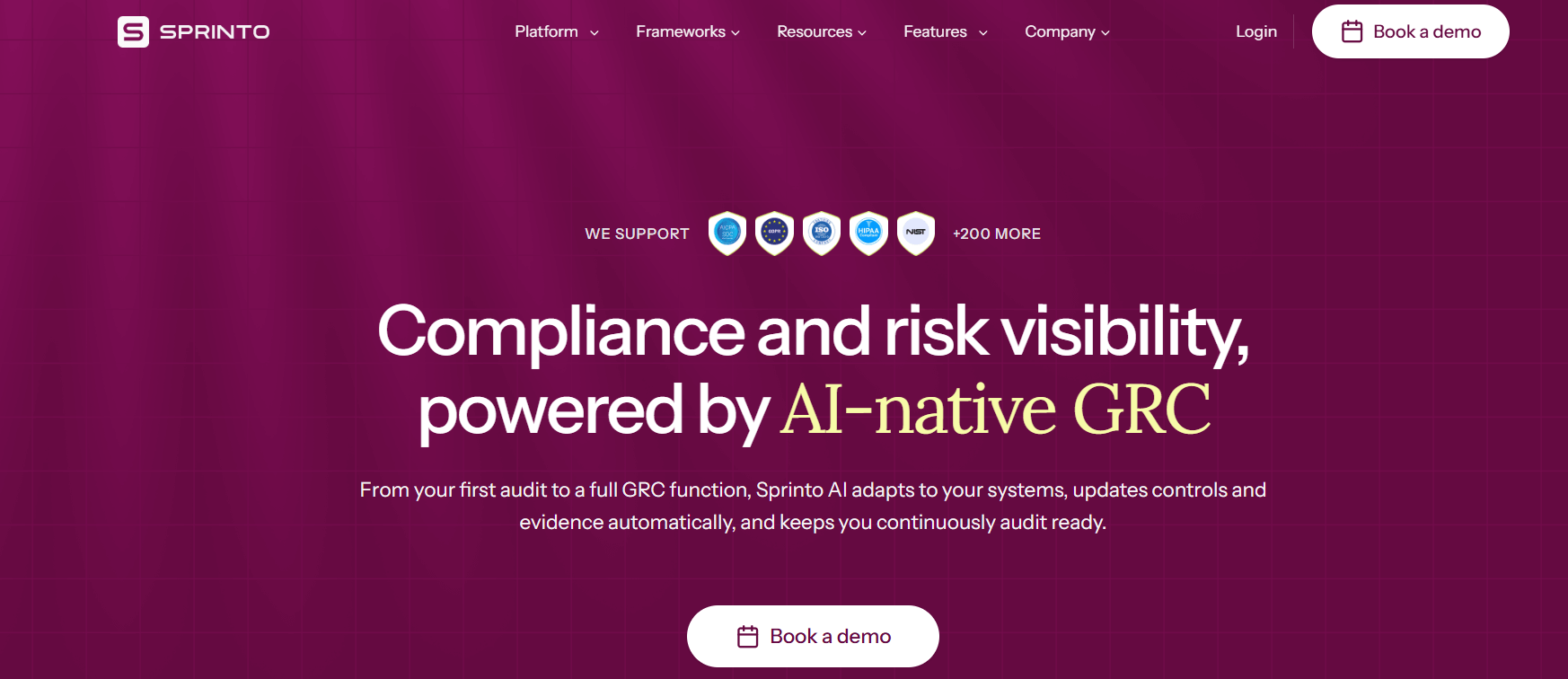
Sprinto built its platform specifically around helping early-stage companies pass their first SOC 2 audit with hands-on guidance rather than a self-service dashboard alone. That focus makes Sprinto one of the more startup-friendly SOC 2 vendors for embedded finance startups that lack a dedicated in-house compliance team and need a partner to walk through every control.
Features
- More than 200 integrations for automated evidence collection
- Dedicated implementation specialists who guide teams through each control
- Prescriptive, engineering-led setup workflow
- Continuous monitoring with real-time compliance health scores
- Support for multi-framework programs as the company matures
Pros
- Custom guidance suits founders who are new to compliance
- Not strictly per-seat pricing, which helps fast-hiring startups control costs
- High marks in user reviews for support responsiveness
Cons
- Pricing is fully custom and requires a sales conversation
- Smaller integration catalog than Vanta or Secureframe for niche tools
Pricing
Sprinto offers custom, quote-based pricing; publicly discussed real-world contracts often start around seven thousand dollars a year for startup-tier plans, increasing with headcount and framework scope.
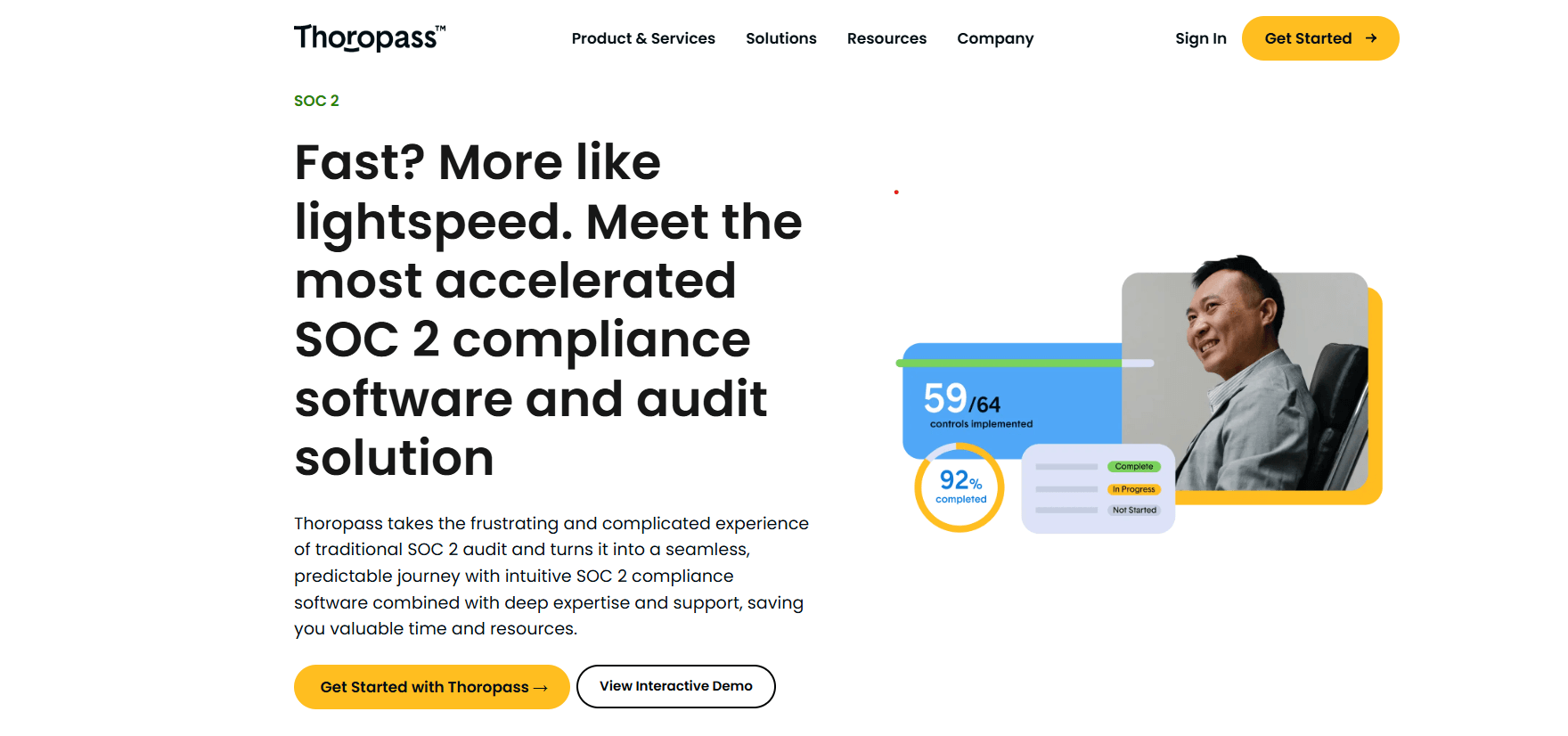
Thoropass bundles software and the audit itself into one relationship, pairing a compliance automation dashboard with an in-house audit practice. That combination appeals to embedded finance startups that would rather manage one vendor than coordinate separately between a software platform and an outside CPA firm.
Features
- Compliance automation dashboard covering SOC 2, ISO 27001, HIPAA, and more
- Audit services delivered by Thoropass’s own licensed auditors
- Centralized evidence locker shared between the software and the audit team
- Policy templates tailored to fintech and payments use cases
- Ongoing monitoring between audit cycles
Pros
- Fewer vendors to manage since software and audit sit under one roof
- Smoother handoff between evidence collection and fieldwork
- Fintech-aware policy templates reduce drafting time
Cons
- Higher upfront cost than software-only platforms
- Less flexibility to choose a different, independent audit firm
Pricing
Thoropass prices as a bundle of software and audit fees; because the audit is included, total first-year cost tends to run higher than software-only competitors, though it can reduce total spend across the full compliance lifecycle.
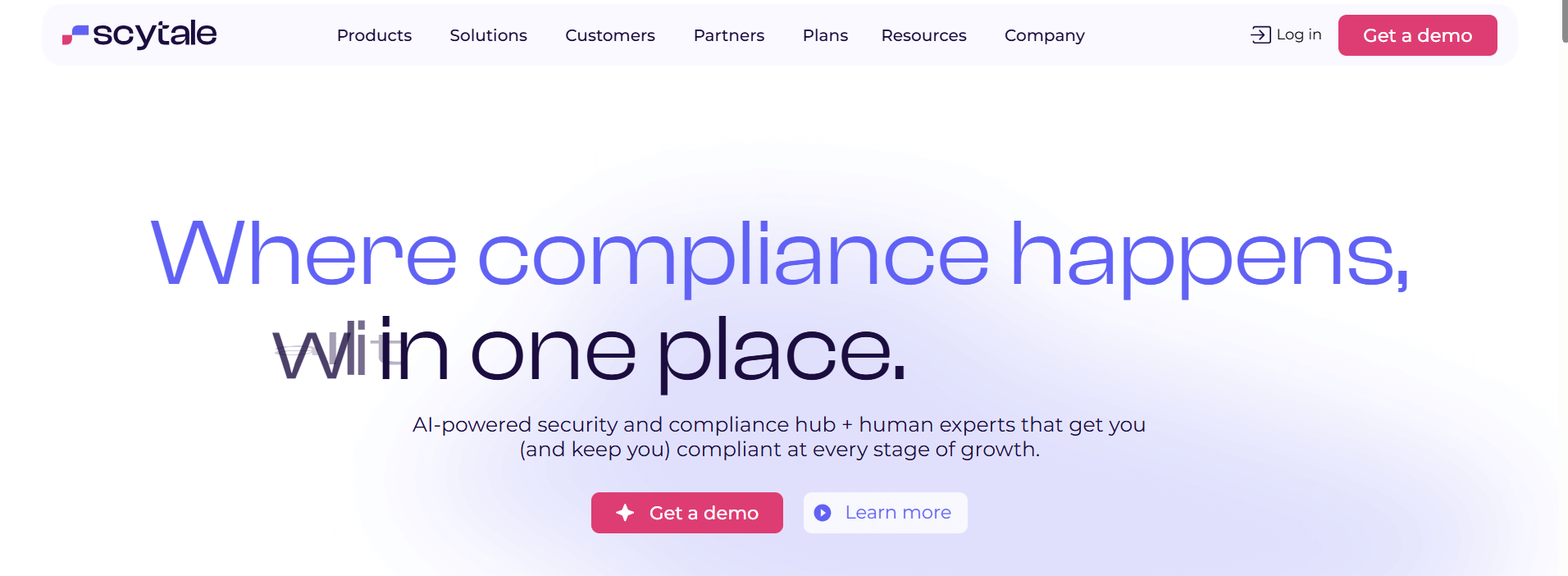
Scytale differentiates itself with AI-driven evidence review, automatically flagging whether submitted artifacts satisfy the control they are mapped to. Among newer SOC 2 vendors for embedded finance startups, Scytale appeals to lean teams that want an extra layer of quality assurance before an auditor ever sees the evidence package.
Features
- AI evidence reviewer that checks artifacts against control language
- Automated evidence collection integrations across common cloud and SaaS tools
- Dedicated customer success manager assigned to each account
- Multi-framework support including ISO 27001 and GDPR
- Readiness dashboard with real-time gap tracking
Pros
- AI evidence review catches mismatched artifacts before audit fieldwork
- Hands-on customer success model suits first-time compliance owners
- Competitive with larger platforms on core automation features
Cons
- Smaller integration marketplace than category leaders
- Less brand recognition among enterprise banking partners
Pricing
Scytale uses custom, quote-based pricing tailored to company size and framework count, with audit fees purchased separately through a partner CPA firm.
Scrut Automation combines compliance monitoring with a built-in risk register, which suits embedded finance startups that need to document not just SOC 2 controls but also vendor and third-party risk tied to banking partnerships. Its lower-friction, startup-oriented workflow has made it a common alternative on shortlists dominated by larger incumbents.
Features
- Continuous control monitoring with automated evidence capture
- Integrated risk register and vendor risk assessment tools
- Multi-framework mapping to reduce duplicate control work
- Cloud security posture management add-on
- Collaborative auditor workspace
Pros
- Built-in risk management reduces the need for a separate GRC tool
- Lower-friction setup aimed at resource-constrained startup teams
- Regional support strength for teams outside the United States
Cons
- Less mature Trust Center features compared with Vanta or Drata
- Smaller reference base among large embedded finance platforms
Pricing
Scrut publishes tiered plans on request; startup-focused packages generally undercut the entry pricing of Vanta and Drata, though exact figures require a sales quote.
Hyperproof leans toward enterprise-grade governance, risk, and compliance work, which makes it a fit for embedded finance startups that expect to graduate quickly into multi-framework, multi-entity compliance programs. Its workflow and reporting depth exceed what most early-stage teams need, but growth-stage fintechs often adopt it once they outgrow lighter-weight platforms.
Features
- Centralized control and risk repository across multiple frameworks
- Custom workflow builder for control owners and reviewers
- Executive-level reporting dashboards
- Integration with common ticketing and cloud infrastructure tools
- Vendor risk management module
Pros
- Reporting depth suits boards and enterprise banking partners
- Scales well across multiple business units or subsidiaries
- Strong workflow customization for complex organizations
Cons
- Steeper learning curve than startup-focused competitors
- Overkill for a company pursuing only its first SOC 2 report
Pricing
Hyperproof sells through custom enterprise contracts; pricing generally sits above startup-tier platforms and is negotiated based on the number of frameworks, users, and business units in scope.
Strike Graph stands out among SOC 2 vendors for embedded finance startups because it publishes pricing openly rather than gating every quote behind a sales call. That transparency helps founders budget accurately during fundraising conversations, when investors and banking partners often ask for a compliance timeline and cost estimate.
Features
- Published, self-service pricing tiers
- Automated control and evidence mapping
- Risk assessment tools aligned to Trust Services Criteria
- Auditor marketplace for selecting an independent CPA firm
- Framework expansion into ISO 27001 and HIPAA
Pros
- Transparent pricing simplifies budget planning for early-stage founders
- Straightforward interface with a manageable learning curve
- Flexibility to choose an auditor outside the platform
Cons
- Smaller integration library than category leaders
- Less brand recognition when demonstrating compliance to large banking partners
Pricing
Strike Graph publishes starting tiers directly on its website, with plans generally priced below the custom-quote platforms, making it easier to compare costs before a sales conversation.
OneTrust is a broad governance, risk, and privacy platform rather than a SOC 2-only tool, and embedded finance startups usually adopt it once they already rely on it for privacy or third-party risk management. Consolidating SOC 2 alongside GDPR, CCPA, and vendor risk under one platform can pay off once a company runs five or more overlapping frameworks.
Features
- Unified privacy, risk, and compliance management suite
- SOC 2 control mapping alongside GDPR and CCPA workflows
- Extensive third-party and vendor risk assessment tools
- Enterprise-grade reporting and executive dashboards
- Broad ecosystem of consulting and implementation partners
Pros
- Strong fit for companies already using OneTrust for privacy compliance
- Consolidates many frameworks into a single system of record
- Extensive partner ecosystem for implementation support
Cons
- Higher total cost than startup-focused SOC 2 platforms
- Heavier implementation effort not suited to very early-stage teams
Pricing
OneTrust negotiates enterprise contracts case by case; real-world spend frequently exceeds fifty thousand dollars a year once a company layers in multiple modules and frameworks.
A-LIGN is a licensed CPA and security assessment firm rather than a software platform, and every embedded finance startup eventually needs a firm like it because software alone cannot issue a SOC 2 report. A-LIGN performs the actual Type I and Type II audits, often integrating directly with automation platforms such as Vanta or Drata to pull evidence and shorten fieldwork.
Features
- Licensed CPA auditors who issue official SOC 2 Type I and Type II reports
- Direct integrations with major compliance automation platforms
- Single-provider option for multiple assessments, including PCI DSS and ISO 27001
- Dedicated audit project management through fieldwork
- Experience across regulated industries, including payments and banking
Pros
- Combines audit services with other assessments a fintech may need
- Established reputation with banks and payment networks
- Efficient fieldwork when paired with a compatible automation platform
Cons
- Does not replace the need for a separate evidence-collection platform
- Larger firm structure can move slower than boutique audit shops
Pricing
A-LIGN prices audits individually based on scope, trust services categories, and company size; most startups should expect a separate audit fee on top of whatever automation platform they choose.

Schellman is another independent CPA firm that specializes in SOC examinations, and it rounds out this list of SOC 2 vendors for embedded finance startups because it can serve both early-stage companies and later-stage fintechs expanding into international frameworks. Its focus on technical assessments, rather than generalist accounting work, appeals to engineering-heavy embedded finance teams.
Features
- SOC 1, SOC 2, and SOC 3 audit services performed by licensed CPAs
- Deep technical assessment capability for cloud-native infrastructure
- International framework support, including ISO 27001 and PCI DSS
- Flexible engagement models for startups and larger enterprises alike
- Direct collaboration with major compliance automation platforms
Pros
- Strong technical depth suits engineering-led embedded finance companies
- Global framework coverage supports international expansion
- Reputation for efficient, well-organized audit fieldwork
Cons
- Requires pairing with a separate automation platform for evidence collection
- Demand can extend scheduling lead times during peak audit season
Pricing
Schellman quotes audits individually based on scope and trust services criteria; startups typically budget a separate audit fee alongside their chosen compliance automation subscription.