If you are searching for the best SOC 2 providers for companies needing certification fast, you have landed in the right place. Today, more businesses than ever face pressure from enterprise clients, investors, and partners to demonstrate airtight data security, and SOC 2 certification is often the non-negotiable proof they demand. The clock is ticking, and choosing the wrong provider can cost you weeks, or even months, of painful back-and-forth.
Fortunately, the compliance landscape has evolved dramatically. Where traditional audits once dragged on for a year or more, a new generation of tech-forward providers now combines automation, expert guidance, and streamlined workflows to get you audit-ready in record time. As a result, companies no longer have to choose between speed and quality, they can have both.
In this article, we walk you through the top 12 SOC 2 providers that consistently deliver fast, reliable certification. Whether you are an early-stage startup chasing your first enterprise deal or a scaling company closing a compliance gap, this guide will help you find the right partner and move forward with confidence.
Top 12 Best SOC 2 Providers for Companies Needing Certification Fast
1. Vanta

Vanta is the dominant player in the SOC 2 compliance automation market, holding roughly 35% market share and serving more than 15,000 customers. Founded in 2018, it pioneered the idea of continuous, automated compliance — connecting directly to cloud infrastructure, identity providers, HR systems, and dev tools to collect evidence around the clock. For startups and scaling SaaS companies, Vanta is frequently the first name on any shortlist due to its speed of onboarding, breadth of integrations, and strong partner auditor network that can dramatically reduce audit costs for early-stage companies.
Features
- 400+ native integrations (AWS, GCP, Azure, Okta, GitHub, Jira, and more)
- 1,300+ automated control tests running every hour
- AI-powered policy builder and control remediation workflows
- Cross-framework mapping across 35+ frameworks (SOC 2, ISO 27001, HIPAA, PCI DSS, GDPR, FedRAMP)
Pros
- Largest integration library in the market — works with virtually any stack
- Fastest time-to-audit-ready for most SMB SaaS companies
- Partner auditor network offers significantly reduced audit costs for startup
Cons
- Cost scales quickly with headcount and add-on modules
- Starting price ~$10K/year, rising to $25K+ for larger orgs
Timeline: 4-8 weeks
2. Drata
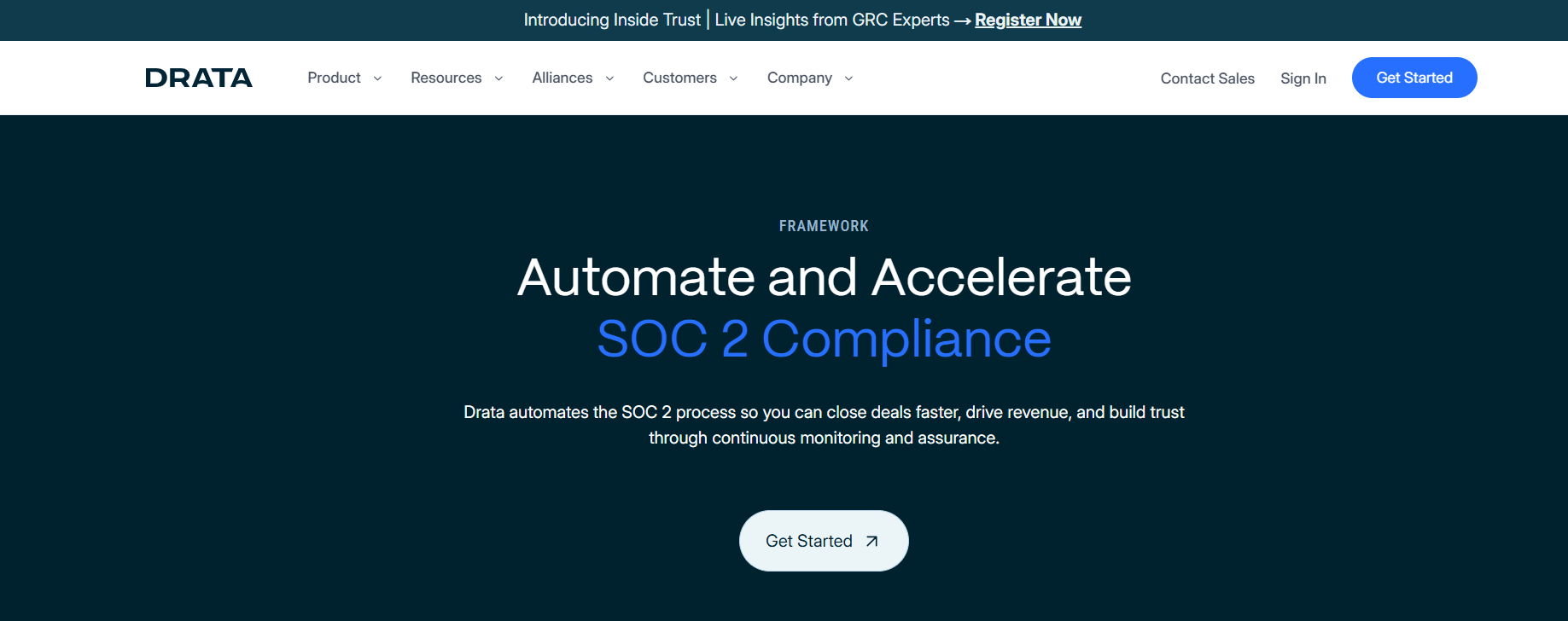
Drata is purpose-built for engineering-heavy teams that want deep automation, fine-grained workflow control, and a modern developer-friendly experience. Drata’s differentiators lie in the depth of its integrations, not just the count, and its highly configurable evidence collection workflows. It is especially favored by companies with strong DevOps maturity who want to treat compliance as code rather than a compliance officer’s manual task list.
Features
- 100+ native integrations with deep configuration options
- Automated evidence collection with continuous monitoring and real-time alerts
- Audit Hub — dedicated portal for real-time auditor collaboration
- AI-powered policy generation and gap analysis
Pros
- Deep integration configurations — superior for complex, non-standard tech stacks
- Excellent Audit Hub for smooth auditor handoff and collaboration
- Strong choice for companies with experienced security or DevOps teams
Cons
- Steeper learning curve than Vanta, requires more internal setup time
- Support responsiveness can be inconsistent at lower tiers
Timeline: 4-8 weeks
3. Secureframe
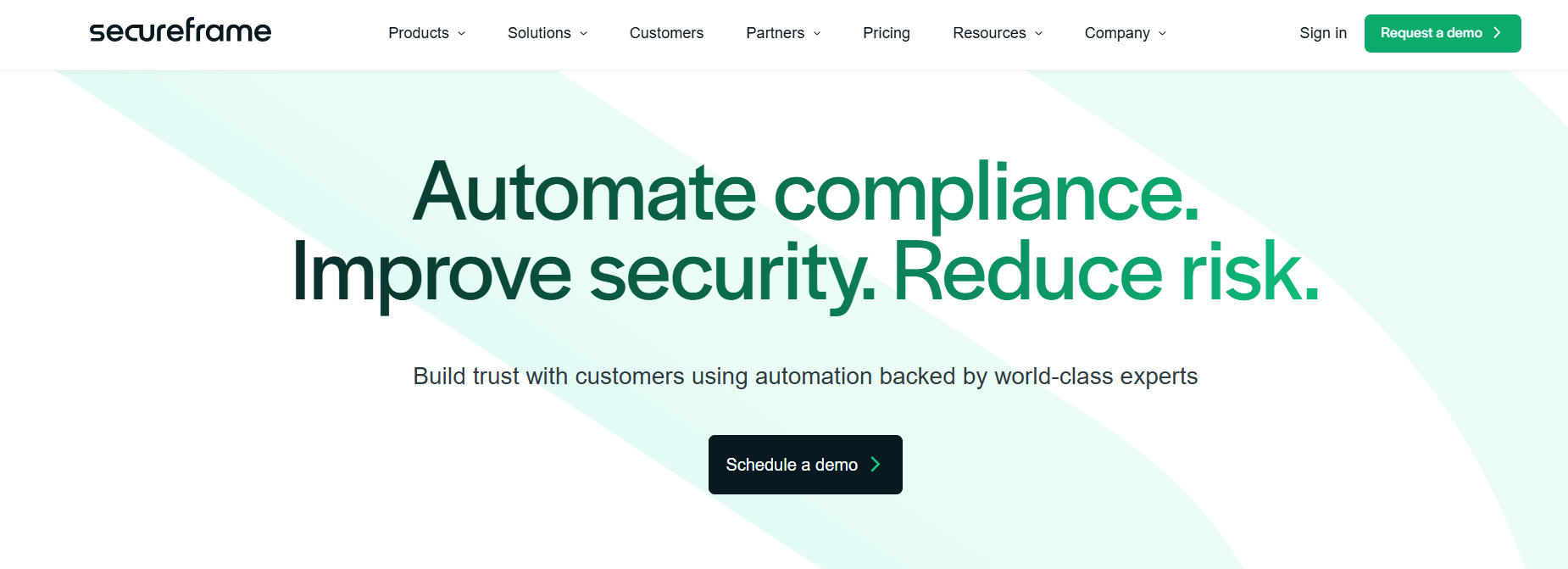
Secureframe occupies a sweet spot between pure automation platforms (Vanta, Drata) and full consulting engagements. Its key differentiator is blending software automation with direct access to in-house compliance experts, many of whom come from prior audit backgrounds. This means first-time compliance owners get both the tooling and the human guidance they need. The platform organizes SOC 2 controls into an actionable checklist, runs daily automated tests across 35+ frameworks, and connects to 300+ integrations. It is particularly well-suited for growth-stage companies managing SOC 2 alongside HIPAA or ISO 27001 simultaneously.
Features
- In-house compliance experts available within the platform (included)
- 200+ pre-built SOC 2 controls organized into a clear actionable checklist
- Multi-framework compliance (SOC 2, HIPAA, ISO 27001, PCI DSS, GDPR)
- Policy creation tools with customizable templates
Pros
- Built-in advisory support reduces need for expensive external consultants
- Excellent for teams without a dedicated security officer
- Simpler onboarding process than Drata for less-technical teams
Cons
- Smaller auditor network than Vanta or Drata
- Integration library slightly narrower than top competitors
Timeline: 4-6 weeks
4. Thoropass
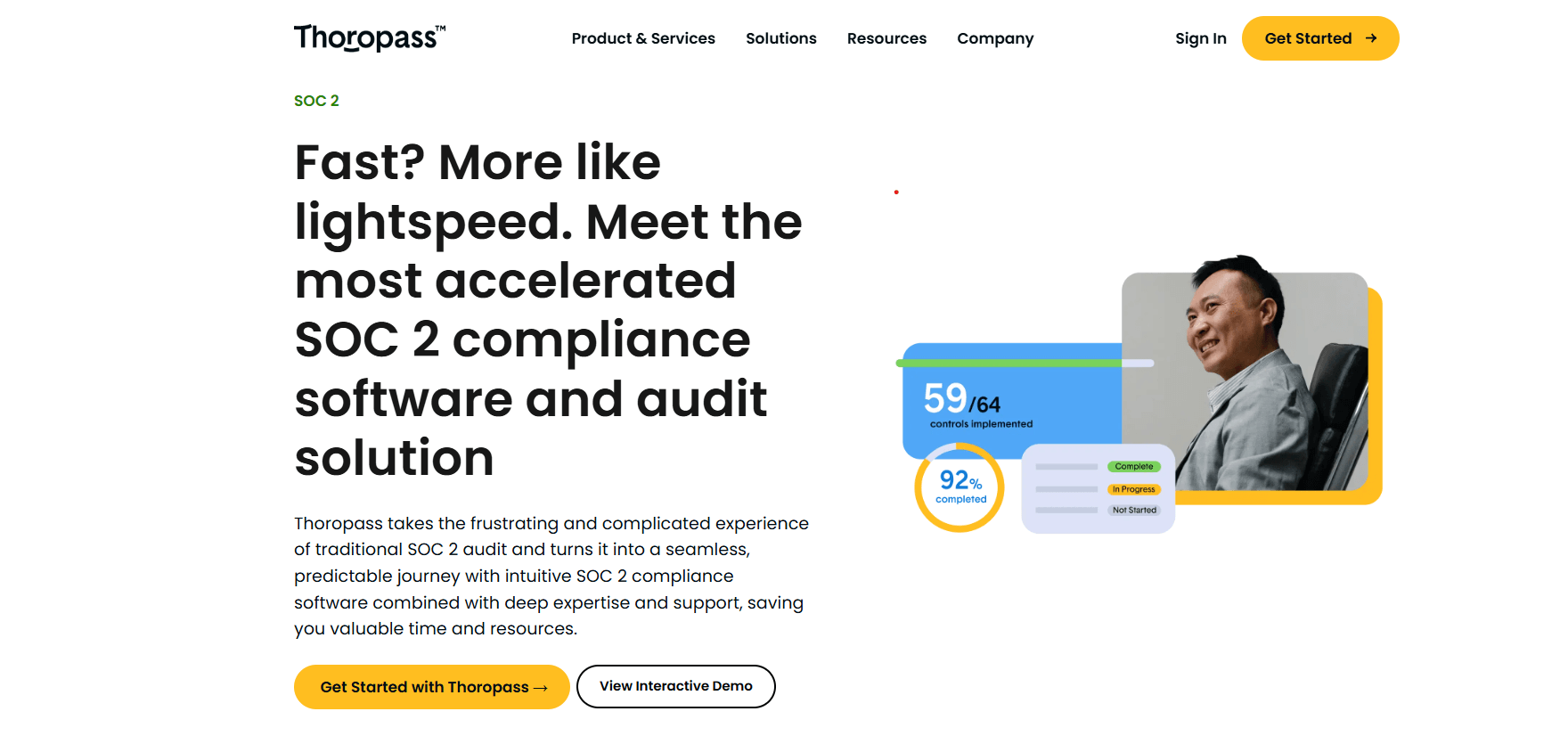
Thoropass (formerly Laika) is unique among automation platforms because it bundles the compliance software with in-house audit services, creating a true closed-loop, single-vendor certification experience. This means you do not need to source a separate CPA auditor, which eliminates a significant coordination overhead. Teams get a dedicated compliance manager, continuous evidence monitoring, and the audit itself, all under one contract. While this bundled model typically costs more upfront, it gives companies a highly predictable total compliance spend and removes the friction of managing two separate vendor relationships through the audit process.
Features
- Compliance platform + in-house audit services bundled in one contract
- 75+ native integrations covering major cloud, identity, and HR tools
- Dedicated compliance manager assigned per account
- Continuous evidence collection and real-time control monitoring
Pros
- Single vendor eliminates coordination friction between platform and auditor
- Predictable total compliance cost, platform + audit in one bill
- Dedicated compliance manager provides high-touch guidance
Cons
- Higher upfront cost than platform-only alternatives
- Auditor choice is locked to Thoropass — no flexibility to choose your own CPA
Timeline: 6-10 weeks
5. Sprinto
Sprinto has rapidly gained traction as the most budget-accessible tier-one compliance platform, starting as low as $4,000–$5,000 for smaller environments. It runs automated compliance tests twice daily (the highest frequency of any major platform), assigns remediation tasks directly to the responsible team members, and supports 20+ frameworks. Particularly popular with international companies, startups in APAC, and lean engineering teams, Sprinto provides access to pre-vetted auditors to cut coordination overhead further. It is the go-to choice for early-stage SaaS companies that need to check the compliance box without straining a constrained budget.
Features
- Direct task assignment to responsible team members for remediation
- Supports 20+ frameworks (SOC 2, ISO 27001, HIPAA, GDPR, PCI DSS)
- Pre-vetted auditor access network to reduce coordination friction
- Compliance zone configuration for multi-entity or multi-region setups
Pros
- Most affordable tier-one platform — starts at $4K–$5K/year
- Twice-daily test runs catch issues faster than most competitors
- Flexible compliance zone configuration suits international setups
- Direct remediation task assignment reduces internal coordination lag
Cons
- Integration depth is shallower than Vanta or Drata for complex configurations
- Less brand recognition with US enterprise buyers vs Vanta/Drata
Timeline: 4-8 weeks
6. Scytale
Scytale positions itself as the “compliance on autopilot” solution, designed for CTOs and founders who want to focus on building product, not on compliance documentation. Its standout feature is Scy, a dedicated AI GRC agent that guides teams through the entire SOC 2 process, reviews evidence, flags risks, and provides actionable next steps. The platform automates up to 90% of evidence collection while pairing the software with a team of dedicated compliance experts who handle complex policy customization and auditor queries. It earned multiple G2 Badges including “Fastest Implementation”, a fitting recognition for its speed focus.
Features
- Trust Center for sharing security posture with prospects
- AI-assisted security questionnaire responses
- Built-in penetration testing coordination and vulnerability risk registers
- Continuous control monitoring with real-time remediation guidance
Pros
- AI agent (Scy) makes the platform genuinely self-directing for small teams
- Dedicated compliance experts reduce need for internal security knowledge
- High automation percentage (up to 90%) vs industry average
Cons
- AI agent still requires human expert oversight for complex edge cases
- Best suited for SaaS — less optimized for non-cloud environments
Timeline: 4-8 weeks
7. Scrut Automation
Scrut Automation is a comprehensive GRC platform supporting more than 60 compliance frameworks, a breadth unmatched by most competitors. Serving 1,700+ customers across 65 countries, it is especially well-suited for multinational organizations and companies that need to layer multiple global certifications (ISO 27001, SOC 2, GDPR, PCI DSS) simultaneously without rebuilding processes for each. Pre-built controls and a content library mapped to SOC 2 Trust Service Criteria accelerate the readiness phase, while its 80+ integrations and real-time control monitoring keep teams audit-ready year-round. It holds a near-perfect 4.9/5 rating on G2.
Features
- Support for 60+ compliance frameworks — widest multi-framework coverage available
- Pre-built controls and policies mapped to SOC 2 Trust Service Criteria
- 80+ integrations with cloud, identity, dev, and HR tools
- Real-time control monitoring with automated evidence collection
Pros
- Unmatched multi-framework breadth — 60+ frameworks in one platform
- Excellent for international companies managing overlapping certifications
- Near-perfect G2 rating (4.9/5) with consistent praise for support
Cons
- Platform depth can overwhelm small startups doing their first SOC 2
- Pricing requires a custom quote — not ideal for quick budget estimation
Timeline: 4-8 week
8. A-LIGN
A-LIGN is one of the most prominent AICPA-accredited CPA firms specializing in SOC 2 audits, cybersecurity assessments, and compliance certifications. Unlike automation platforms, A-LIGN is an actual audit firm, it can issue the SOC 2 attestation report itself. It also conducts penetration testing, FedRAMP assessments, ISO 27001 certifications, HITRUST, and PCI DSS audits, making it a compelling single partner for companies facing multiple audit obligations. A-LIGN is known for its technical depth, transparent processes, and strong reputation with enterprise buyers who demand credible, well-known auditors on their reports.
Features
- A-SCEND proprietary compliance management platform for clients
- Dedicated senior auditor teams per engagement
- SOC 2 + FedRAMP combined assessment capabilities
- Industry specialization in healthcare, fintech, and government sectors
Pros
- Issues the actual SOC 2 attestation report — not just a readiness tool
- Highly recognized by enterprise buyers and regulated industry clients
- Covers nearly every major compliance framework in one firm
Cons
- More expensive than platform-partnered auditors — typically $15K–$50K+ for SOC 2
- Slower than platform-paired audit firms for early-stage startups
Timeline: 6-12 weeks
9. Schellman
Schellman is widely considered one of the most technically rigorous and respected SOC 2 audit firms in the industry. It is a top-tier choice for mid-market and enterprise companies that need an audit report that will pass the scrutiny of demanding enterprise buyers, investors performing due diligence, or regulated industries. Schellman’s auditors are known for their depth of knowledge, methodical approach, and ability to handle complex multi-cloud, multi-service environments that less specialized firms struggle with. If your customers include large financial institutions, healthcare systems, or government agencies, a Schellman report carries significant weight
Features
- AICPA-accredited CPA firm — issues formal SOC 2 attestation reports
- Specializations in SOC 2, ISO 27001, PCI DSS, FedRAMP, and HITRUST
- Deep technical audit capability for complex cloud and hybrid environments
- Compliance Readiness Assessment services prior to formal audit
Pros
- One of the most credible and technically rigorous audit firms available
- Reports carry high trust with demanding enterprise and regulated buyers
- Handles complex, non-standard environments other firms struggle with
Cons
- Longer timelines due to thoroughness — not the fastest option
- Primarily a traditional audit firm, not a software-automation platform
Timeline: 8-14 weeks
10. BAAR Advisory
BARR Advisory is a compliance partner firm that combines the functions of a cybersecurity consulting firm and a licensed CPA auditor. Its primary differentiation is deep expertise in regulated industries, healthcare (HIPAA, HITRUST), financial services, and government, and its reputation for treating clients as partners through a collaborative engagement model rather than an adversarial auditor relationship. BARR is particularly recommended for founders who are anxious about a stressful audit experience and want a partner who feels like an extension of their team, conducting gap assessments, building remediation roadmaps, and seeing the company through to certification.
Features
- AICPA-accredited, issues SOC 2 Type I and Type II reports directly
- Compliance programs for SOC 2, ISO 27001, HITRUST, FedRAMP, PCI DSS
- Advisory-first model, gap assessments and roadmaps before audit
- Deeply collaborative engagement model (partner-like, not adversarial)
Pros
- Highly collaborative — feels like an internal team extension, not an auditor
- Excellent for regulated industries (healthcare, finance, government)
- Combines advisory + audit in one firm — fewer vendors to manage
- vCISO service is valuable for companies without dedicated security leadership
Cons
- Higher cost than automation platform + partner auditor combinations
- Slower timeline than platform-driven approaches
Timeline: 8-12 weeks
11. Hyperproof
Hyperproof is a governance, risk, and compliance platform built for mature compliance programs running multiple frameworks simultaneously. It is less targeted at “first SOC 2” startups and more suited to mid-market and enterprise companies with existing compliance teams who need a centralized operations hub. Its collaborative workflow features, structured evidence management, and deep auditability make it an excellent platform for teams managing SOC 2, ISO 27001, NIST, and internal audit programs in parallel. Hyperproof is often shortlisted alongside Vanta and Drata for enterprise evaluations where customization, cross-team collaboration, and GRC depth outweigh pure speed of onboarding.
Features
- Centralized compliance operations hub for multi-framework programs
- Deep cross-team collaboration features for compliance, security, and engineering
- Automated evidence collection with structured audit trails
- Risk management with detailed risk registers and treatment plans
Pros
- Excellent for mature compliance programs managing 3+ frameworks concurrently
- Deep customization for non-standard control environments
- Strong cross-team collaboration tools, ideal for larger organizations
- Rigorous evidence trail management satisfies demanding enterprise auditors
Cons
- Not well suited to first-time SOC 2 startups, steep learning curve
- Slower onboarding and setup time than Vanta or Securefr
Timeline: 6-10 weeks
12. AuditBoard (optro)
AuditBoard (recently rebranded as Optro) is the legacy enterprise giant of the GRC world, designed for Fortune 500 companies with internal audit departments, large compliance teams, and complex regulatory requirements spanning dozens of frameworks. It is robust, feature-complete, and widely recognized among large enterprise buyers. However, for modern SaaS companies trying to move fast, AuditBoard is often a mismatch, its implementation timelines are long, its cost is high, and its UI lags behind the modern automation platforms. That said, for large enterprises where compliance credibility, audit committee reporting, and deep internal audit integration matter, AuditBoard remains a leading option in 2026.
Features
- Enterprise-grade compliance management across all major frameworks
- Internal audit management with full workflow automation
- SOX, SOC 2, ISO 27001, PCI DSS, NIST, and 30+ framework support
- Risk management with enterprise risk registers and board-level reporting
Pros
- Enterprise-grade power and depth for large internal audit programs
- Widely recognized and trusted by Fortune 500 compliance and audit teams
- Comprehensive SOX and internal audit capabilities unmatched by startups
Cons
- Lacks the agile automation of newer compliance platforms
- Major overkill for startups and SMBs pursuing their first SOC 2
Timeline: 10-16 weeks