Not all SOC 2 firms for early stage startups operate the same way. Some focus on software automation platforms, giving teams tools to manage readiness themselves, while others are full-service auditing firms that conduct formal audits and issue official SOC 2 reports. Many early-stage startups benefit from combining both approaches, as this balance affects the speed of preparation, total cost, and the overall effectiveness of the resulting compliance program. Selecting the right SOC 2 firms for early stage startups ensures that teams can build a solid security foundation while meeting audit requirements efficiently.
For early-stage startups, the choice of provider often depends on the size of the team and the complexity of the business systems. Software platforms usually automate evidence collection, monitor controls continuously, and provide dashboards that highlight gaps, which reduces manual work and keeps small teams on track. Full-service auditing firms, on the other hand, offer expert guidance, validate controls, and provide a level of assurance that enterprise clients often require during procurement. Startups that integrate both types of providers often find that they not only speed up the audit process but also build repeatable compliance practices that scale as the company grows.
Here are top 12 best SOC 2 firms for early stage startups, covering features, pricing, pros and cons, and use cases so you can make the right call for your stage, stack, and budget.
Top 12 Best SOC 2 Firms for Early Stage Startups

Vanta stands out as the most widely used compliance automation platform for early-stage startups. Trusted by over 14,000 companies, it has become the go-to solution for cloud-native SaaS teams pursuing their first SOC 2 report. The platform combines automation with clear guidance, helping teams complete compliance tasks quickly without needing a full-time compliance officer. In addition, it monitors systems continuously, so teams can catch gaps early and maintain readiness throughout the year.
Features
- • Runs more than 1,200 automated tests across 400+ integrations, including AWS, Azure, GCP, GitHub, Okta, Slack, and Google Workspace• Continuous monitoring that keeps compliance current year-round, not only at audit time• Pre-built SOC 2 policy templates designed for non-compliance teams to adopt immediately• Step-by-step in-app guidance that walks startup teams through every requirement• Vetted network of partner auditors familiar with Vanta, which speeds up audit coordination• Cross-framework mapping for ISO 27001, HIPAA, GDPR, PCI DSS, and 35+ additional frameworks
Pricing
- SOC 2 plans start at around $10,000 per year for early-stage teams
- Pro and Enterprise packages may cost $30,000–$80,000+ depending on employees, frameworks, and audit add-ons• Startup program offers discounted pricing for very early-stage companies (audit fees are separate and paid to CPA firms)
Best Use Case
Vanta works best for seed-to-Series A SaaS startups with cloud-native infrastructure (AWS, GCP, or Azure). Teams that need fast SOC 2 Type I or Type II readiness without hiring a dedicated compliance person benefit most. The platform also supports scaling into enterprise markets through cross-framework mapping and a broad auditor network.
Pros
- Largest integration library in the market (400+)
- Widest auditor network — most CPA firms know the platform
- Fast onboarding; many teams achieve audit readiness within weeks
- Excellent documentation and in-app guidance
- Supports 35+ frameworks for future compliance expansion
Cons
- Base pricing ($10K+) may feel steep for pre-revenue startups
- Advanced features require higher-tier subscriptions.
Drata competes closely with Vanta and attracts engineering-driven teams that want deep technical automation, developer-stack integrations, and an enterprise-ready interface. The platform monitors hundreds of controls continuously and updates compliance scores in real time. Teams gain immediate insight into gaps and risk, which allows them to act before auditors start their review. In addition, Drata integrates directly with engineering workflows, so developers can manage compliance without leaving familiar tools.
Features
- Compliance-as-Code workflows that convert SOC 2 requirements into automated, code-driven processes integrated with CI/CD pipelines
- Compliance dashboards with control-level visibility for accurate tracking of audit readiness
- Audit Hub, which centralizes evidence, documentation, and auditor collaboration to reduce back-and-forth during audits
- Vendor Risk Management module that evaluates and monitors third-party vendors using automated workflows
- Pre-mapped risk library with over 150 pre-built risks, customizable scoring, and live risk dashboards
- Support for more than 20 compliance frameworks, including SOC 2, ISO 27001, HIPAA, GDPR, and PCI DSS.
Pricing
- Entry-level plans start around $7,000–$7,500 per year
- Mid-tier plans typically cost about $15,000 per year
- Larger deployments may exceed $40,000 annually
- Audit fees are billed separately
- Founders can negotiate pricing based on team size and the number of frameworks in use
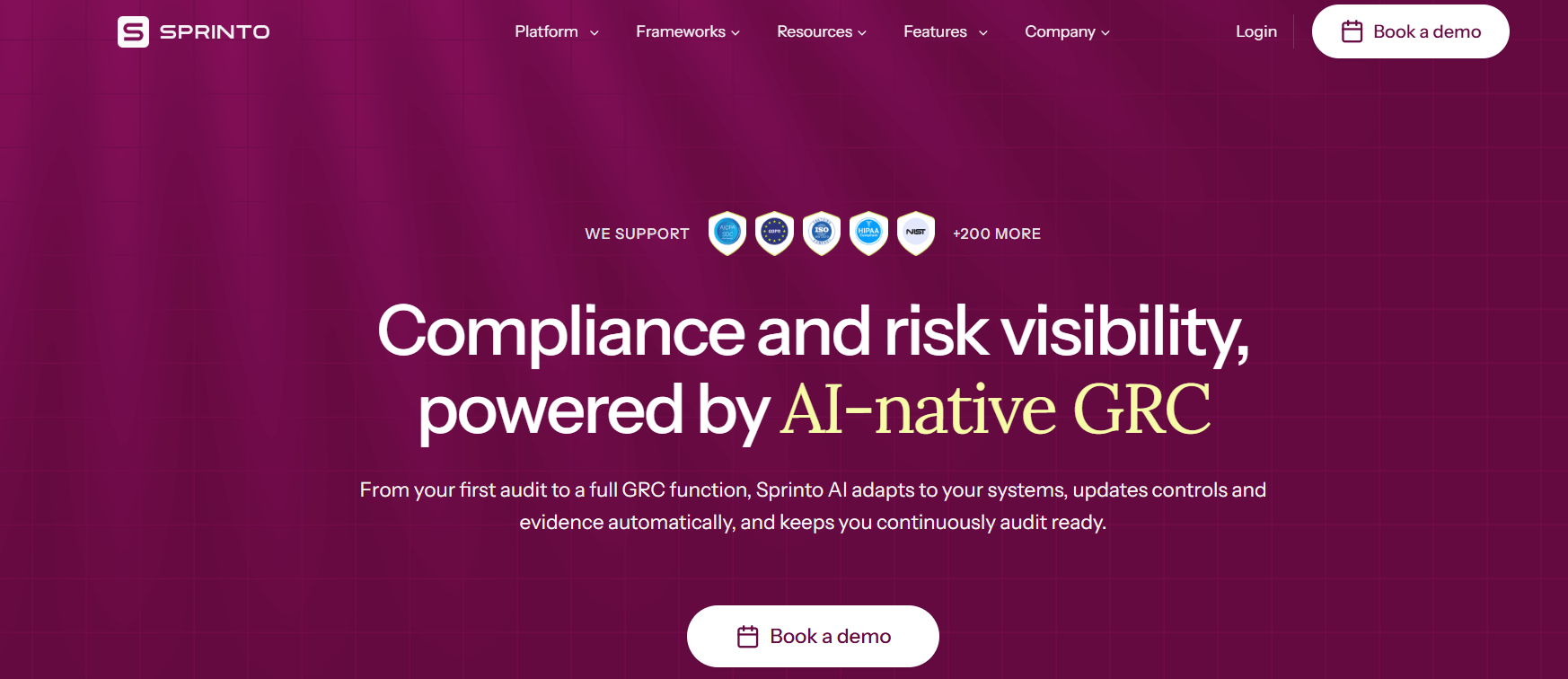
Sprinto is an AI-native, cloud-first compliance automation platform that launched in 2020. The company designed it specifically for fast-growing SaaS startups that want to reach SOC 2 readiness without building a large compliance team. The platform automates a significant portion of compliance work, which allows engineering teams to focus on product development while the system tracks controls in the background. In addition, Sprinto connects directly with common cloud infrastructure and development tools, so teams collect evidence and monitor systems without relying on manual documentation.
Features
- Connects with more than 200 cloud and developer tools, including AWS, Azure, GCP, GitHub, Okta, and Google Workspace
- Provides pre-approved compliance programs that teams can activate quickly during initial setup
- Detects missing configurations and then sends reminders to responsible team members to correct them
- Monitors compliance status in real time across more than 15 frameworks such as SOC 2, ISO 27001, GDPR, HIPAA, PCI DSS, and CMMC
- Includes built-in device security checks for companies that do not operate a separate device management system.
Pricing
Pricing depends on company size and compliance scope, although it often costs less than well-known competitors such as Vanta or Drata.
Best Use Case
Sprinto works particularly well for seed-stage and pre-Series A startups that want fast SOC 2 readiness while operating with a limited compliance budget. Companies without dedicated compliance engineers can still progress through the certification process with structured guidance and automation support.
Pros
- High automation coverage reduces engineering effort during compliance preparation
- Access to compliance experts from the beginning of the engagement
- Fast path to audit readiness for many startups
- Pre-approved compliance programs reduce early setup work
Cons
- Fewer integrations than some competitors such as Vanta or Drata.
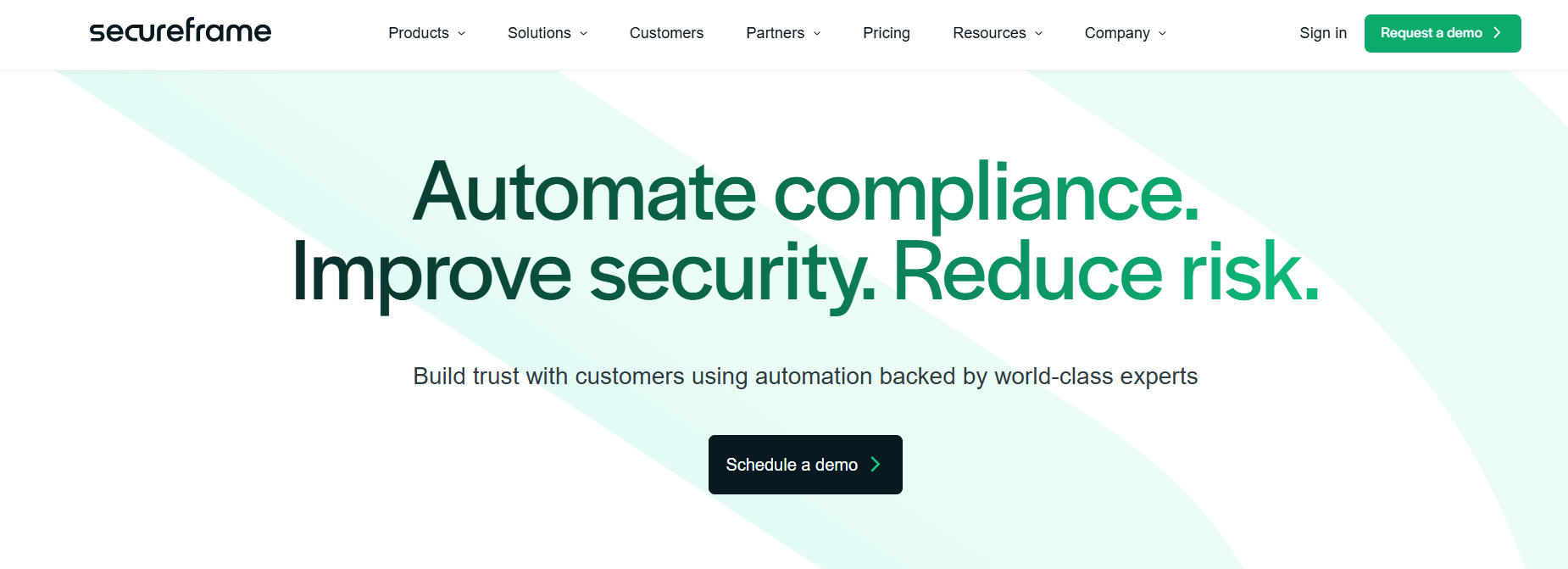
Secureframe built its reputation on helping founders and operations teams approach SOC 2 without prior compliance experience. The platform guides users through the entire process with a clear, checklist-style workflow. In addition, it explains each step in simple language, which helps teams understand expectations without relying on technical experts. Consequently, organizations move from readiness assessment to the final audit report with greater clarity and fewer surprises. At the same time, Secureframe supports multiple compliance frameworks, so companies manage security and regulatory work from a single platform.
Features
- Built-in security awareness training and policy acknowledgment workflows that help startups establish security practices early
- Automated background check integration for new employees, which supports a common compliance control many startups overlook
- Comprehensive policy template library that allows teams to adopt prewritten policies immediately instead of drafting documents from scratch
- More than 150 integrations across cloud providers, identity platforms, HR tools, and additional systems
- Multi-framework coverage that includes SOC 2, ISO 27001, HIPAA, GDPR, PCI DSS, FedRAMP, CMMC, and AI governance frameworks.
Pricing
Pricing typically begins around $7,500–$8,000 per year for companies with up to 100 employees. Costs increase depending on team size, frameworks selected, and optional modules.
Best Use Case
Secureframe works especially well for non-technical founders and operations-led teams that want structured guidance during their first compliance effort. In addition, organizations in regulated sectors such as healthcare technology or fintech often choose Secureframe when they must pursue SOC 2 together with HIPAA or PCI DSS from the start. Furthermore, startups with limited engineering capacity benefit from a system that handles many compliance tasks automatically while still providing step-by-step direction.
Pros
- Clear interface that many users find easy to navigate
- Strong option for non-technical buyers who prefer guided workflows
- Broad framework coverage including FedRAMP and CMMC#Built-in employee training and background check integration
- Advisory support included rather than a purely self-serve system
Cons
- Integration library smaller than some competitors such as Vanta
- Auditor network is smaller, so teams should confirm CPA compatibility first
- Some users report occasional integration sync issues that require manual retries
- Advisory services may overlap with external consultants, which can increase costs
- Less suitable for organizations with heavily customized or developer-driven compliance programs
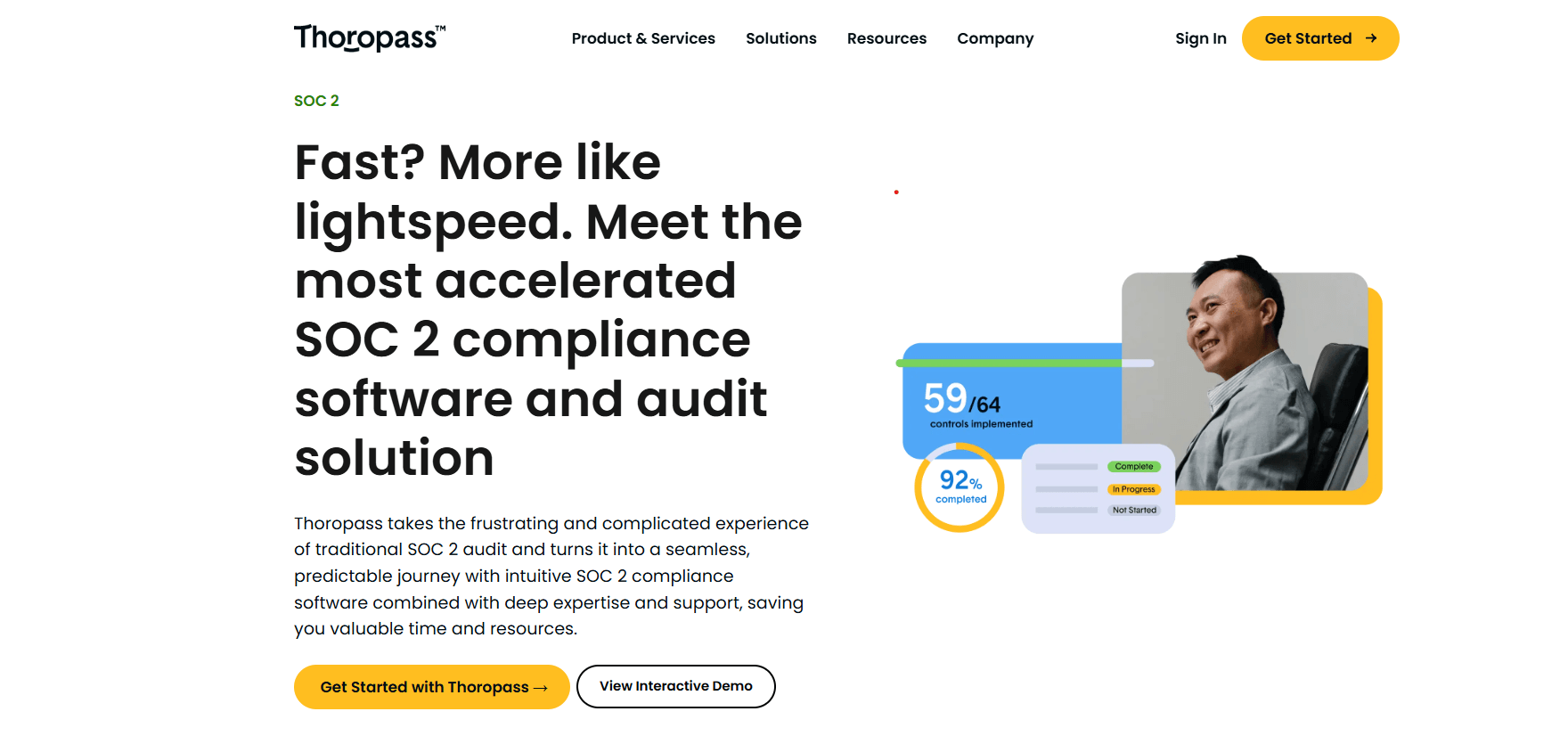
Thoropass combines compliance software with internal audit services inside one system. Instead of using one platform for readiness and then searching for a separate CPA firm, companies complete both steps through the same provider. Consequently, teams avoid complicated vendor coordination while maintaining a single workflow from preparation to the final audit report. In addition, the platform guides organizations through each stage of SOC 2 compliance while its auditors handle the official review. Therefore, startups gain a clearer path to certification and spend less time managing multiple external partners.
Features
- All-in-one audit model where internal auditors manage readiness and perform SOC 2 Type I and Type II audits
- First Pass AI checks collected evidence for completeness before auditors review it
- Continuous monitoring across SOC 2, ISO 27001, HIPAA, GDPR, CCPA, and PCI DSS frameworks
- More than 100 integrations with cloud infrastructure, identity tools, and common business applications
- Built-in project management tools for milestone tracking, task assignments, and compliance deadlines
Pricing
- Typically between $8,000 and $27,000 depending on company size, framework scope, and audit requirements
Best Use Case
Thoropass suits early-stage startups that prefer minimal vendor coordination and predictable compliance spending. In addition, the platform provides one point of accountability from readiness through the final SOC 2 report, which simplifies the overall process for smaller teams.
Pros
- Single provider handles both the platform and the audit process
- Predictable overall cost since software and audit services come together in one package
- AI detects missing or incomplete evidence before auditors review it
- • AI-generated questionnaire responses help teams answer enterprise security reviews faster
- Internal auditors already understand the platform, which reduces repeated document requests
- Works well for companies that want hands-on guidance throughout the compliance journey
Cons
- Some users report switching auditors during engagements, which may create inconsistency
- Platform navigation can feel confusing for some teams
- Supports fewer compliance frameworks compared with broader enterprise platforms
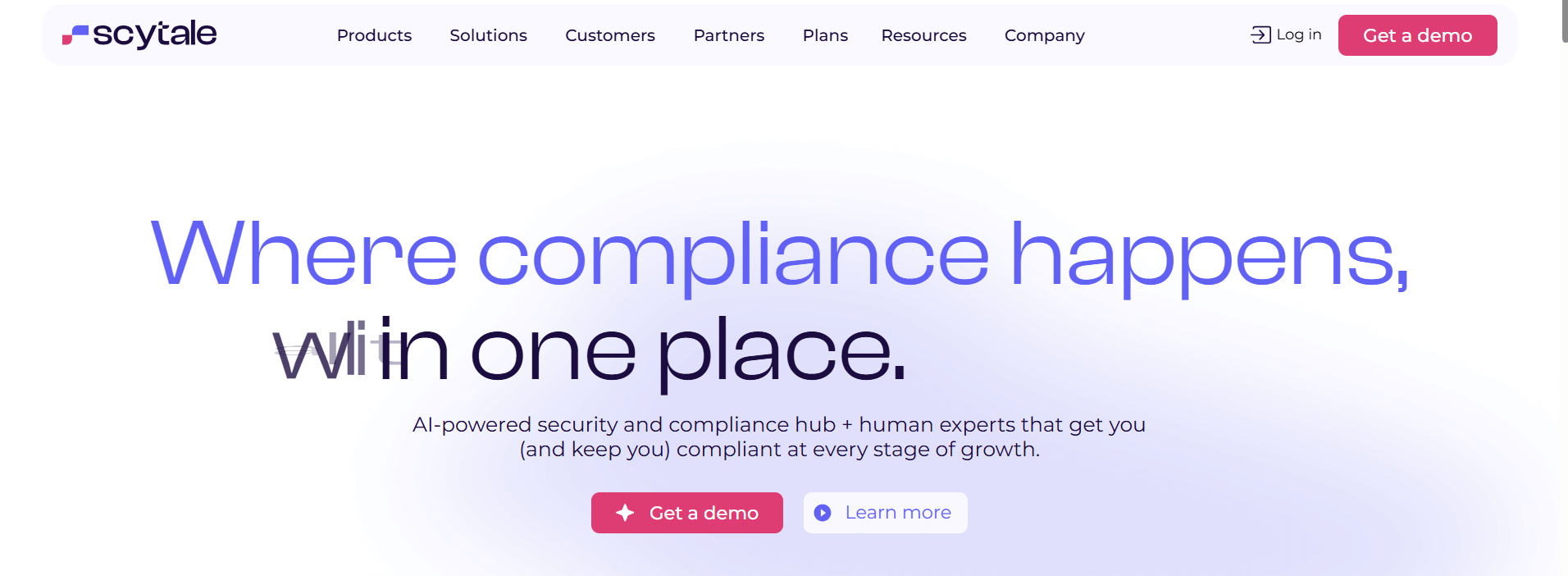
Scytale operates as an AI-powered compliance automation platform that combines automation with direct support from experienced GRC professionals. Many early-stage startups struggle during their first compliance program, especially when internal security knowledge remains limited. Therefore, Scytale assigns a dedicated compliance specialist to every customer. This specialist guides the team through each stage of the SOC 2 journey while also helping interpret technical requirements and documentation expectations. In addition, the platform automates many compliance tasks, which reduces manual effort and allows teams to focus on product development and growth priorities.
Features
- Support for more than 40 frameworks including SOC 2, ISO 27001, PCI DSS, HIPAA, GDPR, CCPA, and emerging AI governance frameworks
- Cross-framework intelligence that reuses evidence and controls across certifications, which reduces duplicated work during multi-framework compliance efforts
- Integrated asset inventory that tracks systems, users, and vendors to maintain full visibility into compliance scope
- Automated policy builder that generates policies aligned with SOC 2 and ISO 27001 based on connected systems and integrations.
Pricing
Scytale publishes packaged plans publicly; however, the company does not display fixed pricing tiers. Interested buyers typically contact the sales team for a customized quote. The platform generally sits in the mid-level pricing category.
Best Use Case
Scytale works well for startups that have no internal compliance expertise and want more than a simple software tool. Instead, these companies receive ongoing guidance from a dedicated compliance partner who helps them move through each stage of their first SOC 2 engagement while maintaining clarity around requirements and timelines.
Pros
- Dedicated compliance expert assigned to every customer from the beginning
- Scy AI agent provides advanced assistance for first-time compliance teams
- More than 40 supported frameworks with shared evidence across certifications
Cons
- Some users report bugs or inconsistencies in features such as policy assignment
- Certain niche tools lack direct integrations and require manual configuration.
Scrut Automation presents itself as an intelligent GRC platform that focuses on risk management rather than treating compliance only as an audit checklist. The platform examines your environment first and then connects security controls to the risks your company actually faces. In addition, cloud-native startups that run workloads on AWS, Azure, or GCP often adopt Scrut when they want visibility into their cloud security posture while also preparing for SOC 2. Therefore, teams monitor security and compliance together instead of handling them through separate tools. Furthermore, this approach helps organizations address security concerns earlier while still preparing documentation for auditors.
Features
- Transparent subscription pricing with all features included and no add-on modules or hidden fees
- Audit reports and compliance status directly with enterprise prospects
- Risk-driven approach that begins with a business risk assessment before connecting controls
- Vendor risk assessment tools with questionnaires and automated document tracking
Pricing
- Custom pricing available through direct consultation with the Scrut team
Best Use Case
Scrut works best for cloud-native startups that want deep cloud security posture monitoring alongside SOC 2 preparation. In addition, teams operating in regulated sectors such as healthcare or fintech often adopt it when they must track risk continuously. Furthermore, organizations running multi-cloud environments benefit from its risk-first approach rather than relying on simple checklist compliance.
Pros
- Support for 60+ frameworks with cross-mapping that reduces duplicated evidence collection
- Risk-first methodology that strengthens actual security posture instead of focusing only on documentation
- Often reported as more affordable than Vanta or Drata
- Trust Vault portal enables transparent sharing of compliance status with enterprise prospects
Cons
- Some users report occasional performance issues and slower page loading times.
Strike Graph built its product philosophy around one idea that many SOC 2 providers for early-stage startups overlook: not every startup needs hundreds of controls. Instead of applying a one-size-fits-all control library, the platform begins with a risk assessment of your business and generates a control set sized for your actual needs. Consequently, teams adopt a compliance program that reflects real risk rather than copying a generic framework. This approach allows startups to start lean and expand as complexity grows, while still maintaining strong security practices.
Features
- Risk-based framework that starts with a detailed assessment to create a control set appropriate for the business
- AI-powered compliance guidance to help build and manage security programs, collect audit evidence, and achieve certifications
- Centralized interface for managing compliance tasks with guided workflows and automation that reduce manual effort
- Multi-framework support including SOC 2, HIPAA, ISO 27001, NIST, CMMC, and GDPR in one platform
- Scalable design that grows with the company, letting startups start small and expand controls as needed
Pricing
• $9,000/year — entry-level program
• Certify: starting at $18,000/year
• Scale: starting at $27,000/year for enterprise needs
Best Use Case
Strike Graph works best for founders frustrated with platforms that force them to implement hundreds of unnecessary controls. Seed-stage startups benefit most, as the platform allows them to implement SOC 2 properly from the start without over-engineering a program built for much larger companies.
Pros
- Right-sized approach avoids over-engineering compliance for early-stage teams
- Risk-driven control design builds genuine security maturity
- Scales cleanly from seed stage to growth stage without requiring platform migration
- Supports multiple frameworks within a single, right-sized program
Cons
- Less brand recognition among enterprise auditors verify compatibility
- Support team may have less capacity than larger vendors during peak demand.
A-LIGN operates as a technology-enabled security and compliance firm that focuses primarily on professional auditing services rather than compliance software. Many early-stage startups turn to A-LIGN when they reach the audit stage, especially after completing readiness preparation with tools such as Vanta or Sprinto. At that point, companies need an AICPA-accredited CPA firm that can conduct the audit in a structured and dependable way. In addition, A-LIGN handles a high number of SOC 2 engagements each year, which helps the firm maintain consistent processes and experienced audit teams. The company also developed its own compliance management system, A-SCEND, which organizes audit tasks and keeps communication clear between clients and auditors.
Features
- A-SCEND compliance management tool that organizes audit tasks, assigns responsibilities, and keeps evidence requests visible to all participants
- High-volume SOC 2 audit experience supported through hundreds of annual reports across startup and enterprise environments
- Technology-supported audit process that reduces repeated document requests and simplifies auditor coordination
- Support for SOC 2 Type I and Type II along with ISO 27001, PCI DSS, HIPAA, FedRAMP, and HITRUST engagements.
Pricing
• Quote-based pricing that adjusts according to audit scope, company size, and selected frameworks
Best Use Case
A-LIGN works best for startups that have already completed readiness preparation and now need an accredited auditor to perform the official SOC 2 assessment. In many situations, companies reach this stage after implementing controls through platforms such as Vanta or Sprinto. Therefore, once preparation is complete, A-LIGN can conduct the audit with a predictable structure and defined timeline. This option becomes especially valuable when startups pursue their first major enterprise contract and must present a SOC 2 report within a fixed deadline.
Pros
- Efficient audit execution supported through well-established processes
- A-SCEND platform keeps evidence requests organized and visible
- Strong reputation with enterprise buyers reviewing SOC 2 reports
- Supports multiple compliance frameworks alongside SOC 2
- Technology-supported workflow reduces administrative effort for internal teams
Cons
- Operates primarily as an audit firm rather than a readiness preparation platform
- Less suitable for startups that have not completed compliance preparation.
Prescient approaches SOC 2 audits differently from many traditional firms. Instead of treating compliance as a paperwork exercise, the team studies a company’s real cybersecurity risks first and then builds the audit process around those findings. Consequently, the compliance program focuses on meaningful protections rather than unnecessary controls. Furthermore, this approach helps founders understand why each control exists, which makes the entire audit feel practical instead of symbolic.
In addition, Prescient designed its commercial model with startup founders in mind. The firm provides direct access to senior partners and encourages open communication throughout the engagement. Therefore, teams ask questions quickly and receive guidance without navigating layers of account managers.
Features
- Direct phone access to firm partners during the engagement, which ensures founders communicate with decision-makers instead of only support staff
- Dedicated Slack channels for unlimited questions and ongoing guidance during preparation and audit stages
- Acceptance of AWS, Azure, and Google Cloud marketplace credits for audit fees
- Flexible payment structures designed to accommodate startup cash flow cycles
- Bundled audit options for SOC 2 with ISO 27001 or SOC 2 with ISO 42001, which supports companies building AI and machine learning systems.
Pricing
• Request a formal quote from the firm based on engagement scope
Best For
B2B SaaS startups from early stage through Series A and growth phases that prefer an auditor who communicates in technical language rather than traditional accounting terms. In addition, fintech and AI or machine learning companies benefit from Prescient’s combined certification capabilities, especially when enterprise buyers request both SOC 2 and AI governance standards.
Pros
- Risk-focused audit approach produces a compliance program that reflects real operational risks
- Cloud marketplace credit acceptance allows startups to offset audit costs with existing credits
- SOC 2 combined with ISO 42001 offers strong value for AI companies facing governance expectations
- International compliance experience supports SaaS companies expanding into global markets
Cons
•Limited availability during busy periods may delay engagements for new early-stage clients
BARR Advisory focuses on organizations that manage sensitive or high-value data in regulated sectors such as healthcare, financial services, and government technology. The firm builds compliance programs that connect several frameworks instead of treating each one separately. Therefore, companies that must satisfy multiple standards can manage those obligations through one coordinated approach. In addition, BARR supports frameworks such as SOC 2, ISO 27001, HITRUST, FedRAMP, and PCI DSS within the same program. Consequently, startups operating in regulated industries receive guidance that reflects real security and regulatory expectations. Early-stage teams often value this expertise, especially when they face strict data protection requirements and complex customer demands. Furthermore, BARR’s advisors explain compliance requirements in practical terms, so founders and engineering teams understand how those requirements translate into everyday security practices.
Features
- Integrated compliance programs covering SOC 2, HITRUST, FedRAMP, and ISO 27001 together rather than separately
- Gap identification and remediation planning during audit preparation
- Practical guidance that converts compliance requirements into real security improvements
Pricing
Audit fees are custom-quoted depending on project scope, industry requirements, and frameworks selected.
Best Use Case
Early-stage startups that handle sensitive data in regulated industries, particularly healthcare technology, financial services platforms, and government-adjacent software. This option suits founders who value strong advisory relationships and detailed security guidance more than the lowest possible audit cost.
Pros
- Deep experience with regulated industries such as healthcare, financial services, and government technology
- Senior experts stay involved throughout the engagement rather than appearing only during kickoff meetings
- Strong HITRUST support, which many healthcare SaaS companies require alongside SOC 2
- Security improvement focus that helps startups strengthen controls while preparing for audits
- Well-established reputation among companies operating in regulated environments
Cons
- Higher pricing compared with smaller boutique audit specialists due to the depth of advisory involvement
Schellman stands out as an audit partner for early-stage startups through its strict focus on IT compliance, attestation, and cybersecurity. The firm concentrates entirely on these disciplines, and it does not divide its attention across financial audits, tax services, or unrelated consulting work. Therefore, every auditor builds deep familiarity with compliance frameworks and modern security expectations. In addition, this focus leads to sharper audit questions, clearer evidence requests, and reports that enterprise procurement teams often recognize and respect. Consequently, startups working toward enterprise contracts gain an audit partner that understands how security documentation influences purchasing decisions.
Features
- Fixed-fee engagement model that confirms total audit cost before signing and prevents unexpected billing
- Draft SOC 2 reports delivered within about three weeks after audit completion
- Final SOC 2 reports issued in under 30 days for faster certification timelines
- Direct access to senior experts and firm principals during the entire engagement
- Exclusive focus on IT compliance and cybersecurity, which supports understanding of cloud systems, CI/CD pipelines, and SaaS security practices.
Pricing
• Typically start around $15,000 or more
• Final cost depends on company size, technical complexity, and audit scope
Best Use Case
Early-stage startups that sell to Fortune 500 companies, financial institutions, government contractors, or other heavily regulated sectors often select Schellman. In addition, the firm’s reputation helps strengthen credibility during enterprise procurement reviews. Therefore, companies presenting a SOC 2 report from Schellman often signal a high level of trust and audit quality to potential buyers.
Pros
- Fixed-fee model prevents unpredictable costs for startups managing tight budgets
- Fast audit turnaround, with drafts delivered in about three weeks and final reports within a month
- SOC 2 Essentials program created specifically for early-stage startups
Cons
- Structured audit process may feel rigid for startups running highly unusual or experimental technology stacks.
Selecting the best SOC 2 firms for early-stage startups depends largely on your company’s stage of growth. However, the decision also depends on how much guidance your team needs and which enterprise markets you plan to enter. Some startups require hands-on support and structured onboarding. Meanwhile, others prefer automation tools that allow internal teams to manage most compliance tasks independently. Therefore, founders should evaluate each firm carefully and consider how well its approach fits their internal resources, technical maturity, and long-term security goals.
At the same time, one principle stays the same regardless of the firm you select. SOC 2 does not function as a one-time checkbox or a short-term project. Instead, it represents an ongoing operational standard that shows enterprise buyers, investors, and partners that your startup treats data protection seriously. Startups that view SOC 2 as a long-term strategic capability often gain stronger credibility in competitive markets. These companies also focus on building real security practices rather than completing documentation for the sake of passing an audit. Over time, this approach strengthens trust with enterprise customers and helps young companies compete with more established organizations