

Supplier Risk Management Software helps organisations manage risks associated with third-party vendors. These platforms facilitate the identification and continuous monitoring of potential risks, including financial instability, geopolitical concerns, and compliance challenges, and also enable a comprehensive analysis of their holistic impact. Furthermore, they support the coordination of both operational and strategic responses to mitigate these risks effectively. Supplier risk management aims to help organizations reduce prioritized risks across the entire supply chain, encompassing both physical and digital domains.
When choosing a platform, consider factors such as integration capabilities, customizable workflows, data privacy features, and scalability to ensure the solution fits your organization’s needs.
Supplier risk management software empowers you to quickly identify, manage, and mitigate the risks associated with your vendors and service providers. Prevent potential disruptions across your entire supply chain, protect your organisation, strengthen resilience, and maintain compliance.
TOP 12 Best Supplier Risk Management Software

SecurityScorecard provides tools to companies concerned about cybersecurity threats that their suppliers and service providers may encounter. With continuous monitoring capabilities, parent companies can spot vulnerabilities before they are gravely impacted. This solution revolutionizes third-party supplier risk management through continuous, non-intrusive monitoring of vendor security postures. Instead of relying solely on questionnaires and periodic assessments, SecurityScorecard analyzes publicly observable security signals to rate vendor cybersecurity. The platform monitors millions of organizations globally, providing instant risk insights without requiring vendor cooperation.
Features
- SecurityScorecard rates vendor cybersecurity continuously by analyzing DNS health, patching cadence, network security, and other observable factors
- The software monitors your vendor portfolio automatically, alerting you when security scores deteriorate or breaches occur
- The system also benchmarks vendor security against industry peers, so you can contextualize risk scores
- Additionally, it identifies the attack surface by discovering vendor digital assets, including IP addresses, domains, and cloud resources
- Finally, the system tracks vendor supply chains to uncover fourth-party risks from your vendors’ vendors
Pricing
- Basic: $30,000 annually
- Enterprise: $100,000
Best For
SecurityScorecard is best suited for organizations where cybersecurity represents the primary third-party risk concern—particularly technology companies, financial services firms, and healthcare providers.
2 UpGuard

Upguard is a popular third-party supplier risk management software that gives you complete visibility into vendor risks and your potential attack surfaces by conducting different assessments. Firstly, it asks vendors to submit SOC 2 audit reports and other compliance reports as evidence. Along with that, it performs a vendor assessment where it examines security ratings and other routine checks.
Features
- UpGuard automatically organizes the vendor risks by severity, making it easier for your team to decide which risks need immediate remediation and which ones are less critical and can be tackled later.
Its VRM tools allow organizations to assess risks, monitor security postures, and receive alerts if the vendor’s security status changes.
- This third-party supplier risk management software gives you the flexibility to schedule the intervals for vendor risk assessments (i.e., how often you want to conduct the review).
- The software integrates over 90 tools, eliminating manual hand-offs and saving time.
Pricing
- Starter costs: $1,599 per month
- Professional: 3,333 per month
- Enterprise: Custom pricing based on your needs
Best For
UpGuard is ideal for regulated industries, technology or SaaS companies, and businesses managing multiple third-party or fourth-party relationships.
3. Venminder

Venminder offers pre-built, customizable workflows that your team can run to automate the risk assessment process seamlessly. This will save their time and reduce the risk of overlooking critical steps. Additionally, this third-party risk management software generates detailed reports that outline identified risks and their potential impacts after each assessment. These reports can help guide your decision-making process, such as renewing existing vendors’ contracts.
Features
- Venminder offers a Venmonitor tool that tracks all critical risk domains like business health, data privacy, data, and KYV (Know your vendor) data.
- This third-party risk management software provides SLA tracking features that monitor each vendor’s performance against agreed-upon service level agreements (SLAs).
- The platform assesses cybersecurity risk by analyzing vendor security practices, certifications, and third-party security ratings
- This solution offers managed services where Venminder’s analysts can conduct assessments, review documentation, or manage your entire TPRM program
Pricing
Starting price: $25,000 annually
Enterprise: $50,000 to $150,000+ annually
4. Aravo

Aravo’s supplier risk management software provides a structured setup that makes it much easier for the teams to access, review, and evaluate critical vendor-related details effectively. It organizes all vendor-related information (like firmographic data and risk level details) in one centralized inventory.
Features
- Aravo automates end-to-end processes with just a few clicks to streamline and simplify vendor risk management
- The solution allows the team responsible for reviewing vendor risk to record their comments, attestations, and confirmation that the vendor complies with the organization’s code of conduct.
- The system also performs anti-bribery/corruption, information security, data privacy, and financial services risk assessments to provide you with more clarity regarding vendors’ practices.
Pricing
Arovo’s pricing is custom-quote based.
Best For
Aravo is best suited for large enterprises/ global organizations with many third-party relationships across different geographies and business units.
5. OneTrust

OneTrust is designed to automate and streamline the process of vendor risk identification, assessment, monitoring, and onboarding, eliminating the need for manual intervention. It first performs a thorough vendor due diligence screening, and based on the review results, it automatically calculates the risk score. By examining these risk scores, you can further prioritize which vendor risks require immediate attention and which need additional expert support to mitigate them.
Features
- This software creates a thorough anti-corruption program that includes third-party security checks
- OneTrust automatically triggers a reassessment workflow whenever uncertain risks are detected.
- The system also immediately notifies your team so that they can track the progress of the reassessment workflow
- Additionally, if you want your team of experts to handle vendor risks, this software automatically assigns identified risks to the appropriate persons you enlisted.
Pricing
- Free: $0/domain per month
- Small: $14/domain per month
- Business: $49/domain per month
- Advanced: $199/domain pr month
- Enterprise: Custom pricing for your needs
Best For
OneTrust’s comprehensive nature makes it well-suited for organizations with numerous vendors, complex supply chains, and multiple compliance requirements across jurisdictions.
6. Bitsight

Bitsight gives organizations an outside-in view of the security posture of their vendors and suppliers by continuously gathering publicly observable data. This includes vulnerability reports, malware incidents, exposed credentials, open ports, and breach history — and transforming them into risk ratings and actionable insights.
With BitSight, risk or security teams can consolidate vendor/supplier oversight, monitor large vendor portfolios at scale, and automate many of the tasks involved in due diligence, onboarding, and ongoing monitoring.
Features
- Bitsight allows you to build a full third-party vendor inventory by sending invitations to vendors, collecting their information and centralizing everything in a dashboard rather than using spreadsheets.
- The platform gives a clear, quantifiable measure of vendor risk.
- BitSight monitors vendors 24/7, rather than relying on a one-time assessment
- The platform watches for common security issues that could signal potential breach vectors via suppliers
- It gives you a “single source of truth” for all vendor data, making audits easier and vendor oversight more organized.
Pricing
Bitsight’s pricing depends heavily on the number of vendors you want to monitor and which modules you pick.
Best For
Bitsight tends to serve large organisations with enough budget better.
7. Riskonnect
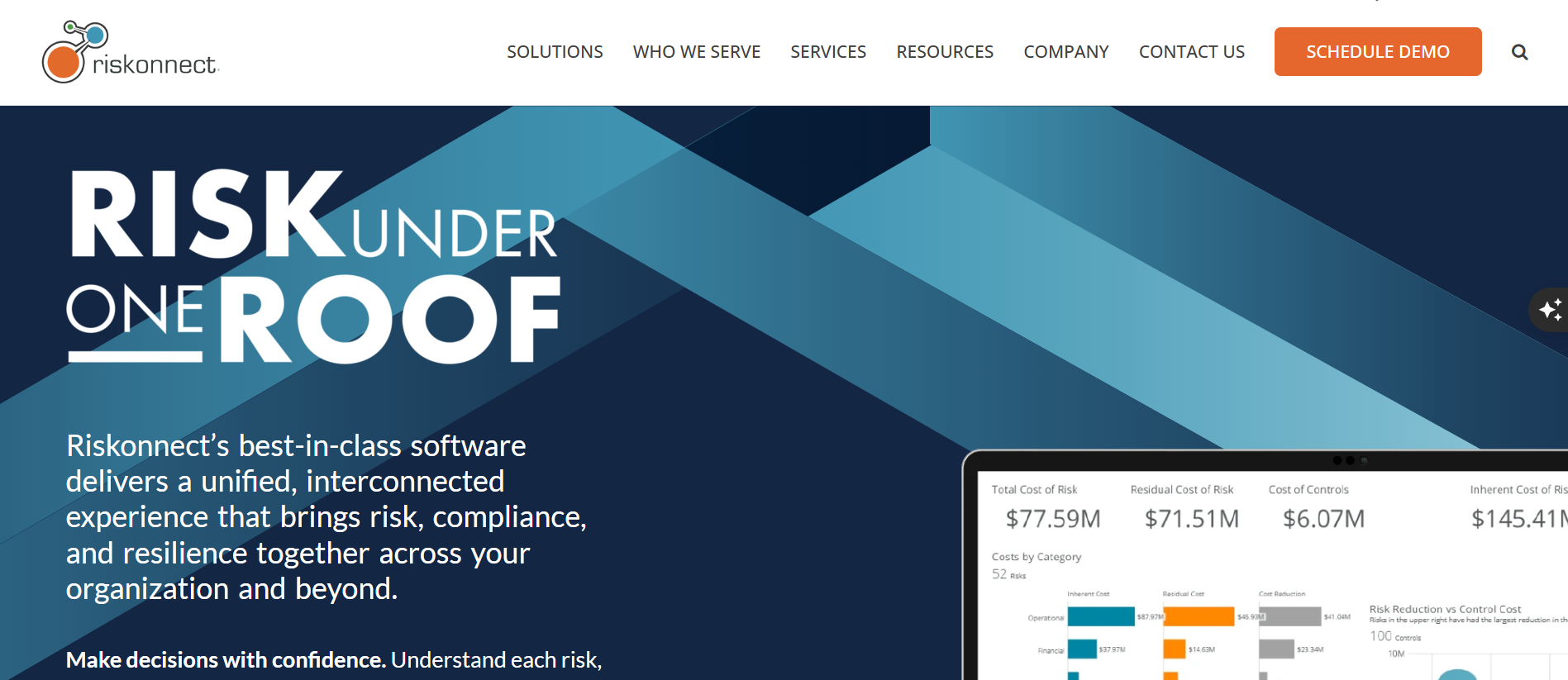
Riskonnect is a third-party risk management software with a centralized system to manage supplier and third-party risks. As a supplier risk management tool, it allows companies to store all critical information about their suppliers in one place. This includes contracts, service-level agreements (SLAs), compliance documents, key contacts, and performance metrics. By maintaining a centralized repository, Riskonnect eliminates the need for error-prone spreadsheets or fragmented tracking systems, providing a single source of truth for supplier data.
Features
- First and foremost, the platform allows you to build a central supplier library to store critical information on each supplier.
- The system enables you to track contracts, costs, SLAs, and KPIs, to ensure continuous performance monitoring of suppliers against key metrics
- In addition, the platform streamlines your risk assessments, questionnaires, and surveys with automated workflows and a dedicated vendor portal.
- The platform allows suppliers themselves to access a portal to complete onboarding questionnaires, upload required documents, and submit risk-related details
Pricing
Several factors determine Riskonnect’s pricing
Best For
Riskonnect works well for enterprises that need a serious, governed, scalable supplier/ third‑party risk management system, not just occasional vendor screening.
8. ProcessUnity

ProcessUnity provides a comprehensive third-party risk management platform that adapts to your organization’s evolving needs. The platform’s strength lies in its configurability—you can customize workflows, risk models, and reporting to match your specific requirements without extensive coding. The platform serves as a single system of record for all vendor risk activities from onboarding through offboarding.
Features
- Configures risk assessment workflows using a drag-and-drop interface that lets you design processes matching your governance requirements
- Maintains a vendor risk register that consolidates risk data, assessment results, contracts, and performance metrics
- Automates vendor onboarding by collecting required documents, running background checks, and routing approvals to appropriate stakeholders
- Monitors vendor performance by tracking KPIs, SLA compliance, and incident history alongside traditional risk metrics
- Conducts ongoing monitoring through integrations with financial data providers, news services, and security rating agencies
Pricing
ProcessUnity uses quote-based pricing.
Best For
ProcessUnity works especially well for companies in regulated industries with complex compliance requirements that standard platforms often fail to address out of the box.
9. SAP Ariba

SAP Ariba supplier risk management software extends the world’s leading procurement platform with comprehensive risk monitoring capabilities. If you’re already using Ariba for procurement, this module integrates seamlessly to add risk intelligence directly into your sourcing and supplier management workflows. The platform leverages Ariba’s massive supplier network to benchmark risk across industries and regions.
Features
- Monitors supplier risk continuously by analyzing data from Dun & Bradstreet, news sources, sustainability ratings, and the Ariba network
- Alerts procurement teams to financial distress, compliance violations, or operational disruptions affecting their suppliers
- Scores supplier sustainability across environmental, social, and governance (ESG) dimensions using standardized frameworks
- Integrates risk into sourcing decisions by displaying risk scores alongside pricing and performance data in RFx processes
- Manages supplier corrective actions with workflows that track improvement plans from identification through verification
Pricing
SAP Ariba’s pricing depends on your existing Ariba subscription tier and the number of suppliers monitored.
Best For
SAP Ariba is best suited for large enterprises already invested in the SAP Ariba ecosystem and want to add risk management without introducing another standalone platform.
10. Coupa

Coupa integrates supplier risk management directly into its business spend management platform, ensuring risk considerations influence every procurement decision. The platform’s approach centers on making risk data visible and actionable at the moment of impact—when users select suppliers, issue purchase orders, or renew contracts. Coupa’s community intelligence leverages data from thousands of organizations to identify risk patterns.
Features
- Embeds risk scores directly in procurement workflows so buyers see risk alongside price and delivery information
- Monitors supplier financial health using real-time data from Dun & Bradstreet and other financial information providers
- Tracks supplier compliance with certifications, insurance requirements, and regulatory standards
- Aggregates community intelligence from the Coupa network to identify emerging risks affecting supplier industries or regions
- Automates risk assessments by sending questionnaires triggered by supplier tier, spend level, or category
- Manages supplier information in a centralized registry that becomes the single source of truth for risk, performance, and contract data
Best For
Coupa delivers strong value for companies prioritizing spend visibility and control alongside risk management, particularly those in retail, manufacturing, and professional services.
11. MetricStream

MetricStream’s third-party supplier risk management software automates end-to-end processes for information gathering, onboarding, real-time monitoring, risk, compliance, and control assessment, as well as risk mitigation. For example, it automatically conducts an inherent risk assessment to identify ‘red flags,’ and when risks are identified, it promptly alerts relevant teams, allowing them to take necessary action instantly.
Features
- MetricStream offers a structured portal that displays all the onboarded third-party profile details like products/services offered info, certification, due diligence status, risk rating, contract details, and more
- The platform provides a centralized view that makes monitoring vendor practices much easier for your team
- Additionally, it allows third-party vendors to add additional data or update their compliance status as needed.
- This solution uses AI/ML to quickly detect issues like failing to meet contract terms, non-compliance with regulatory standards, and poor performance.
- This platform automates the evaluation of risks for each third party or engagement and defines the frequency of periodic assessments
- Finally, it automatically validates third-party information and identifies “red flags” based on globally sourced content on various associated risks.
Pricing
MetricStream’s pricing is provided upon request for a quote.
12. LogicGate

LogicGate leverages the risk cloud’s open integration to summarize and mitigate critical vendor risks efficiently. The solution integrates tools such as Jira, Slack, and Microsoft 365 to automate vendor risk assessments, onboarding, and assessments. That’s not all; LogicGate also uses visual tools such as heatmaps, risk scores, and letter grades that visually represent vendor risks. This visual representation helps quickly understand what level of risks vendors carry and makes the risk prioritization part (which risks need immediate attention) much easier.
- This software restricts itself to a few sources for gathering third-party risk details.
- LogicGate ensures that you receive the most up-to-date and detailed risk information to evaluate your vendor’s practices and threat level thoroughly.
- LogicGate offers a risk cloud quantification tool that uses Monte Carlo simulations to add a financial perspective on risk decisions.
- It shows how much third-party risks (their impact) could cost your organization in actual dollars (financial implications of the risks).
Pricing
LogicGate’s pricing depends on what applications you pick, the number of users and and any add-ons.
Best For
LogicGate is best suited for mid-size to enterprise organisations that have numerous external vendors, suppliers, or third-party service providers and need a robust way to onboard, assess, and monitor them.
Pingback: Top 10 Best Enterprise Risk Management Software for Banks in 2026 - vizajobs.com - Remote Jobs