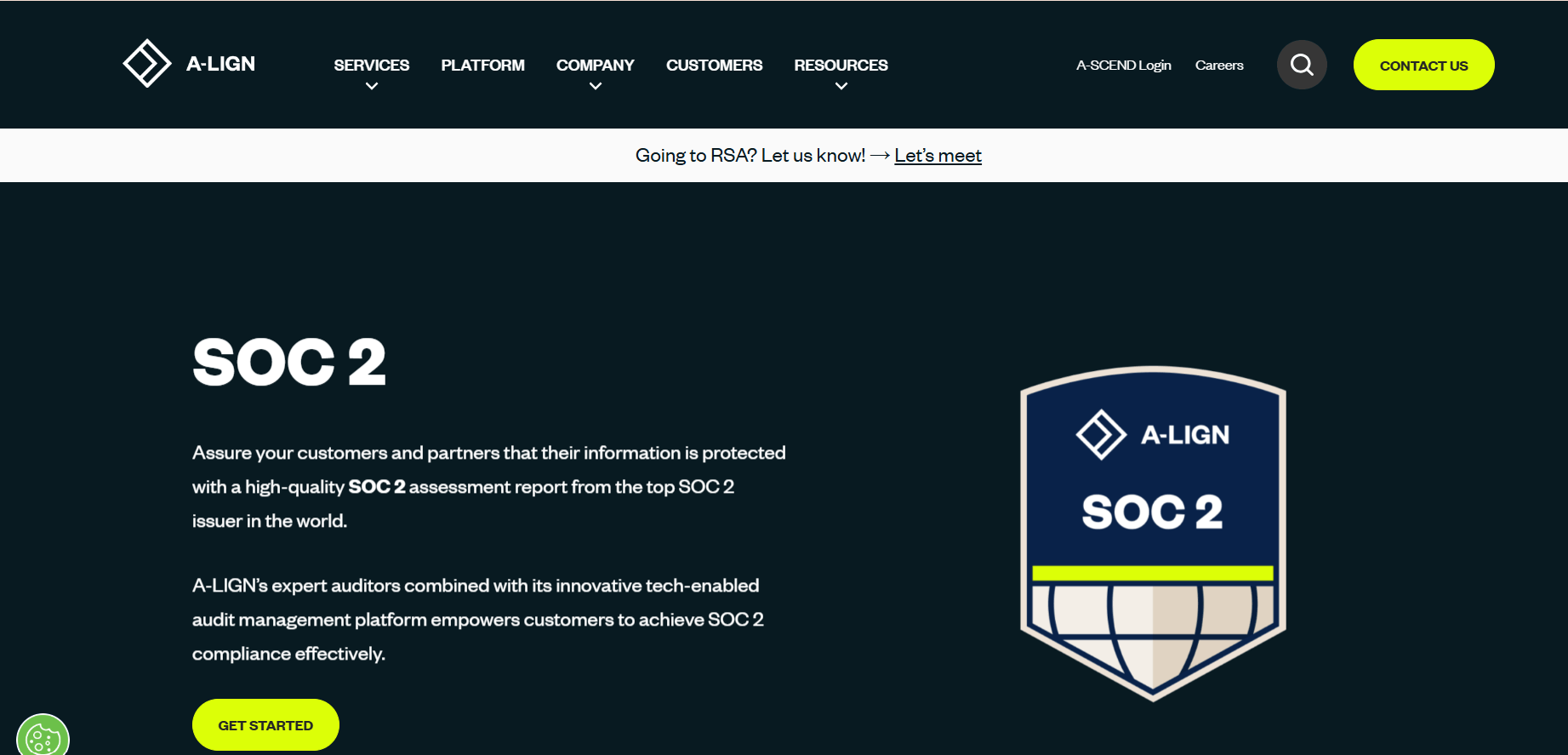
A-LIGN operates at a scale few competitors match.The company combines audit expertise with its A-SCEND platform. This system manages evidence, tracks progress, and organizes documentation in one place. In addition, it helps teams stay aligned throughout the audit process.
Features
- A-SCEND platform centralizes audit tasks and tracks milestones
- Supports multiple frameworks in one engagement
- Offers SOC 2+ with ISAE 3000 for global use
- Provides 24-hour support across time zones
- Speeds up audit timelines with tech-enabled workflows
- Works with both startups and large enterprises
Pros
- Handles high audit volume with proven experience
- Reduces manual work through its platform
- Covers several compliance frameworks under one vendor
- Maintains quick response times
- Integrates with tools like Vanta, Drata, and Secureframe
Cons
- Shares pricing only through custom quotes
- May not connect with every internal tool
- Applies fees in some rescheduling cases
- Can feel less personal for smaller teams
Pricing
- Custom pricing based on scope and company size
- Quote available through the official website
Verdict
A-LIGN suits companies that want a single provider for multiple compliance needs. It also works well for fast-growing SaaS teams that need consistency and speed. However, smaller teams may prefer firms that offer more direct, hands-on support.
2. Schellman & Company
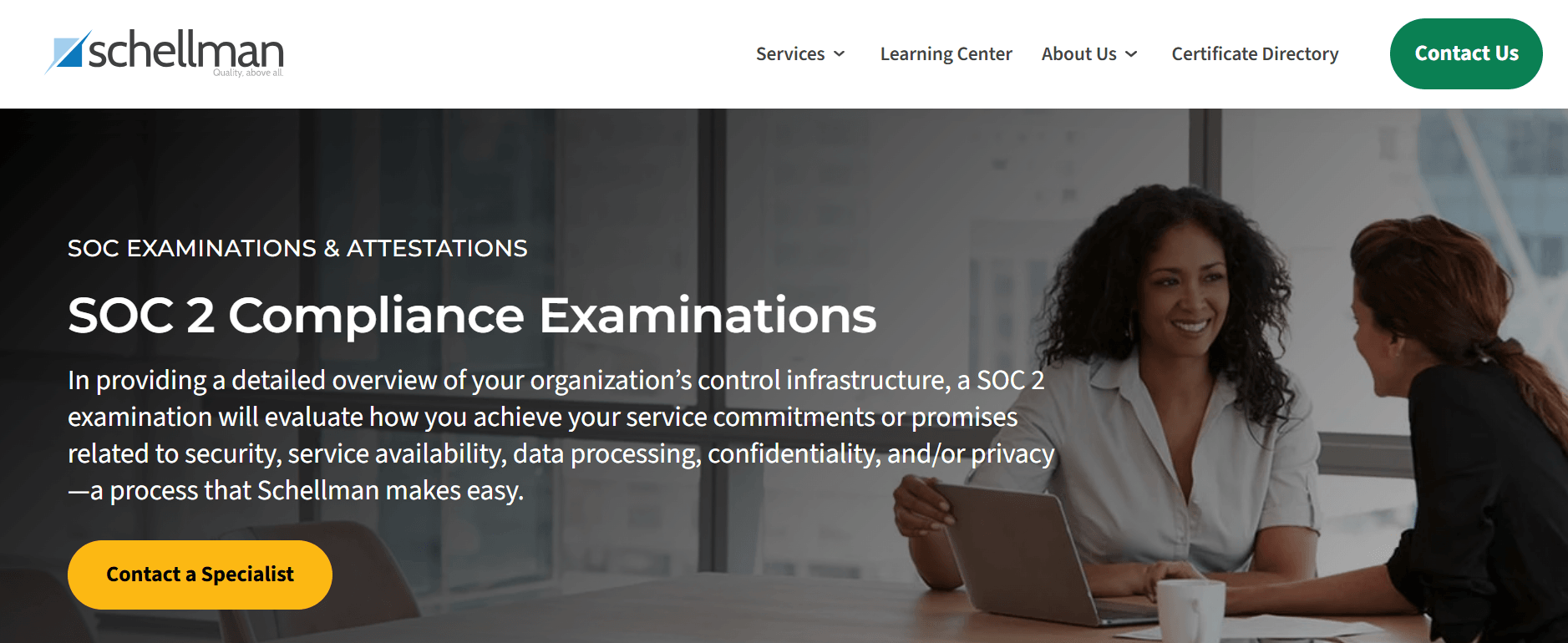
Schellman has become the largest specialized cybersecurity and privacy assessment firm in the United States, employing over 400 people and completing thousands of projects each year. Moreover, the firm focuses only on compliance and security assessments. It does not handle tax work or financial audits, so teams stay fully focused on one area.
Features
- Full focus on IT compliance and security assessments
- Supports multiple frameworks at once
- Central portal for uploading and tracking evidence
- Senior staff help shape AICPA SOC 2 standards
- Leadership stays directly involved in engagements
Pros
- Widely trusted by large enterprises
- Strong reputation with Fortune 500 companies
Cons
- Higher pricing than many competitors
- Less suitable for early-stage startups
Pricing
- Fixed-fee structure
- Custom quote based on each engagement
Best Use Cases
- Companies selling to large enterprises, financial institutions, or government bodies; therefore, reputation matters
- Organizations that need multiple certifications handled together; this saves time and reduces repeated work
- Cloud platforms in regulated industries that require high-assurance reports
- Companies preparing for IPOs or private equity reviews, where detailed audits support due diligence
Verdict
Schellman suits companies that need credibility and depth in their audits. However, smaller businesses may find the cost difficult to justify.
3. Prescient Security
Prescient Security is a fast-growing cybersecurity and compliance firm that works closely with B2B SaaS and cloud-first companies. It has built a strong reputation among teams that need SOC 2 attestations done with clarity and technical depth. In addition, the company combines security engineering knowledge with compliance experience, which helps teams understand not just what to do, but why it matters.
Features
- Risk-based audits that match real business risks
- Strong experience with AWS, Azure, and GCP
- Coverage across 25+ frameworks (SOC, ISO, HIPAA, GDPR, PCI DSS, and more)
- Direct integrations with Vanta, Drata, and Secureframe
- In-house penetration testing services
- AI-supported tools for testing and evidence collection.
Pros
- Cuts down audit workload through risk-focused reviews
- Deep knowledge of cloud and SaaS environments
- Integrates smoothly with common compliance tools
- Explains requirements clearly during audits
- Keeps the process efficient with less manual input
Cons
- Type II audits take more time than Type I
- No public pricing; you need a quote
- Works best for tech and cloud-focused companies
- May not suit very large enterprise needs
The company has worked with over 5,000 clients worldwide. At the same time, it continues to receive strong feedback across review platforms, which reflects consistent delivery and support.
Pricing
- Custom quotes based on company size and scope
- Generally considered accessible for startups
Best Use Cases
- SaaS companies preparing for their first SOC 2 audit
- Cloud-based platforms running on AWS, Azure, or GCP
- Teams already using Vanta, Drata, or Secureframe
- Startups that want a practical but thorough audit partner
- Companies that want SOC 2 and penetration testing from one provider
Verdict
Prescient Security suits companies that want a practical, technically sound approach to compliance. It focuses on real risks, keeps audits efficient, and supports modern cloud environments. However, very large enterprises may prefer firms with a bigger footprint.
4. Coalfire
Coalfire stands as a cybersecurity risk management and compliance firm known for technical depth, impartial audits, and strong advisory capabilities. It works with global brands across technology, cloud, healthcare, retail, payments, and finance. In particular, it delivers SOC 2 services through Coalfire Controls, its licensed CPA firm accredited by the AICPA. Moreover, the company uses an industry-focused model, so it assigns auditors based on each client’s sector. This approach ensures relevant expertise from the start. In addition, it connects its SOC 2 work to the Compliance Essentials platform, which allows teams to manage multiple frameworks in one place.
Features
- Industry-based auditor assignment for sector-specific expertise
- Compliance Essentials platform for managing multiple frameworks
- Coverage of all five Trust Services Criteria
- Experience with FedRAMP, FISMA, and DoD SRG requirements
- Independent audits with no consulting overlap
Pros
- Strong industry knowledge from specialized auditors
- Solid experience with government compliance standards
- Platform helps reduce duplicate work across frameworks
- No conflict of interest in audit process
- Includes penetration testing within compliance programs
Cons
- Does not provide readiness or advisory support
- Less helpful for teams that need guidance before audits
- Pricing may be high for smaller companies
- Process can feel formal and structured
- Better suited for larger organizations
Pricing
- Custom quotes depending on scope and company size
Best Use Cases
- Cloud platforms in finance, healthcare, or retail that need sector-specific auditors
- Enterprises handling multiple compliance frameworks at once
- Organizations that prefer strict audit independence
- Businesses that want both penetration testing and compliance support from one provider
Verdict
Coalfire fits organizations that value independent audits and deep industry expertise. However, it may not suit teams that want hands-on guidance before the audit process.
5. Deloitte
Deloitte stands as one of the most recognized professional services firms in the world, and it continues to lead enterprise-level SOC 2 audits. As a Big Four firm, it offers strong brand credibility and operates in more than 150 countries. Therefore, companies that target Fortune 500 clients or prepare for public listing often choose Deloitte to strengthen trust with buyers and investors. In addition, its dedicated risk advisory teams bring deep experience in cloud systems and regulated data environments. Deloitte also applies a “SOC 2+” approach, which combines SOC 2 with other frameworks in one coordinated engagement. Consequently, organizations manage multiple compliance requirements together instead of handling them separately.
Features
- SOC 2+ multi-framework audits (ISO, NIST, HIPAA, GDPR)
- Cloud-focused risk advisory teams
- Global audit delivery across 150+ countries
- End-to-end support from readiness to final report
Pros
- Strong global brand trust
- High acceptance among enterprise buyers
- Multi-framework coverage in one audit
- Deep advisory expertise
Cons
- Very high cost
- Not suitable for startups
- Longer audit timelines (6–12 months)
- Demands significant internal effort
Pricing
• Custom-quoted for enterprise engagements only
Best Use Cases
Deloitte works best for Fortune 500 companies, large cloud platforms, and multinational organizations that operate across regions. It also suits public companies or businesses preparing for IPO, especially when audit reputation plays a key role in closing deals.
6. PwC
PwC stands as a Big Four firm with a strong reputation for enterprise-level SOC 2 attestation. It operates across more than 150 countries, and it supports organizations that need consistent audit quality in multiple regions. In addition, PwC combines formal compliance work with strategic advisory, so companies gain insight while completing audits. Therefore, cloud platforms in regulated industries often rely on PwC when they need both credibility and depth. At the same time, the firm focuses on long-term governance improvements, which helps organizations strengthen their security posture beyond the audit itself.
Features
- Handles SOC 2, ISO 27001, GDPR, HIPAA together
• Operates in 150+ countries with global audit teams
• Provides compliance insights alongside audit reports
• Offers industry-focused teams for regulated sectors
• Applies risk-based testing focused on key areas
Pros
- Strong global reputation with enterprise buyers
• Supports complex multi-framework compliance needs
• Focuses audits on high-risk areas
• Adds strategic guidance for long-term improvement
• Includes industry-specific expertise
Cons
- High pricing
• Not suitable for startups or early-stage teams
• Long timelines, often 6–12 months
• Requires heavy internal involvement
• Less automation compared to newer platforms
Pricing
- Custom-quoted enterprise engagements
• No public pricing available
Best Use Cases
PwC works best for enterprise cloud platforms that need strong credibility across multiple regions. In addition, multinational SaaS companies with overlapping requirements such as GDPR, HIPAA, and SOC 2 benefit from its global reach and coordinated audit approach.
7. KPMG
KPMG collects evidence automatically, presents real-time audit insights, and improves transparency across the engagement. In addition, enterprise cloud platforms choose KPMG when they want Big Four credibility combined with technology-driven audit workflows. Therefore, organizations that operate at scale often rely on KPMG to manage complex compliance requirements while maintaining visibility into audit progress.
KPMG operates in more than 140 countries, and it supports SOC 2 audits across multiple regions within one coordinated engagement. Moreover, its teams bring experience from industries such as financial services, healthcare, technology, and government. Consequently, auditors understand industry-specific compliance expectations and apply that knowledge throughout the audit process.
Features
- AI-powered audit platform
- Real-time audit dashboards and insights
- Automated evidence collection
- Multi-framework support (SOC 2, ISO 27001, HIPAA, GDPR, PCI DSS)
- Global audit delivery in 140+ countries
- Industry-focused audit specialists
- Centralized client-auditor collaboration portal
Pros
- Strong Big Four credibility
- Global audit coverage
- Real-time audit visibility
- Supports multiple frameworks
- Recognized by enterprise buyers
Cons
- High cost compared to smaller firms
Requires more internal resources
Longer audit timelines
Pricing
- Custom-quoted with no public rates
Best Use Cases
KPMG fits Fortune 500 cloud platforms that require strong brand recognition and advanced audit workflows. It also works well for multinational companies that need SOC 2 audits across several countries under one engagement. In addition, enterprises already working with KPMG for tax or financial audits often continue the relationship for compliance. Finally, IPO-bound or private equity-backed cloud companies choose KPMG when they need high-trust SOC 2 documentation for investors and stakeholders.
8. Baker Tilly
Baker Tilly delivers the credibility and scale of a near–Big Four firm, yet it maintains a more accessible approach to pricing and client engagement. The firm handles hundreds of SOC 2 engagements each year, and AICPA-qualified specialists lead these audits with consistent oversight. In addition, the team prepares detailed control matrices and gap analyses before formal testing begins, so cloud platforms understand what to fix early. Therefore, companies enter the audit phase with clarity instead of uncertainty.
Moreover, Baker Tilly stands out among SOC 2 certification agencies for cloud platforms through its ability to combine multiple frameworks into one coordinated audit. It brings SOC 2 together with standards such as HIPAA, ISO 27001, HITRUST, and NIST, which reduces repeated work across separate compliance efforts.
Features
- Pre-audit control matrices with clear gap analysis
- SOC 2+ audits across multiple frameworks
- Global audit support in 140+ countries
- Mid-market focus with accessible pricing
- High volume of SOC 2 engagements each year
Pros
- Near–Big Four credibility at lower cost
- Strong pre-audit preparation and planning
- Multi-framework audits reduce repeated work
- Global coverage for multi-location teams
- Focused support for mid-market companies
Cons
- Higher cost than boutique firms
- Less focus on advanced automation tools
Pricing
• Custom-quoted based on scope and company size
Best Use Cases
Growth-stage SaaS companies that want high audit quality without Big Four pricing often choose Baker Tilly. In addition, PE-backed or mid-market cloud platforms benefit when they manage SOC 2 alongside HIPAA, ISO 27001, or HITRUST in one engagement. Furthermore, organizations that need detailed preparation before audits find value in its structured approach. Healthcare technology companies also rely on it when they must meet SOC 2, HIPAA, and HITRUST requirements at the same time.
9. BARR Advisory
BARR Advisory operates as a cloud-focused cybersecurity and compliance firm that supports organizations handling sensitive data in modern cloud environments such as AWS, Microsoft Azure, and Google Cloud Platform. It also stands out among SOC 2 certification agencies for cloud platforms, since it performs both SOC audits and ISO 27001 certifications under one roof. In addition, the firm works closely with clients and provides guidance throughout the compliance journey, which helps teams treat compliance as part of business growth rather than a one-time requirement. Therefore, companies that rely heavily on cloud infrastructure often choose BARR for its focused expertise and combined service offering.
Features
- Strong focus on AWS, Azure, and GCP environments
• Accredited for both SOC 2 audits and ISO 27001 certification
• Advisory-led support throughout the compliance process
• CSA STAR certification for cloud security assurance
• End-to-end audit lifecycle support
Pros
- High client satisfaction and positive feedback
• Combines SOC 2 and ISO 27001 in one provider
• Deep expertise in cloud-native systems
• Offers hands-on guidance during compliance
• Experience in regulated industries
Cons
- Less suitable for legacy or on-premise systems
• Pricing is not publicly listed
• Smaller firm compared to large global auditors
• Lower brand recognition than Big Four firms
Pricing
- Custom-quoted based on company size and scope
• Positioned between boutique firms and Big Four pricing
Best Use Cases
BARR Advisory fits cloud-native SaaS companies that manage sensitive data across AWS, Azure, or GCP. It also works well for organizations in healthcare, finance, and government that must meet strict compliance requirements. In addition, companies that want both SOC 2 attestation and ISO 27001 certification from one provider often find it a practical choice. Furthermore, fast-growing startups benefit from its advisory approach, since the firm works closely with internal teams and supports them throughout the process.
10. KirkpatrickPrice
KirkpatrickPrice operates as a licensed CPA firm and HITRUST CSF Assessor, and it focuses its SOC 2 services on smaller organizations that need credible audit results without paying enterprise-level fees. The firm positions itself among reliable SOC 2 certification agencies for cloud platforms that prioritize practical execution over brand prestige. In addition, its auditors bring hands-on technical experience, since many come from security engineering backgrounds rather than traditional compliance roles. Therefore, teams receive feedback that reflects real cloud environments instead of generic checklist reviews, which makes the audit process more relevant and easier to act on.
Features
- Technical auditors with security engineering experience
- Fixed-fee bundles covering gap analysis, Type I, and Type II audits
- Early gap analysis to flag issues before formal testing
- Ongoing compliance guidance throughout the year
- Clear remediation steps with practical context
- Combined SOC 2, HIPAA, and HITRUST support for health-tech teams.
Pros
- Strong value for startups and mid-sized businesses
- Auditors understand real cloud systems and workflows
- Predictable pricing with bundled audit packages
- Good fit for health-tech compliance needs
- Responsive support for smaller teams.
Cons
- Smaller firm with less brand recognition than large audit firms
- Limited fit for complex, multi-cloud enterprise setups.
Pricing
• Bundled packages start around $30,000 in the first year
• Annual renewals average about $25,000
Best Use Cases
KirkpatrickPrice fits startups that want SOC 2 certification without enterprise costs, especially those working with cloud infrastructure. It also supports managed service providers and IT firms that need credibility with mid-sized clients. In addition, health-tech startups benefit from its combined SOC 2, HIPAA, and HITRUST offering, which simplifies compliance under one provider.
11. Linford & Company
Linford focuses on deep SOC 2 expertise, and that focus sets it apart from many soc 2 certification agencies for cloud platforms. The firm requires every auditor to have at least ten years of experience, so clients work directly with seasoned professionals instead of junior staff. In addition, Linford maintains strict data protection practices, which helps organizations handle sensitive information with confidence. Therefore, companies that value direct expert involvement often choose Linford over larger, process-heavy firms. At the same time, its strong emphasis on SOC 2 allows teams to move through audits with clear direction and fewer misunderstandings.
Features
- All-senior auditor team with 10+ years experience
- Strong focus on SOC 2 engagements
- Secure collaboration tools for data protection
Pros
- Experienced auditors handle every engagement
- Deep SOC 2 knowledge across projects
- High-quality service without Big Four pricing
Cons
- Smaller team limits capacity for large projects
- Not ideal for complex global enterprise environments
- No built-in compliance platform or software
Pricing
• Custom-quoted, often competitive with mid-tier firms
Best Use Cases
- Companies that want expert-led SOC 2 audits without high enterprise costs
- Cloud platforms in healthcare needing SOC 2, HIPAA, or HITRUST support
- SaaS companies working toward FedRAMP, StateRAMP, or NIST alignment
- Organizations that prefer direct auditor interaction over software-driven processes
- Privacy-focused teams that require secure and controlled audit workflows.
12. Sensiba LLP
Sensiba LLP operates as a CPA firm and a certified B Corporation, which combines audit credibility with clear pricing and a focus on social responsibility. In addition, the firm follows a fixed-fee model, so clients see costs upfront instead of dealing with uncertain billing later. Therefore, many companies searching for SOC 2 certification agencies for cloud platforms consider Sensiba a practical and transparent option. In 2025, the firm expanded its global GRC capabilities after acquiring AssuranceLab. This move added over 90 compliance experts and more than 2,000 completed audits to its portfolio. Sensiba now supports cloud platforms with international operations more effectively. At the same time, its approachable style and consistent delivery continue to attract both SMBs and enterprise clients.
Features
- Fixed-fee pricing with clear upfront costs
- Friendly, professional audit support
- Multi-framework coverage: SOC 2, ISO 27001, HIPAA, PCI DSS
Pros
- Social responsibility adds brand credibility
- Expanded global and automation capabilities
- Strong support for first-time SOC 2 clients
Cons
- Smaller global presence than large audit firms
- Less recognition in highly regulated industries
- Integration after acquisition still evolving
Pricing
• Fixed-fee model with transparent structure
Best Use Cases
Sensiba works well for mid-market SaaS and cloud platforms that want predictable pricing and a reliable audit partner. In addition, it suits technology companies that need credible SOC 2 certification support without the cost and complexity of large audit firms.
Conclusion
SOC 2 compliance now stands as a requirement for cloud platforms that want to compete for enterprise business. The right audit partner simplifies what often feels like a long and complex process, and at the same time delivers a clear, structured path to a report that customers trust during vendor risk reviews.
Some firms, such as Schellman, emphasize credibility and recognition, while others like KirkpatrickPrice focus on accessibility for startups. In addition, large firms including Deloitte, PwC, and KPMG bring brand prestige, whereas providers such as Prescient Security and BARR Advisory focus on cloud-focused expertise. At the same time, A-LIGN delivers growth through technology, and firms like Coalfire and Linford contribute federal compliance knowledge. Meanwhile, Baker Tilly supports mid-market companies with flexible engagement options.
However, no single firm fits every organization. Each company must evaluate its stage, buyer expectations, compliance goals, and available budget before making a decision. Therefore, use this as a starting point, then shortlist two or three firms that match your needs. In addition, request proposals and ask direct questions about their experience with your cloud setup, their platform integrations, and their approach to evidence collection and audit timelines. The right partner will communicate clearly from the first interaction and will show a strong understanding of your environment.