As DevOps tool providers scale their platforms and handle increasingly sensitive customer data, security and trust have become non-negotiable priorities. Choosing from the best SOC 2 compliance firms for DevOps Tool Providers is one of the most strategic decisions a DevOps company can make, not just to pass audits, but to build the kind of credibility that enterprise customers demand before signing contracts. Fortunately, a growing number of specialized compliance automation vendors now serve the DevOps space, helping teams achieve SOC 2 certification faster and with far less manual effort.
DevOps tool providers face a unique set of compliance challenges. Unlike traditional software companies, they operate in fast-moving, CI/CD-driven environments where infrastructure changes constantly, pipelines shift daily, and access controls must keep pace with rapid deployments. As a result, compliance platforms that work well for slower-moving organizations often fall short in DevOps contexts. Therefore, DevOps firms need vendors that understand their tech stack, including tools like GitHub, Jenkins, AWS, Terraform, and Kubernetes, and integrate seamlessly with them.
Moreover, the stakes have never been higher. Enterprise buyers increasingly require SOC 2 Type II reports before onboarding any DevOps tooling vendor, and security reviews are only growing stricter. Consequently, companies that delay compliance risk losing deals to competitors who have already earned that trust.
In this article, we break down the top 12 SOC 2 compliance firms that are best suited for DevOps tool providers. We evaluate each vendor based on its integrations with DevOps tooling, automation capabilities, audit readiness features, and overall fit for engineering-driven organizations. Whether you are pursuing SOC 2 Type I for the first time or upgrading to continuous compliance, this guide will help you identify the right partner for your team.
Top 12 Best SOC 2 Compliance Firms for DevOps Tool Providers
1. Vanta

Vanta leads the compliance automation space with a platform purpose-built for modern engineering teams. Founded in 2018, the company has grown rapidly to serve thousands of organizations by connecting directly to their cloud infrastructure, CI/CD pipelines, and developer tooling. For DevOps teams, Vanta cuts the time required to achieve SOC 2 certification from months to weeks by continuously monitoring controls, automating evidence collection, and surfacing remediation tasks inside the tools engineers already use. Additionally, Vanta supports over 35 compliance frameworks, including ISO 27001, HIPAA, and PCI DSS — so DevOps organizations can scale their compliance posture as they grow without rebuilding their programs from scratch.
Features
- 200+ native integrations covering AWS, GCP, Azure, GitHub, GitLab, Jira, and more
- Continuous automated evidence collection and control monitoring
- In-platform auditor collaboration workspace to streamline audit fieldwork
- Multi-framework support including SOC 2, ISO 27001, HIPAA, and PCI DSS
- Trust Center for sharing compliance status publicly with customers
Pros
- Extremely fast time-to-certification — many DevOps teams achieve SOC 2 Type I in under eight weeks
- Strong auditor network makes it easy to pair with a CPA firm without a separate search
- Polished UI that engineers adopt quickly without heavy change management
Cons
- Some advanced custom control configurations require workarounds
- The in-house auditor network is US-centric, so international DevOps firms may need external auditors
Pricing
Vanta starts at approximately $7,500–$10,000 per year for early-stage startups and scales based on employee count and the number of frameworks activated. Enterprise plans are available via custom quote.
2. Drata
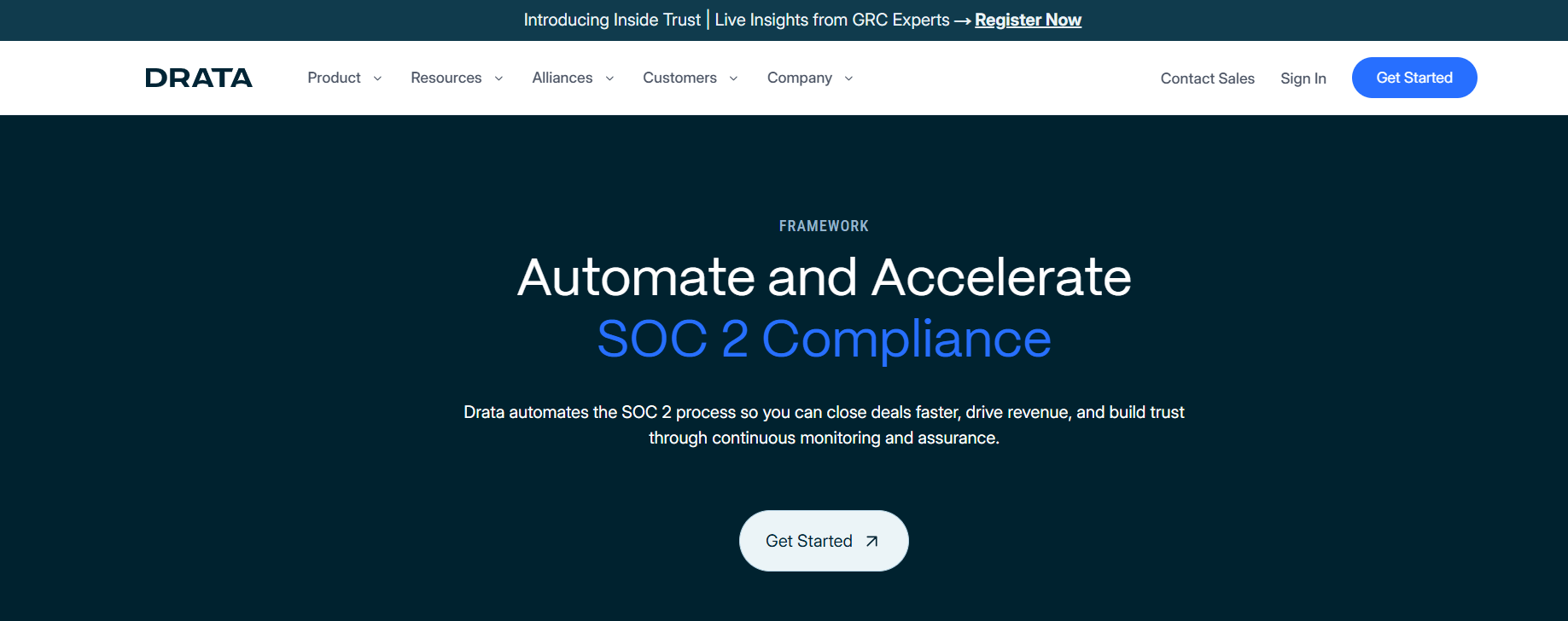
Drata has quickly established itself as one of the Best SOC 2 Compliance Firms for DevOps Tool Providers in the market, particularly for DevOps-heavy organizations running complex cloud environments. The platform’s autopilot engine continuously maps infrastructure changes — such as new microservices, Kubernetes clusters, and pipeline configurations — to SOC 2 controls, so compliance never falls behind the pace of deployment. Drata also goes beyond evidence collection by providing guided workflows that help DevOps engineers understand exactly what each control requires, closing the knowledge gap between security and engineering. Furthermore, the platform’s native integrations with container orchestration tools and infrastructure-as-code platforms make it a natural fit for teams practicing modern DevOps.
Features
- Autopilot continuous control monitoring with automated evidence push to auditors
- 250+ native integrations including Kubernetes, Terraform, CircleCI, and Datadog
- Vendor management portal with automated third-party risk assessments
- Real-time compliance dashboard with readiness score and gap analysis
- Audit-ready reports exportable directly to auditor workspaces
Pros
- Best-in-class Kubernetes and container monitoring for cloud-native DevOps teams
- Comprehensive auditor network with pre-negotiated rates saves significant procurement time
- Transparent compliance readiness score gives engineering leadership a clear picture of progress
Cons
- Implementation requires a dedicated project to map all integrations correctly upfront
- Some integrations are shallower than competitors and may still require manual evidence supplements
Pricing
Drata’s pricing begins around $10,000–$15,000 per year for growing startups. Pricing scales based on the number of frameworks, integrations, and employees. Enterprise pricing is available by custom quote.
3. Sprinto

Sprinto takes a uniquely engineering-first approach to SOC 2 compliance, making it especially popular among DevOps tool providers and SaaS startups that need to move fast without sacrificing compliance rigor. The platform automatically discovers an organization’s cloud footprint, groups assets into logical entity sets, and maps them to SOC 2 criteria in a matter of hours. What sets Sprinto apart is its campaign-based remediation system, which turns compliance gaps into trackable engineering tasks that integrate directly with Jira and Slack. Consequently, DevOps teams can treat SOC 2 compliance like any other sprint deliverable, managing it inside workflows they already understand. Sprinto also supports multi-entity and multi-geography compliance programs, making it a strong choice for DevOps tool providers serving global markets.
Features
- Automated cloud asset discovery across AWS, GCP, and Azure with entity mapping
- HR system integrations for automated employee onboarding and offboarding compliance
- Custom policy templates tailored to SaaS and DevOps organizations
- Multi-entity and multi-framework support for global DevOps providers
- Security awareness training module with automated completion tracking
Pros
- Campaign-based task management makes compliance feel like engineering work rather than audit prep
- Fast onboarding — most teams complete initial setup in under two days
- Dedicated customer success managers guide teams through the entire audit lifecycle
Cons
- The reporting layer, while functional, is less polished than top-tier competitors
- Best suited for cloud-based organizations; on-premise DevOps environments require additional customization
Pricing
Sprinto offers transparent pricing starting at around $6,000–$8,000 per year for startups. Pricing scales with the number of employees and frameworks. A free trial and demo are available upon request.
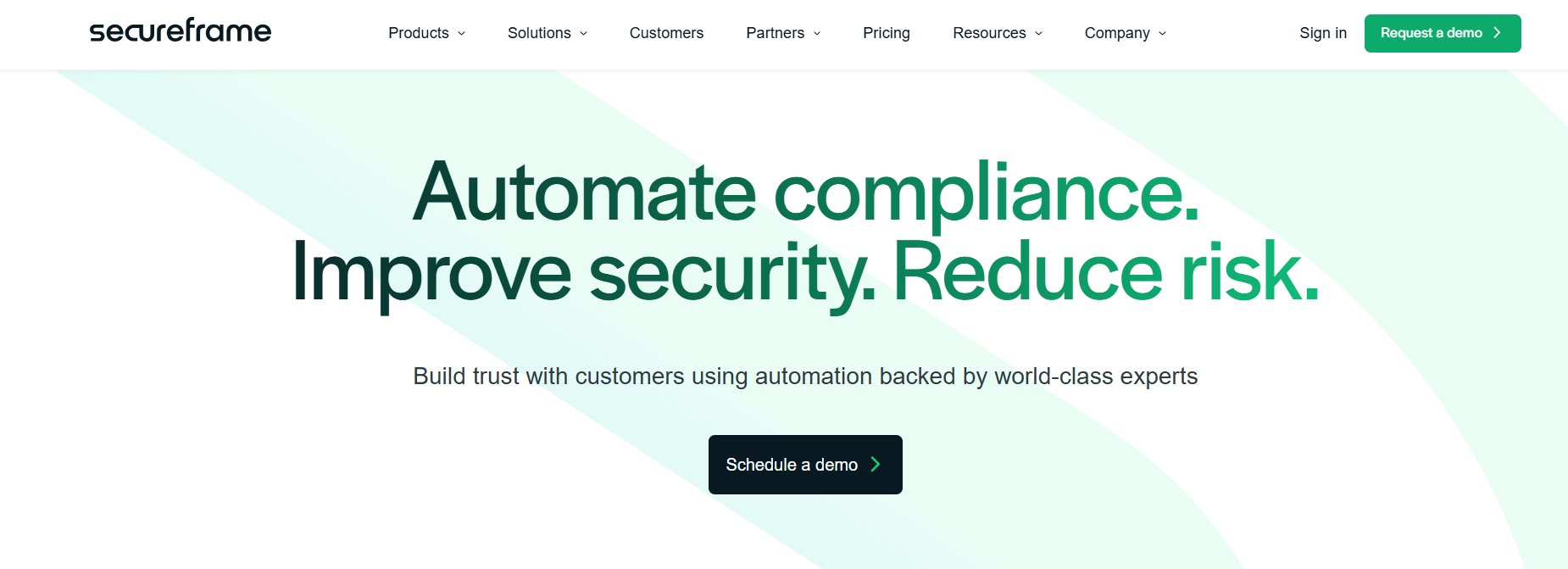
Secureframe combines deep compliance automation with an exceptional user experience, delivering a platform that appeals to both DevOps engineers and compliance managers alike. The company’s integration layer spans the full modern tech stack — from cloud providers and code repositories to identity providers and endpoint management tools — making it straightforward to bring a complex DevOps environment under compliance control. Secureframe also offers Comply AI, an AI-powered feature set that helps teams draft policies, map controls, and respond to security questionnaires in a fraction of the normal time. Moreover, the platform includes a vendor risk management module and an automated access review system, addressing two of the most time-intensive aspects of SOC 2 compliance for DevOps organizations with dynamic infrastructure.
Features
- Comply AI for AI-assisted policy drafting, control mapping, and questionnaire completion
- Continuous control testing with evidence auto-collection and exception tracking
- Trust Center for sharing real-time compliance posture with prospective customers
- Training module with built-in phishing simulation for security awareness
- Multi-framework support including SOC 2, ISO 27001, GDPR, HIPAA, and PCI DSS
Pros
- Comply AI dramatically accelerates policy creation and questionnaire turnaround for DevOps teams
- Strong enterprise-grade vendor risk management module built into the core platform
- Responsive customer support team with compliance expertise
Cons
- Some DevOps-specific integrations (e.g., advanced Terraform modules) lag behind specialist platforms
- Custom reporting capabilities are more limited compared to audit-centric platforms
Pricing
Secureframe pricing starts at approximately $10,000 per year and scales based on headcount and frameworks. Custom enterprise pricing is available for organizations requiring advanced features.
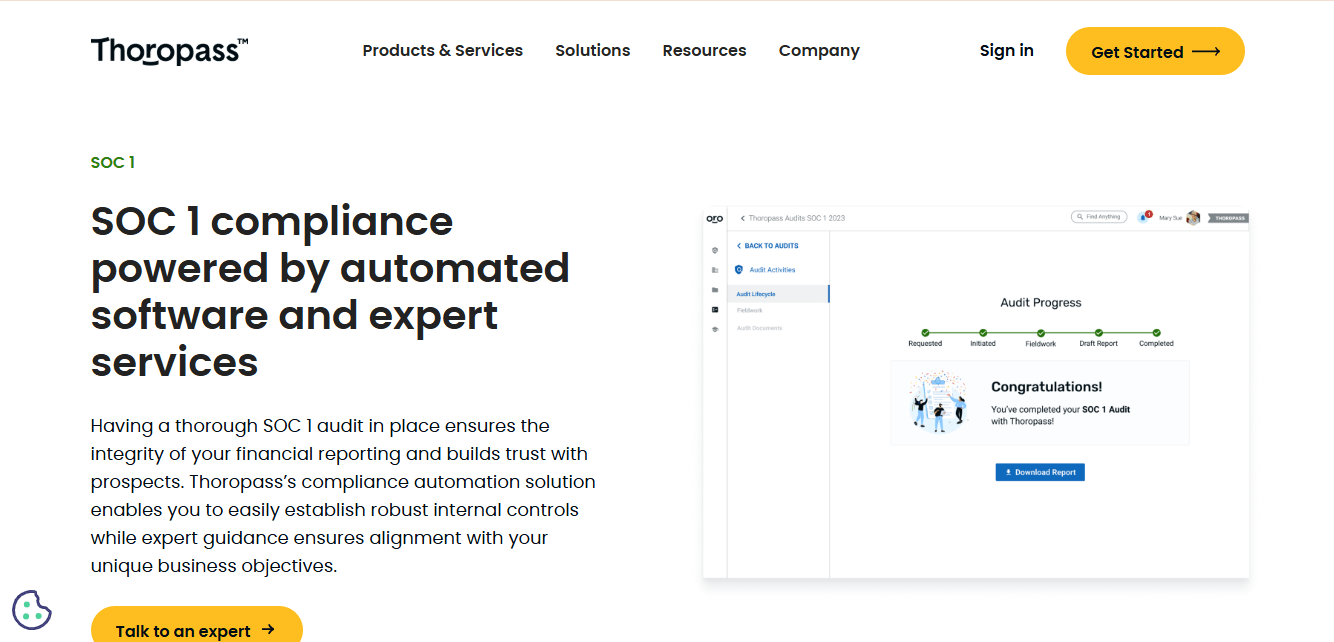
Thoropass, formerly known as Laika, differentiates itself by combining compliance software with in-house audit services under one roof, creating a fully integrated compliance experience that particularly suits DevOps tool providers preparing for their first SOC 2 audit. Rather than forcing teams to manage a separate auditor relationship alongside their compliance platform, Thoropass handles the entire journey, from gap assessment through audit completion, within a single engagement. For DevOps organizations, this integrated model significantly reduces coordination overhead and eliminates the risk of scope misalignment between the platform and the audit firm. Furthermore, Thoropass’s compliance experts embed directly with customer teams, providing hands-on guidance that helps DevOps engineers translate technical controls into audit-ready evidence.
Features
- End-to-end audit services with in-house licensed CPAs for SOC 2, ISO 27001, and HIPAA
- Automated evidence collection across cloud infrastructure and DevOps tooling
- Policy and procedure templates customized for SaaS and DevOps environments
- Vendor due diligence workflows with automated questionnaire distribution
- Audit workspace with real-time document request management and progress tracking
Pros
- All-in-one model eliminates the complexity of managing separate software and auditor relationships
- In-house audit services typically result in faster audit cycles and fewer scope surprises
- Strong reputation for transparent pricing that bundles software and audit fees together
Cons
- Less suitable for organizations that want to use their own external auditor
- Integration depth for specialized DevOps tooling is narrower than pure-play automation platforms
Pricing
Thoropass offers bundled pricing that includes both the software platform and audit services. Packages typically start around $15,000–$20,000 and vary based on audit scope and the number of frameworks. Custom quotes are available.
6. AuditBoard
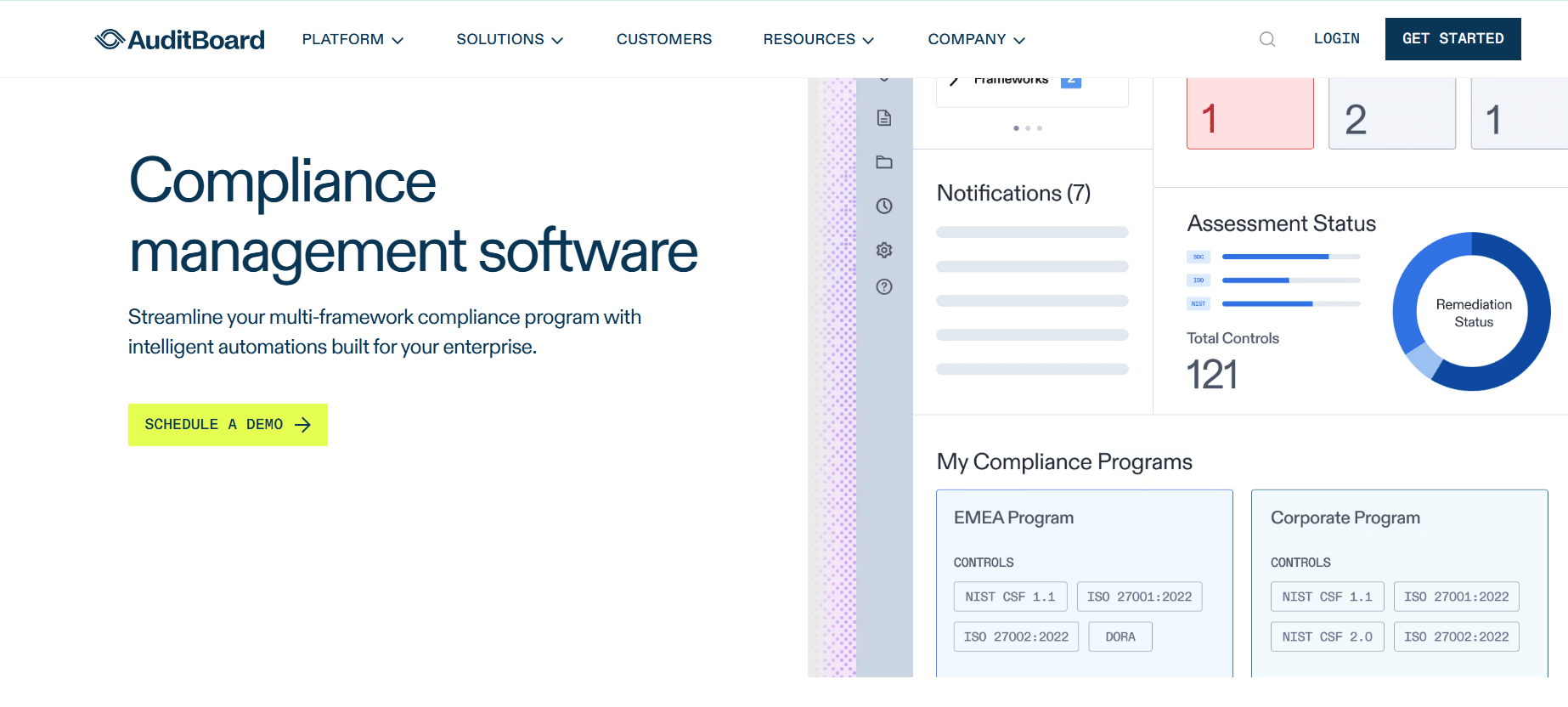
AuditBoard serves the enterprise end of the compliance market, offering a comprehensive GRC (Governance, Risk, and Compliance) platform that extends well beyond SOC 2 automation to encompass internal audit management, risk quantification, and ESG reporting. For large DevOps tool providers with mature compliance programs and complex organizational structures, AuditBoard provides the depth and configurability necessary to manage SOC 2 alongside a portfolio of other compliance obligations. The platform’s cross-functional workflow capabilities allow DevOps, security, and audit teams to collaborate on evidence collection and control testing within a single system, making it one of the best SOC 2 Compliance Firms for DevOps Tool Providers. Additionally, AuditBoard’s analytics engine provides executive-level visibility into compliance risk across the entire technology stack.
Features
- Unified GRC platform covering SOC 2, internal audit, risk management, and ESG in one system
- Cross-functional workflow builder for assigning and tracking compliance tasks across teams
- Audit management module with work paper management and auditor collaboration
- Risk quantification engine for prioritizing remediation efforts based on financial impact
- Regulatory change management alerts for evolving compliance requirements
- Custom framework builder for organizations with proprietary control sets
Pros
- Unmatched depth for large DevOps organizations managing multiple compliance frameworks simultaneously
- Powerful analytics and reporting capabilities satisfy C-suite and board-level reporting requirements
- Strong integration with enterprise ITSM tools like ServiceNow
Cons
- Significant implementation investment in time and cost makes it unsuitable for early-stage DevOps startups
- Pricing is enterprise-tier and can reach six figures for large deployments
Pricing
AuditBoard targets enterprise customers, with pricing typically starting at $30,000–$50,000 per year and scaling based on modules, users, and organizational complexity. Custom enterprise pricing is standard.
7. Scytale
Scytale focuses specifically on compliance automation for SaaS and DevOps organizations, making it one of the most targeted solutions on this list. The platform’s automation engine continuously monitors cloud infrastructure, developer tools, and identity management systems for compliance gaps, and it presents remediation guidance in language that DevOps engineers understand. Scytale also stands out for its white-glove customer success model, where a dedicated compliance success manager guides each customer through every step of the SOC 2 journey — from initial scoping through audit report delivery. This combination of automation and human expertise makes Scytale particularly effective for DevOps tool providers that lack an internal compliance team and need a trusted partner to keep the program on track.
Features
- Automated control testing and evidence collection across cloud and DevOps tooling
- Dedicated compliance success manager for end-to-end audit journey support
- Auditor-ready evidence packages generated automatically for each control
- SOC 2 readiness assessment with gap analysis and prioritized remediation roadmap
- Vendor security assessment portal with automated questionnaire management
- Multi-framework support including ISO 27001, GDPR, and HIPAA
Pros
- White-glove success model is ideal for DevOps teams without dedicated compliance resources
- Automated evidence packages significantly reduce time spent preparing for auditor requests
- Competitive pricing for the level of human support included
Cons
- Smaller integration library compared to market leaders Vanta and Drata
- Less suitable for large enterprise DevOps organizations that need advanced GRC capabilities
Pricing
Scytale pricing starts at approximately $7,000–$9,000 per year for startups and scales based on employee count, frameworks, and the level of compliance success support required. Custom quotes are available.
Hyperproof takes a control-centric approach to compliance management, organizing the entire SOC 2 program around a structured control library that allows DevOps teams to map evidence, tasks, and risks to specific requirements with surgical precision. The platform excels at cross-framework compliance, enabling organizations to reuse evidence across multiple standards and avoid duplicative work when managing SOC 2 alongside ISO 27001 or PCI DSS. For DevOps tool providers that need to demonstrate compliance to enterprise customers across several regulatory frameworks simultaneously, Hyperproof’s evidence reuse engine can significantly reduce the compliance overhead. The platform also features robust workflow automation capabilities that allow operations and engineering teams to automate routine compliance tasks without requiring custom scripting.
Features
- Control-centric compliance platform with cross-framework evidence reuse
- Risk management module with risk-to-control linkage for impact analysis
- Audit management workspace with real-time collaboration and document request tracking
- Out-of-the-box support for 70+ compliance frameworks including SOC 2, ISO 27001, and FedRAMP
- API and Zapier integrations for connecting to custom DevOps tool stacks
- Compliance operations dashboard with readiness metrics and gap visualizations
Pros
- Outstanding cross-framework evidence reuse reduces the marginal cost of adding new compliance frameworks
- Strong risk-to-control linkage helps DevOps teams prioritize remediation based on business impact
- Transparent and collaborative audit workspace improves auditor relationships
Cons
- Native integrations for automated evidence pull are less extensive than Vanta or Drata
- UI complexity can slow adoption among DevOps teams that prefer a simpler interface
Pricing
Hyperproof pricing starts at around $12,000 per year for growing organizations. Enterprise pricing scales with the number of users, frameworks, and integrations. A free trial is available for eligible companies.
Strike Graph offers a flexible, risk-based approach to SOC 2 compliance that appeals to DevOps tool providers who want to build a compliance program tailored to their unique risk profile rather than following a one-size-fits-all template. The platform guides users through a customized risk assessment that informs which controls the organization needs to implement, effectively right-sizing the scope of the SOC 2 program from the outset. This approach prevents over-engineering, which is a common and costly mistake for DevOps startups pursuing their first SOC 2. Furthermore, Strike Graph’s in-house auditor network allows organizations to complete the entire SOC 2 Type II audit cycle — from risk assessment through report delivery — within a single platform engagement.
Features
- Risk-based SOC 2 scoping engine that customizes the control set to the organization’s risk profile
- In-house audit network for end-to-end SOC 2 Type I and Type II certification
- Policy library with customizable templates for SaaS and DevOps environments
- Continuous compliance monitoring with control status dashboards
- Audit-ready report generation with real-time status updates
- Employee training and policy acknowledgment management
Pros
- Risk-based scoping prevents DevOps teams from over-engineering their first SOC 2 program
- Integrated audit services simplify the certification process for first-time SOC 2 seekers
- Highly approachable platform with minimal compliance jargon, ideal for engineering-led companies
- Transparent pricing model with predictable all-in costs for software and audit
Cons
- Less suitable for organizations with complex multi-framework compliance needs
- Continuous monitoring features are not as mature as dedicated automation platforms
Pricing
Strike Graph pricing typically starts around $7,500 per year and includes access to the in-house auditor network. All-in packages combining software and audit are available at custom pricing based on scope.
- Tugboat Logic (by OneTrust)
Tugboat Logic, now part of the OneTrust platform, brings compliance automation capabilities to one of the world’s leading privacy and trust intelligence ecosystems. For DevOps tool providers that already use OneTrust for privacy management or third-party risk, integrating SOC 2 compliance into the same platform creates a unified view of the organization’s entire trust posture. Tugboat Logic’s original strength — rapid SOC 2 readiness assessments and pre-built control frameworks — remains intact within OneTrust, and the combined platform now benefits from OneTrust’s global integration network and enterprise-grade workflow capabilities. This makes the solution particularly compelling for DevOps organizations operating in privacy-sensitive industries or selling into regulated enterprise markets where customers expect comprehensive trust reporting.
Features
- Pre-built SOC 2 control frameworks with readiness scoring and gap identification
- Integration with OneTrust’s privacy, vendor risk, and GRC modules for unified trust management
- Trust Center for sharing SOC 2 and privacy certifications with customers and prospects
- Vendor risk management integrated with OneTrust’s third-party risk platform
- Audit management workspace with in-platform auditor collaboration
- Multi-framework compliance support covering SOC 2, ISO 27001, GDPR, and CCPA
Pros
- Unified platform for privacy and compliance reduces tool sprawl for DevOps organizations selling to regulated markets
- Strong enterprise credibility from the OneTrust brand accelerates customer trust conversations
- Excellent multi-framework coverage, particularly for privacy-adjacent compliance requirements
- Robust vendor risk management capabilities built into the same ecosystem
Cons
- The OneTrust platform is large and complex, which can slow implementation for smaller DevOps teams
- Native DevOps-specific integrations are fewer than dedicated SOC 2 automation platforms
- Pricing reflects OneTrust’s enterprise positioning, making it expensive for early-stage startups
Pricing
OneTrust Compliance Automation (Tugboat Logic) pricing is enterprise-tier, typically starting at $20,000+ per year. Pricing varies significantly based on modules activated and organizational size. Custom quotes are standard.
11. Anecdotes
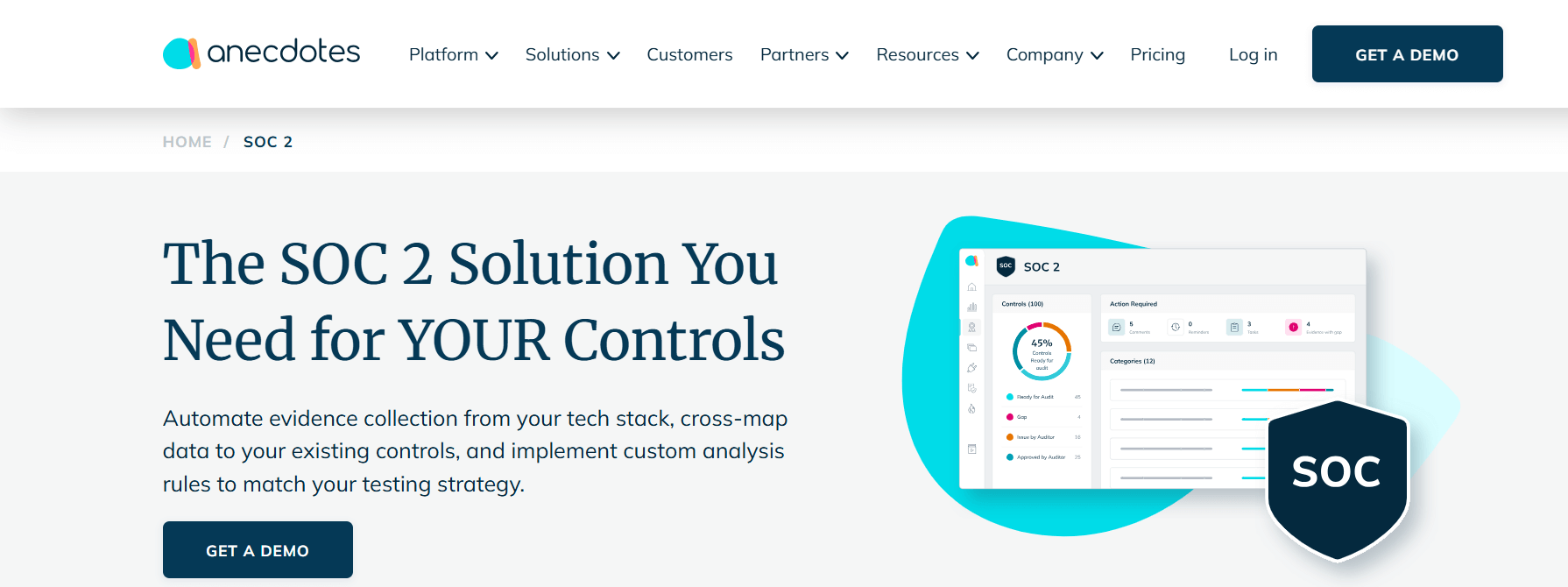
Anecdotes delivers a data-centric compliance platform that treats compliance evidence as a structured data asset rather than a collection of static documents. For DevOps tool providers, this approach enables much richer analysis of the compliance program — teams can query their compliance data, identify trends in control failures, and build custom dashboards that give engineering leadership real-time visibility into security posture. Anecdotes connects directly to the organization’s existing data sources, including cloud infrastructure, CI/CD pipelines, and security tooling, and continuously ingests compliance-relevant signals without requiring manual evidence uploads. The platform’s open data architecture also allows DevOps teams to build custom integrations using its API, making it highly extensible for organizations with proprietary toolchains.
Features
- Data-centric compliance engine that ingests and structures evidence from cloud and DevOps tooling
- Risk management module with data-driven risk scoring
- Audit collaboration workspace with structured evidence packaging
- Multi-framework support including SOC 2, ISO 27001, and custom control sets
- Compliance posture reporting for executive and board-level audiences
Pros
- Data-centric architecture gives DevOps teams deeper analytical insights into their compliance program
- Open API makes it ideal for DevOps organizations with custom or proprietary tool stacks
- Highly scalable for large, complex DevOps environments with many interconnected systems
Cons
- Best suited for technically sophisticated teams that can take advantage of the data-centric architecture
- Less hand-holding than platforms with embedded compliance success managers
Pricing
Anecdotes targets mid-market and enterprise DevOps organizations, with pricing starting around $20,000 per year. Custom enterprise pricing is available based on the number of integrations, frameworks, and users.
12. Compliancy Group
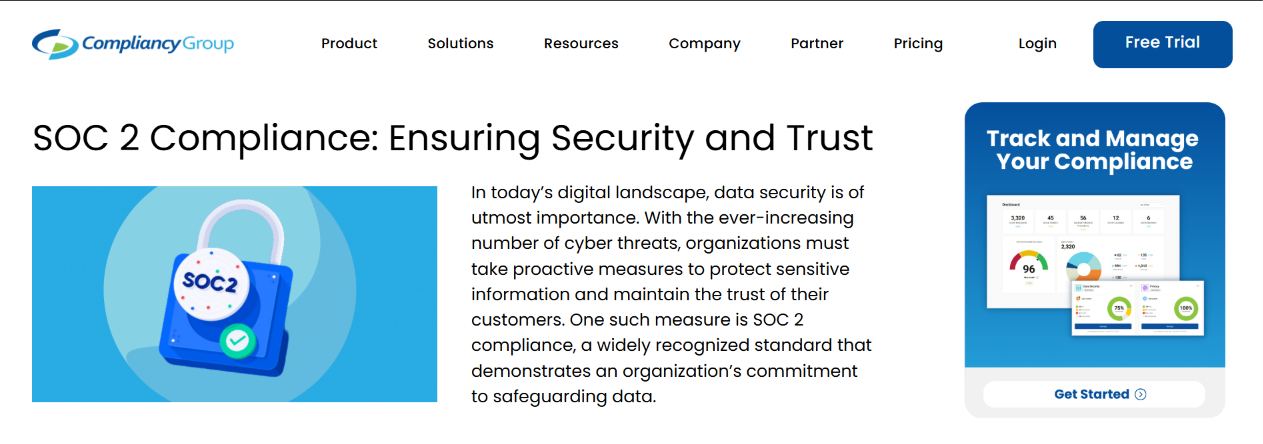
Compliancy Group rounds out this list as one of the best SOC 2 Compliance Firms for DevOps Tool Providers. The platform is a managed compliance service provider with deep expertise in helping technology companies, including DevOps tool providers, achieve and maintain SOC 2 certification. Unlike fully automated platforms, Compliancy Group pairs its cloud-based compliance management software with dedicated compliance coaches who work alongside customer teams throughout the certification journey. For DevOps organizations that lack internal compliance expertise and prefer a high-touch advisory relationship over a self-serve automation tool, Compliancy Group’s service model provides significant value. The platform covers SOC 2, HIPAA, and other healthcare-adjacent frameworks, making it especially relevant for DevOps tool providers serving the healthcare IT market, where multiple overlapping compliance requirements must be managed simultaneously.
Features
- Cloud-based compliance management platform covering SOC 2, HIPAA, and related frameworks
- Employee training module with automated completion tracking and documentation
- Vendor management workflows with automated third-party risk assessments
- Audit-ready documentation packages prepared by the compliance coaching team
- Annual compliance maintenance program to sustain SOC 2 Type II certification
Pros
- High-touch compliance coaching is ideal for DevOps tool providers entering compliance for the first time
- Compliance coaches provide practical, actionable guidance that pure-play software platforms cannot replicate
- Annual maintenance program reduces the risk of certification lapse for resource-constrained teams
Cons
- Automation capabilities are more limited compared to developer-first platforms like Vanta or Drata
- Less suitable for large DevOps organizations with dedicated compliance and security teams
Pricing
Compliancy Group pricing starts at approximately $8,000–$12,000 per year and includes both software access and compliance coaching services. Pricing varies based on the scope of the engagement and number of frameworks covered.