The cybersecurity environment in 2026 calls for a clear move away from old perimeter-based protection toward zero trust architecture. Organizations no longer rely on the outdated “trust but verify” mindset. Instead, they now treat every connection as a potential risk. At the same time, hybrid work setups, cloud services, and more advanced cyberattacks keep increasing how exposed networks have become. Therefore, selecting the right Software for Zero Trust Network Security in 2026 now sits at the center of modern security planning. We explore the top Software for Zero Trust Network Security in 2026, while also breaking down their features, pricing models and real-world value so you can make a confident choice.
What Zero Trust Network Security Means
Zero Trust Network Security uses a “never trust, always verify” approach, which means every user and every device must prove their identity before gaining access to any network resource. Instead of granting trust after the first connection, the system checks each request again and again. In this way, access stays limited to only what the user or device truly needs, even after they are already inside the network.
How It Differs from Traditional Security
Traditional tools such as VPNs depend on a fixed network boundary, however zero trust shifts control to identity and context. For example, it evaluates who the user is, what device they are using, and where the request comes from before allowing access. Consequently, this method blocks many common attack paths that rely on stolen credentials or compromised devices.
The Role of ZTNA
One of the key building blocks of this approach is Zero Trust Network Access, also known as ZTNA. This technology grants users restricted access to specific applications, services, or systems instead of opening the entire network. Furthermore, it works well in cloud-based and hybrid environments, which many companies now depend on. As threats continue to grow more complex, ZTNA helps organizations keep tighter control over who can reach what, while still supporting modern work styles.
Top 13 Best Software for Zero Trust Network Security in 2026

Zscaler Zero Trust Exchange brings together secure web gateway (SWG), data loss prevention (DLP), ZTNA, and CASB into one cloud-based security platform. However, it delivers these services through two main products, Zscaler Internet Access (ZIA) and Zscaler Private Access (ZPA), which work side by side rather than as a single built-in system. Meanwhile, the Zscaler Client Connector acts as one agent that manages both ZIA and ZPA, so users stay protected even when they connect outside the company network. In addition, the platform runs mainly in the cloud, although it supports limited on-site use through its Branch Connector.
Features
- Cloud-native zero trust setup that replaces traditional VPN connections
- AI-driven threat detection that checks all traffic, including encrypted data
- Secure Web Gateway (SWG) that blocks harmful websites and stops malware
- Zero Trust Network Access (ZTNA) that controls who can access specific apps
Pros
- Fine-tuned access controls for users and devices
- Strong security coverage across web and private apps
- Clear visibility into user activity and connected assets
Cons
- High-speed internet is needed to get the best performance
- The stated number of global PoPs does not cover every service
- No free trial option
Pricing
Best For
Zscaler fits large and widely spread companies that use cloud apps and support many remote or branch-based employees. Therefore, organizations moving to tools like Office 365 and other SaaS platforms can connect directly to the cloud without routing traffic through old network hardware. Moreover, teams that want to adopt a Zero Trust security model will find this platform useful since it checks identity, device status, and context before granting access.
Final Verdict
Zscaler Zero Trust Exchange offers a cloud-first way to protect users, devices, and applications through ZIA, ZPA, and a single client connector. However, while it provides deep security and strong control over access, the lack of transparent pricing and the need for fast internet can slow down decision-making for some businesses. Still, for organizations that want consistent protection both on and off the corporate network, this platform delivers dependable zero trust security with wide coverage.

Palo Alto Networks builds its Zero Trust framework on Prisma, Strata, and Cortex, which all operate under one control system. Together, these tools protect users, devices, apps, and networks through continuous verification. The platform checks every access request and then keeps monitoring activity after approval. At the same time, it limits access based on identity, device, and behavior. In addition, the system detects threats in real time while connecting easily with other security tools.
Features
- Validates every user and device before granting access
- Applies Zero Trust controls to applications, not just networks
- Detects and identifies all connected devices, including IoT
- Uses AI-powered analytics to find and stop threats
- Monitors activity continuously after login
- Controls access with detailed permission rules
Pros
- Delivers strong security backed by a long-established firewall company
- Combines networking and security into a single SASE platform
- Connects well with other Palo Alto products
- Updates threat data constantly for better protection
- Offers centralized control through Cloud Management Console or Panorama
Cons
- Requires advanced technical knowledge during initial setup
- Lacks clear documentation for more complex configurations
Pricing
- Uses a subscription model
- Calculates cost based on bandwidth, number of users, and chosen features
Best For
- Medium to large organizations that want a single security platform
- Businesses with multiple locations and cloud environments
- Companies that need consistent security rules across offices, data centers, and remote teams
- Enterprises that depend on high-speed, low-delay network security
Final Verdict
Palo Alto Networks Prisma Access delivers high-level Zero Trust security with powerful threat intelligence and a complete SASE platform. It protects complex environments well, while also keeping visibility across users and devices. However, the setup process takes time and expertise, and the pricing sits on the higher end. Still, organizations already using Palo Alto products will gain strong value through tight integration. Meanwhile, new customers should weigh the advanced protection against the added cost and technical effort.
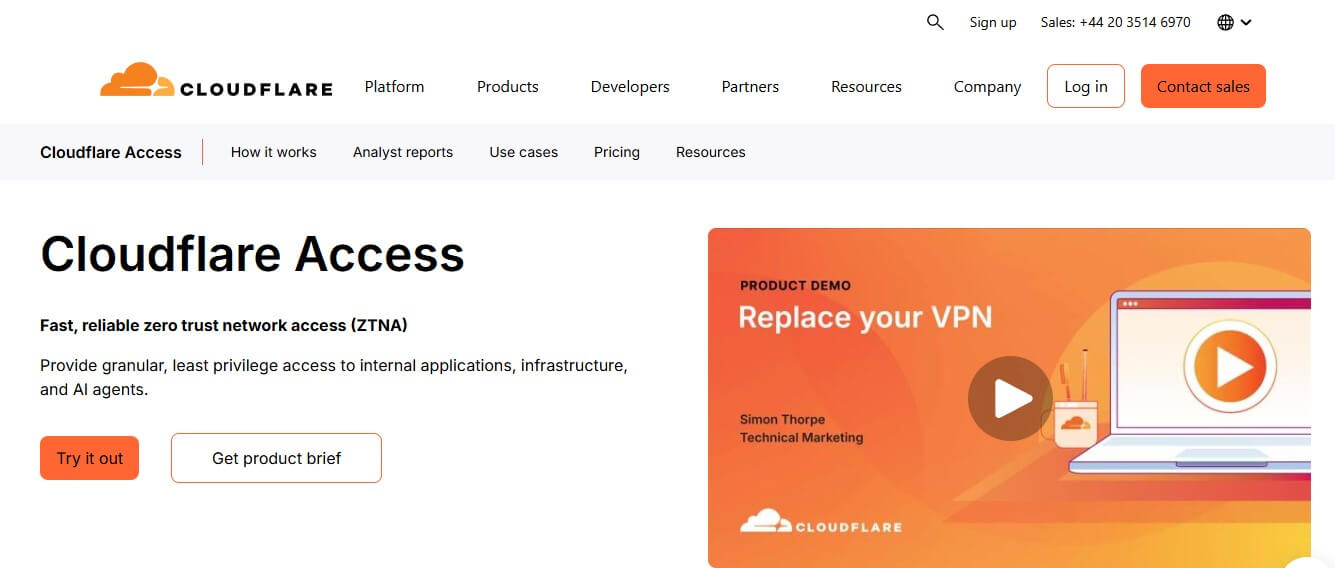
Cloudflare Zero Trust replaces traditional security boundaries with a global network that delivers Zero Trust access to company applications. It authenticates users across its worldwide network while also onboarding third-party users and recording every event and request. In addition, its internet security tools such as Secure Web Gateway, browser isolation, email security, and cloud access security broker work together to stop data leaks, malware, and phishing.
Features
- Secure Web Gateway (SWG): Filters and watches web traffic while also blocking malware and phishing attempts
- Device safety: Checks device status before allowing access
- Data protection: Helps keep sensitive information from leaving approved environments
Pros
- Simple setup with no hardware needed
- Fast connections due to its globally distributed network
- No software agents required for some use cases
- Pricing starts at $7 per user per month, which stays competitive
Cons
- Extra fees apply for storing and analyzing logs
- The free plan does not include detailed logging or support
Pricing
- Free: Up to 50 users with basic features, although logging is limited and support is not included
- Pay-as-you-go: $7 per user per month when billed annually
- Contract (Enterprise): Custom pricing that includes dedicated support and advanced options
Best Use Case
Cloudflare Zero Trust works well for small to mid-sized businesses that want cost-effective Zero Trust security without heavy infrastructure. Meanwhile, teams with users spread across different locations gain fast and dependable access through Cloudflare’s global edge network.
Final Verdict
Cloudflare Zero Trust brings together strong security, fair pricing, and worldwide performance in one platform. Furthermore, its edge-based design delivers low-latency access that many competitors cannot match at this cost. However, DNS query limits and extra logging fees still need attention. Even so, the $7 per user plan offers solid value for most organizations. The free plan also lets teams test the platform before committing, which lowers risk. Therefore, businesses that want fast and affordable Zero Trust security without complex infrastructure will find Cloudflare Zero Trust a smart option.
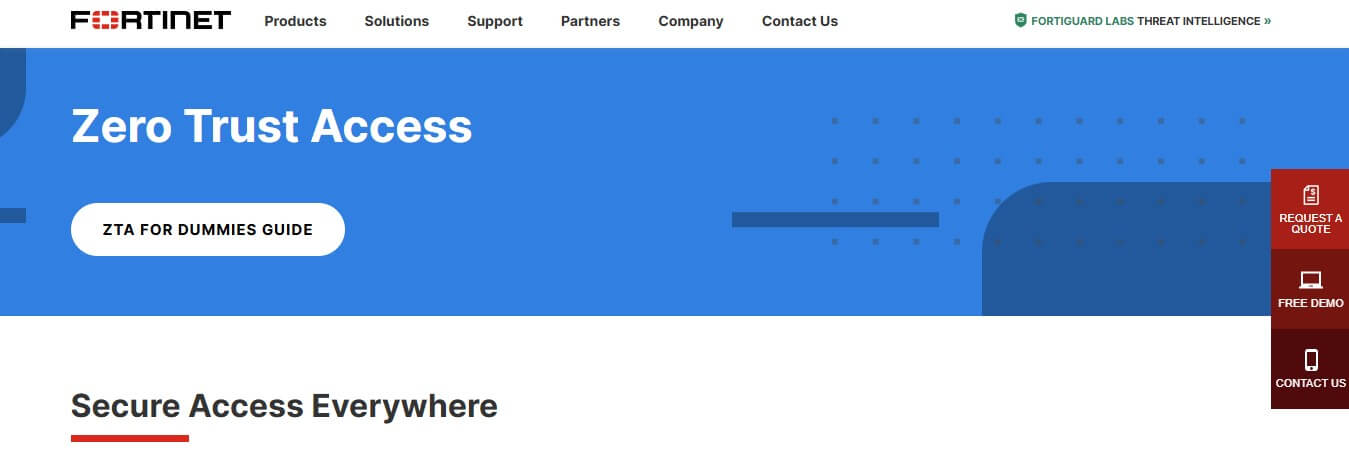
Fortinet Zero Trust Access keeps checking every user and device whenever they try to reach company apps and data. It also spots and protects unknown IoT devices the moment they connect to the network. In addition, built-in endpoint visibility, control, and threat protection keep systems safer. Users only get access to specific applications after the platform verifies their identity and device health for each session. Moreover, this same policy stays active whether users are inside or outside the office, so security remains consistent everywhere.
Features
- AI-driven next-generation antivirus (NGAV) for threat detection
- App-level access control with identity and device posture checks
- FortiSASE with cloud-hosted ZTNA, CASB, and Secure Web Gateway
- Endpoint isolation and ransomware defense
- USB device management and application firewall
Pros
- Strong value for the cost when compared to similar platforms
- Advanced endpoint security tools
- Zero trust rules that apply to both remote and on-site users
Cons
- Advanced features take time to set up
- New users face a learning curve at first
Pricing Contact vendor for pricing details.
Best For
Small and mid-sized businesses that need full security coverage without spending too much often choose Fortinet. In addition, companies that want to combine networking and security in one device, such as using a single unit for firewall and SD-WAN, find it useful. Meanwhile, managed service providers prefer it for handling multiple clients from one system. Also, distributed organizations like retail chains and school districts benefit from its affordable hardware across many locations.
Final Verdict
Fortinet Zero Trust Access delivers dependable, session-based protection with strong endpoint controls. Therefore, it works well for organizations that want solid security, flexible deployment, and good value in one platform.
Cisco Secure Access delivers identity-first zero-trust network access through an active mix of Cisco Duo multi-factor authentication and Cisco’s network technology. First, the system checks every user and every device before it allows entry to any application. Then it applies zero-trust rules across the entire environment, which helps organizations keep control of who gets in and what they can reach.
Features
- Uses identity-based segmentation through software-defined networking
- Connects with Cisco ISE to enforce identity rules at the network layer
- Analyzes endpoints and checks device posture before granting access
- Keeps users inside assigned security zones with zero-trust segmentation
- Supports multi-factor authentication, including password-free sign-in
- Uses AI to detect unusual user and device behavior
Pros
- Combines networking and security into one system, which improves visibility and control
- Delivers strong identity checks and reliable MFA
- Works smoothly with existing Cisco network hardware
- Uses behavioral analysis to help detect threats earlier
Cons
- Costs can be high for smaller organizations
- Setup and management can feel complicated without networking experience
Pricing
- Offers free trials
- Enterprise pricing depends on deployment size and setup
Best For
Cisco fits organizations that want to move toward zero-trust while still keeping tight control over secure connectivity. Moreover, companies that depend on tools like Duo, SD-WAN, and Umbrella for remote work can protect their teams more effectively. In addition, franchises, global companies, and universities benefit from Cisco’s large support network and proven reliability.
Final Verdict
Cisco Secure Access delivers strong zero-trust protection built on Cisco’s network foundation. Furthermore, its identity-first model and network-level controls work together to create wide coverage that stands out in the market. For organizations already using Cisco products, this platform offers a powerful and practical way to secure access across their systems.
Microsoft Azure Entra ID, previously known as Azure Active Directory, works as Microsoft’s cloud-based identity and access management system inside the Azure platform. It operates independently from on-premises Active Directory; however, organizations can connect both in a hybrid setup. Therefore, users can log in safely to external tools such as Microsoft 365, the Azure portal, and many SaaS platforms. At the same time, they can also reach internal apps hosted on a company’s private network. In addition, Entra ID keeps access under strict control through modern security policies, which helps companies protect accounts while keeping sign-ins simple.
Features
- Manages user identities and access across cloud and internal applications
- Applies Conditional Access rules that follow zero trust principles
- Supports multi-factor and password-free sign-in options
- Uses risk-based policies through Identity Protection
- Connects closely with Microsoft 365, Azure, and Microsoft Defender
- Provides Single Sign-On for thousands of pre-connected apps
Pros
- Works smoothly with other Microsoft services
- Offers password-free login options
- Comes bundled with many Microsoft cloud plans
- Allows access rules based on user roles, device status, and location
- Includes a 30-day trial for testing
Cons
- Setup can feel difficult, especially when linking with on-prem Active Directory
- Advanced, context-based MFA is locked behind premium plans
- Does not provide built-in SSO for custom user applications
Pricing
Best For
Microsoft Entra ID fits businesses that already use Microsoft 365 or Azure. Moreover, companies that want strong control over who can access their systems benefit from its zero trust approach. Small, mid-size, and large organizations can also rely on it for identity management that grows with their needs, while still keeping a familiar Microsoft interface.
Final Verdict
Microsoft Entra ID delivers strong value for teams that depend on Microsoft’s cloud tools. It connects closely with Microsoft services, which reduces friction for both users and IT teams. In addition, it offers enterprise-level identity control at a fair price. However, companies outside the Microsoft ecosystem might prefer other platforms. Still, for those running Microsoft 365 or Azure, Entra ID remains one of the most practical options available.
IBM Zero Trust security verifies users and connects them to sensitive data only when needed. It uses contextual information to reduce cyber risks while protecting critical information. The solution allows organizations to set up Zero Trust policies that work across remote, hybrid, and on-premises environments. IBM combines cloud technologies and strategic partnerships to deliver a secure Zero Trust framework without compromising user experience.
Features
- Threat detection and response solutions that identify and address attacks in real time
- Identity and privileged access management to control who can access what, when
- Endpoint and data protection through AI-driven unified endpoint management
Pros
- Compliance and industry expertise to meet regulatory standards
- Extensive research and intelligence for proactive security
- Comprehensive security solutions covering multiple layers
- Integration capabilities with open platforms for wider compatibility
Cons
Pricing
IBM typically bases pricing on consumption, such as per user or per resource. Organizations often receive a custom quote based on their specific requirements.
Best For
IBM suits Fortune 500 companies, critical infrastructure, and organizations that require high-level security management. Companies with complex global operations, including banks needing worldwide threat monitoring, airlines, large manufacturers, and government agencies, often choose IBM to ensure consistent protection and rapid incident response.
Final Verdict
IBM Zero Trust provides a powerful security framework for organizations handling sensitive data at scale. It combines advanced threat management with flexible policy enforcement, making it a preferred choice for enterprises that cannot compromise on security or global coverage.
StrongDM’s Continuous Zero Trust Authorization delivers security that adapts in real time to evolving threats. It prevents unauthorized access while maintaining smooth operations, shifting away from static perimeter defenses toward a system that verifies every action within the network. Every user, device, and transaction undergoes ongoing checks, ensuring that trust is never assumed.
Features
- Advanced Strong Policy Engine: Create and enforce detailed security rules across all systems.
- Unified Policy Management: Manage access policies for multiple resources from a single interface.
- Contextual Signal Control: Grant or restrict access based on real-time signals like location, device, or behavior.
- Device Trust Framework: Evaluate and enforce trustworthiness for every device connecting to your network.
Pros
- Continuous verification strengthens overall security
- Responds to potential threats immediately
- Controls access with fine-grained precision based on context
- Makes compliance reporting easier
- Offers a 14-day trial for evaluation
Cons
- Available only as a SaaS solution
- Requires ongoing access to StrongDM API for managed resources
Pricing
Best For
StrongDM fits organizations that need secure, auditable access to sensitive infrastructure such as databases, servers, and cloud platforms. It works particularly well for companies that must meet strict compliance standards, maintain detailed audit logs, and eliminate traditional credentials.
Final Verdict
StrongDM delivers specialized infrastructure access management that general zero trust solutions cannot match. Organizations seeking secure access to databases, servers, and Kubernetes environments benefit from its comprehensive audit capabilities. Its secretless access model reduces risks associated with traditional credentials. While StrongDM focuses on infrastructure access, it complements broader zero trust strategies rather than replacing them entirely.
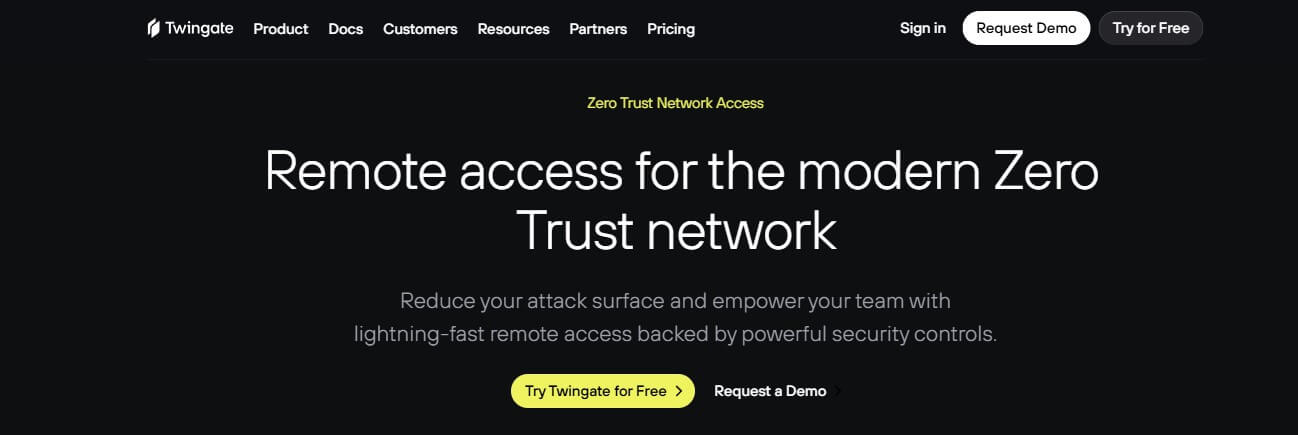
Twingate offers a zero-trust network access platform designed to replace traditional VPNs. It delivers strong performance, high security, and ease of use compared to legacy VPN solutions. Its centralized zero-trust orchestration layer installs in about 15 minutes without changing IP addresses, remapping network names, or adjusting firewall rules. The platform connects seamlessly with major identity providers, MDM/EDRs, SIEMs, and DOH providers.
Twingate encrypts data and uses split tunneling, which simplifies traffic separation. The platform tracks activity through detailed audit logs and can identify and block unusual access patterns.
Features
- Cloud-native architecture requiring no infrastructure changes
- Application-layer access control enforcing least privilege
- Deployment in minutes without network reconfiguration
- Agentless browser-based access
- Split tunneling to maintain performance
- Detailed activity logging and analytics.
Pros
- Strong security measures
- Granular permission management
- Quick and easy setup
- Secure infrastructure
- Multi-factor authentication included
- Single sign-on capability
- Application-level network access controls
Cons
- Linux access limited to command line interface
- No self-hosted option
- Cannot enforce server-level access control by port
Pricing
- Starter: Free
- Team: $5/user/month
- Business: $10/user/month
- Enterprise: Custom pricing
Best For
Twingate fits small to mid-sized businesses that want a simple VPN replacement with zero-trust principles. Companies frustrated with complex legacy VPNs or poor performance will benefit from its modern approach. Organizations that value rapid deployment and smooth user experience over extensive additional features will find Twingate particularly suitable.
Final Verdict
Twingate focuses on one main goal: replacing traditional VPNs with modern zero-trust access quickly and efficiently. Businesses seeking full SASE platforms may need to explore other solutions, but those aiming for VPN replacement without infrastructure changes will find Twingate highly effective. Competitive pricing, simple deployment, and a user-friendly interface make it an excellent choice for small to mid-sized organizations ready to modernize remote access.
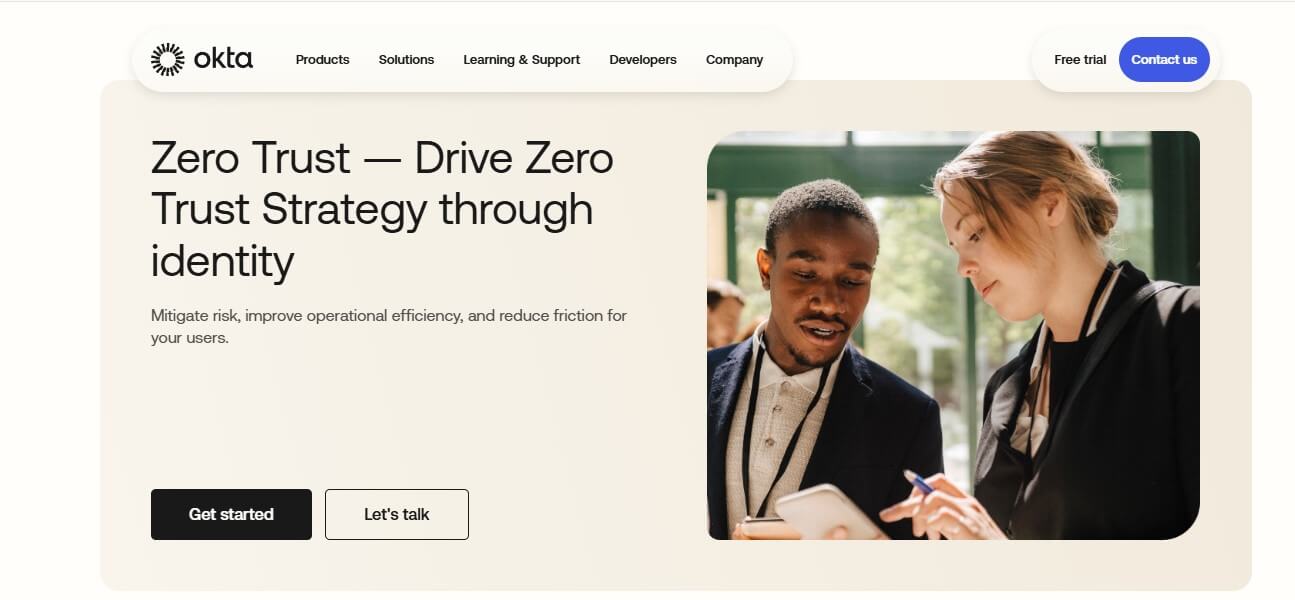
Okta controls access to digital devices by allowing only authenticated users, reflecting Zero Trust principles. It triggers multi-factor authentication (MFA) based on contextual signals such as new devices, unfamiliar IP addresses, or other specified conditions. Users can manage identities with ease while gaining insight into activity across the organization. The platform supports flexible MFA settings, allowing multiple authorization levels for both individual applications and the entire organization.
Features
- Unified identity and access management across applications
- Pre-built integrations with numerous apps
- MFA support for Apple Touch ID and Windows Hello
- AI-powered improvements for the Identity Cloud
- Detailed activity logs for monitoring and compliance
Pros
- Access a large library of pre-integrated applications
- Manage all integrated tools from a central platform
- Audit logs assist with governance and compliance
Cons
- Initial setup or migration may be complex for some users
- Occasional delays can occur in syncing or updating access permissions
Best For
Okta works well for businesses seeking a secure, simple way to manage user access across multiple apps. It enhances productivity by simplifying logins, protecting data with smart authentication, and automating identity-related tasks. Teams of any size, from small groups to large enterprises, can maintain security and efficiency using Okta.
Final Verdict
Okta provides comprehensive identity management with adaptable MFA options, detailed insights, and strong security controls, making it a reliable choice for organizations that want both protection and simplicity.
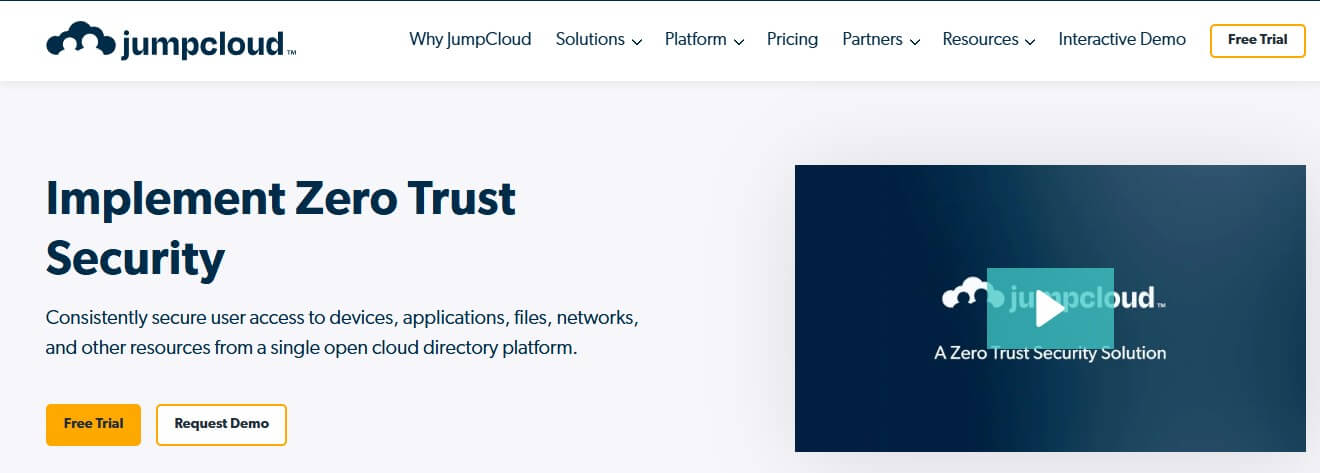
JumpCloud provides a complete solution for zero trust identity and access management. Its cloud-based Open Directory Platform uses open standards to manage server, device, and user identities across multiple operating systems. Organizations can handle single sign-on (SSO), conditional access, and passwordless authentication all from one interface. The platform also allows integration with existing tools, giving teams the freedom to connect services and expand their workflows as needed. Popular integrations include AWS Identity Center, Google Workspace, Microsoft 365, Active Directory, HRIS platforms, and network infrastructure tools.
Features
- Cloud-based directory that removes the need for on-premises infrastructure
- Supports multiple operating systems: Windows, macOS, and Linux
- Unified user authentication across applications and systems
- Conditional access policies to enforce zero trust security
- Multi-Factor Authentication (MFA) included
- Device management for Windows, Mac, and Linux devices
Pros
- Works with a wide range of integrations
- Offers control over access policies
- Provides access to AWS resources and 900+ pre-built applications
- Includes event logging and compliance reporting
Cons
- Limited compatibility with legacy or on-premises systems
- Can require time to learn for new users
- Needs internet connectivity to operate
Pricing
Best For
JumpCloud suits small and mid-sized businesses, as well as startups, looking for modern directory services without relying on Active Directory. Organizations with mixed operating systems—Windows, macOS, Linux—benefit from its unified management. Teams seeking to reduce or eliminate on-premises infrastructure will find JumpCloud’s cloud-first approach effective.
Final Verdict
JumpCloud’s Open Directory Platform offers strong value for organizations pursuing zero trust principles. It combines affordability with multi-OS support while removing the need for local infrastructure. While it may not match all the advanced features of enterprise-level solutions, it delivers the essential capabilities most organizations need, making it a practical choice at a competitive price.
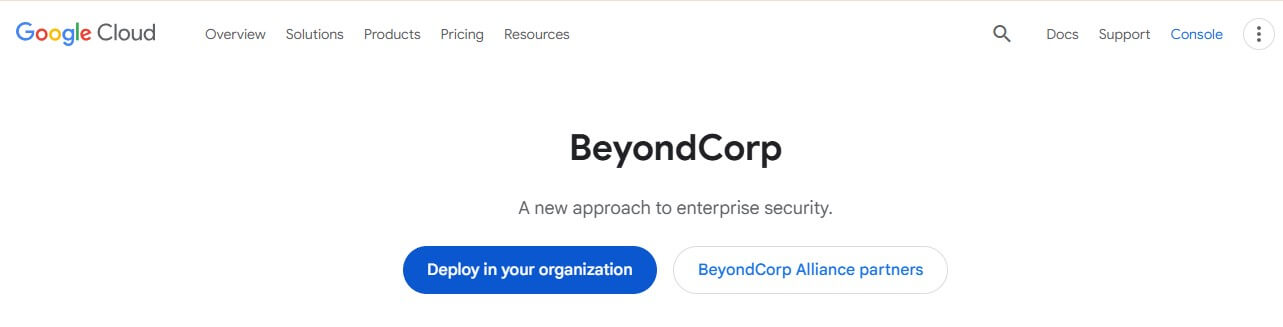
BeyondCorp represents Google’s Zero Trust network architecture, designed to move security from the traditional network perimeter to individual users. Google replaced its VPN-based remote access with a model that allows employees to work securely from almost any location. The system draws on over a decade of internal experience at Google, enhanced by community insights and security best practices. Shifting access control to users ensures that only authenticated and authorized devices and accounts can reach corporate resources, even outside the network.
Features
- Browser-based access eliminates the need for software agents on endpoints
- Built on Google’s global infrastructure, offering fast and reliable connections
- Access controls adapt based on user identity, device condition, and context
- Supports hybrid environments including SaaS, web apps, client-server apps, and cloud services
- Incorporates threat protection and data security based on Google’s security expertise
Pros
- Offers discounts for large-scale deployments
- Provides precise access control across users and devices
- Includes advanced security features
- Supports SSO, access policies, access proxies, and authentication based on user and device
Cons
- May not work well with older or third-party technologies
- Depends on Chrome and Google’s ecosystem for full functionality
Pricing
- Costs vary depending on deployment size and model
- Often bundles pricing with Google Workspace integration
Best For
- Organizations that rely heavily on Google Workspace and Google Cloud Platform
- Teams that prefer an agent-free approach with Chrome browser standardization
- Companies that value Google’s security expertise and infrastructure
Final Verdict
Google BeyondCorp Enterprise offers strong zero trust security, built on years of internal practice at Google. Its browser-based model removes the need to install agents, while the global infrastructure ensures consistent performance. The solution works particularly well for organizations deeply embedded in Google Workspace and GCP, though reliance on Chrome may limit flexibility for others. For companies within the Google ecosystem, BeyondCorp integrates smoothly and offers high-level security. Organizations outside this ecosystem should evaluate whether its design aligns with their technology and security needs.
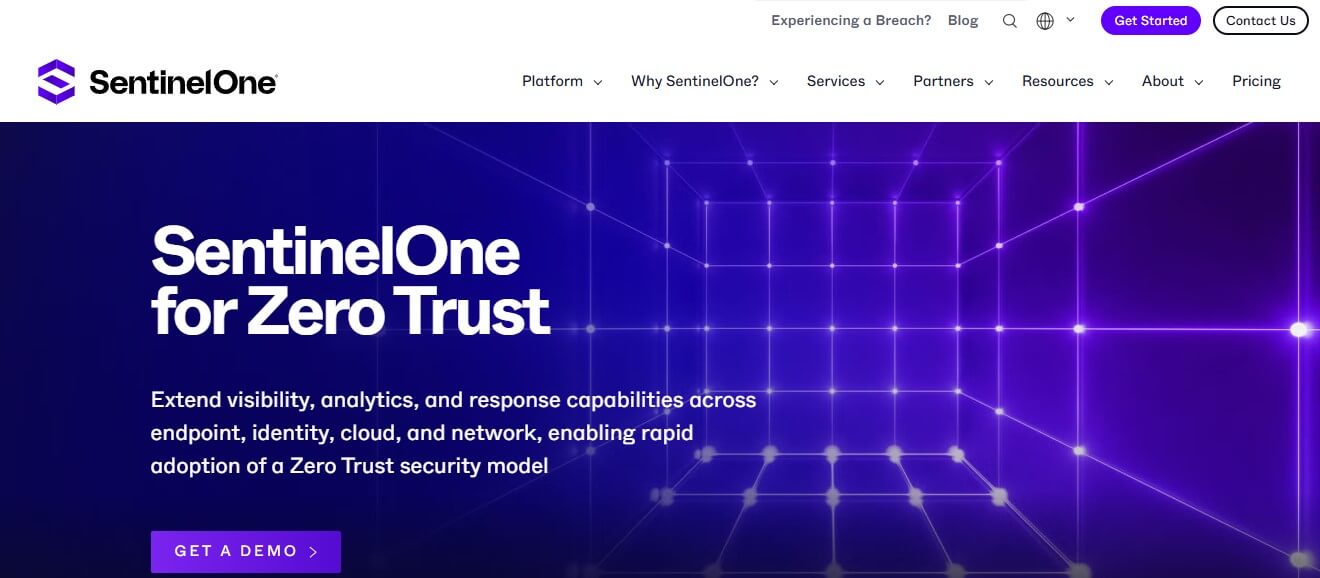
SentinelOne’s Zero Trust solution combines advanced security tools with existing IT infrastructure to close security gaps without major upgrades. It allows security teams to continuously monitor and manage IT risks across endpoints, user identities, applications, and corporate networks. The platform enforces the principle of “never trust, always verify,” giving organizations greater control over their cybersecurity posture.
Features
- Endpoint Security: Singularity XDR integrates with Microsoft Azure Active Directory, giving endpoints and user identities Zero Trust protection.
- Cloud Workload Security: Singularity Cloud Workload Security monitors cloud environments and protects workloads against threats.
- Zero Trust Network: Maintains strict verification across networks, ensuring access is granted only to authenticated users and devices.
Pros
- Responds to threats quickly with automated remediation
- Achieves top-tier MITRE ATT&CK evaluation scores
- Continues endpoint protection even when offline
- Deploys easily with minimal configuration
- Restores files in four hours or less using ransomware rollback
Cons
Occasionally isolates systems incorrectly, requiring user review
Dashboard consolidation across products is still in progress
Pricing
Best For
SentinelOne suits organizations that need autonomous security operations and fast ransomware recovery. Mid-sized and large enterprises with small security teams gain the most from automated threat detection and response. Organizations with remote workers or inconsistent internet connections benefit from offline protection. Companies that value speed and minimal manual intervention find the platform particularly effective.
Final Verdict
SentinelOne is one of the most advanced autonomous endpoint protection platforms in 2026. Its AI-driven security operates with minimal human oversight, while the ransomware rollback feature ensures rapid recovery from attacks. Although its pricing exceeds traditional antivirus solutions, the platform delivers proven results, reduces administrative burden, and provides comprehensive protection that justifies the investment for organizations committed to endpoint security.
Conclusion
Choosing the right Software for Zero Trust Network Security in 2026 requires careful consideration of your organization’s size, existing systems, technical skills, and specific security needs. Moreover, the 2026 landscape shows clear shifts: cloud-native architectures increasingly power new deployments, AI-driven threat detection gains widespread adoption, SASE platforms bring multiple security functions together, and identity takes center stage as the main security boundary. Effective zero trust security goes beyond picking the right tool.
Organizations must plan thoroughly, secure stakeholder support, train users consistently, and refine policies over time. No single solution guarantees complete protection; combining strong Software for Zero Trust Network Security in 2026 with a proactive security culture, regular training, network segmentation, and detailed incident response measures produces the best results. As cyber threats evolve and remote work persists, investing in quality zero trust software proves essential to safeguarding modern organizations.