Investors, especially those in growth equity and institutional funds often ask for SOC 2 reports during technical due diligence. In fact, the top soc 2 firms investors recommend frequently come up early in these conversations, since their involvement signals credibility. Startups that present a clean SOC 2 Type II report during fundraising show that they operate with discipline, manage risk carefully, and can meet enterprise expectations. Consequently, this strengthens valuation, speeds up deal timelines, and improves the chances of closing contracts with Fortune 500 companies, financial institutions, healthcare systems, and government agencies.
At the same time, founders who research the top soc 2 firms investors recommend gain a clearer path through the compliance process. The SOC 2 ecosystem includes two main vendor types, and each plays a distinct role. First, compliance automation platforms offer SaaS tools that help teams prepare for audits through automated evidence collection and ongoing control tracking. Next, licensed CPA audit firms independent accountants accredited by the AICPA conduct the formal examination and issue the official SOC 2 report. Therefore, many companies choose to work with both to complete the process efficiently. We have reviewed 12 leading SOC 2 firms across these categories.
Top 12 Best SOC 2 Firms Investors Recommend
1. Vanta

Vanta stands as one of the most widely adopted compliance automation platforms, with more than 9,000 companies using it worldwide. The company launched in 2018 and focused from the start on removing the manual effort tied to SOC 2 compliance for SaaS and cloud businesses. As companies grow, investors at Series A and B stages often point to Vanta as the standard way to show strong security practices.
Moreover, the platform uses an AI-driven system that handles up to 90% of evidence collection, while it also runs over 1,200 tests every hour to maintain continuous compliance checks. In addition, it connects with more than 375 tools across cloud, identity, endpoint, and ticketing systems. According to IDC, customers report a 526% return on investment over three years, along with a payback period of about three months.
Features
- Automates evidence collection across 375+ integrations
- Runs 1,200+ hourly compliance tests
- Uses AI to handle security questionnaires (about 25 per year on Growth plan)
- Includes vendor risk tracking and scoring
- Supports automated user access reviews and approvals
- Maps multiple frameworks to avoid duplicate work
- Connects users with audit partners like A-LIGN and Schellman
Pros
- Widely trusted by investors and enterprise buyers
- Large integration ecosystem
- Strong AI-driven automation on higher plans
Cons
- Pricing increases with team size and added features
- New users may need time to understand the system
- Mid-tier support experience can vary
- Audit costs come separately
Pricing
- Does not list fixed prices publicly
- Essentials plan: about $7,500–$11,500 per year
- 1–50 employees: about $12,000–$25,000 per year
- 51–200 employees: about $20,000–$40,000 per year
- 200–500 employees: about $35,000–$60,000+ per year
- Multi-framework bundles: about $30,000–$80,000+ per year
Best Use Cases
- SaaS startups preparing for investor reviews or enterprise deals
- Companies working toward SOC 2 and ISO 27001 at the same time
- Teams that want a widely recognized compliance platform
- Organizations with complex cloud systems that need automation
Verdict
Vanta fits companies that want a trusted name in compliance and need automation to handle complex systems. However, growing teams should plan for rising costs and some onboarding time before they see full value.
2. Drata
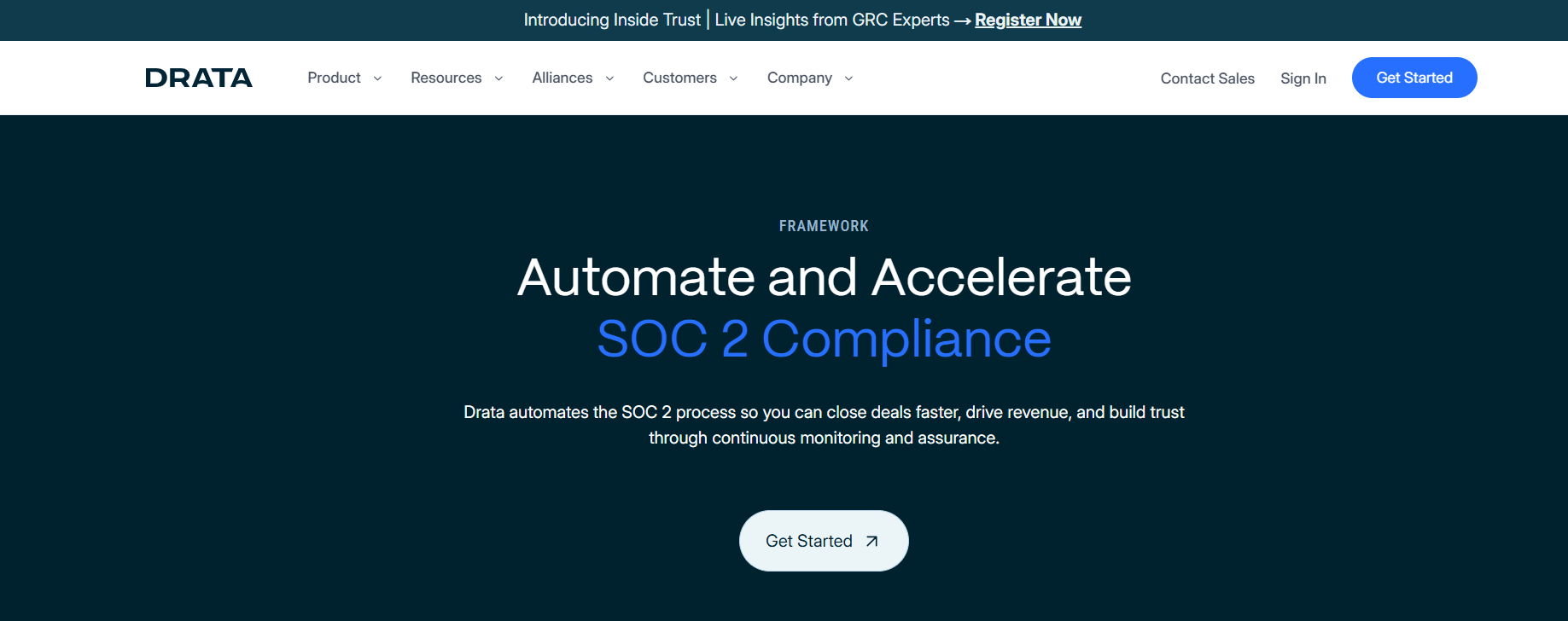
Drata works with over 4,000 customers and supports more than 26 compliance frameworks. It uses a Compliance-as-Code approach, which helps engineering teams handle compliance tasks through automation instead of manual effort. In addition, the platform connects with over 200 tools and tracks systems continuously in real time. For this reason, many engineering-led SaaS companies choose Drata when they want strong technical automation built into their compliance process.
Features
- Automated user access reviews with role-based approvals
- Audit Hub for secure evidence sharing with auditors
- Cross-mapping so one control can meet multiple certifications
- Risk register with scoring, alerts, and guided fixes
- AI support for faster security questionnaire responses
Pros
- Strong fit for engineering-focused teams
- Continuous monitoring reduces manual work
- Wide integration support across cloud and DevOps tools
Cons
- Extra cost for vendor risk and Trust Center features
- Setup can take a few weeks in complex systems
- Integrations may break in highly customized setups
- May feel too complex for very small teams
Pricing
- Custom pricing based on company size and needs
- Foundation plan: about $7,000–$15,000 per year
- Advanced plan: about $15,000–$25,000 per year
- Enterprise plan: $25,000–$100,000+ per year
- Extra frameworks: $1,500–$7,500 each per year
- Setup fees can reach $25,000
- Average annual cost reported around $34,385
- Audit fees are separate from platform pricing
Best Use Cases
- Engineering-led SaaS companies with 20–500+ employees
- Startups backed by investors that need strong compliance systems
- Teams working toward multiple certifications at once
- Companies using tools like AWS, GitHub, and Okta
- Organizations where security engineers handle compliance
Verdict
Drata stands out for teams that want deep automation and strong technical control over compliance. However, smaller companies or those with simpler needs may find it too complex and expensive.
3. A-LIGN
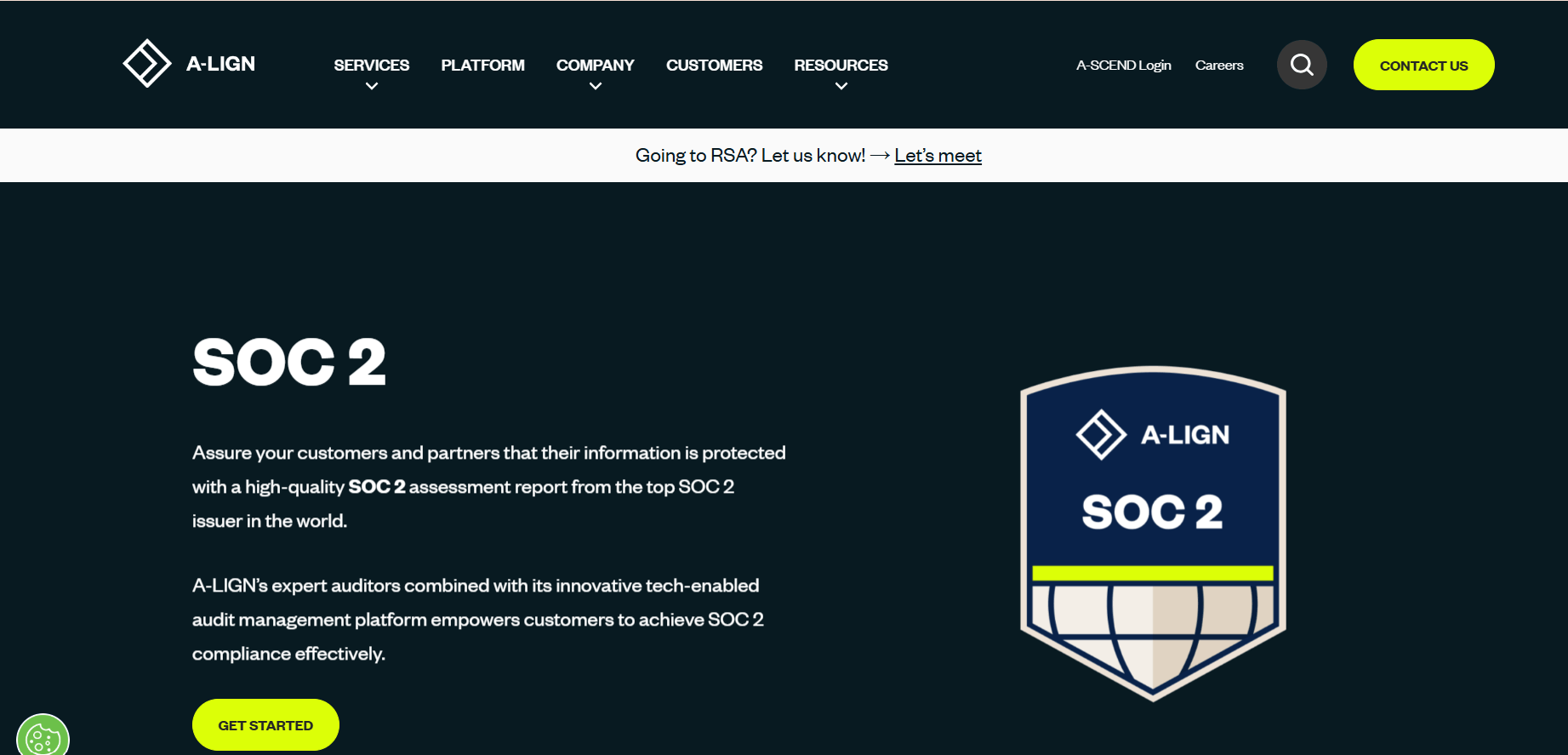
A-LIGN has completed more than 31,000 audits and serves over 5,700 clients with a team of 400+ auditors across five international offices. It focuses fully on cybersecurity and compliance, which helps it deliver consistent audit quality at scale.
In addition, A-LIGN uses its A-SCEND platform to manage audits from start to finish. The platform connects directly with tools like Vanta, Drata, and Secureframe, which reduces repeated work and speeds up the audit process. Therefore, clients often complete audits faster with less effort. The company also reports a 96% client satisfaction rate and promises responses within 24 hours, which supports strong client retention.
Features
- A-SCEND platform for evidence collection and audit tracking
- Direct integrations with Vanta, Drata, and Secureframe
- AI support to detect gaps and speed up audit reviews
- Global support teams across multiple time zones
- SOC 2 readiness checks and gap assessments
- Covers multiple frameworks: SOC 1, SOC 2, ISO 27001, FedRAMP, HITRUST
- Offers combined SOC 2 and ISAE 3000 audits
- Licensed CPA firm registered with Public Company Accounting Oversight Board
Pros
- Reduces duplicate work through direct integrations
- Handles multiple compliance frameworks in one place
- Strong experience in fintech, healthcare, and regulated sectors
Cons
- Does not provide ongoing monitoring like compliance software tools
- Uses custom pricing, so you need a consultation first
- May feel too structured for very small startups
Pricing
- No fixed pricing available publicly
- Custom quotes depend on scope, company size, and audit type
- Typical estimates:
- SOC 2 Type I: $10,000–$30,000
- SOC 2 Type II: $20,000–$60,000+
- Costs may increase for larger or more complex audits
Best Use Cases
- SaaS companies already using Vanta, Drata, or Secureframe
- Teams that need quick audit completion for enterprise deals
- Companies working toward multiple certifications at once
- Fintech and healthcare businesses in regulated environments
Verdict
A-LIGN stands out for its scale, speed, and deep focus on compliance audits. It works especially well for growing companies that want an efficient audit process and already use compliance tools. However, smaller teams may prefer a more hands-on or flexible option.
4. Schellman & Company
Schellman focuses fully on cybersecurity and compliance instead of offering financial audits, tax work, or general consulting. Therefore, clients work with specialists who stay deeply involved throughout the engagement. In addition, the firm uses a fixed-fee structure, so clients understand costs from the start without unexpected changes. Schellman also moves quickly, delivering draft SOC 2 reports in about three weeks and final reports within 30 days. This timeline is much shorter than the six to twelve months many larger firms require.
Features
- Fixed-fee pricing with clear upfront costs
- Draft SOC 2 report in about 3 weeks
- Final report within 30 days after audit completion
- Focus only on cybersecurity and compliance
- Active role in the AICPA SOC 2 working group
- Auditors hold credentials like CISA, CISSP, and CPA
Pros
- Strong reputation in cybersecurity compliance
- Quick turnaround time
- Deep SOC 2 expertise across the team
- Helpful startup program for early-stage companies
- Trusted by large enterprises and government buyers
Cons
- Higher cost than smaller firms
- No built-in automation tools like Vanta or Drata
- Not ideal for companies needing tax or financial audit services
- May feel too advanced for very small startups
- Pricing can still be high compared to offshore firms
Pricing
- Fixed-fee model, though exact prices are not publicly listed
- Typically lower than Big Four firms, yet higher than smaller providers
- More details available on Schellman website
Best Use Cases
- Startups selling to large enterprises or financial institutions
- Mid-sized companies that want predictable audit costs
- Teams working under tight investor or customer deadlines
- Tech companies handling multiple compliance requirements at once
Verdict
Schellman stands out for speed, pricing clarity, and deep specialization. Moreover, its strong reputation makes it a solid choice for companies that need credibility during sales or fundraising. However, smaller teams or budget-conscious startups may find other options more suitable.
5. Thoropass
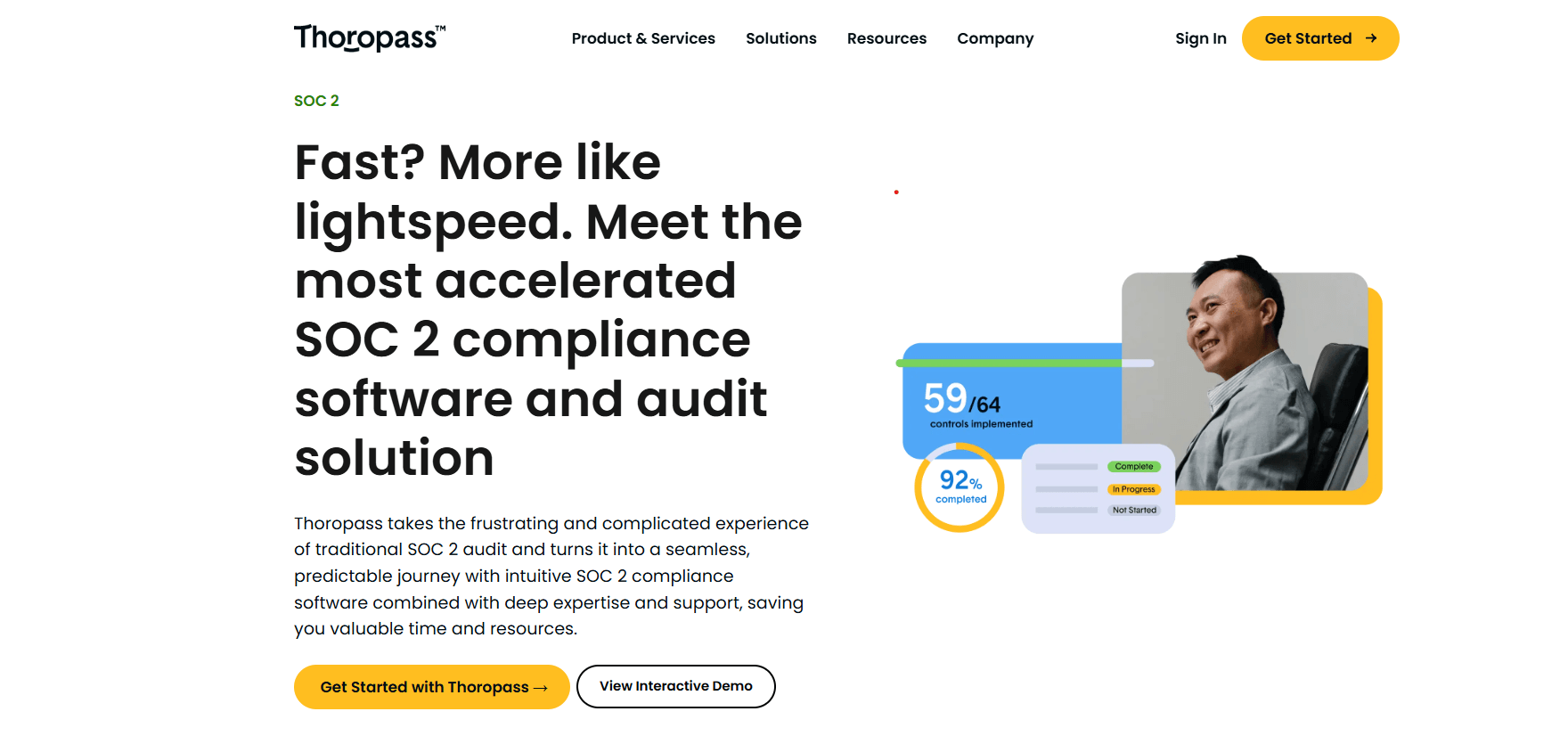
Thoropass (formerly Laika) stands out among soc 2 firms investors recommend since it combines compliance software with built-in audit services. Instead of using one tool for preparation and another firm for auditing, you can handle both within the same platform. This setup reduces back-and-forth, and it simplifies communication throughout the process. Moreover, Thoropass states that companies can cut costs by 25–50% compared to hiring a separate audit firm. This happens since the platform includes both preparation tools and audit execution, along with its First Pass AI for evidence checks.
Features
- Combined audit model (prep + audit in one place)
- First Pass AI for evidence review
- Automated evidence collection from systems
- Continuous monitoring dashboards
- Risk register and vendor tracking
- Policy templates for documentation
- Task reminders and workflow automation
Pros
- Uses one vendor for both prep and audit
- Can reduce overall compliance costs
- Faster audits with in-house experts
- Easy-to-use interface
- Strong support experience
Cons
- Higher starting cost than software-only tools
- Less advanced automation for DevOps teams
- Fewer integrations than competitors
- Dashboard may feel crowded
- Not ideal if you already use another auditor
- Some limits with file uploads
Pricing
- Custom pricing model
- Platform starts around $8,700/year
Best Use Cases
- Companies that want one provider for audit and compliance
- First-time SOC 2 teams that need guidance
- Businesses comparing full cost (tool + audit)
- Fintech and healthcare SaaS companies
Verdict
Thoropass appeals to teams that want a simpler path to compliance. It brings everything into one place, and that reduces coordination issues. However, companies with strong internal engineering teams may prefer tools with deeper automation. Still, if you want guidance and fewer moving parts, Thoropass remains one of the soc 2 firms investors recommend for a reason.
Secureframe stands out through its guided workflows, built in compliance support, and wide integration options. In addition, former auditors work directly with customers, which helps simplify the process for beginners. The platform holds a 4.7/5 rating on G2, and many users say it makes SOC 2 easier to understand, especially for teams without a dedicated security function. Therefore, many soc 2 firms investors recommend often include Secureframe for first-time compliance efforts.
Features
- Step-by-step workflows with clear action items
- 150+ integrations for automated evidence collection
- Built-in policy builder with editable templates
- Access to in-house compliance experts
- Real-time monitoring of cloud systems
- Automated control testing and gap alerts
- AI tools for fixing controls and risk checks
Pros
- Direct access to former auditors
- Easy-to-use interface for non-technical teams
- Supports multiple frameworks in one place
Cons
- Fewer integrations than some competitors
- Some integrations need manual setup
- Limited control customization options
Pricing
- Custom pricing model
- Estimated $7,500/year for platform access (up to 100 employees)
Best Use Cases
- Early-stage and growth-stage SaaS companies
- Founders preparing for their first SOC 2 audit
- Teams without a dedicated security expert
- Companies managing multiple frameworks in one platform
Verdict
Secureframe works best for companies that need guidance throughout the SOC 2 process. It combines software with human support, which makes adoption easier. However, larger teams with advanced technical needs may prefer more flexible tools. Still, among soc 2 firms investors recommend, Secureframe remains a strong choice for startups and growing businesses.
7. Sprinto
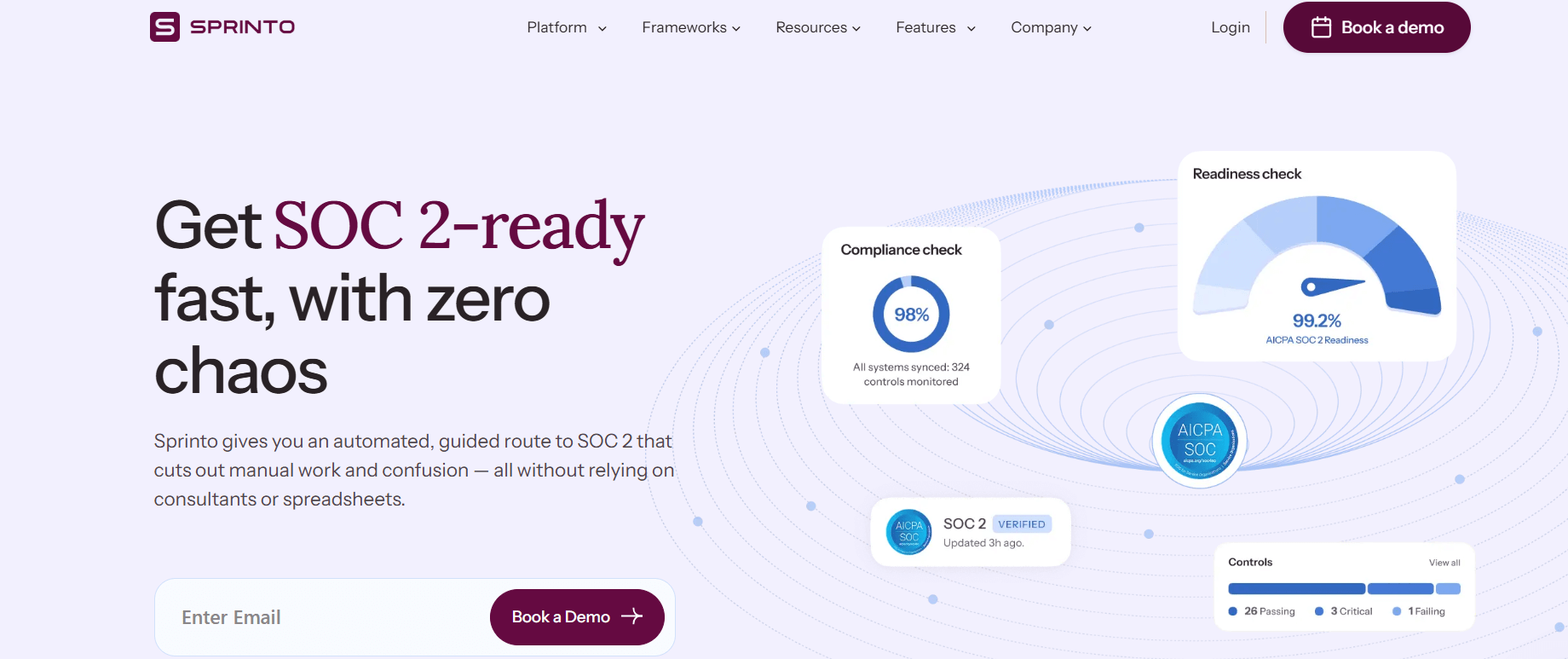
Sprinto stands out especially for startups that want a cost-friendly way to handle compliance. It focuses on automation, so teams can complete tasks without constant follow-up. For instance, the platform reminds engineers to install security tools and prompts HR to upload required documents. Therefore, teams spend less time chasing tasks and more time building their product. In addition, this hands-on automation appeals to lean startups across APAC and early-stage companies in the US.
Features
- Adaptive automation that organizes tasks and nudges teams
- Pre-approved compliance programs with quick setup
- Built-in mobile device security checks
- Evidence and control mapping across frameworks
- Vendor risk management with centralized scoring
- Privacy and data governance tools beyond SOC 2
Pros
- Affordable starting price
- Clear pricing with no hidden renewal costs
- Reduces manual work for small teams
- Strong presence in APAC markets
- Scales as the company grows
- Good option for budget-conscious founders
Cons
- Fewer integrations than competitors
- Limited enterprise track record
- Not ideal for complex multi-cloud setups
- Teams may outgrow it after Series B
- Smaller auditor partner network
- Less advanced AI features
Pricing
- Starts around $4,000–$5,000 per year
- Plans include: Starter, Professional, Advanced, Enterprise.
Best Use Cases
- Early-stage startups with tight budgets
- APAC companies working toward SOC 2 or ISO 27001
- Businesses with simple cloud environments
- Founders who want low-touch compliance management
- Teams comparing affordable alternatives to Vanta or Drata
Verdict
Sprinto works well for startups that want a simple and affordable way to manage compliance. It keeps teams on track through automation, while also reducing the need for manual oversight. However, companies with complex systems or rapid scaling plans may need a more advanced solution later on.
8. Deloitte
Deloitte stands as the largest of the Big Four accounting firms and operates in more than 150 countries. In particular, its Digital Assurance and Transparency practice delivers SOC 2 services from readiness assessments through final attestation. In addition, Deloitte offers a SOC 2+ service that combines frameworks like ISO 27001, HITRUST, NIST, and GDPR into a single audit. At the same time, it helps companies manage multiple attestations while reducing repeated work and internal disruption. Therefore, companies preparing for an IPO or operating globally often choose Deloitte, since its reports carry strong credibility with investors, boards, and regulators.
Features
- Combines SOC 2 with ISO 27001, HITRUST, NIST, and GDPR
- Coordinates multiple audits through the SECO program
- Provides readiness assessments and gap analysis
- Offers clear remediation guidance
- Operates across 150+ countries
- Brings industry expertise in fintech, healthcare, government, and enterprise tech
- Connects compliance work with cyber risk advisory
- Gives access to broader consulting services like data privacy and AI governance
Pros
- Strong global reputation and trust
- Combines multiple audits into one process
- Deep expertise across regulated industries
- Works well for IPO-focused companies
- Provides access to wide consulting support.
Cons
- Costs much more than most competitors
- Takes longer to complete engagements
- Requires heavy internal involvement
- Does not fit early-stage startups
Pricing
- Does not publish fixed pricing
- Uses custom quotes for each engagement.
Best Use Cases
- Large enterprises and Fortune 500 companies
- Companies preparing for IPO
- Businesses in regulated industries like banking and healthcare
- Multinational organizations needing consistent audits
- Companies seeking a combined SOC 2 and multi-framework audit
Verdict
Deloitte works best for large or complex organizations that need global credibility and can support a detailed audit process. However, smaller companies or those with tight timelines may find the cost and duration difficult to manage.
9. PwC
PwC operates as one of the Big Four firms, with a presence in more than 150 countries. It delivers SOC 2 services through its Digital Assurance and Transparency practice. In addition, its SOC 2+ approach combines multiple standards, including HITRUST, NIST, and GDPR, into one coordinated review.
They helps large companies manage several attestations at once while cutting down duplicate work. Therefore, many companies choose PwC when they prepare for IPOs or acquisitions.
Features
- Combines SOC 2 with other standards in one assessment
- SECO program manages multiple attestations together
- Global teams ensure consistent audits across countries
- Certified auditors with strong technical backgrounds
- Uses AI tools to review audit evidence
- Offers advisory on cyber risk, privacy, and AI governance
- Provides readiness checks and post-audit support
Pros
- Strong reputation with investors and boards
- Handles complex, multi-framework compliance efficiently
- Supports multinational companies with local teams
- Includes advisory insights within the audit process
- Deep experience in regulated industries.
Cons
- High cost compared to many competitors
- Long timelines, often several months
- Requires significant internal effort
- Onboarding can take time
Pricing
- No public pricing; quotes depend on scope
- Typical range: $75,000 to $300,000+
Best Use Cases
- Large enterprises and global companies
- Businesses preparing for IPO or acquisition
- Firms in banking, insurance, or government sectors
- Companies needing SOC 2 plus other frameworks together
- Organizations that require top-tier audit credibility
Verdict
PwC fits companies that need strong audit credibility and can handle a long, detailed process. However, smaller teams or fast-moving startups may find the cost and timeline difficult to manage.
10. Baker Tilly
Baker Tilly operates as a global advisory and assurance firm with a strong SOC 2 practice. It runs SOC 2 engagements through its Risk Advisory group, which includes AICPA-qualified specialists. The firm completes hundreds of SOC 2 audits each year.
In addition, it combines SOC 2 with other frameworks such as HIPAA, ISO 27001, HITRUST, and NIST. This approach supports companies that must meet multiple compliance standards at once. Notably, it also focuses on emerging areas like AI governance in SOC 2 planning.
Features
- AICPA-qualified SOC specialists handle SOC 2 audits
- Teams complete hundreds of SOC 2 engagements annually
- SOC 2+ reports combine HIPAA, ISO 27001, HITRUST, and NIST
- Global presence supports operations in 140+ countries
- Experience across healthcare, fintech, and government sectors
- AI governance guidance included in SOC 2 scoping discussions
- Separate risk advisory unit focuses on SOC work.
Pros
- Strong global brand with enterprise credibility
- SOC 2+ reporting covers multiple frameworks in one engagement
- Deep experience in regulated industries
- Presence in over 140 countries supports global firms
- Offers practical guidance during audits
Cons
- Costs more than smaller boutique SOC 2 firms
- Slower pace than firms focused only on speed
- More process steps than startup-focused providers.
Pricing
Baker Tilly does not publish fixed SOC 2 pricing. However, SOC 2 Type I often starts around $15,000–$40,000. SOC 2 Type II can reach $30,000–$100,000+ depending on scope and complexity. Contact the firm directly for an exact quote.
Verdict
Baker Tilly fits companies that want enterprise-grade SOC 2 support with global reach. It works well for mid-market and regulated businesses. It also suits organizations that need multiple compliance frameworks in one audit. However, smaller startups may find the cost and process weight too high for early-stage needs.
11. BARR Advisory
BARR Advisory focuses on cloud and SaaS companies that need compliance audits and certification support. It operates across more than 20 countries and combines SOC 2 auditing with ISO 27001 certification services. In addition, it stands out for holding both CPA audit licensing and ISO certification authority under one firm. This reduces the need to work with multiple providers during compliance projects.
Features
- Provides SOC 2 and ISO 27001 under one firm
- Supports cloud platforms like AWS, Azure, and GCP
- Offers audit guidance and risk assessments
- Covers multiple compliance frameworks globally
- Delivers fixed-rate engagement structure
- Includes remediation and gap support
Pros
- Combines SOC 2 and ISO 27001 services in one place
- Fixed pricing helps reduce unexpected cost changes
- Strong understanding of cloud-native environments
- Personalized client engagement model
- Supports international compliance needs
Cons
- Smaller team compared to large audit firms
- Limited capacity during peak audit periods
- Lower brand recognition in some markets
- Not designed for large enterprise-wide audit needs
- Does not focus on financial audit services
Pricing
BARR Advisory uses fixed pricing but does not publish official rates. Estimated ranges include:
- SOC 2 Type I: $12,000–$30,000
- SOC 2 Type II: $20,000–$50,000+
Verdict
BARR Advisory fits SaaS and cloud companies that want hands-on audit support and combined certification services. It also works well for teams that prefer fixed pricing and direct auditor engagement. Additionally, it suits organizations that need both SOC 2 and ISO 27001 without working with multiple firms.
12. Linford & Company
Linford & Company is an independent CPA firm founded by former Big Four auditors. The firm focuses heavily on SOC 2 audits and builds most of its work around that framework. It also supports startups and tech companies that want strong audit quality with a more personal service model. Many consider it among soc 2 firms investors recommend when they want both depth and speed in compliance work.
Features
- SOC 2 work makes up about 90% of its audit practice
- Former Big Four professionals lead engagements
- SOC 2 readiness checks help teams fix gaps early
- It combines SOC 2 with ISO 27001, HIPAA, and PCI DSS when needed
- It also supports FedRAMP and HITRUST readiness programs
- Penetration testing sits alongside audit services.
Pros
- Big Four experience supports strong audit execution
- High SOC 2 focus improves consistency across engagements
- Fast report delivery compared to larger firms
- Clear communication throughout the audit process
- Strong educational support for first-time SOC 2 clients
Cons
- Small team limits capacity for very large enterprises
- Limited global reach for multinational audit needs
Pricing
Linford & Company does not list fixed fees publicly. However, SOC 2 Type I audits often cost about $10,000–$25,000. SOC 2 Type II audits usually fall between $15,000–$45,000. Overall, pricing stays lower than Big Four firms and many mid-tier providers.
Best Use Cases
- Startups preparing for their first SOC 2 audit
- SaaS and tech companies that need fast compliance support
- Teams that want SOC 2 plus HIPAA, PCI DSS, or ISO 27001 in one cycle
- Companies that prefer direct communication with experienced auditors
Verdict
Linford & Company works well for growing tech companies that want strong SOC 2 execution without the cost and complexity of large firms. It fits especially well for teams that value speed, clarity, and experienced auditors with deep SOC 2 focus.
How to Choose the Right SOC 2 Partner for Your Stage
Seed startups usually do best with guided SOC 2 platforms like Vanta or Secureframe, while Sprinto offers a more budget-friendly option. For audits, A-LIGN and Schellman are common choices due to speed and integration support.
Series A/B companies often prefer Drata for its automation and DevOps-friendly setup, paired with A-LIGN or Schellman for audits.
Companies that want one provider for both software and audit can use Thoropass to reduce vendor complexity and cost.
Mid-market and regulated industries such as fintech or healthcare often choose Baker Tilly or BARR Advisory, while large enterprises tend toward Deloitte or PwC for brand recognition and scale.
Linford & Company offers a strong alternative for companies that want Big Four-level quality at a lower cost.
Overall, the right choice depends on company stage, budget, and complexity, but starting early is key to avoiding delays in deals and partnerships.