Choosing the right technology can make or break an account-based marketing program, which is exactly why so many B2B marketers are searching for the Best Account Based Marketing Software in 2026 right now. Account-based marketing has grown from a niche enterprise tactic into a core go-to-market strategy, and as a result, the market has exploded with platforms that promise everything from predictive intent data to AI-generated personalization at scale. However, not every tool delivers on that promise, so marketing and sales leaders need a clear, honest breakdown of what actually works before they commit six-figure budgets to a single vendor.
That’s precisely what this guide provides. Instead of repeating vendor marketing copy, it walks through 25 leading platforms, spanning enterprise orchestration suites, intent-data providers, sales intelligence tools, and emerging AI-native content engines, and evaluates each one on its overview, standout features, genuine pros and cons, and current pricing. Furthermore, because ABM technology moves quickly, this roundup reflects the latest product changes, mergers, and pricing shifts shaping the category heading into 2026. Whether a team is launching its first target-account pilot or scaling a mature, multi-channel program, this list makes it easier to pick the right fit and avoid an expensive mismatch.
Top 25 Best Account Based Marketing Software in 2026
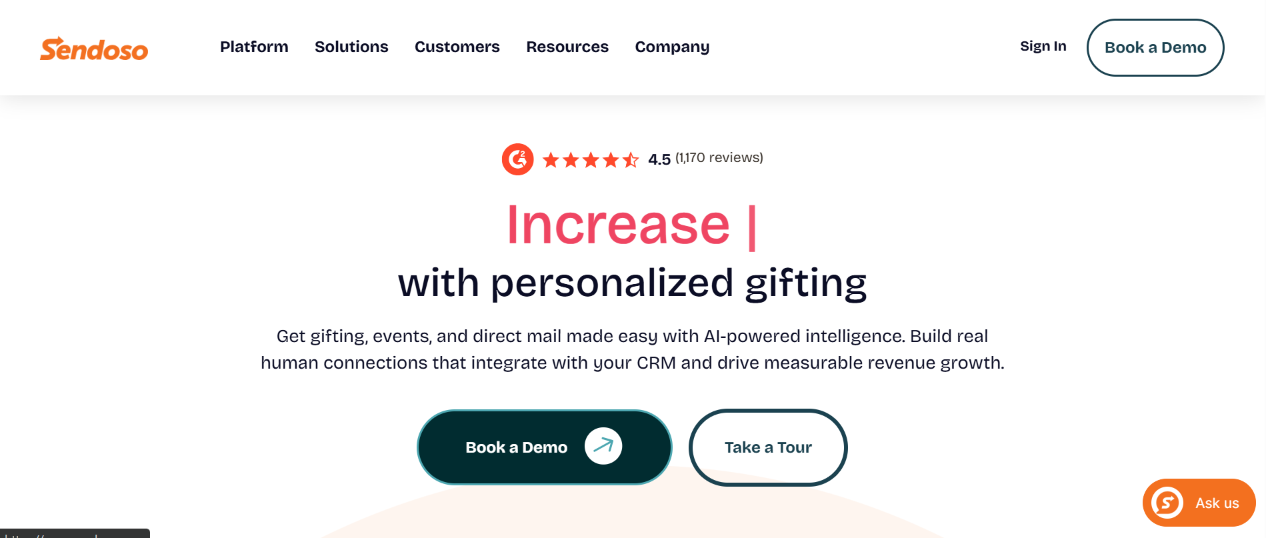
Sendoso rounds out many lists of the Best Account Based Marketing Software in 2026 by tackling a problem digital channels alone can’t solve: breaking through inbox fatigue with tangible, personalized touchpoints. Marketing and sales teams use the platform to send gifts, branded swag, and direct mail to target accounts at key moments, then track how those physical touches influence pipeline movement.
Features
- Global gift-sending marketplace with fulfillment and warehousing
- Automated direct-mail campaigns triggered from CRM events
- Native triggers from Salesforce, HubSpot, and Marketo workflows
- ROI and engagement reporting tied to sent items
- International shipping and localization support
Pros
- Measurable lift in reply and meeting-booked rates from tangible touches
- Extensive global catalog and logistics network
- Integrates cleanly into existing ABM and sales-engagement sequences
Cons
- Attribution can be harder to isolate from other campaign activity
- Works best as a complement to, not a replacement for, a full ABM platform
Pricing: Custom, quote-based; typically billed as a platform subscription plus a per-send fulfillment cost.

DemandScience, now integrated with the Terminus orchestration engine, still earns independent mention among the Best Account Based Marketing Software in 2026 for its content syndication network and predictive intent data. Demand-generation teams lean on DemandScience to fill the top of the funnel with qualified leads, then hand those accounts off to Terminus for coordinated multi-channel engagement.
Features
- PredictiveIntent data across a global publisher network
- Content syndication for top-of-funnel lead generation
- Lead qualification and verification services
- Direct integration with Terminus orchestration tools
- Global data coverage spanning multiple regions and industries
Pros
- Strong lead- and pipeline-generation performance
- Large global data footprint across industries and geographies
- Complements orchestration platforms rather than competing with them
Cons
- Product roadmap is still consolidating following the Terminus merger
- Less appealing for teams that prefer fully self-serve control
Pricing: Custom quotes, typically bundled with Terminus modules; contracts generally fall in the low-to-mid five-figure range annually.

Metadata.io has carved out a spot among the Best Account Based Marketing Software in 2026 by automating the tedious mechanics of paid demand generation. Instead of optimizing toward clicks or cost-per-lead, the platform’s AI continuously adjusts audiences, budgets, and bids toward pipeline and closed-revenue outcomes pulled straight from the connected CRM, which frees lean marketing teams from manual campaign babysitting.
Features
- Cross-channel campaign management (LinkedIn, Meta, Google, Reddit, X)
- Lead enrichment applied automatically to captured leads
- CRM-based reporting tied to pipeline and revenue
- Experimentation engine for testing creative and audiences at scale
Pros
- Automates repetitive campaign optimization work
- Optimizes toward revenue outcomes rather than vanity metrics
- Strong satisfaction scores from marketing-team reviewers
Cons
- Performance depends heavily on clean, well-structured CRM data
- Functions as an advertising layer rather than full ABM orchestration
Pricing: Custom, quote-based through a sales consultation; no public self-serve pricing is available.

LinkedIn Sales Navigator remains indispensable across the Best Account Based Marketing Software in 2026 category because it is the only tool with direct access to LinkedIn’s first-party professional graph. Sales and marketing teams use it to map buying committees, track job changes, and warm up InMail outreach before ever picking up the phone, making it a near-universal complement to any dedicated ABM platform.
Features
- Advanced lead and account search filters
- Buying-committee and org-chart mapping
- Real-time alerts for job changes and posted content
- InMail messaging with AI-assisted drafting
- Native CRM embedding for Salesforce, HubSpot, and Dynamics
- Team usage analytics and adoption reporting
Pros
- Unmatched access to first-party professional data at scale
- Strong for identifying and mapping buying committees
- Deep CRM embedding keeps reps working inside familiar tools
Cons
- No native advertising or content-personalization capability
- Per-seat costs add up quickly across larger sales teams
Pricing: Core costs roughly $99.99/month per seat; Advanced runs about $1,799.88/year per seat; Advanced Plus (enterprise) is custom-quoted, often starting around $1,600+ per seat annually.
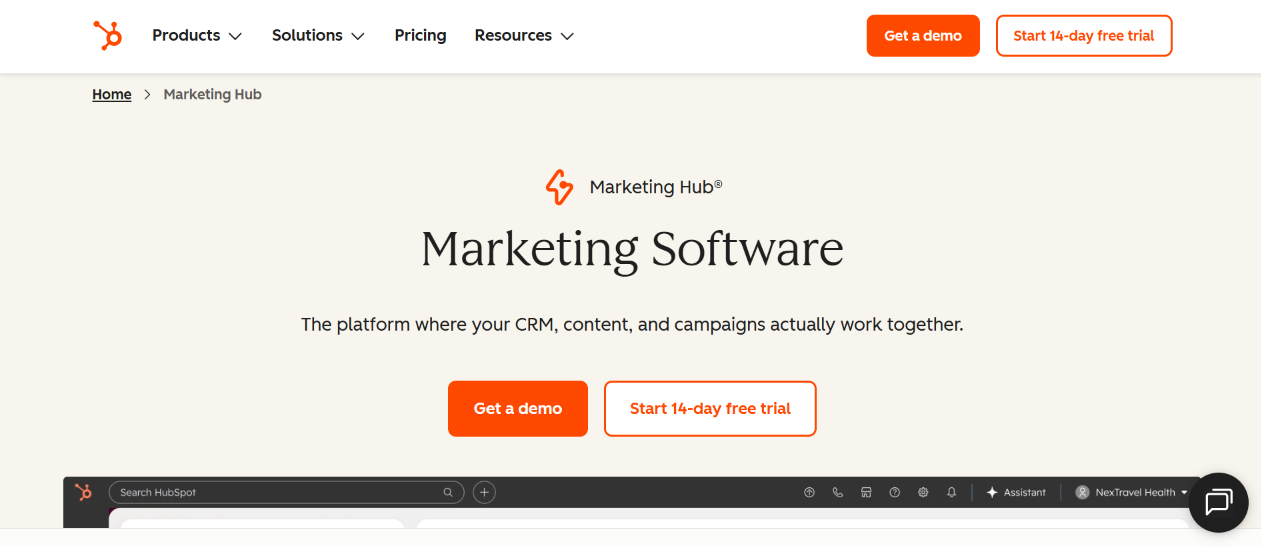
HubSpot Marketing Hub appeals to smaller and mid-market teams evaluating the Best Account Based Marketing Software in 2026 because it folds target-account workspaces, buying-role tracking, and AI-powered intent signals directly into a CRM most revenue teams already use. Consequently, marketing and sales stay aligned on the same account records without needing a separate integration project.
Features
- Target account workspace with tiered account lists
- Buying-role tracking across contacts within an account
- ABM reporting dashboards tied to pipeline stages
- Breeze AI intent signals as an add-on capability
- Native CRM, sales, and service alignment
Pros
- Seamless alignment between CRM, marketing, and sales data
- Approachable for teams new to formal ABM programs
- Frequent product updates backed by a large support ecosystem
Cons
- ABM depth is lighter than purpose-built enterprise platforms
- Costs rise quickly as contact volume and seats scale
Pricing: Professional tier starts around $800/month; Enterprise starts around $3,600/month, with additional cost for advanced intent and advertising add-ons.

Userled has emerged as one of the Best Account Based Marketing Software in 2026 picks for teams that want AI-native content personalization without a lengthy build process. The platform automatically generates account- and persona-specific microsites, ad creative, and email content, then activates that content across channels, letting lean marketing teams run 1:1 and 1:few campaigns that once required a much larger content team.
Features
- Dynamic, personalized microsites for target accounts
- Multichannel activation across ads, email, and LinkedIn
- Engagement analytics tied to content performance
- CRM integration for account and contact syncing
- Rapid campaign launch without heavy design resources
Pros
- Fast time-to-value for personalized content at scale
- Strong full-funnel orchestration from a modern, AI-native workflow
- Reduces dependency on a large in-house content team
Cons
- Smaller customer base and track record than legacy vendors
- Best suited to teams already running coordinated multichannel campaigns
Pricing: Custom, quote-based; positioned as a mid-market-friendly alternative to legacy enterprise ABM suites.

UserGems solves a narrow but valuable problem within the Best Account Based Marketing Software in 2026 landscape: surfacing warm accounts that other tools miss. By tracking job changes among past customers and champions, the platform alerts sales and marketing the moment a known buyer moves to a new company, turning relationship equity into a fresh, high-intent pipeline opportunity.
Features
- Job-change tracking for past customers and champions
- Buying-committee change alerts within target accounts
- Automated list building based on relationship signals
- Native integration with Salesloft, Outreach, and major CRMs
- Customer and champion tracking dashboards
- Workflow triggers for automated outreach sequencing
Pros
- Surfaces high-converting warm accounts other tools overlook
- Narrow, focused use case that is easy to operationalize
- Delivers strong ROI for outbound-heavy sales teams
Cons
- Narrower scope than full ABM suites
- Requires pairing with a separate execution or orchestration tool
- Limited advertising or content-personalization capability
Pricing: Custom, quote-based, typically priced according to the number of tracked accounts and user seats.

Factors.ai has climbed the rankings of the Best Account Based Marketing Software in 2026 by offering transparent, published pricing and a two-week onboarding window in a category dominated by opaque, quote-only vendors. The platform automates the full five-step ABM motion — defining the ideal customer profile, identifying visitors, scoring accounts, activating LinkedIn and Google Ads audiences, and proving full-funnel ROI — from a single dashboard.
Features
- Company-level visitor identification with a 75%+ match rate
- AI account scoring based on behavior and pipeline stage
- Native dynamic audience sync to LinkedIn and Google Ads
- Full-funnel attribution tied to closed-won revenue
- Slack alerts for account engagement
- Free tier for initial evaluation without a credit card
Pros
- Transparent, published pricing versus opaque enterprise quotes
- Fast onboarding, typically around two weeks
- Strong native LinkedIn and Google Ads activation depth
Cons
- Smaller analyst-recognition footprint than legacy vendors
- Fewer large-enterprise case studies to reference
Pricing: Published tiers reportedly start in the low five figures annually, positioned well below premium enterprise platforms; a free entry-level tier is available.
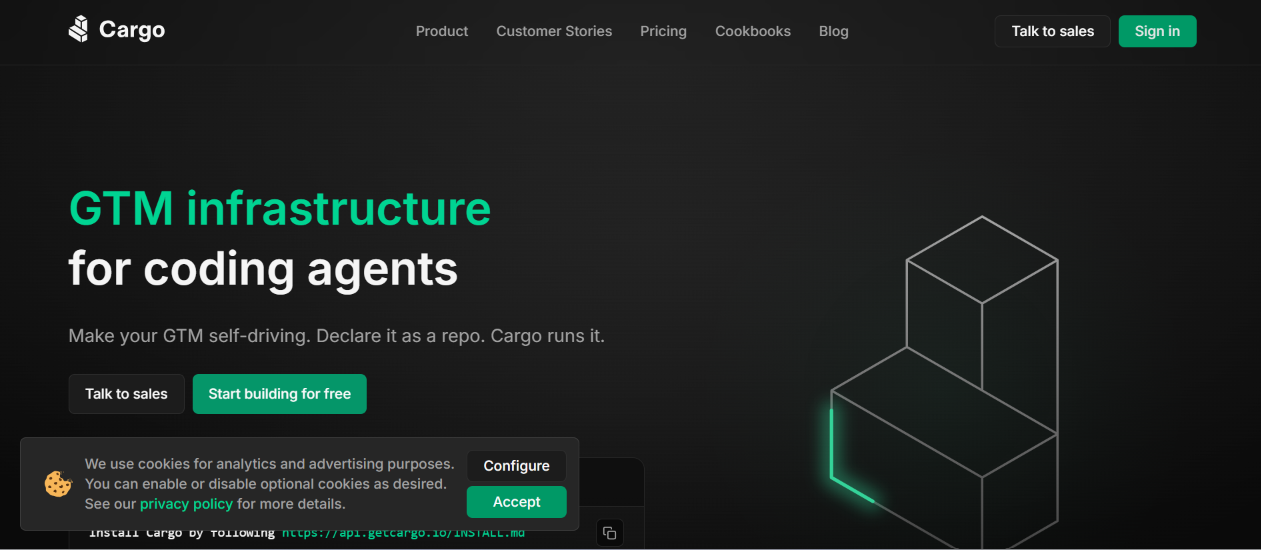
Cargo brings a GTM-engineering approach to the Best Account Based Marketing Software in 2026 conversation, functioning less like a traditional ABM suite and more like programmable revenue infrastructure. RevOps and GTM engineering teams use its Agents, Plays, Tools, and Data Models to automate account list-building, lead scoring, enrichment, and routing across a stack of more than one hundred connected GTM tools.
Features
- Autonomous AI agents that research, qualify, and act on signals
- Reusable Tools callable from the UI, API, or an agent
- Unified Data Models spanning CRM, product, and enrichment data
- API and CLI access with Claude Code and Cursor skill integration
- SOC 2 Type II certified infrastructure
Pros
- Replaces fragmented Zapier flows with persistent, event-driven workflows
- Highly composable for technical GTM and RevOps teams
- Integrates with more than 100 GTM tools out of the box
Cons
- No mid-tier plan between Starter and Professional pricing
- Limited third-party review history given its relative newness
Pricing: Credit-based pricing spans a free tier (100 one-time credits)
- Starter at $250/month (2,500 credits)
- Professional at $1,190/month (17,000 credits)
- Enterprise from $3,000+/month.
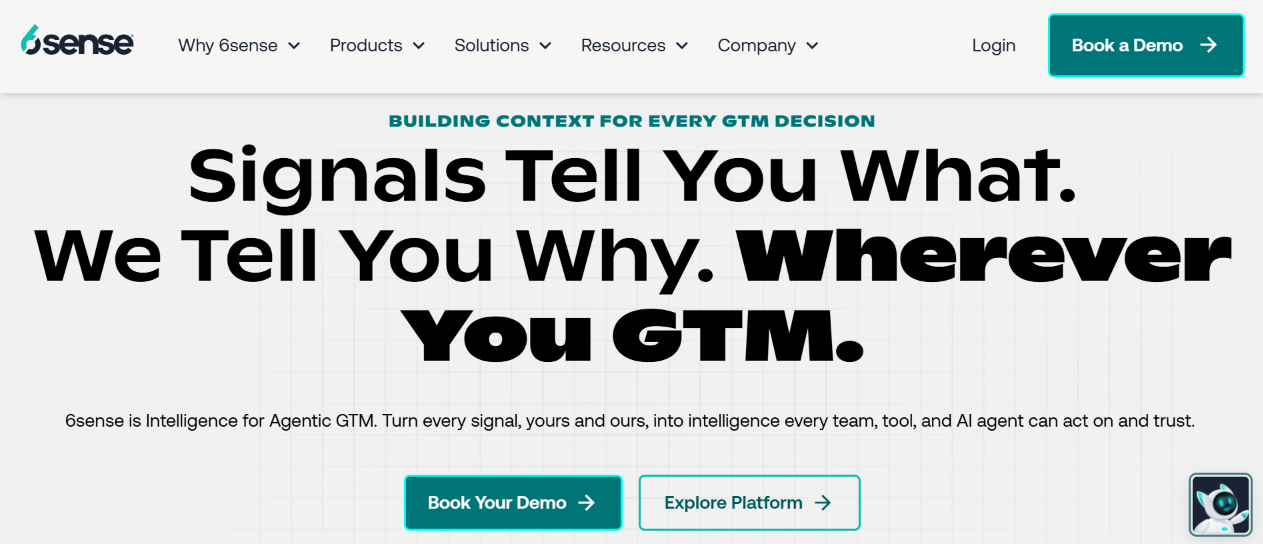
6sense anchors any list of the Best Account Based Marketing Software in 2026 because it pairs predictive AI with anonymous buyer-journey tracking, so marketing and sales teams spot in-market accounts before a single form gets filled out. The platform scores accounts across every stage of the funnel, from early awareness through active purchase intent, and it earned Forrester Wave Leader recognition for Revenue Marketing Platforms in early 2026. Consequently, revenue teams treat 6sense as the intelligence layer that feeds every other tool in their ABM stack.
Features
- AI-driven predictive account scoring across the full buying journey
- Anonymous website visitor identification and intent-signal tracking
- Native advertising orchestration across display, social, and CTV channels
- Deep Salesforce and HubSpot integrations with pipeline dashboards
- Sales alerts delivered directly into Slack or email
Pros
- Best-in-class intent accuracy and predictive AI modeling
- Extensive integration ecosystem across CRM and marketing automation
- Recognized market leadership backed by independent analyst reports
Cons
- Premium pricing puts it out of reach for smaller marketing teams
- Intent scoring can feel opaque without dedicated onboarding support
Pricing: Custom, quote-based; enterprise contracts commonly run $50,000–$120,000+ annually, though a limited free Sales Intelligence tier (50 credits/month) is available for smaller teams to test the platform.
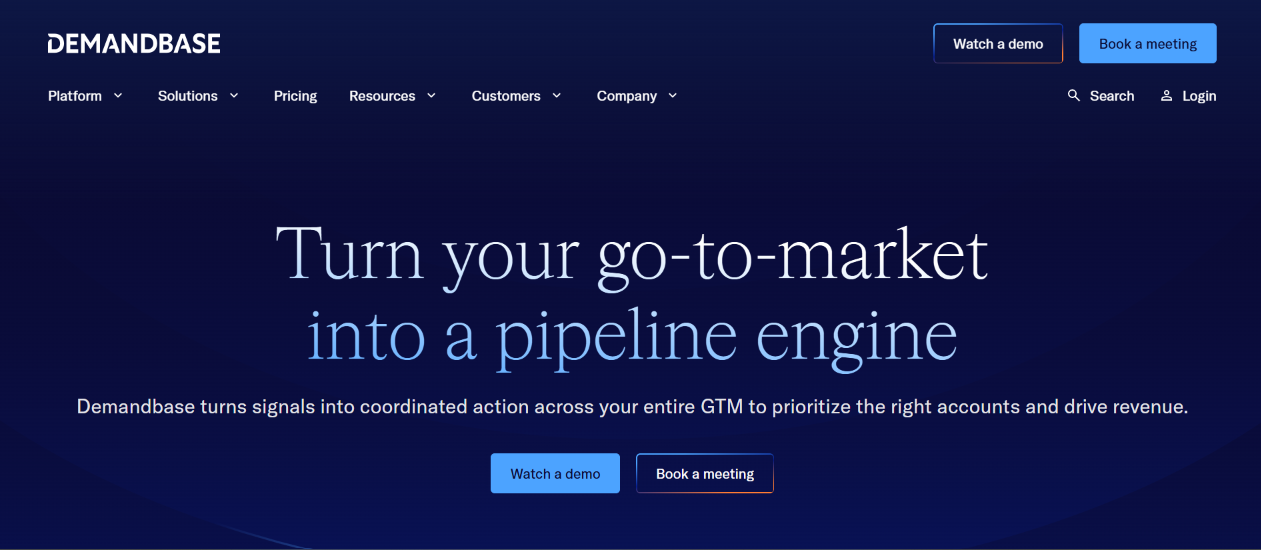
Demandbase One remains a fixture among the Best Account Based Marketing Software in 2026 thanks to its unified company graph, which correctly groups regional subsidiaries — think Acme North America and Acme Europe — under a single account. As a result, global enterprises rely on Demandbase to coordinate advertising, sales intelligence, and analytics without losing sight of who they are actually targeting. The platform blends its own intent signals with Bombora’s keyword data, giving marketers a fuller picture of buyer research behavior.
Features
- Proprietary company graph that unifies global account identities
- Native B2B advertising across display, video, and connected TV
- Dynamic website personalization by account and persona
- Sales intelligence with real-time engagement alerts
- Bombora-powered intent data layered on first-party signals
- Pipeline and revenue-impact analytics dashboards
Pros
- Unmatched account resolution for multi-region enterprises
- Comprehensive channel coverage in a single interface
- Strong analyst and peer-review reputation for enterprise ABM
Cons
- Six-figure annual contracts are common at enterprise scale
- Complex setup requires dedicated implementation resources
- Steep learning curve for teams without a mature ABM program
Pricing: Custom quote; Vendr’s marketplace data puts the median annual contract around $68,000, with large enterprise deployments frequently exceeding $100,000.

Terminus, now combined with DemandScience’s data and demand-generation engine following their 2024 merger, continues to earn its spot among the Best Account Based Marketing Software in 2026 for mid-market teams that want multi-channel orchestration without Demandbase-level pricing. Because the platform coordinates advertising, chat, and email from one dashboard, marketing and sales teams can launch coordinated campaigns quickly, then layer in DemandScience’s content syndication for additional pipeline generation.
Features
- Multi-channel campaign orchestration across ads, chat, and email
- Account scoring with LinkedIn audience synchronization
- Terminus Data Cloud with firmographic and intent signals
- Sales alerts and account-engagement notifications
- Integration with major CRMs and marketing automation platforms
- DemandScience content syndication for demand generation
Pros
- More competitive pricing than Demandbase or 6sense
- Broad integration ecosystem across the martech stack
- Solid multi-channel advertising and engagement orchestration
Cons
- Post-merger product roadmap still carries some uncertainty
- Module-based pricing can escalate quickly with add-ons
Pricing: Median subscription around $23,000 annually; enterprise contracts bundling Bombora intent data and advanced analytics can reach $87,000 or more.

RollWorks, operating under the AdRoll ABM brand, gives growth-stage and mid-market companies an accessible entry point among the Best Account Based Marketing Software in 2026. It draws on a database of more than 18 million vetted B2B companies and applies machine-learning models to prioritize accounts most likely to convert. The standout Command Center dashboard consolidates fit, intent, and engagement signals so marketers and sales reps can act from a single, unified view.
Features
- Machine-learning account scoring and prioritization
- Command Center dashboard unifying fit, intent, and engagement data
- LinkedIn and programmatic display advertising
- Clean, native HubSpot and Salesforce integrations
- Customizable account journey stages for pipeline tracking
Pros
- Most accessible entry pricing among dedicated ABM platforms
- Fast time-to-value, often operational within four to six weeks
- Clean HubSpot integration favored by mid-market marketing teams
Cons
- No native website-personalization capability
- Higher tiers still require meaningful budget for larger account universes
Pricing: Starter plans begin around $13,000 per year, scaling to roughly $120,000 per year for Pro and enterprise-level configurations.

ZoomInfo Marketing earns a place among the Best Account Based Marketing Software in 2026 by pairing one of the industry’s largest B2B contact and company databases with intent signals, org charts, and workflow automation. Sales and marketing teams use it to build precise target-account lists and then keep those records fresh through continuous data verification, which in turn improves outreach accuracy across every downstream campaign.
Features
- Extensive, continuously refreshed contact and company database
- Org-chart mapping for buying-committee visibility
- Workflow automation for list building and enrichment
- Native Salesforce, HubSpot, and Marketo integrations
- Chorus conversation intelligence add-on
Pros
- Deep, frequently updated data with strong direct-dial coverage
- Robust CRM and marketing automation integrations
- Scales well from mid-market prospecting to enterprise GTM programs
Cons
- Pricing is opaque and requires a sales conversation to confirm
- Credit-based system can create unexpected overage costs
Pricing: Professional plans begin near $14,995 per year for three seats; Advanced runs roughly $25,000–$30,000 per year; Elite starts around $35,995 and can exceed $40,000 with add-ons.
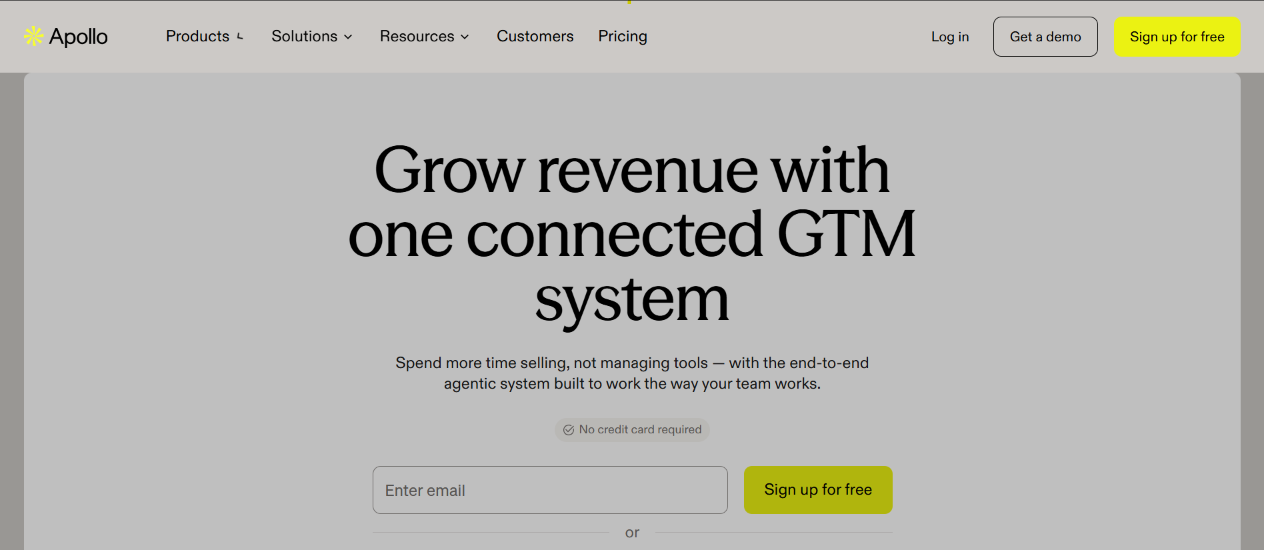
Apollo.io consistently appears among the Best Account Based Marketing Software in 2026 for startups and SMBs that need sales intelligence and engagement automation without an enterprise price tag. The platform combines a database of more than 270 million contacts with built-in email and call sequencing, so lean teams can identify target accounts, build outreach cadences, and track engagement without stitching together separate tools.
Features
- 270M+ contact and 60M+ company database
- AI copilot for prospecting and message drafting
- Chrome extension for LinkedIn-based prospecting
- Basic intent signals and technographic filters
- Native CRM sync with Salesforce and HubSpot
Pros
- Transparent, published pricing with a usable free tier
- Fast self-serve setup with no long-term contract required
- Combines data and engagement tools in a single subscription
Cons
- Data accuracy trails premium providers in independent testing
- Account-level intelligence is lighter than dedicated ABM suites
Pricing: Plans start around $49 per user/month on annual billing and scale to about $119 per user/month; a free tier with 10,000 emails per month is also available.
Cognism has built a reputation as one of the Best Account Based Marketing Software in 2026 for teams that prioritize compliant, phone-verified international data. Its Diamond Data mobile numbers consistently post higher match and connect rates than competing databases, which matters enormously once outbound reps start dialing into European and other GDPR-regulated markets.
Features
- Diamond Data verified mobile and direct-dial numbers
- Intent data layered onto firmographic filters
- Chrome extension for on-platform prospecting
- Salesforce and HubSpot native integrations
- Credit-based contact reveal system
Pros
- Strong mobile and direct-dial match rates, especially in EMEA
- Compliance-first approach reduces legal risk for global outreach
- Consistently praised for list-building accuracy in peer reviews
Cons
- Functions primarily as a data layer rather than full orchestration
- Best suited to teams that already own an execution platform
Pricing: Custom, quote-based; reported median annual contracts hover around $36,000, with a typical range of roughly $18,000–$94,000 depending on seats and data volume.
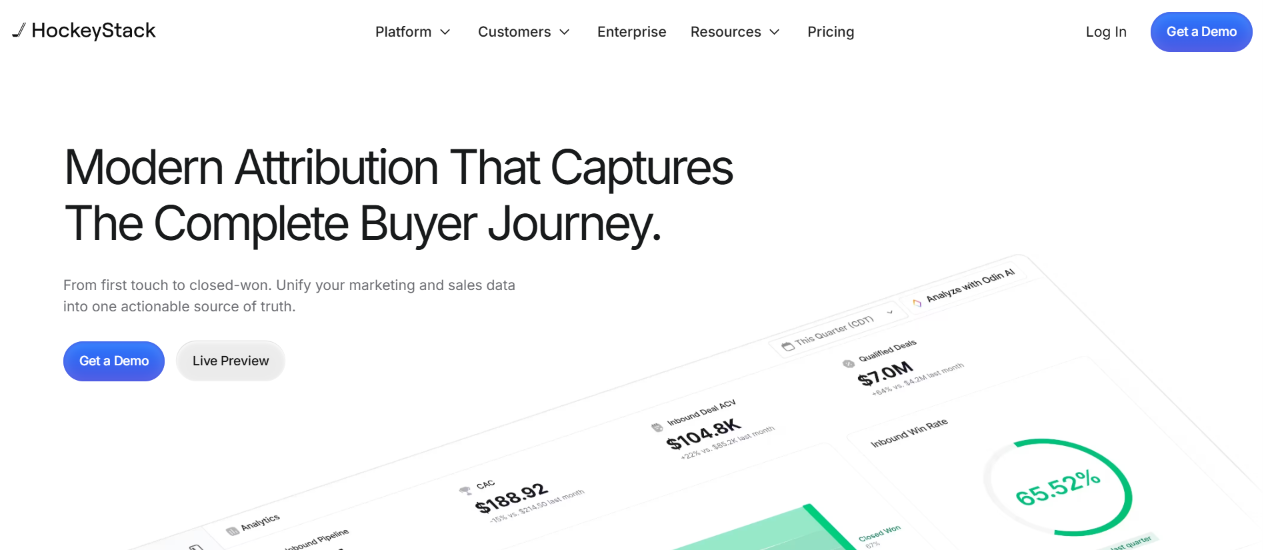
HockeyStack targets RevOps leaders evaluating the Best Account Based Marketing Software in 2026 who are tired of manually stitching together attribution reports every Monday morning. Its Atlas data layer ingests hundreds of billions of rows daily from CRM, marketing automation, ad platforms, and intent providers, while its AI agents answer revenue questions in plain language and act on account-prioritization insights automatically.
Features
- Odin AI analyst answering revenue questions in natural language
- Nova account-intelligence agent for prioritization and triggers
- Sub-second query performance across 30+ integrated systems
- Pre-call briefs generated automatically for sales reps
- Closed-lost re-engagement and expansion-finder workflows
Pros
- Deep GTM data unification that replaces manual analyst workflows
- Natural-language revenue attribution with a high no-clarification rate
- Prebuilt AI agents cover common RevOps use cases out of the box
Cons
- Best suited to teams with enough data volume for meaningful attribution
- Entry cost (roughly $2,200/month) is steep for early-stage teams
Pricing: Enterprise, quote-based pricing; publicly reported starting cost is roughly $2,200 per month.
Tofu stands out among the Best Account Based Marketing Software in 2026 as the AI-native content engine that solves ABM’s biggest bottleneck: producing enough personalized content to match every segment, persona, industry, and account. Using brand guidelines and existing segmentation, Tofu generates on-brand variations for ads, emails, landing pages, blog posts, and case studies, then feeds performance data back into the system to keep optimizing.
Features
- Generative AI content creation across personas, industries, and accounts
- Feedback loop that optimizes content based on campaign performance
- Integration with major advertising and marketing automation platforms
- Brand-guideline enforcement across all generated variations
- Agentic marketing workflows that adjust content based on live goals
Pros
- Only AI-native platform generating hyper-personalized content at true scale
- Reduces reliance on a large in-house content production team
- Strong fit for mid-market teams without dedicated ABM headcount
Cons
- Content quality still benefits from human review before publishing
- Newer entrant compared with legacy content-personalization vendors
Pricing: Custom, quote-based; positioned for mid-market teams that need content personalization without a large content-team investment.

Guideflow supports account-based programs from a different angle among the Best Account Based Marketing Software in 2026, letting teams build personalized, interactive product demos for specific target accounts. Because prospects can click through a demo tailored to their own use case, the interaction reveals real buying intent and engagement depth that static content simply cannot capture.
Features
- No-code interactive demo builder from product screenshots or live capture
- Account- and persona-specific demo personalization
- Embeddable demos for landing pages, emails, and ads
- Engagement analytics revealing click-level buyer intent
- Team collaboration tools for demo creation and review
Pros
- Turns static product tours into measurable, intent-revealing engagement
- Fast to build and personalize without engineering resources
- Complements existing ABM orchestration and advertising tools well
Cons
- Not a full ABM platform on its own — best used alongside a broader stack
- Smaller vendor footprint than category-leading ABM suites
Pricing: Tiered subscription plans with a free trial; paid plans scale by number of demos and monthly views, with custom enterprise pricing available.

Bombora remains the intent-data backbone behind many of the Best Account Based Marketing Software in 2026 platforms, since 6sense, Demandbase, RollWorks, Terminus, and others license its Company Surge data to power their own scoring models. Used directly, Bombora tells marketing teams which companies are actively researching relevant topics across its co-op of premium B2B publishers, well before those companies ever visit a company’s own website.
Features
- Company Surge intent data across 13,000+ B2B topics
- Weekly (or premium daily/real-time) intent refresh cycles
- Audience Solutions for activating intent segments on ad platforms
- API access for programmatic routing into CRM and MAP systems
- Integrations with major ABM and marketing automation platforms
Pros
- Widely trusted, industry-standard source of third-party intent data
- Powers the scoring models of many other leading ABM platforms
- Broad topic coverage across virtually every B2B category
Cons
- No contact-level data — teams still need a separate enrichment tool
- Standard refresh cadence is weekly unless premium add-ons are purchased
Pricing: Custom, quote-based; entry-level contracts typically start around $25,000–$30,000 per year, with mid-market deals ranging $50,000–$100,000 and enterprise configurations exceeding $100,000.
Dealfront, formed from the merger of Leadfeeder and Echobot, gives European-focused go-to-market teams a strong presence among the Best Account Based Marketing Software in 2026, particularly for companies needing GDPR-compliant company-level website visitor identification. The platform reveals which companies are browsing a website — even anonymously — and enriches those visits with firmographic and contact data for immediate follow-up.
Features
- Company-level website visitor identification
- GDPR-compliant European B2B data coverage
- CRM integrations including HubSpot and Salesforce
- Contact and firmographic enrichment
- Automated alerts for high-intent website visits
Pros
- Strong European data compliance and coverage
- Easy to set up, train on, and adopt quickly
- Well suited to small and mid-market GTM teams
Cons
- Data depth outside Europe is comparatively thinner
- Advertising and full-channel orchestration capabilities are limited
Pricing: Free and freemium tiers are available; paid plans scale with website traffic volume and are otherwise custom-quoted.

Lusha has become a go-to pick among the Best Account Based Marketing Software in 2026 for teams that want verified contact data and buying signals without committing to a $60,000-plus enterprise ABM contract first. Sales and marketing teams use Lusha to build target account lists, enrich CRM records, and validate an ABM motion before layering in a larger platform.
Features
- Verified email and direct-dial contact database
- Buying-signal alerts including funding, hiring, and job changes
- Chrome extension for LinkedIn-based prospecting
- CRM enrichment and list-building workflows
- API access for programmatic data integration
Pros
- Straightforward, transparent, published pricing
- Generous free tier for early-stage evaluation
- Simple to deploy without a lengthy implementation cycle
Cons
- Less account-intelligence depth than full ABM orchestration platforms
- Best paired with a separate advertising or engagement tool
Pricing: Free plan with 40 credits/month; paid plans include Starter at $49.90/month, Pro at $69.90/month, and Premium at $399.90/month on annual billing.
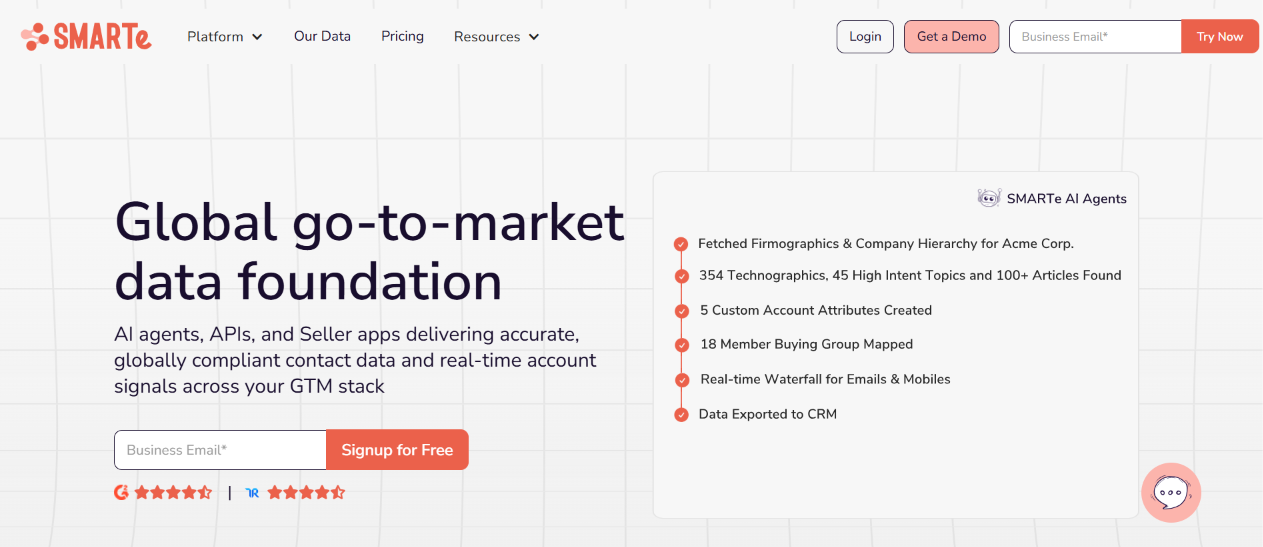
SMARTe rounds out the data-and-enrichment corner of the Best Account Based Marketing Software in 2026 field, focusing on real-time B2B contact accuracy with verified emails, phone numbers, and advanced firmographic filters. Sales development teams lean on SMARTe to keep CRM records current and to build precise account and contact lists before launching outbound sequences.
Features
- Real-time contact and company data verification
- Verified email addresses and direct-dial phone numbers
- Advanced firmographic and technographic filtering
- CRM sync for automated list building and enrichment
- Chrome extension for LinkedIn prospecting
- Waterfall enrichment across multiple data sources
Pros
- Strong real-time data-verification accuracy
- Competitive pricing relative to legacy enterprise data providers
- Useful waterfall enrichment approach that reduces bounce rates
Cons
- Primarily a data tool rather than full campaign orchestration
- Best combined with a dedicated engagement or advertising platform
Pricing: Custom, quote-based, typically priced per seat and data-credit volume.
Madison Logic has long held a place among the Best Account Based Marketing Software in 2026 for teams that prioritize account-based advertising at scale. The ML Platform combines intent, firmographic, and engagement data to identify in-market accounts, then activates coordinated advertising campaigns designed to move those accounts through every stage of a complex buying committee.
Features
- Multi-source intent and engagement data integration
- Account-based advertising activation across display and social
- Buying-committee identification and targeting
- Pipeline acceleration reporting tied to CRM data
- Native integrations with major marketing automation platforms
- Account prioritization based on composite intent scoring
Pros
- Well-regarded integrated data and targeting capabilities
- Streamlines marketing and sales alignment around advertising activity
- Smooth integration with existing CRM and MAP systems
Cons
- No published pricing, requiring a sales conversation for every quote
- Smaller feature set for website personalization than category leaders
Pricing: Custom, quote-based enterprise pricing; no public pricing tiers are listed.
Jabmo closes out this list of the Best Account Based Marketing Software in 2026 as an enterprise-focused, internationally minded ABM platform built for manufacturers and complex B2B sellers. The platform senses anonymous account activity and powers coordinated programs across IP-based advertising, retargeting, website personalization, and sales enablement, giving global sales teams alerts the moment a target account shows buying intent.
Features
- IP-based advertising and retargeting for anonymous accounts
- Website personalization tailored to visiting accounts
- Sales enablement alerts tied to account engagement
- Account-based analytics and pipeline reporting
- Integrations with Marketo, Oracle, and other major MAPs
- International data coverage suited to global manufacturers
Pros
- Strong fit for global manufacturers and complex, long-cycle sales
- Effective IP-based advertising for anonymous account engagement
- Sales teams receive timely alerts on target-account activity
Cons
- Requires an entry-level setup fee unlike some competitors
- Narrower brand recognition than the category’s largest platforms
Pricing: Custom, quote-based enterprise pricing with a required setup fee; no public pricing tiers are listed.