

A massage business runs on small details. A 60-minute deep tissue session needs a different slot than a 90-minute hot stone treatment. One therapist works Tuesdays and Thursdays, another works weekends. A couples massage needs two therapists and a room at the same time. Clients fill out intake forms, pay deposits, cancel late, and book the same time every month. A basic calendar cannot handle all of that. The right massage therapy booking software in 2026 lets clients book the exact service they want, keeps each therapist’s schedule accurate, collects payment, and cuts no-shows with reminders and cancellation rules.
This guide compares 18 options, from massage-specific tools to spa platforms and general schedulers. When you compare them, check five things: how the software handles service durations, whether clients can pick a therapist, what it does about deposits and cancellations, whether it stores intake forms and session notes, and how the price changes when you add therapists or rooms.
18 Best Massage Therapy Booking Software in 2026
1. MassageBook
MassageBook builds its platform around the way massage practices operate. Clients can book through your website or MassageBook’s directory, while you control which services they see and how long each appointment lasts. The Launch plan limits you to three services but lets you create unlimited durations, so you can offer 30-, 60-, and 90-minute sessions under one service.
As your practice grows, the Clinic plan adds tools for larger teams and more complex bookings. You get unlimited staff seats, room assignment for room- or equipment-specific services, couples massage booking, first-available-therapist booking, and waitlists. MassageBook also combines scheduling with SOAP notes and intake forms, so therapists can manage appointments and client documentation from one platform. It also supports card payments through Stripe and Square.
Key features
- Online booking through a directory listing, pre-built website, and website integration on higher plans
- Services with unlimited durations, with a three-service limit on Launch
- Basic and premium SOAP notes
- Client intake forms
- Text and email appointment reminders on Practice and higher plans
- Monthly membership management and gift certificates
- Smart room assignment, couples massage booking, and waitlists on Clinic
- Outcall functionality and mobile app
- Card payments through Stripe and Square
Pros
- Lets you offer different massage lengths without creating separate services.
- Supports couples bookings and room assignment on the Clinic plan.
- Includes SOAP notes and intake forms, reducing the need for another documentation platform.
- Gives Clinic users unlimited staff seats.
Cons
- Launch limits you to three services.
- Couples booking, room assignment, and first-available-therapist booking require the highest plan.
- Card processing fees come separately from the subscription.
Pricing
- Launch: $21.75 / month
- Practice: $44.25 / month
- Clinic: $74.25 / month
Best for
Massage practices ranging from solo therapists to multi-room clinics that want booking, client notes, and payments in one system.
2. Noterro
Noterro combines appointment scheduling, SOAP notes, billing, and client management for massage therapists who need more than a basic calendar. Clients can book through a clinic-branded app, and therapists can require deposits or establish payment policies during booking. Recurring appointments make it easier to manage clients who return on a regular schedule, while waitlists help fill cancelled appointments.
Noterro puts particular emphasis on clinical documentation. Therapists can create custom SOAP templates, use shorthand snippets, and generate AI summaries from intake forms. Mobile therapists can also use Noterro GO for service-area booking and travel-time management. The platform reserves some features for higher plans, however. Packages and memberships require Max, while waitlists and text or call reminders start on the middle tier.
Key features
- Online booking through a clinic-branded app
- Payment policies and deposits
- Custom SOAP note templates and snippets
- Health snapshots
- Intake form builder with AI summaries
- Recurring appointments and waitlists
- Email, text, and call reminders
- Packages and memberships on Max
- Square integration for in-person payments
- Insurance billing, including TELUS eClaims in Canada and US clearinghouses
- Noterro GO for mobile practices
Pros
- Gives massage therapists detailed SOAP charting tools.
- Supports mobile practices with service-area booking and travel-time management.
- Lets you set deposit and payment rules during online booking.
- Offers free data migration from another software platform.
Cons
- Packages and memberships require the top plan.
- Waitlists and text or call reminders start on the middle plan.
- The massage page does not clearly state the billing term behind its advertised prices.
Pricing
- Core starts at $28.05/month, according to Noterro’s massage page.
- Plus costs $46.75/month.
- Max costs $65.45/month.
- Confirm the billing term and per-practitioner costs before subscribing.
- Offers a 14-day free trial with no credit card.
Best for
Solo and small-team therapists who need detailed SOAP charting and mobile-practice tools.
3. ClinicSense
ClinicSense targets massage therapists and similar practitioners who want to manage appointments and client records from one platform. Its plans use monthly appointment limits, which makes the pricing structure easy to understand. Lite supports 20 appointments per month, Standard supports 200, and Premium removes the appointment limit completely.
Lite works well for new or part-time therapists who do not have a heavy booking schedule. Standard adds text reminders, No Show Guard, a block list, waitlists, packages, and gift cards, making it more useful for a full-time solo practice. Premium targets larger clinics and includes unlimited appointments, with additional practitioners costing $20 per month each.
Key features
- Online booking
- SOAP notes and intake forms from Lite
- Email reminders on Lite
- Text reminders on Standard and Premium
- Block list and No Show Guard on Standard and Premium
- Waitlist management
- Packages and gift cards on Standard and Premium
- Financial reports
- Unlimited appointments on Premium
Pros
- Includes massage-focused forms and notes from the entry plan.
- Helps reduce repeat no-shows with No Show Guard and a block list.
- Includes packages and gift cards on Standard.
- Charges $20/month for each additional Premium practitioner.
Cons
- Lite limits users to 20 appointments per month.
- Standard limits users to 200 appointments per month.
- Text reminders require Standard or higher.
- Larger clinics need Premium plus additional practitioner fees.
Pricing
- Lite starts at $35/month, billed monthly.
- Standard costs $63/month.
- Premium costs $90/month.
- Annual billing gives you one month free per year.
Best for
Solo and small-team massage therapists who want forms, notes, packages, and no-show protection without paying for a large platform.
4. Jane
Jane works well for massage clinics with several therapists or practices that combine massage with services such as physiotherapy and chiropractic care. Clients can book through a branded website, while the platform manages scheduling, intake forms, charting, treatment plans, payments, and client communication.
Practice and Thrive provide unlimited appointments and unlimited practitioner profiles, but Jane charges a monthly fee for each additional bookable practitioner. Thrive adds tools for more complex clinics, including rooms and equipment, availability tagging, waitlists, return-visit reminders, packages, and memberships. Every plan includes intake forms, charting templates, treatment plans, gift cards, and online payment policies, giving clinics a strong foundation for both scheduling and documentation.
Key features
- Online booking through a custom-branded website
- Real-time availability
- Intake forms
- Custom charting templates
- Treatment plans
- Online booking payment policies
- Cards on file
- Unlimited SMS appointment reminders on Practice and Thrive
- Rooms and equipment management on Thrive
- Availability tagging on Thrive
- Packages and memberships on Thrive
- Return-visit reminders
- Gift cards and invoicing
- Reporting and analytics
Pros
- Manages rooms and equipment on Thrive.
- Supports packages and memberships for repeat clients.
- Includes charting, treatment plans, and intake forms on every plan.
- Does not charge for admin and support staff who do not take bookings.
Cons
- Packages, memberships, and room management require Thrive.
- Practice and Thrive charge a monthly fee for each additional bookable practitioner.
- Jane does not offer a free trial.
- Balance allows only one practitioner and 20 appointments per month.
Pricing
- Balance starts at CAD $59/month, billed monthly.
- Practice costs CAD $79/month.
- Thrive costs CAD $99/month.
Best for
Multi-therapist massage clinics and integrative practices that need scheduling, rooms, memberships, and detailed charting.
5. Mangomint
Mangomint targets day spas and larger massage studios that manage several therapists on a shared calendar. Instead of charging separately for every provider, it prices its plans according to team size. Essentials supports two to ten service providers, Standard supports up to 20, and Unlimited removes the provider limit.
Every plan includes unlimited SMS and email notifications, free data import, and one-on-one onboarding. Standard adds memberships, Express Booking, and a virtual waiting room. Mangomint keeps forms and charting separate as a paid add-on, so studios that need client intake forms and notes should include that additional cost when comparing plans. The platform also charges extra for additional locations but does not require a contract or setup fee.
Key features
- Online booking and scheduling
- Multi-provider calendars
- Unlimited SMS and email notifications
- Memberships on Standard and higher
- Express Booking
- Virtual waiting room
- Forms and Charting add-on
- Additional location support
- Free data import
- One-on-one onboarding
- Free trial and demo
Pros
- Prices by provider-count bands rather than individual seats.
- Includes unlimited SMS and email notifications on every plan.
- Adds memberships on Standard.
- Provides free data import and one-on-one onboarding.
- Does not require a contract or setup fee.
Cons
- The starting price is expensive for a solo therapist.
- Essentials targets teams of two to ten providers.
- Forms and charting cost extra.
Pricing
- Monthly price is $120 per location and $10 per user.
Best for
Day spas and massage studios with at least two providers.
6. Square Appointments
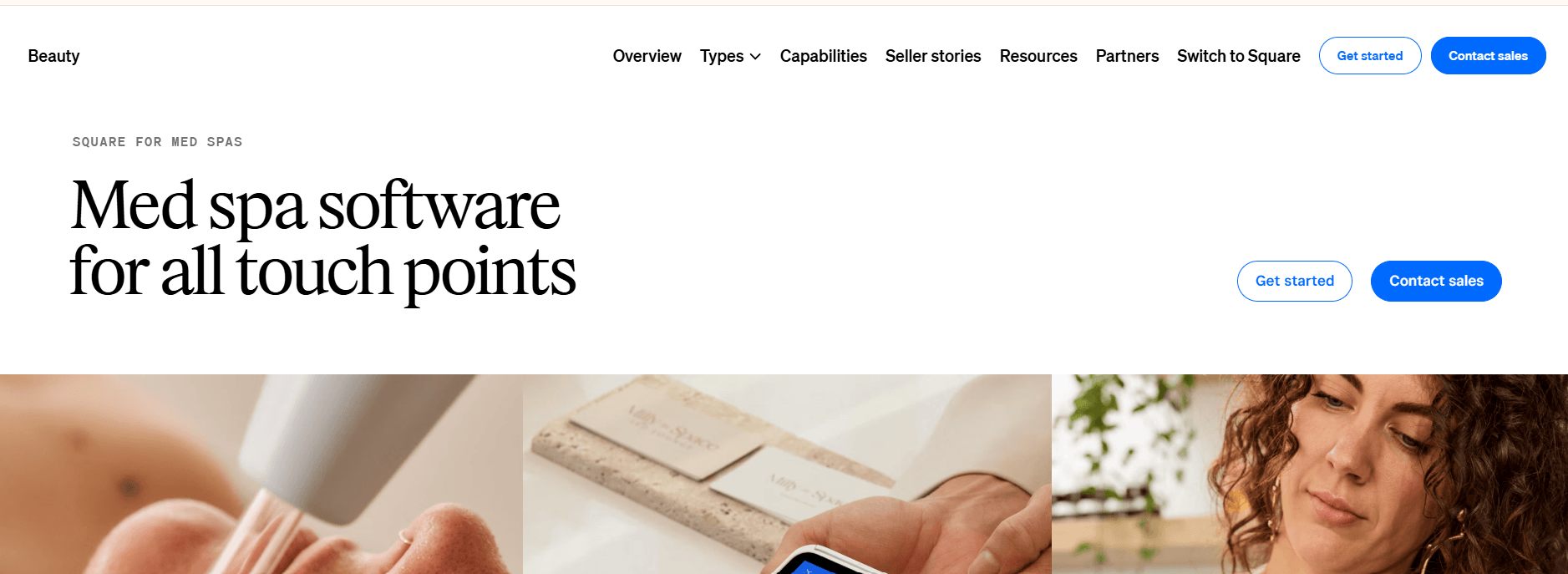
Square Appointments gives solo massage therapists a free way to manage online bookings and payments. The Free plan covers one location, while Plus adds cancellation policies and fees, waitlists, class bookings, processing time, Google Calendar sync, and custom text notifications. Premium adds resource management, which helps clinics that need to coordinate treatment rooms or equipment.
Square charges by location rather than by therapist. That pricing structure can benefit clinics with several therapists working from one location because they can add staff without paying a separate seat fee. However, Square Appointments remains a general appointment scheduler. Its published plan features do not include massage-specific SOAP notes or clinical charting.
Key features
- Online booking through a Square Online booking website
- Cancellation policies and fees on Plus and Premium
- Waitlists and class booking
- Google Calendar sync
- Custom text notifications
- Resource management on Premium
- Gift cards
- Appointment reports
- Future-booking reports
- Integrated Square card payments and hardware
Pros
- Offers a free plan for one location.
- Charges by location rather than therapist.
- Supports cancellation fees on Plus.
- Works with Square card readers and registers.
Cons
- Cancellation fees, waitlists, and text notifications require a paid plan.
- Premium is required for resource management.
- Square does not list SOAP notes among its plan features.
Pricing
- Free for one location.
- Plus starts at $29/month per location, billed monthly.
- Premium costs $69/month per location.
- Card-present payments on paid plans cost 2.5% + $0.10 per transaction.
Best for
Solo therapists who already use Square and want free booking with integrated payments.
8. Vagaro
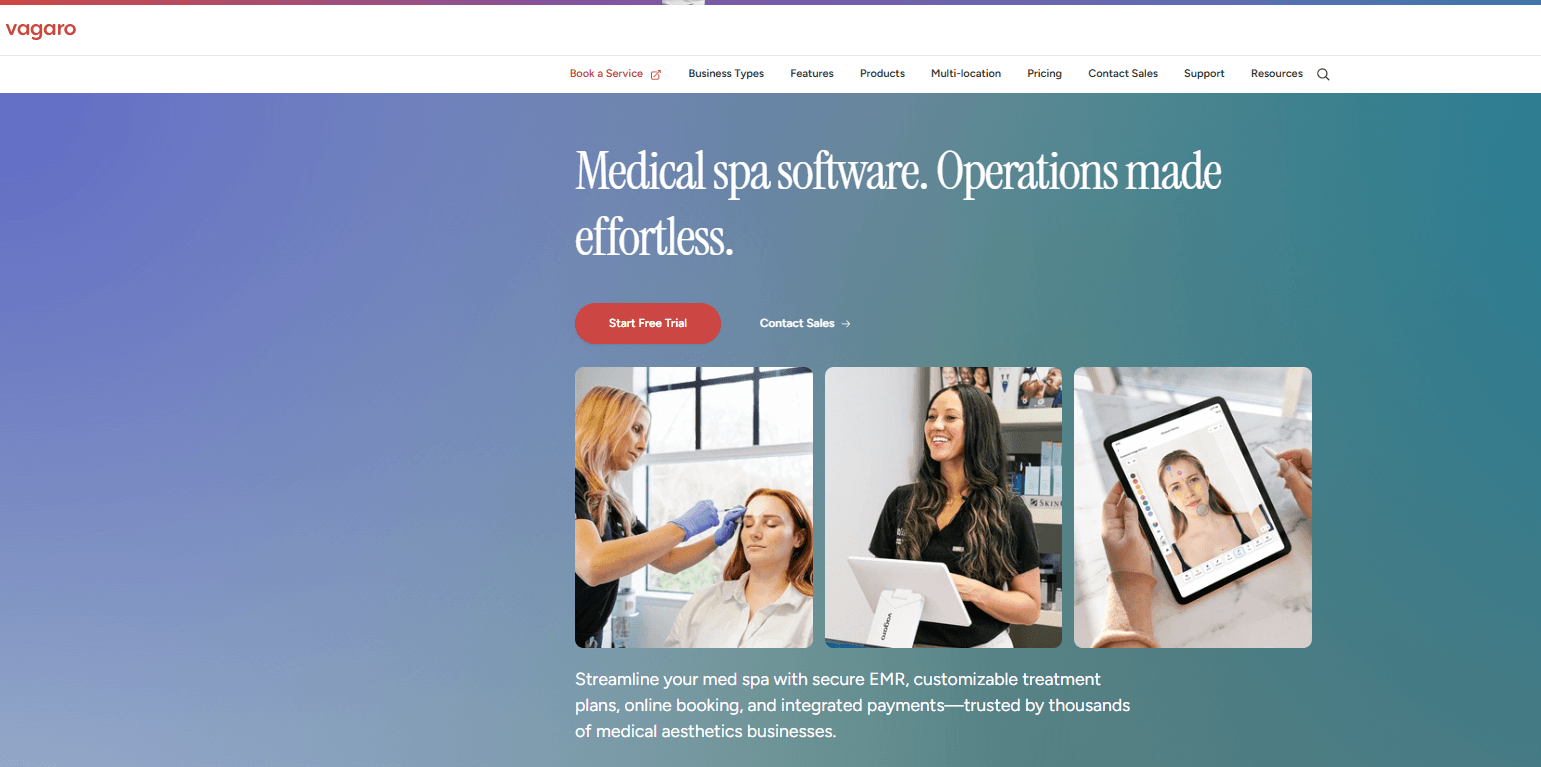
Vagaro charges based on bookable calendars, which makes the cost relatively predictable as a spa adds therapists. Each therapist gets a calendar with waitlist and resource-management capabilities, making the platform useful for businesses that share treatment rooms and equipment.
Vagaro also lets businesses purchase additional features separately. These include text marketing, website building, file storage, payroll, and accounting integrations. This approach keeps the starting subscription lower but can increase the total cost for businesses that need several extras. Vagaro therefore fits spas and studios that offer massage alongside other services and want to add features as they grow.
Key features
- Bookable calendars for each therapist
- Waitlists
- Resource management
- Online booking
- Client management
- Marketing tools
- Optional text marketing
- Website builder
- File storage
- Payroll
- Accounting integration
- Free trial
Pros
- Adds a predictable cost when you add another therapist.
- Supports resource management for rooms and equipment.
- Lets businesses purchase only the add-ons they need.
Cons
- Add-ons can significantly increase the monthly cost.
- The sources reviewed do not list SOAP notes among Vagaro’s core features.
- Pricing can vary by region and promotion.
Pricing
- Pricing is based on the number of bookable calendars.
- Confirm the current rate directly on Vagaro’s pricing page.
- Vagaro’s own pricing page could not be retrieved during research, so review-site figures may reflect promotions rather than standard pricing.
- Multi-location businesses need a custom quote.
Best for
Spas and studios that offer massage alongside several other services and want to add features gradually.
9. Acuity Scheduling

Acuity Scheduling works well for massage therapists who mainly need reliable online booking rather than a complete clinical management system. The Starter plan provides one calendar and unlimited services, allowing therapists to offer 30-, 60-, and 90-minute appointments without creating separate calendars.
Standard supports up to six calendars and adds text reminders, packages, gift certificates, and group appointments. Premium supports up to 36 calendars and adds HIPAA-related workflows. Because Acuity bases its plans partly on the number of calendars, larger practices need a higher tier. The platform does not provide massage-specific SOAP charting, so therapists who need detailed clinical notes will need another system.
Key features
- Online self-scheduling
- Unlimited services
- Separate calendars for therapists or locations
- Payments through Stripe, Square, and PayPal
- Basic intake forms
- Text reminders on Standard and higher
- Packages and gift certificates on Standard and higher
- Group appointments
- Reporting
Pros
- Supports different treatment lengths through unlimited services.
- Provides additional calendars for therapists on higher plans.
- Adds packages and gift certificates on Standard.
- Costs less than many massage-specific platforms at the entry level.
Cons
- Starter supports only one calendar.
- Text reminders, packages, and gift certificates require Standard or higher.
- Does not provide SOAP notes or massage-specific charting.
- Offers no free plan.
Pricing
- Starter starts at $16/month when billed monthly.
- Standard: $27/month annually.
- Premium: $49/month annually.
Best for
Solo therapists who need simple online booking and already manage client notes elsewhere.
10. WellnessLiving
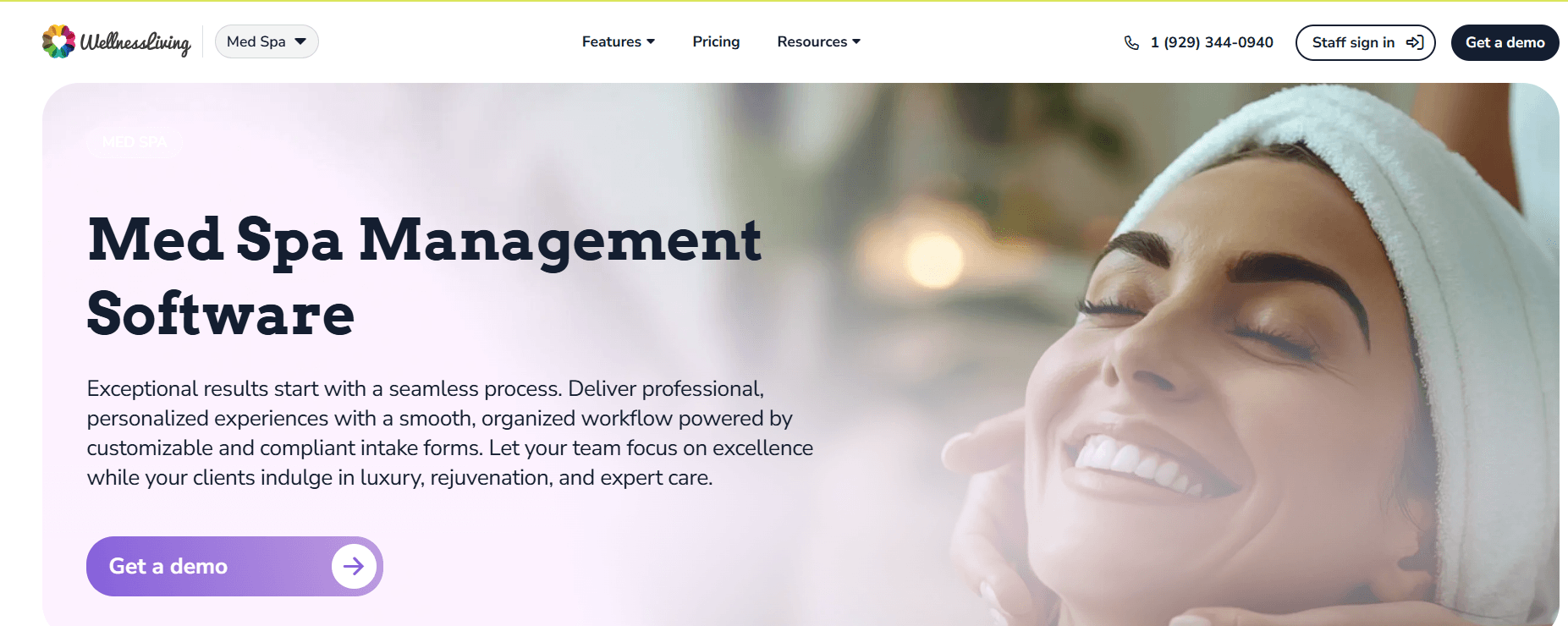
WellnessLiving is built for wellness businesses that need more than appointment scheduling. It combines online booking with memberships, packages, payments, client management, marketing, and business reporting. The platform also supports multiple locations, making it useful for massage studios that are growing beyond a single practice.
Its tools cover both the client booking experience and day-to-day business management. Businesses can sell memberships and packages, automate reminders, manage staff schedules, and accept payments through the platform. The broader feature set makes WellnessLiving a stronger fit for established studios than solo therapists who only need a simple booking calendar.
Key features
- Online booking and scheduling
- Client management
- Memberships
- Packages
- Gift cards
- Automated reminders
- Payments and point of sale
- Staff management
- Marketing tools
- Business reporting
- Multiple-location management
- Mobile apps
Pros
- Combines booking, payments, memberships, and marketing in one platform.
- Supports packages and memberships for repeat clients.
- Handles multiple locations and staff.
- Provides business reporting and client management tools.
Cons
- The broader feature set can be more than a solo therapist needs.
- Some features require higher plans or additional costs.
- Pricing depends on the selected plan and business setup.
- Does not focus specifically on massage therapy documentation such as SOAP notes.
Pricing
- Pricing varies by plan and business requirements.
- WellnessLiving offers multiple plans with different feature sets.
- Confirm the current price directly with WellnessLiving before subscribing.
- Additional payment processing and selected add-ons may affect the total cost.
Best for
Massage studios and wellness businesses that need booking, memberships, payments, marketing, and business management in one platform.
11. PocketSuite
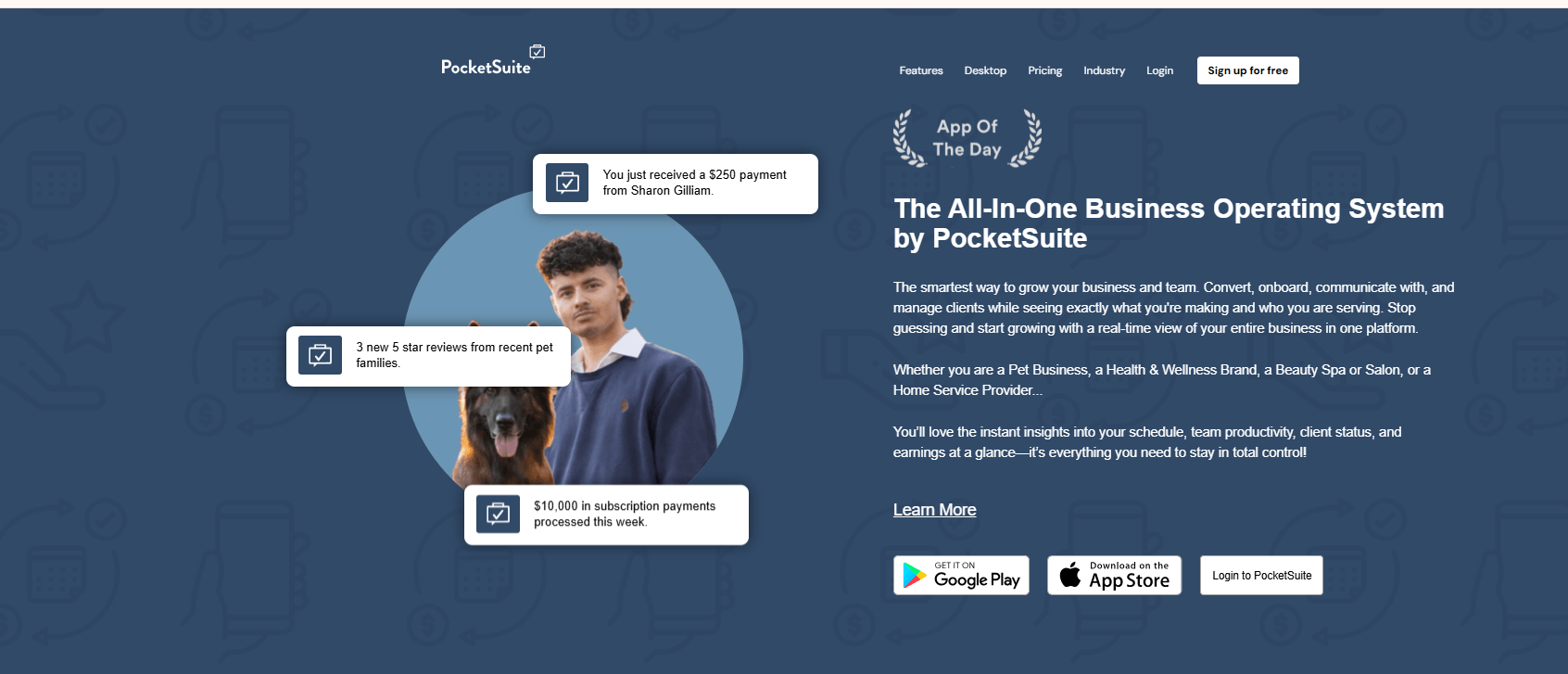
PocketSuite targets independent health and wellness professionals who manage much of their business through their phones. Its Solo plan combines a business phone number, two-way texting and calls, online booking, digital forms, contracts, payments, invoices, packages, and subscriptions.
The platform also automates appointment and payment reminders and syncs with Google Calendar and iCalendar. This combination works particularly well for therapists who sell memberships or session packages and want to communicate with clients through a dedicated business number. PocketSuite also offers plans for teams and multi-location practices as the business grows.
Key features
- Business number for two-way texting and calls
- Online booking
- Lead forms
- Live chat
- Digital forms and contracts
- Payments and invoices
- Card readers
- Packages and subscriptions
- Recurring billing
- Automated appointment and payment reminders
- Google Calendar and iCalendar sync
- QuickBooks and Zapier integrations
Pros
- Gives therapists a dedicated business number for client communication.
- Includes packages and recurring billing on Solo.
- Supports digital forms and contracts for intake and waivers.
- Provides team and multi-location plans.
Cons
- Solo costs more than free and low-cost alternatives.
- Solo does not list SOAP notes.
- PocketSuite does not show team and multi-location prices alongside the Solo price.
Pricing
- Solo Practitioner starts at $49.99/month.
- PocketSuite also offers Team, Studio, Clinic, and Multi-Location Network plans.
- Confirm pricing and billing terms for higher tiers before subscribing.
Best for
Independent therapists who sell packages or memberships and want a dedicated business phone number.
12. GlossGenius
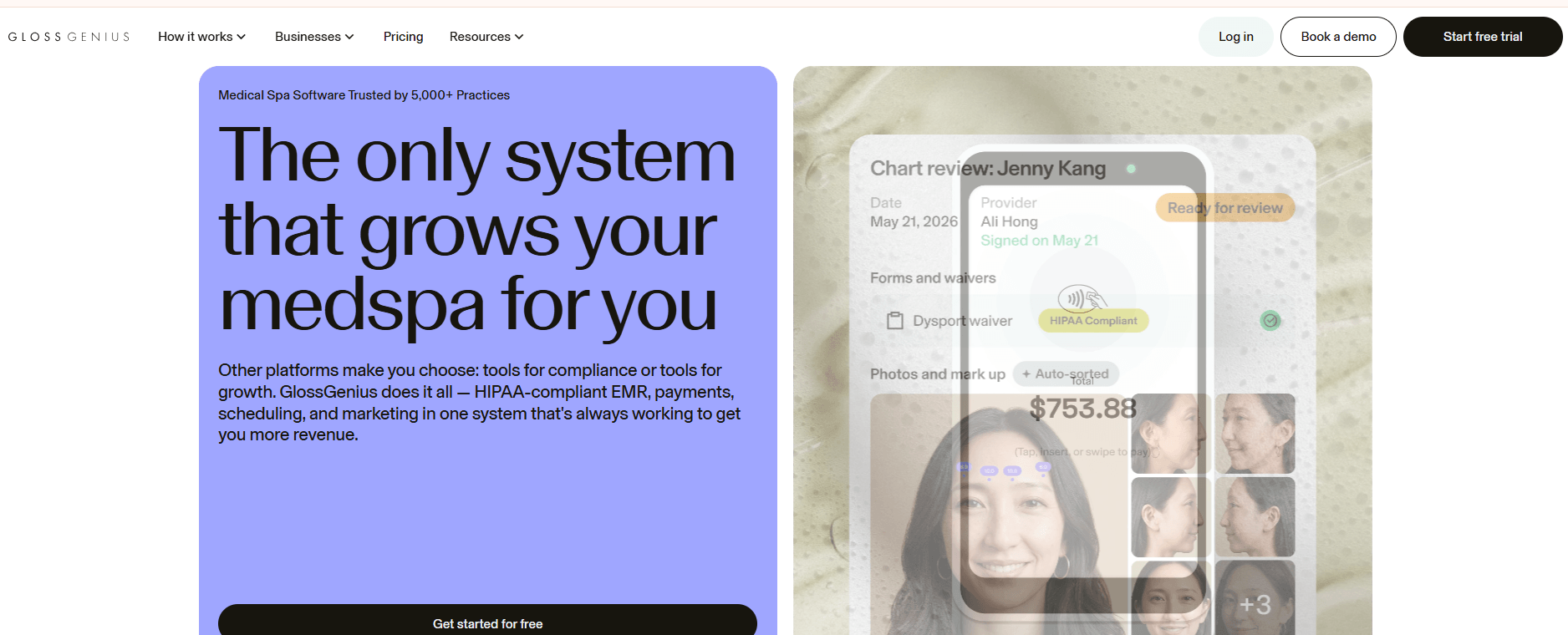
GlossGenius combines booking, payments, client management, and marketing for beauty and wellness professionals, including massage therapists. Standard gives solo providers the core tools they need to manage online bookings, build a booking site, process payments, manage clients, and run basic marketing campaigns.
Gold adds growth-focused tools such as AI support and staff workflows, while Platinum removes the team-member limit and adds Google marketing analytics, premium support, and a larger text-marketing allowance. The platform gives massage businesses a polished client-facing experience, but it focuses more broadly on salons and beauty businesses and does not list SOAP notes or clinical charting.
Key features
- Online booking
- Booking-site builder
- Point of sale
- Payment processing
- Client management
- Basic marketing tools
- Larger text-marketing allowances on higher plans
- AI support on Gold
- Staff workflows on Gold
- Unlimited team members on Platinum
- Google marketing analytics on Platinum
- Optional payroll add-on
Pros
- Combines booking, checkout, and client records in one dashboard.
- Uses plan-based pricing for solo providers.
- Includes massage therapists among its target users.
- Offers a free trial on every plan.
Cons
- Gold includes 500 text-marketing credits, while Platinum includes 2,500.
- Growing teams may need Gold or Platinum.
- Does not list massage-specific notes or intake charting.
Pricing
- Standard starts at $24/month when billed annually or $28/month monthly.
- Gold costs $48/month annually or $56/month monthly.
- Platinum costs $148/month annually or $168/month monthly.
- Payroll costs extra.
- Offers a two-week free trial.
Best for
Beauty and wellness studios and spas where massage forms part of a broader service menu.
13. Booksy
Booksy combines online booking with a client marketplace, which can help newer massage therapists attract clients who discover them through the platform. The base subscription covers one user, while each additional team member costs $20 per month. Every user gets access to the same core feature set, including 24/7 booking, marketing tools, calendar and client management, reporting, and marketplace exposure.
Additional staff receive individual calendars, logins, commission tracking, and performance reports. Booksy originally focused heavily on beauty professionals, so its interface and templates suit salons and barbers more naturally than clinical massage practices. The sources reviewed also do not list SOAP notes.
Key features
- 24/7 online booking
- Calendar management
- Client management
- Marketplace listing
- Marketing tools
- Up to 2,000 SMS marketing messages per month
- Individual staff calendars
- Staff logins
- Commission tracking
- Stats and reports
- Booksy Card Reader
Pros
- Gives users the full feature set without multiple subscription tiers.
- Lists businesses in a client marketplace.
- Tracks staff commissions.
- Offers a 14-day free trial with no commitment.
Cons
- Each additional team member costs $20/month.
- Focuses heavily on beauty businesses.
- Does not list massage-specific notes.
- Card processing fees come separately from the subscription.
Pricing
- Starts at $29.99/month plus tax for one user.
- Additional team members cost $20/month each.
Best for
Newer massage therapists and small studios that want marketplace exposure alongside online booking.
14. Cliniko

Cliniko serves allied health practices, including massage therapists, and takes a different approach to pricing. Instead of restricting features by plan, Cliniko gives every customer access to the full feature set. Your monthly price depends only on the number of practitioners.
That structure makes budgeting easier for clinics because you do not have to upgrade to unlock specific features. Cliniko includes unlimited admin and reception users, locations, patients, and file storage. It also supports treatment notes, treatment histories, recurring appointments, automated reminders, and telehealth. The platform leans toward clinical practices rather than spas, and SMS reminders cost extra.
Key features
- Online booking
- Practitioner availability
- Recurring appointments
- Automated reminders
- Treatment notes
- Treatment histories
- Unlimited locations
- Unlimited patients
- Unlimited file storage
- Unlimited admin and reception users
- Telehealth
- Free support
Pros
- Gives every customer access to all features.
- Prices according to practitioner count.
- Supports unlimited locations and admin users.
- Provides detailed clinical notes and treatment histories.
- Offers free accounts to registered charities and educational institutions.
Cons
- SMS reminders cost extra.
- Does not focus on spa features such as memberships.
- Monthly pricing increases as you move into higher practitioner bands.
Pricing
- Starts at $45/month for one practitioner.
- Two to five practitioners: $95/month.
- Six to eight: $145/month.
- Nine to 12: $195/month.
- 13 to 25: $295/month.
- 26 to 200: $395/month.
Best for
Notes-heavy massage practices that want all features included and prefer practitioner-band pricing.
15. Setmore
Setmore provides a free booking system for very small massage practices. Its Free plan supports up to four users and 200 appointments per month, which gives new practices a way to start taking online bookings without paying a subscription.
Pro removes the appointment limit and adds text reminders, two-way calendar sync, recurring appointments, video appointments, custom reminders, and branding removal. Pro charges by user, so a solo therapist can keep costs low, but the bill increases as more therapists join. Setmore also offers a signed HIPAA Business Associate Agreement on Pro. Like other general schedulers, it does not list massage-specific SOAP notes or intake charting.
Key features
- Online booking page
- Free plan for up to four users
- 200 appointments per month on Free
- Unlimited appointments on Pro
- Text reminders on Pro
- Custom reminders
- Two-way calendar sync
- Recurring appointments
- Video appointments
- Branding removal
- HIPAA BAA on Pro
Pros
- Provides free booking for up to four users and 200 appointments per month.
- Supports recurring appointments on Pro.
- Keeps costs low for solo therapists.
Cons
- Text reminders and two-way calendar sync require Pro.
- Month-to-month Pro pricing costs more than annual billing.
- Does not provide massage-specific notes or intake charting.
Pricing
- Free for up to four users.
- Pro starts at $5/user/month when billed annually.
- Month-to-month Pro costs $12/user/month.
- Free limits users to 200 appointments per month.
Best for
Very small practices that want free or low-cost booking and manage client notes elsewhere.
16. Mindbody
Mindbody targets large spas, wellness centers, and multi-service businesses rather than solo massage therapists. Its Starter tier combines online booking, integrated payments, basic reporting, and a listing in the Mindbody app. Higher tiers add marketing automation, client-retention analytics, and multi-resource scheduling.
These tools can help busy spas manage multiple rooms, bring back inactive clients, and promote services across a larger customer base. However, Mindbody charges by location and publishes only the Starter price. Smaller massage practices should compare that cost against simpler platforms before choosing Mindbody.
Key features
- Online booking and scheduling
- Integrated payments
- Basic reporting
- Mindbody app listing
- Marketing automation on higher tiers
- Client-retention analytics
- Multi-resource scheduling on higher tiers
Pros
- Supports multi-resource scheduling for spas with several rooms.
- Adds marketing automation for client retention.
- Gives businesses exposure through the Mindbody app.
Cons
- Mindbody publishes only the Starter price.
- Higher-tier pricing requires a quote.
- Charges per location.
- The cost can be high for solo therapists.
Pricing
- Starter starts at $99/month per location.
- Accelerate and Ultimate use custom pricing.
- Confirm current pricing directly with Mindbody.
Best for
Large spas and wellness centers that need marketing automation and multi-room scheduling.
17. Boulevard
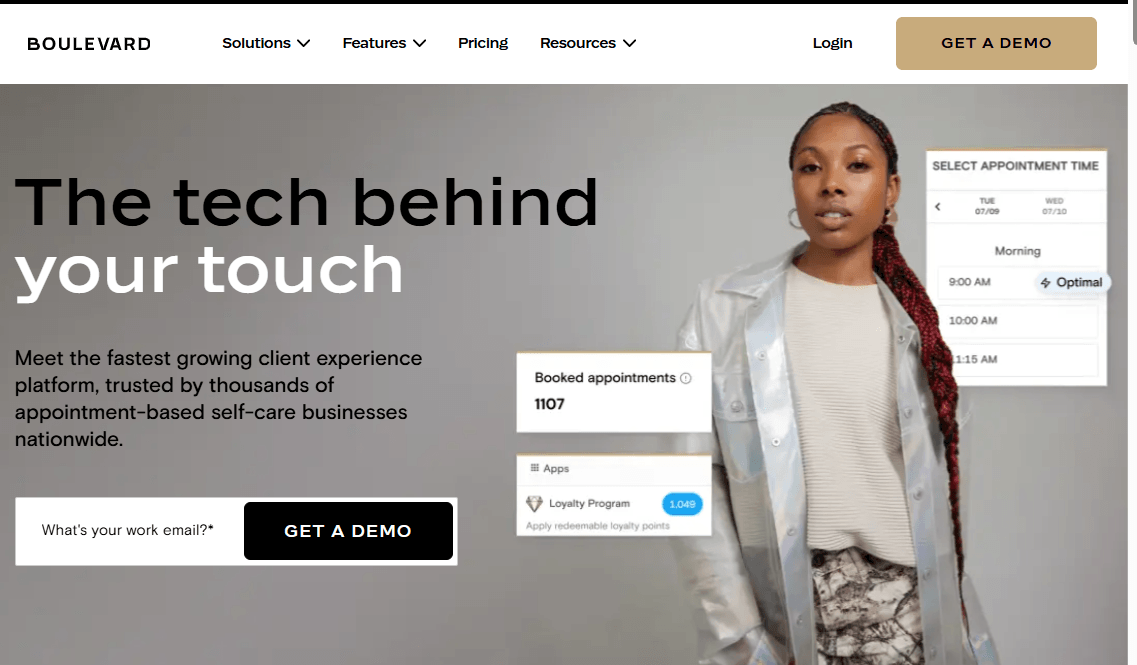
Boulevard is a premium salon and spa management platform that also serves massage businesses. It combines online booking, scheduling, payments, point of sale, texting, client profiles, and reporting in one system. Client profiles can store notes and photos, while memberships support automatic billing.
The platform focuses on delivering a polished client experience and supporting businesses with more complex operations. Boulevard does not publish standard pricing, however, so businesses must speak with its sales team to receive a quote. That approach suits high-end spas and multi-location brands but makes it harder for small massage practices to compare costs quickly.
Key features
- Online booking and appointment scheduling
- Point of sale
- Payments
- Client profiles
- Client notes and photos
- SMS messaging and reminders
- Memberships with automatic billing
- Inventory management
- Sales and membership reporting
- Client activity reporting
Pros
- Supports automatic membership billing.
- Stores notes and photos in client profiles.
- Combines booking, payments, texting, and reminders.
- Provides detailed reporting.
Cons
- Requires a sales conversation for pricing.
- Costs more than many entry-level scheduling platforms.
- Targets spas and salons more heavily than solo massage therapists.
Pricing
- Custom pricing; contact Boulevard for a quote.
- Plans bill by location.
Best for
High-end spas and multi-location brands that need memberships, client management, and a polished booking experience.
18. Zenoti
Zenoti targets enterprise spa and wellness businesses rather than small massage practices. It combines online booking, point of sale, memberships, marketing, and multi-location management in one platform. Its focus on large teams, multiple locations, and franchise-style reporting makes it better suited to chains that need centralized operations.
A single-room massage studio will likely find Zenoti more complex than necessary. A growing spa chain, however, can use its centralized system to manage multiple locations and business functions. Zenoti does not publish pricing, so businesses must request a quote based on their size and selected modules.
Key features
- Online booking and scheduling
- Point of sale
- Memberships
- Marketing tools
- Multi-location management
- Spa and wellness business management
Pros
- Manages multiple locations from one platform.
- Combines booking, POS, memberships, and marketing.
- Supports franchise-style operations.
Cons
- Does not publish pricing.
- Targets enterprise spa chains, making it excessive for small practices.
- The sources reviewed do not list massage-specific charting.
Pricing
- Custom pricing; contact Zenoti for a quote.
- Final cost depends on business size, locations, and selected modules.
Best for
Multi-location spa and wellness chains.
How to choose massage therapy booking software
The right choice depends on your practice size, services, and growth plans. These checks can help you narrow the options quickly.
Consider your business size
- Solo therapists need booking, reminders, payments, and basic client records.
- Free or low-cost options such as Square Appointments, Setmore, and MassageBook can cover these needs.
- Larger clinics need separate calendars, staff access, shared records, and reporting.
- Check whether the software charges by therapist, calendar, location, or team size.
Look at booking flexibility
- Check how the software handles different service lengths.
- Check whether clients can choose a therapist based on availability.
- Look for recurring appointments and waitlists.
- Some platforms let you offer 30-, 60-, and 90-minute sessions under one service, while others require separate services.
Check client management tools
- Look for intake forms if you want clients to provide information before their appointments.
- Look for SOAP notes and treatment histories if you need clinical documentation in the same system.
- MassageBook, Noterro, and ClinicSense offer these tools.
- General schedulers such as Acuity and Setmore do not list SOAP notes.
Check payment and cancellation tools
- Look for deposits and saved cards.
- Check whether the software supports cancellation fees.
- Look for automated appointment reminders.
- Check which plan includes these features.
- Compare card processing fees separately from the monthly subscription.
Consider memberships and packages
- Look for packages if clients regularly book multiple sessions.
- Consider memberships if you run recurring client programs.
- Check whether the software supports gift cards and automatic billing.
- Noterro, Jane, Mangomint, Fresha, Schedulicity, and PocketSuite offer some of these features, but availability varies by plan.
Think about your growth
- Compare how pricing changes as you add therapists or locations.
- Check whether the software charges per person, calendar, location, or team size.
- If you plan to add treatment rooms, look for room assignment or resource management.
- Choose a plan that fits where your practice is going, not just where it is today.
Conclusion
No single platform works for every massage business. A solo therapist may only need online booking, reminders, and payments, while a growing clinic may need therapist calendars, room management, memberships, client records, and reporting.
The best massage therapy booking software in 2026 should fit how you work now and support your plans for next year. Start with features that protect your income, such as flexible service lengths, deposits, cancellation rules, and reminders. Then compare the cost of adding therapists, rooms, and locations. If possible, use free trials to test a few options before choosing one.