

Healthcare data breaches have reached unprecedented levels, and criminals compromise millions of records each year. The average breach now costs healthcare organizations huge amounts of money. Meanwhile, cybercriminals target electronic protected health information with greater focus. Healthcare systems must also prepare for major HIPAA Security Rule updates. Therefore, every provider must choose the right Best Software for HIPAA-compliant cybersecurity in healthcare in 2026 to protect patients and meet compliance demands.
Why Does it Matter?
Software for HIPAA-compliant cybersecurity in healthcare matters because it protects patient trust and sensitive information. It also keeps hospitals and clinics able to deliver care without interruptions. Healthcare organizations handle some of the most personal data in the world. Consequently, attackers see the sector as an easy opportunity. HIPAA requires organizations to keep ePHI confidential and accurate. The law also demands that only authorized people can access that data. In addition, cybersecurity software delivers safeguards such as encryption, access controls, and activity monitoring. These tools detect threats early and block many attacks. Furthermore, they reduce ransomware incidents and insider misuse while supporting daily operations.
This guide reviews the leading Best Software for HIPAA-Compliant Cybersecurity in Healthcare in 2026 and explains their features and pricing. It also highlights strengths and limitations in clear terms.
Top 13 Best Software for HIPAA-Compliant Cybersecurity in Healthcare in 2026
1. Bitdefender GravityZone
Bitdefender GravityZone delivers complete cybersecurity protection for endpoints, cloud workloads, and data centers on all major operating systems. The platform combines Endpoint Protection (EPP), Endpoint Detection and Response (EDR), and Extended Detection and Response (XDR) in one unified system that teams manage from a central cloud or on-premise console. Bitdefender does not receive, store, process, or transmit electronic protected health information (ePHI). Instead, the company provides security software that customers deploy inside their own ePHI environments. Furthermore, Bitdefender does not manage customer health data, and the system sends telemetry through Transport Layer Security (TLS) encryption to keep communications secure.
Features
- Advanced Threat Prevention: The software uses machine learning, behavioral analysis through HyperDetect, and anti-exploit technology to identify and block new threats, zero-day attacks, and complex ransomware before damage occurs.
- Unified Security Management: Administrators control policies for Windows, Mac, Linux, iOS, and Android devices from one dashboard, and therefore IT teams maintain clearer visibility over their security posture.
- Detection and Response (EDR/XDR): The platform provides forensic insights and visual attack mapping so security teams understand the full attack chain and respond faster to incidents.
- Risk and Compliance Management: The built-in Compliance Manager supports frameworks such as HIPAA, SOC 2, ISO 27001, and GDPR, and it connects security performance directly to compliance goals.
- Low System Impact: The lightweight agent protects devices while it preserves system speed and daily productivity.
Pros
- The system achieves strong threat detection accuracy
- Organizations can expand usage as they grow
- The agent consumes minimal device resources
- The platform unites EPP, EDR, XDR, and compliance tools in one console
- The solution enforces two-factor authentication and supports secure single sign-on
Cons
- Teams may need technical knowledge to complete initial setup and configuration
Pricing
- Starts at $77.69 per year
Verdict
Bitdefender GravityZone stands out as a dependable option for healthcare organizations that need proven endpoint security with HIPAA-focused capabilities. Moreover, the platform blends advanced threat prevention, ransomware defense, and compliance support, and therefore it competes strongly among leading security solutions.
2. Symantec Control Compliance Suite
Symantec Control Compliance Suite from Broadcom helps organizations meet HIPAA compliance requirements. The platform protects systems from malware and phishing threats while generating built-in compliance reports. In addition, it automates IT assessments through pre-packaged content for applications, cloud environments, databases, endpoints, network devices, and servers. Users manage security configuration, permissions, patches, and vulnerabilities from one central console. Furthermore, the suite gives security teams clear visibility into compliance status and daily risks.
Features
- The system scans many environments at the same time and identifies issues such as missing operating system patches, weak password settings, unauthorized privileges, and incorrect file access
- It monitors changes to security settings and detects configuration errors across devices and applications
- The platform performs integrity checks on sensitive data and tracks who accesses that data
- It produces detailed management reports and practical security recommendations
- Automated compliance workflows reduce manual checks and support regular HIPAA audits
Pros
- The software delivers dependable performance across large infrastructures
- It connects smoothly with existing enterprise security tools
Cons
- Some users report slow or limited customer support responses
Pricing
- Contact the vendor directly for current pricing details
Verdict
Symantec Control Compliance Suite gives organizations clear security and risk visibility, and therefore teams can align compliance goals with IT operations. The platform automates ongoing assessments and presents a unified picture of security controls and vulnerabilities. In addition, it helps companies strengthen data centers, focus remediation on high-priority risks, and support safe migration to software-defined environments. The suite also reduces the effort of checking whether user accounts, servers, or applications follow internal security policies and accepted industry practices.
3. Microsoft Azure Security Suite for Healthcare
Microsoft Azure delivers HIPAA-compliant cloud infrastructure through Azure Health Data Services and supports healthcare organizations with compute, storage, networking, and security capabilities built for medical workloads. Moreover, the platform provides security services that help organizations meet regulatory duties, while customers remain responsible for correct configuration and for managing their internal compliance programs. Therefore, Azure acts as a foundation that hospitals, insurers, and digital health companies can use to host protected health information safely and responsibly.
Features
- Microsoft includes an automatic Business Associate Agreement with licensing contracts
- Azure Security Center manages security controls from one central dashboard
- Azure Sentinel supplies AI-driven security analytics and incident response tools
- Microsoft Defender monitors systems and detects advanced threats
- The platform encrypts data at rest and during transmission
- Multi-factor authentication and conditional access protect user accounts
Pros
- Independent auditors verify compliance through numerous certifications
- The system connects easily with existing Microsoft products such as Office and Windows
- Built-in backup and disaster recovery protect critical health records
Cons
- Organizations must configure services correctly before they achieve HIPAA readiness
- The shared responsibility model requires customer teams to manage many security settings
Pricing
Azure calculates costs through consumption-based services and user-based Microsoft Security plans, so monthly expenses depend on actual usage and selected tools.
Verdict
Microsoft Azure serves healthcare organizations that need enterprise-level cloud infrastructure with HIPAA support. Furthermore, the platform suits large hospitals and digital health providers that maintain technical teams capable of handling configuration duties. Still, Azure does not operate as instant compliance out of the box; instead, organizations must plan deployments carefully and monitor controls continuously. Consequently, companies with skilled IT staff gain a powerful environment for protected health data, while smaller teams may need outside expertise to manage the system effectively.
4. Palo Alto Networks
Palo Alto Networks provides hospitals and healthcare organizations with clear visibility and protection for every network-connected endpoint through one unified platform. The company uses a network-based approach to secure medical devices, staff systems, and operational technology across complex hospital environments. In addition, the Medical IoT Security capability connects directly with Strata Cloud Manager, an AI-driven Zero Trust management solution that strengthens defenses and reduces network disruptions across all enforcement points. The platform delivers detailed application visibility, proactive threat prevention, and HIPAA-focused assessment services that support the daily demands of healthcare IT teams. Moreover, the solution helps security teams monitor activity in real time and respond to risks before they affect patient care.
Features
- Unit 42 HIPAA assessment and incident response services
- Integration with enterprise directories for accurate user identification
- Threat prevention supported with real-time security updates
Pros
- Provides thorough HIPAA assessment and compliance guidance
- Improves network segmentation within healthcare environments
- Supports telemedicine platforms and mobile healthcare delivery
Cons
- Requires significant time for initial setup and policy configuration
- Places some healthcare functions behind additional licensing
Pricing
Contact vendor for details
Verdict
Palo Alto Networks delivers enterprise-level security designed for healthcare organizations that treat cybersecurity as a priority. The platform combines advanced firewalls, cloud protection, and specialized services from Unit 42, and this mix creates dependable defense for hospitals and clinics. Furthermore, the system helps IT teams maintain control over growing numbers of medical devices while protecting sensitive patient data.
5. CrowdStrike Healthcare
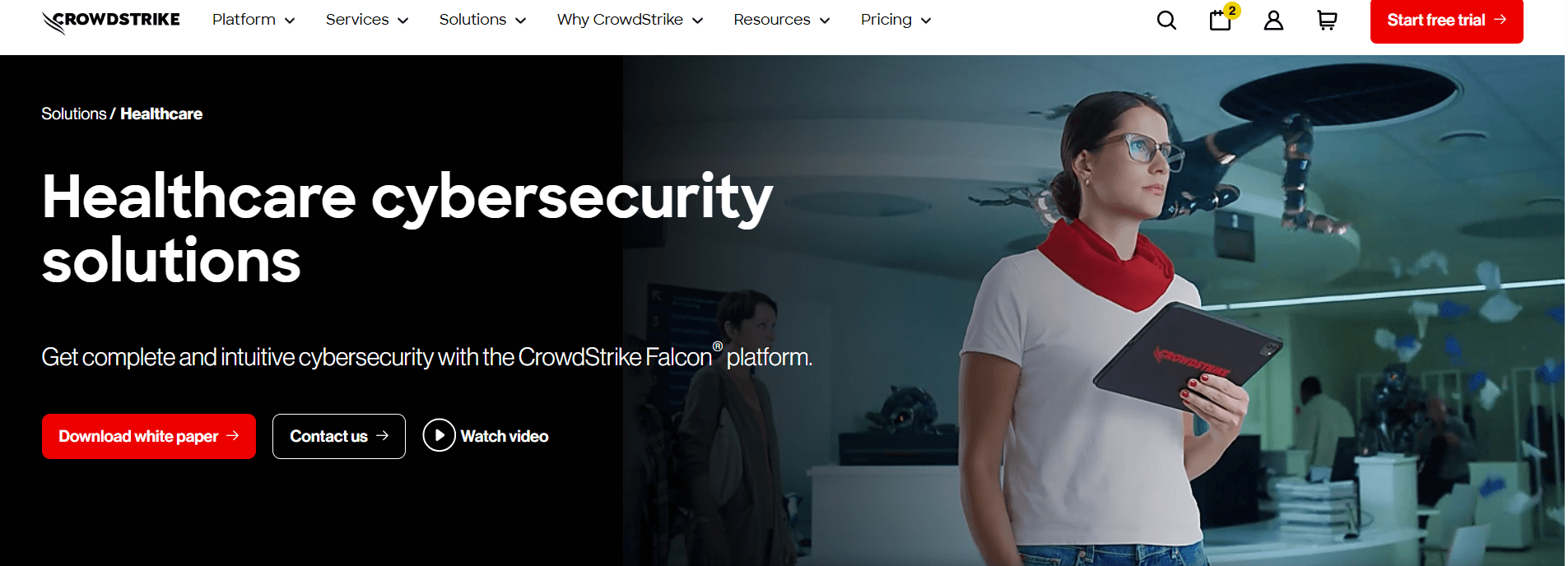
CrowdStrike Services helps healthcare organizations prepare for security incidents, respond to active threats, and prevent future cyberattacks. The company focuses on protecting hospitals, clinics, and health systems from the growing dangers that target patient data and clinical operations. In addition, CrowdStrike delivers cloud-native products and complete turnkey services that support organizations at any stage of their security journey. The platform protects endpoints from every location, both on the network and outside the network. Moreover, the Falcon platform unites threat intelligence with response services, and it supports the shift to remote work and telemedicine in a simple and practical way. Therefore, healthcare teams gain stronger visibility and control without disrupting patient care.
Features
- AI-powered next-generation antivirus that blocks known and unknown malware
- Behavioral detection that identifies zero-day threats before they spread
- Falcon OverWatch managed threat hunting with 24/7 human expertise
- USB device control that supports HIPAA compliance requirements
- Mobile threat protection for iOS and Android devices
Pros
- Teams deploy the solution quickly across many healthcare facilities
- The platform works well on Windows, macOS, and Linux systems
- The tool protects remote healthcare workers with consistent security
Cons
- Comprehensive threat hunting services require higher costs
Pricing
- Falcon Go: $59.99 per device each year
- Falcon Pro: $99.99 per device each year
- Falcon Enterprise: $184.99 per device each year
Verdict
CrowdStrike Falcon performs as a modern, cloud-first security solution that fits healthcare organizations focused on ransomware prevention and simple management. Independent testing shows a 100% prevention rate, and this record builds confidence among security leaders. Furthermore, the lightweight agent keeps clinical systems fast and reliable, and it allows medical staff to work without interruptions. Therefore, the platform serves hospitals and clinics that need strong protection while they maintain daily patient services.
6. Trend Micro Smart Protection Suite
TrendMicro Network Defense solutions help security teams discover targeted attacks that criminals design to avoid normal detection. The system stops spear-phishing messages and blocks social engineering tricks before they reach staff. It identifies advanced malware and reviews suspicious inbound, outbound, and internal network activity. In addition, the platform studies attacker behavior and provides custom sandbox analysis to expose hidden threats. Organizations can protect data in on-site data centers, virtual environments, and cloud platforms at the same time. Furthermore, the solution supports healthcare networks that connect many endpoints, mobile devices, and new Internet of Things equipment. Security focuses on how users actually behave, and this approach reduces risk across the entire organization.
Features
- The platform watches network traffic and reveals advanced malware that traditional tools miss.
- The system analyzes suspicious activity moving into, out of, and inside the network.
- Custom sandbox technology tests files and links in a safe environment before users open them.
- User Protection tools deliver layered security for any user, on any device, and with any application.
- The solution includes integrated Data Loss Prevention to guard sensitive patient information.
- The product supports hospitals and clinics that connect medical devices and IoT equipment.
- Administrators receive clear alerts about attacker behavior and potential breaches.
Pros
- The service offers cloud-based protection that can grow with an organization.
- The platform supports many device types and operating systems.
- Security teams gain better visibility into user activity and network threats.
Cons
- Some organizations may face higher subscription fees when they choose advanced options.
Pricing
Trend Micro does not publish fixed prices for business and enterprise packages such as the Smart Protection Suite for HIPAA compliance. Instead, partners create customized quotes after they review organization size, device count, and required capabilities like EDR or XDR. Therefore, costs vary from one healthcare provider to another, and buyers must request a formal estimate.
Verdict
TrendMicro Network Defense gives healthcare organizations strong tools to detect modern attacks and protect sensitive data. The focus on user behavior and layered security fits hospitals with complex and connected environments. Moreover, the flexible deployment across data centers and cloud systems supports growing networks. Although pricing depends on individual quotes, the solution delivers solid protection for organizations that need dependable HIPAA-ready security.
7. ESET Endpoint Security
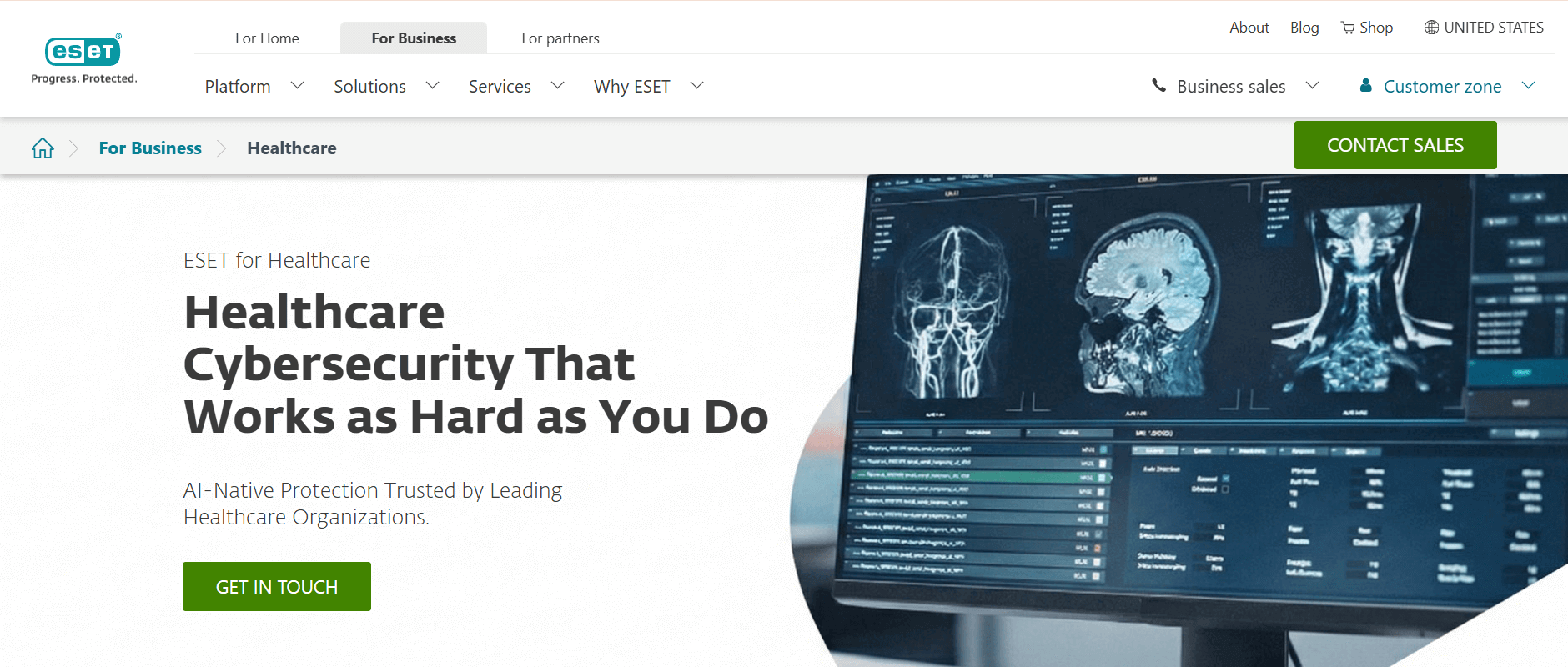
ESET Endpoint Security delivers advanced protection and clear reporting tools that help organizations meet HIPAA requirements. The platform focuses on strong malware defense and adds proactive capabilities such as vulnerability assessment, patch management, and added security for cloud and email systems. In addition, ESET builds its reputation on transparency and fair practices. Therefore, many businesses view it as a cost-effective option for complete endpoint protection that remains easy for teams to manage.
Features
- Modern multilayered endpoint security that blocks threats at different stages
- Cross-platform integration to protect Windows, macOS, Linux, and mobile devices
- Centralized management portal for monitoring all endpoints in one dashboard
- AI-native detection technologies that identify new and unknown attacks
- Managed Detection and Response (MDR) service for expert threat monitoring
- Automated remediation that removes infections without manual effort
- Endpoint Detection and Response (EDR) for detailed incident investigation
- Vulnerability assessment and patch management to reduce security gaps
Pros
- The software delivers excellent performance and keeps system impact low
- The company offers competitive and predictable pricing
Cons
- The basic packages include fewer advanced capabilities
Pricing
ESET Endpoint Security pricing starts at about $304 per year. However, the final cost changes based on the number of devices and the length of the subscription.
Verdict
ESET Endpoint Security provides reliable protection and practical management tools for healthcare organizations and other regulated industries. Moreover, the platform balances security with usability, so IT teams can maintain compliance without added complexity. For this reason, businesses that want dependable endpoint defense at a reasonable price should consider ESET as a strong option.
8. Fortinet Security Fabric
Fortinet Security Fabric protects healthcare networks, data, and connected devices with a unified security approach. In addition, the Secure Networking solutions help organizations demonstrate regulatory compliance with clear controls and reporting. Fortinet delivers converged networking and security tools for branches and headquarters, and this design allows teams to add newly acquired locations quickly while maintaining high performance. The platform uses intelligent segmentation, network access control, endpoint protection, and identity management to safeguard IoMT devices and users. Moreover, the system connects these protections to the wider security architecture and provides analytics, monitoring, and automated reports to support daily operations.
Features
- Integrated network segmentation for medical and IoMT devices
- Centralized management through the Fabric Management Center
- VPN connectivity that supports secure remote healthcare access
- Connection with physical security systems such as cameras and access control
- Power over Ethernet support for fast device deployment
- SOC 2 certification with HIPAA Security Rule alignment
Pros
- Strong segmentation designed for medical device protection
- One console that combines cyber security and physical security controls
- Low latency with high processing speed
- Deployment options for cloud, on-premises, or hybrid environments
Cons
- Setup and daily management can feel difficult for smaller teams
- The platform requires trained specialists to handle advanced features
Pricing
Pricing begins at about $250 for home office use and can reach $300,000 for large enterprise appliances. Therefore, customers must contact the sales team to receive an exact quote.
Verdict
Fortinet provides a broad and capable security system that fits complex healthcare environments, especially when organizations need firm network segmentation and medical device protection. Furthermore, the SOC 2 and HIPAA alignment helps compliance teams show evidence to auditors. Still, recent reports of exploited vulnerabilities create caution, and buyers should weigh these concerns before making a decision.
9. Cisco Healthcare
Cisco delivers an end-to-end zero-trust security architecture designed for healthcare organizations. The company integrates network security, cloud protection, endpoint defense, and security operations tools to guard sensitive medical data. In addition, Cisco supports HIPAA, NIST, GDPR, and PCI DSS requirements while addressing the advanced threats that target hospitals and clinics. Furthermore, the platform connects security controls across on-premise and cloud environments so teams can monitor activity from a single view. Therefore, healthcare providers gain clearer visibility into users, devices, and applications.
Features
- Zero-trust security framework built for healthcare systems
- Secure remote access for doctors, nurses, and administrators
- Advanced malware protection with continuous observation
- Network segmentation to protect medical devices and EHR platforms
Pros
- Cisco supports a strong zero-trust model that limits unauthorized movement
- The platform fits large and complex healthcare enterprises
- Compliance tools help organizations meet regulatory expectations
Cons
- The system needs regular management and technical attention
- Some components appear older when compared with cloud-first alternatives
Pricing
Contact Cisco directly for cost information
Verdict
Cisco offers enterprise-level security backed by long experience in the healthcare sector, and this history builds trust among major health systems. Moreover, the zero-trust design and compliance features create solid protection for patient information. However, the solution often carries a high price and demands skilled IT staff. In addition, no Cisco product achieves HIPAA compliance on its own, and customers must complete proper configuration, establish internal policies, and sign a Business Associate Agreement for cloud services.
10. Tenable
Tenable Cloud Security helps healthcare organizations create stronger and more reliable security programs. It uses a risk-focused method, and this method directs attention to the assets that require immediate protection. In addition, the platform evaluates patient-connected devices and remote monitoring systems, so organizations see risks beyond traditional IT equipment. Furthermore, the system compares internal findings with trillions of threat data points, and this process helps security teams predict which weaknesses demand urgent action. Consequently, healthcare providers gain clearer visibility and protect sensitive patient information with greater confidence.
12. Kitecyber
13. Vanta
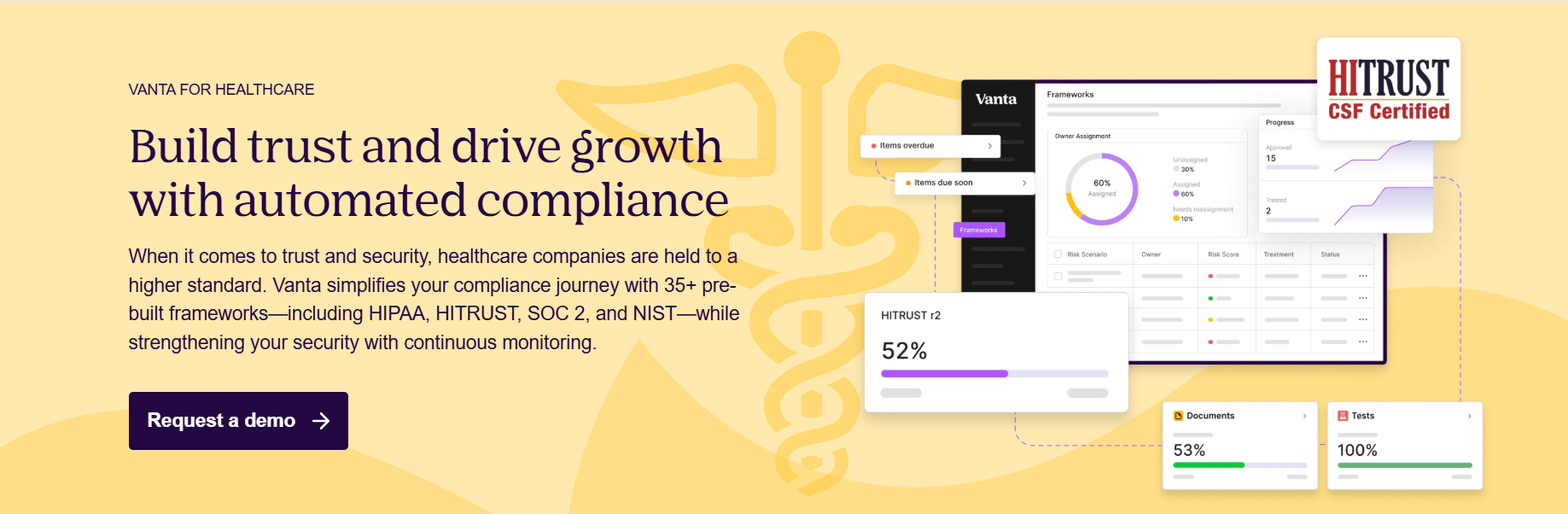
Vanta is a cloud-based trust management and compliance automation platform that healthcare and technology organizations use to manage security and meet regulatory standards such as HIPAA, HITRUST, SOC 2, and ISO 27001. Instead of relying on spreadsheets and manual checklists, the platform brings evidence collection, continuous monitoring, risk reporting, and audit readiness into one system. As organizations grow, Vanta helps teams track compliance status consistently while reducing repetitive compliance tasks.
Features
- Monitors security controls continuously and updates compliance status in real time, therefore removing the need for manual tracking
- Collects and organizes audit evidence automatically, which improves visibility during reviews
- Provides prebuilt policy templates and compliance checklists to support faster implementation
- Supports multiple compliance frameworks, allowing teams to manage overlapping requirements in one place
- Includes tools for access reviews, asset inventory management, and control workflows, which helps enforce internal security practices
Pros
- Time savings and productivity gains: Teams often cut audit preparation time significantly while reducing manual compliance work
- Broad framework coverage: Supports HIPAA alongside other major standards, which benefits healthcare organizations operating under multiple requirements
- Strong automation and third-party integrations, therefore improving ongoing monitoring
Cons
- Limited customization depth: Some organizations report constraints when adapting policies or controls for highly specialized needs
Pricing
Pricing is not publicly listed and depends on several factors, including:
- Number of users or systems monitored
- Number of compliance frameworks in scope
- Overall company size and compliance requirements
Verdict
Vanta offers a reliable compliance automation platform for healthcare organizations that need to manage HIPAA requirements, maintain continuous security oversight, and prepare for audits more efficiently than manual methods. It fits mid-sized to large healthcare providers, digital health companies, and tech-enabled healthcare services that must demonstrate compliance to regulators, customers, or partners.
However, very small clinics or solo practices with limited budgets may find simpler or lower-cost HIPAA compliance tools more practical for their needs.