Choosing the right compliance partner can make or break a growing SaaS business, and that is exactly why SOC 2 vendors for subscription based companies have become such a critical piece of the modern go-to-market stack. As more enterprise buyers demand proof of airtight security before they sign a contract, subscription companies can no longer treat compliance as an afterthought; instead, they need a platform that automates evidence collection, monitors controls continuously, and keeps pace with a fast-moving sales cycle. Consequently, the market has responded with a wide range of options, from automation-first startups to full-scale GRC suites, each promising to shorten the path to a clean SOC 2 report.
However, with so many platforms competing for attention, narrowing down the right fit is rarely straightforward. Some vendors prioritize deep integrations and auditor familiarity, while others focus on guided onboarding, bundled audits, or budget-friendly pricing for early-stage teams.
Therefore, this guide breaks down the top 12 SOC 2 vendors for subscription based companies, covering what each platform does best, where it falls short, and how much it typically costs, so founders and compliance leads can make an informed decision without wading through dozens of sales calls first.
Top 12 Best SOC 2 Vendors for Subscription Based Companies
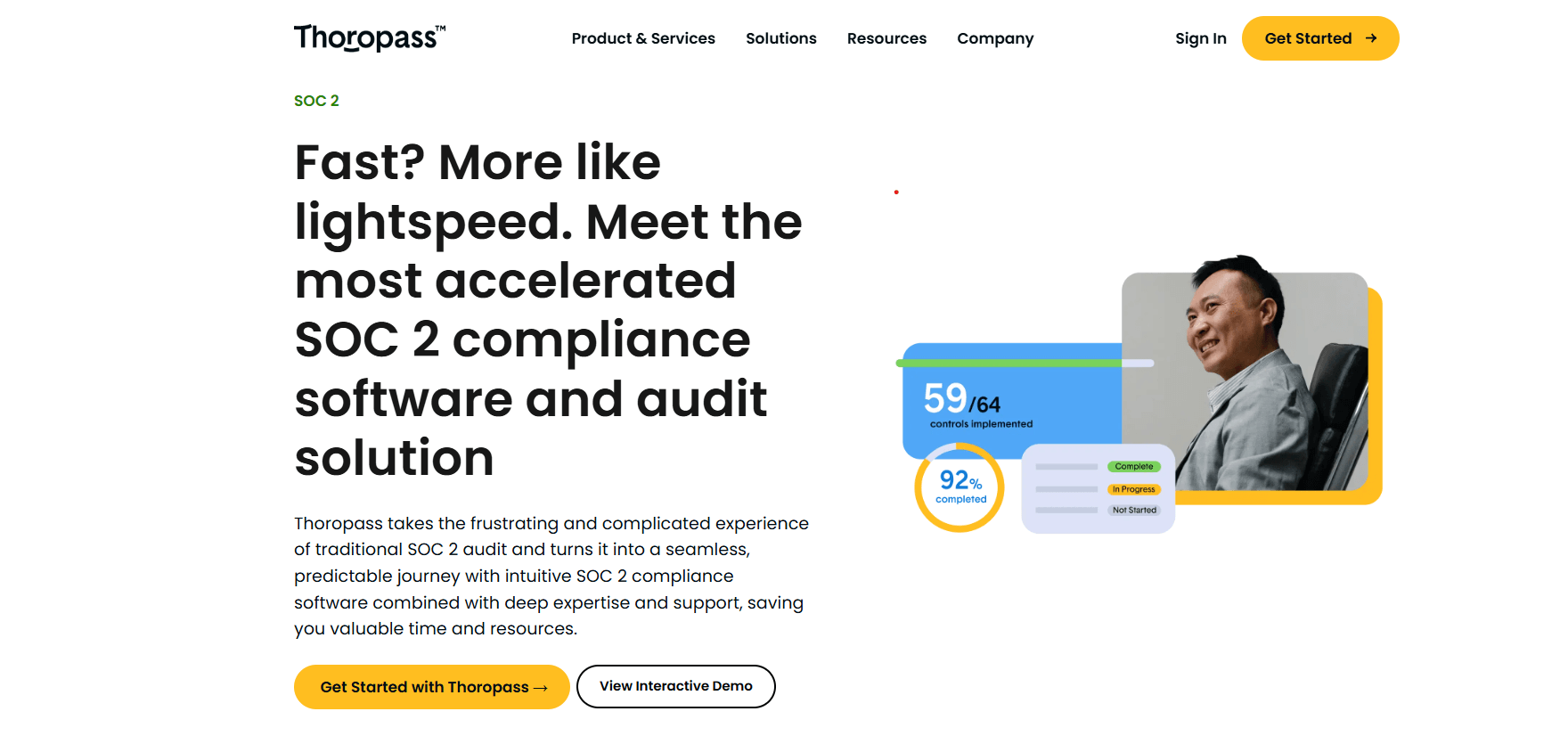
Thoropass, formerly known as Laika, takes a distinctive approach among SOC 2 vendors for subscription based companies by bundling the compliance software with an in-house audit team under one contract. Consequently, a subscription company never has to coordinate separately with an external CPA firm, since Thoropass’s own auditors perform the SOC 2 examination inside the same platform used for evidence collection. This unified model appeals particularly to teams that want a single point of contact from initial readiness through the final report.
Features
- Combines compliance automation software with an in-house CPA audit team in one workflow
- Automates evidence collection across cloud, HR, and identity systems for continuous readiness
- Supports SOC 2, ISO 27001, HIPAA, and PCI DSS within a single connected platform
- Provides audit-progress tracking so stakeholders see exactly where the examination stands
- Delivers guided workflows that translate framework language into concrete action items
Pros
- One vendor handles both the platform and the audit, which simplifies vendor management
- Evidence formatting aligns perfectly with the in-house auditors’ expectations
- Bundled pricing can simplify budgeting compared with separate software and audit contracts
Cons
- Bundling software and audit services together can reduce flexibility to choose an outside auditor
- Customization options trail some competitors as organizations scale beyond early stage
- Heavier reliance on advisory support can slow turnaround for larger, more complex programs
Pricing
Thoropass pricing often starts near $14,500 per year when the platform and the first audit are purchased together, though some sources cite a base platform cost around $8,700 plus roughly $5,800 for the SOC 2 audit itself. Median deal sizes tracked by third-party benchmarks sit near $30,000 annually, and additional frameworks add further cost on top of that baseline.
Scytale distinguishes itself from other SOC 2 vendors for subscription based companies by pairing automation with a dedicated GRC consultant on every plan. Rather than leaving a subscription company to interpret framework documentation alone, Scytale assigns a named expert who maps controls, drafts policies, and answers questions throughout the engagement. Furthermore, its AI agent, called Scy, handles evidence review and gap scanning, which frees the assigned consultant to focus on higher-value guidance.
Features
- Pairs every subscription with a dedicated GRC consultant for hands-on guidance
- Deploys an AI agent, Scy, to review evidence, scan for gaps, and draft policies automatically
- Includes a Built-In Audit feature for tracking progress and messaging the auditor directly
- Supports LaunchReady and StayReady engagement tracks for first-time and ongoing compliance
- Covers SOC 2 alongside ISO 27001, GDPR, and other common frameworks
Pros
- Dedicated advisory support suits teams with no internal compliance function
- Low published starting price makes it approachable for early-stage subscription companies
- Strong customer support consistently receives praise in independent reviews
Cons
- Some integrations are reported as less reliable, occasionally requiring manual verification
- Heavier reliance on advisory support may not suit teams that prefer a fully self-serve tool
- Feature depth for large, multi-entity enterprises trails dedicated GRC platforms
Pricing
Scytale advertises a starting price near $7,500 per year according to AWS Marketplace listings, though the company ultimately issues custom quotes based on company size and framework scope. Because pricing remains largely quote-based, subscription companies should request a detailed breakdown of what advisory hours and AI-driven automation are included at each tier.
Having covered the automation-first leaders, the remaining SOC 2 vendors for subscription based companies on this list take a noticeably different approach, ranging from bundled audit services to enterprise-grade GRC suites and budget-conscious entrants with free tiers.

Hyperproof serves a different niche among SOC 2 vendors for subscription based companies, since it functions more as a comprehensive GRC operations platform than a single-framework point solution. Subscription businesses that already run multiple compliance programs, such as SOC 2 alongside NIST 800-53 or FedRAMP, often choose Hyperproof because it lets every stakeholder work from one shared system of record. In turn, this reduces the duplicated tracking that typically occurs when separate teams manage separate frameworks in isolation.
Features
- Runs multiple compliance programs in parallel while restricting access by stakeholder role
- Maps evidence across controls and frameworks to eliminate duplicate collection work
- Flags stale evidence automatically so nothing goes unnoticed before a renewal deadline
- Uses an unlimited-stakeholder pricing model rather than charging per user seat
- Deploys AI-assisted workflows for searching requirements and drafting questionnaire answers
Pros
- Excellent fit for organizations managing several frameworks and risk registers at once
- Unlimited-user pricing avoids the seat-based cost creep common on smaller platforms
- Tight integration between compliance controls and the broader risk register
Cons
- Initial setup and day-one configuration can feel unintuitive without dedicated enablement
- Reporting and vendor-assessment areas are described as less mature than the core workflow
- The platform is generally overkill for a very small subscription company pursuing only SOC 2
Pricing
Hyperproof issues custom quotes rather than publishing list pricing, and third-party trackers estimate a broad annual range of roughly $12,000 to $100,000 depending on the number of frameworks, modules, and stakeholders involved. Because the platform targets more mature GRC programs, subscription companies still doing their first SOC 2 audit may find simpler, less expensive options elsewhere.
Scrut Automation has built a strong reputation among SOC 2 vendors for subscription based companies that want risk-first depth without paying separately for every framework. The platform bundles every framework, module, and user into a single subscription, which appeals to subscription businesses that expect their compliance scope to expand over time. Additionally, Scrut’s risk documentation tends to hold up well when auditors press for detailed control linkage, which reviewers note as a meaningful differentiator.
Features
- Bundles every supported framework and module into one subscription without per-framework fees
- Provides a risk register that ties directly to control evidence for deeper audit traceability
- Automates evidence collection across cloud, HR, and ticketing integrations
- Uses a Verify AI engine to validate evidence and draft security questionnaire responses
- Supports rigorous, risk-register-heavy audits common in regulated or global markets
Pros
- All-inclusive bundling avoids per-framework charges as compliance scope expands
- Strong risk documentation depth satisfies detail-oriented auditors
- Verify AI reduces manual effort on repetitive security questionnaires
Cons
- Occasional gaps in integration depth appear in independent reviews
- The platform suits teams managing three or more frameworks better than a single-certification startup
- Brand recognition among auditors trails category leaders like Vanta and Drata
Pricing
Scrut Automation prices its bundled subscription in the range of roughly $15,000 to $40,000 per year, though the company negotiates final terms based on company size and framework count. Because the model avoids per-framework surcharges, subscription companies planning to add ISO 27001 or additional standards later may find the bundled approach more predictable than a la carte competitors.
Strike Graph stands out among SOC 2 vendors for subscription based companies partly because it offers a genuinely free entry tier alongside its paid Certify plan. This structure lets a very early-stage subscription company begin mapping controls and drafting policies before committing budget to a paid contract. As the company grows and needs deeper automation, it can then upgrade to the paid tier without migrating to an entirely new platform.
Features
- Offers a free Launch plan that lets teams begin control mapping before any paid commitment
- Provides control reuse across multiple frameworks to reduce duplicated audit work
- Automates evidence collection and continuous testing once a paid plan is activated
- Supports SOC 2 alongside ISO 27001 and other common frameworks
- Publishes transparent, publicly listed pricing rather than a purely custom quote
Pros
- The free tier lowers the barrier to entry for very early-stage subscription companies
- Published pricing simplifies budgeting compared with fully quote-based competitors
- Control reuse across frameworks supports efficient multi-certification programs
Cons
- The free tier covers only foundational readiness work, not full continuous automation
- Brand recognition and auditor familiarity trail more established category leaders
- Larger enterprises may eventually need capabilities beyond the platform’s current scope
Pricing
Strike Graph’s Launch plan is free, and its paid Certify plan is published at roughly $10,000 per year, making it one of the few platforms in this category with a transparent, publicly listed price point. Subscription companies that want to test the platform before committing budget can therefore start on the free tier and upgrade only once real evidence automation becomes necessary.
Oneleet takes a security-first approach among SOC 2 vendors for subscription based companies by bundling compliance automation with an in-house penetration test and light virtual CISO guidance. Because most SOC 2 Type II audits require a penetration test as supporting evidence, Oneleet’s model removes the need to coordinate a separate vendor for that requirement. This bundled approach has made the platform particularly popular with early-stage, venture-backed subscription companies.
Features
- Bundles SOC 2 or ISO 27001 compliance automation with an in-house penetration test
- Provides light virtual CISO guidance alongside standard evidence collection workflows
- Automates asset tracking, vendor management, and real-time security posture monitoring
- Connects to cloud providers, code repositories, and ticketing systems for evidence sync
- Rolls out frameworks sequentially, starting with SOC 2 before adding others
Pros
- Combining compliance automation with a real penetration test simplifies vendor coordination
- Consistently earns some of the highest satisfaction scores in independent review platforms
- Security-led positioning appeals to technically minded founders and engineering teams
Cons
- Native integration count is smaller than category leaders such as Vanta or Drata
- Framework rollout tends to be sequential rather than parallel, which can slow multi-framework plans
- The more hands-on, service-heavy model may not suit teams that prefer pure self-service software
Pricing
Oneleet issues custom quotes, and independent trackers report typical deals ranging from roughly $8,000 to $60,000 per year depending on company size and the scope of the bundled penetration test. Subscription companies should confirm exactly which security services, such as vCISO hours, are included before comparing the total cost against software-only competitors.
OneTrust Certification Automation, previously known as Tugboat Logic, now operates as an enterprise-oriented module within the broader OneTrust privacy and GRC suite. Among SOC 2 vendors for subscription based companies, it appeals most to organizations that already rely on OneTrust for privacy management and want SOC 2 evidence tracking inside that same ecosystem. Consequently, larger subscription companies with existing OneTrust relationships often extend into this module rather than adopting a separate point solution.
Features
- Integrates SOC 2 evidence tracking directly into the broader OneTrust GRC and privacy suite
- Supports policy management and control mapping alongside privacy-focused workflows
- Provides audit management tooling suited to larger, more complex organizational structures
- Connects compliance evidence to existing OneTrust risk and vendor management modules
- Scales to support multiple business units within a single enterprise account
Pros
- A natural extension for enterprises already invested in the OneTrust privacy ecosystem
- Strong fit for organizations running SOC 2 alongside broader privacy and risk programs
- Enterprise-grade access controls suit large, multi-entity organizations
Cons
- Considerably less startup-friendly than dedicated point solutions like Vanta or Sprinto
- Pricing and implementation complexity favor large enterprises over lean subscription teams
- Teams without an existing OneTrust relationship may find onboarding heavier than necessary
Pricing
OneTrust Certification Automation uses quote-based enterprise pricing, and industry estimates place typical programs between roughly $20,000 and $40,000 per year or more, depending on modules and organizational scale. Smaller subscription companies evaluating this option should weigh whether the broader OneTrust ecosystem justifies the higher cost relative to leaner, SOC 2-focused competitors.
TrustCloud rounds out this list of SOC 2 vendors for subscription based companies with an AI-native platform and a genuinely free tier for very small teams. Early-stage subscription companies under roughly twenty employees can access core SOC 2 readiness features at no cost, which makes TrustCloud an attractive starting point before revenue justifies a larger compliance budget. As the organization grows, it can then transition into paid tiers that unlock deeper automation and broader framework support.
Features
- Offers a free tier of SOC 2 readiness tooling for very small, early-stage teams
- Uses AI-native workflows to draft policies, map controls, and summarize evidence gaps
- Provides a customer-facing trust portal to showcase compliance status during sales cycles
- Automates evidence collection across common cloud and identity integrations
- Supports a growth path into paid tiers as headcount and framework needs expand
Pros
- The free tier removes cost as a barrier for the earliest-stage subscription companies
- AI-native automation reduces manual policy drafting and gap analysis
- The trust portal helps close enterprise deals earlier in the sales process
Cons
- Free-tier functionality is limited and best suited to companies under about twenty employees
- Brand recognition among auditors is still developing relative to established competitors
- Companies with complex, multi-framework needs will likely outgrow the free tier quickly
Pricing
TrustCloud’s free tier covers core SOC 2 readiness for companies under roughly twenty employees, while paid plans scale upward from that baseline as headcount and framework requirements grow. Because the paid pricing is quote-based, subscription companies should request a clear breakdown of what triggers the transition from the free tier to a paid contract.

Vanta consistently tops lists of SOC 2 vendors for subscription based companies, and it earns that position mainly because of its enormous integration library and its reputation among auditors. Founded to remove the manual grind of screenshot-based evidence gathering, Vanta connects directly to cloud infrastructure, identity providers, and HR systems, and it then continuously tests those systems against SOC 2 controls. Consequently, subscription businesses that sell into enterprise accounts often choose Vanta first, since auditors already recognize its evidence format and therefore move through review faster.
Features
- Connects to more than 375 cloud, identity, and SaaS tools to pull evidence automatically
- Runs continuous, automated control testing rather than a single point-in-time check
- Provides a public-facing Trust Center that showcases security posture to prospective customers
- Supports multiple frameworks simultaneously, including ISO 27001, HIPAA, and GDPR, alongside SOC 2
- Offers AI-assisted security questionnaire responses to speed up sales-cycle due diligence
Pros
- Deep integration coverage reduces manual evidence collection substantially
- Auditors recognize the platform quickly, which shortens review cycles
- The Trust Center builds customer confidence before a deal even closes
- Scales smoothly from an early-stage startup to a large enterprise
Cons
- Pricing climbs steeply once a company adds frameworks, vendor risk modules, or headcount
- Renewal quotes often increase from the initial contract, so budgeting requires caution
- The sheer number of features can overwhelm a small team without a dedicated compliance owner
Pricing
Vanta uses quote-based pricing rather than a published rate card, though industry trackers place the observed range between roughly $10,000 and $250,000 per year depending on employee count, framework count, and add-on modules. Because pricing scales with complexity, subscription companies should request a quote that separates the base platform fee from optional extras such as vendor risk management or the Trust Center.
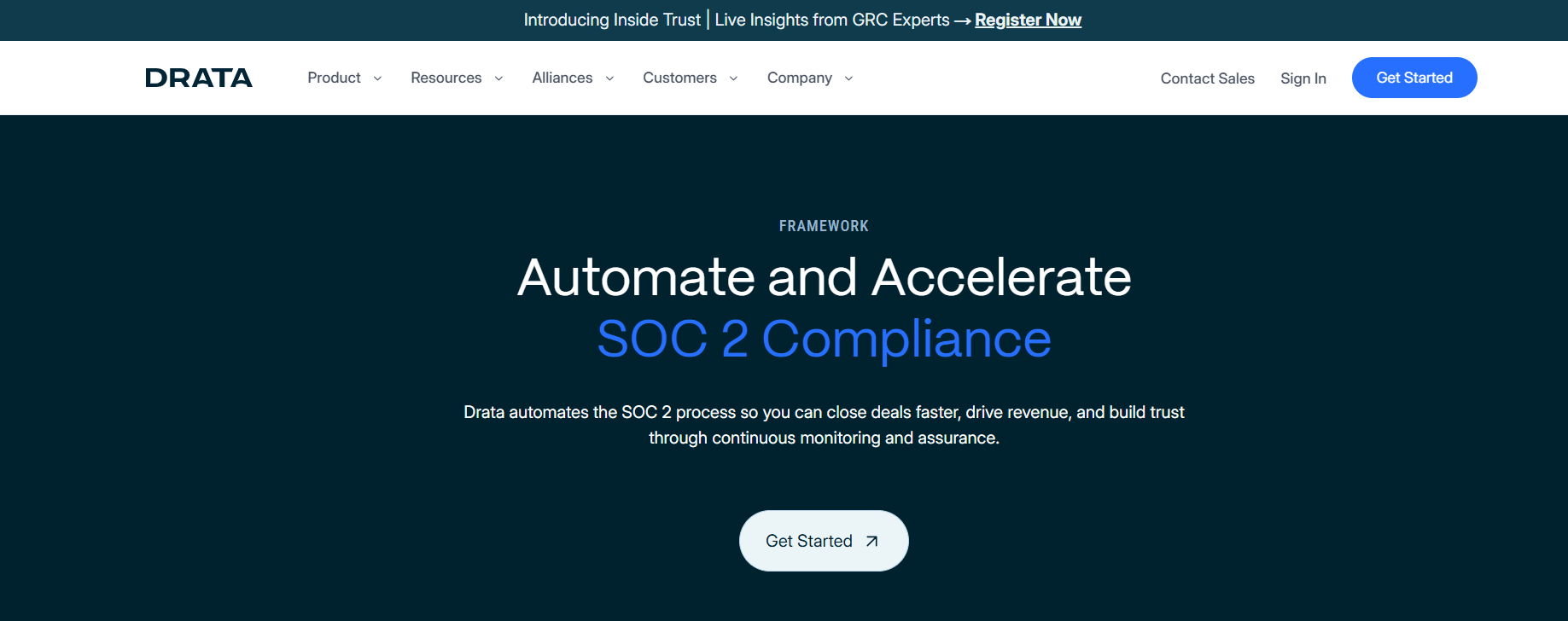
Drata competes directly with Vanta and remains one of the most automated SOC 2 vendors for subscription based companies on the market today. The platform emphasizes continuous monitoring, and it therefore tests controls around the clock instead of waiting for a scheduled audit window. Moreover, Drata supports more than thirty frameworks, so a subscription company that begins with SOC 2 can later expand into ISO 27001, CMMC, or NIS 2 without switching platforms.
Features
- Delivers continuous control monitoring across cloud, identity, and code-repository integrations
- Maps a single control to multiple frameworks, which eliminates duplicate evidence work
- Includes dedicated Risk Management and Compliance-as-Code modules for mature programs
- Offers a Trust Center, acquired from SafeBase, for customer-facing security transparency
- Provides automated user access reviews to satisfy recurring SOC 2 requirements
Pros
- Strong multi-framework mapping saves time once a company pursues a second certification
- Continuous monitoring surfaces control drift before it becomes an audit finding
- Flexible tiering lets startups begin small and expand as requirements grow
Cons
- The platform fee excludes the actual audit, so buyers must budget for a separate CPA firm
- Add-on modules for risk management and the Trust Center increase the total cost quickly
- New administrators sometimes need onboarding support to configure the platform correctly
Pricing
Drata’s entry-level Foundation plan generally starts around $7,500 per year for a single framework and up to fifty employees, while mid-market programs commonly land between $15,000 and $45,000 annually. Enterprise programs that span multiple frameworks and larger headcounts frequently exceed $60,000 to $100,000 per year, so subscription companies should confirm which modules are bundled before signing.
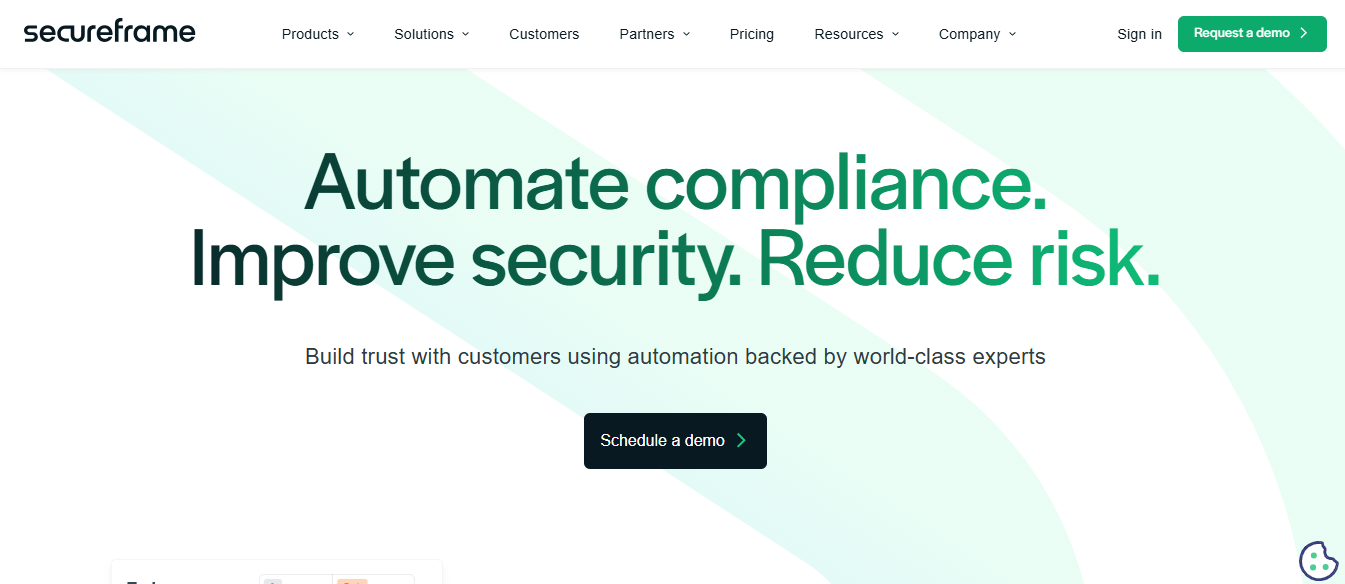
Secureframe positions itself as a guided, all-in-one option among SOC 2 vendors for subscription based companies, and it pairs automation with a structured onboarding path. Because many subscription businesses lack a dedicated compliance hire, Secureframe’s templated policies and vCISO-curated test library help teams move from zero to audit-ready without hiring outside consultants. In addition, the platform bundles employee security training directly into its workflow, which keeps personnel-related controls current automatically.
Features
- Provides a Control Layer that tracks control health in real time and links controls to risks
- Includes a vCISO-curated Test Library of pre-built, audit-ready tests for SOC 2 and related frameworks
- Bundles security awareness training and policy management with automatic renewal reminders
- Automates vendor risk tracking so third-party suppliers stay within scope of the audit
- Connects to more than 300 integrations spanning cloud, HR, and development tools
Pros
- Guided workflows suit teams without an in-house compliance specialist
- Bundled training and policy templates reduce the need for separate point solutions
- Competitive entry pricing appeals to early-stage subscription businesses
Cons
- Advanced features often require an upgrade to a higher-priced tier
- Users report noticeable renewal price increases once headcount or frameworks grow
- Some niche integrations remain less mature than those offered by larger competitors
Pricing
Secureframe’s published tiers include a Fundamentals plan near $7,500 per year, a Complete plan, and a Federal tier for government-focused programs, though final quotes vary by headcount and framework count. Independent trackers frequently cite a broader range of roughly $9,500 to $50,000 annually, so subscription companies should negotiate a multi-year price cap before their first renewal.

Sprinto markets itself as an autonomous compliance platform, and it has become a popular choice among SOC 2 vendors for subscription based companies that want a lean, founder-friendly experience. Unlike some competitors, Sprinto avoids seat-based pricing and paid add-ons, and it instead bundles the essentials, such as evidence collection, vendor risk tracking, and employee training, into a single quote. As a result, early-stage subscription companies frequently favor Sprinto when they want predictable costs alongside fast onboarding.
Features
- Runs automated, continuous checks across cloud infrastructure without manual screenshotting
- Bundles vendor risk management, training, and policy templates into the core plan by default
- Assigns dedicated compliance managers who guide founders through unfamiliar audit steps
- Pre-maps common frameworks so teams can pursue SOC 2 and ISO 27001 in parallel
- Offers an entity-level risk register that ties directly into remediation workflows
Pros
- Transparent, all-inclusive pricing model avoids surprise add-on fees
- Hands-on compliance manager support speeds up first-time certification
- Strong reputation among early-stage and venture-backed subscription businesses
Cons
- Pricing is not published, so teams must still complete a scoping call to get a number
- Integration depth for highly custom infrastructure can lag behind Vanta or Drata
- Enterprise-grade risk and reporting features are less mature than dedicated GRC platforms
Pricing
Sprinto does not publish list prices, but third-party benchmarks place most startups between roughly $6,000 and $10,000 per year for a single framework, with larger or multi-framework programs reaching $20,000 to $30,000. Because Sprinto bundles most features by default, subscription companies often find the effective cost more predictable than platforms that charge separately for each module.