

Caring for residents in assisted living facilities comes with many moving parts, and outdated tools often make the job harder than it should be. These issues slow them down and increase the chance of small errors. With this in mind, many facilities choose assisted living software to improve daily care. It brings important tasks into one system. Caregivers no longer handle piles of documents or loose notes. They check medication times, health records, and daily duties in one place.
As a result, they respond faster and make fewer mistakes. Families also feel more confident about the care their loved ones receive. The software keeps information clear and consistent. It removes many time-consuming admin tasks, too. That means caregivers can focus on what matters most: giving residents meaningful attention.
From managing electronic health records and medication administration to handling billing, staff scheduling, and family engagement, this software ensures that no critical detail falls through the cracks. These platforms not only make facility management faster and more accurate but also keep the entire care process transparent and compliant with healthcare regulations.
Managing an assisted living facility involves countless moving parts, but the right software can make a tremendous difference. Here are the ten best assisted living software trusted by senior living facilities today.
Top 10 Best Assisted Living Software
1. MatrixCare

MatrixCare’s Senior Living software helps senior living communities handle daily operations, clinical tasks, and resident needs in one connected system. It gives administrators clear insight into trends through its data tools, and its dashboards present only the details staff need at any moment. The platform supports the unique workflows of assisted living, long-term care, and skilled nursing, and it covers the full resident journey so teams can work more confidently.
Features
- Resident Care Management: Helps caregivers follow consistent care routines by giving them quick access to important resident details.
- Automated Data Integration: Pulls resident information into the system automatically so staff can complete notes faster and focus more on direct care.
- Financial Management: Handles marketing, billing, census tracking, HR, accounts payable, and operational tasks in a single system.
- Clinical Dashboards: Shows real-time updates, alerts, and audits that help teams stay compliant with regulatory rules.
- Revenue Cycle Management: Offers built-in tools that support billing and payment processes across different care levels and boost overall cash flow.
Pros
- High system availability with almost no downtime during upgrades
- Always updated with current Medicaid requirements
- All-in-one setup removes the need for constant data transfers
- Simple chart reviews and helpful compliance tracking tools
Cons
- Limited options for deep customization
- Creating custom reports can be costly
Pricing
Contact the vendor for specific pricing information.
Best For
Mid-to-large senior living and skilled nursing facilities that need a complete EHR to support clinical performance, daily operations, and compliance across multiple care settings.
2. Eldermark
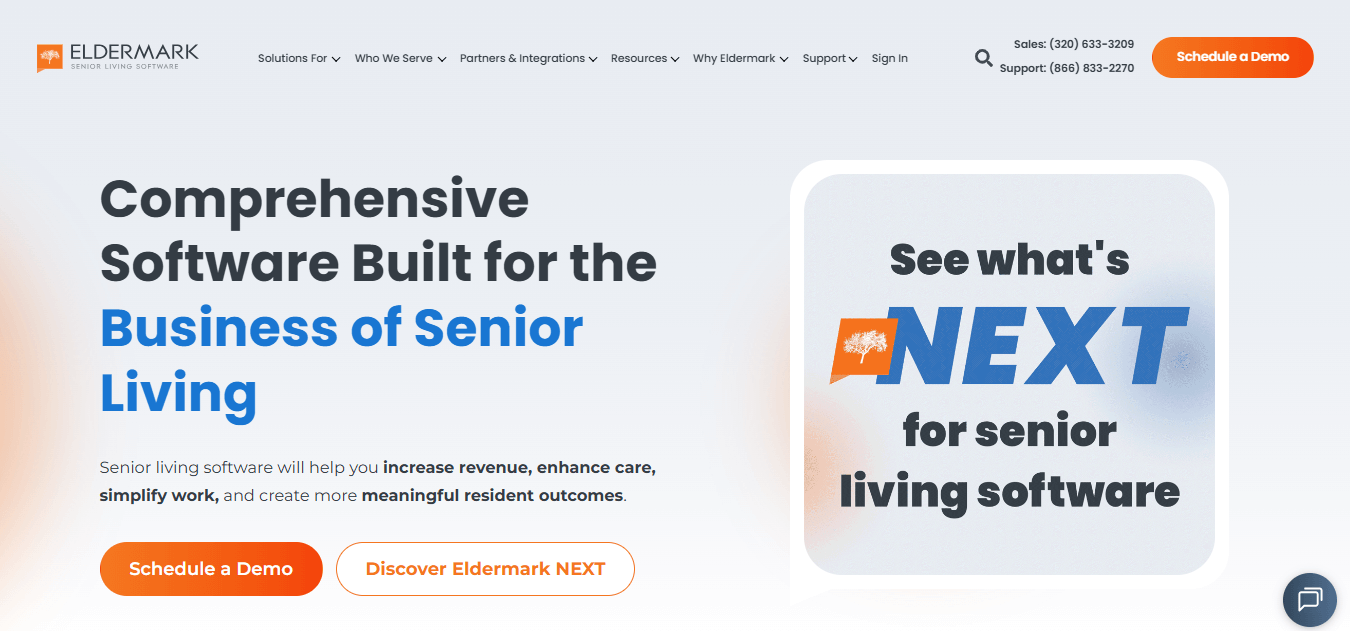
Eldermark gives senior living teams clear, data-driven insights that help them manage daily tasks, support residents, and improve overall performance. It brings key functions such as CRM, marketing, sales, medication management, reporting, and billing into one system so staff can work more efficiently. Everything sits in one place, so operators can boost revenue, improve care quality, and create better experiences for residents and their families.
Features
- WISDOM2ACT: Lets caregivers use mobile devices to track residents, update information, and receive instant notifications so they can act quickly when needed.
- Predictive Analytics: Spots missing revenue, identifies errors, and automatically sends insights each day to guide better decisions.
- Enterprise Management: Connects multiple communities so teams can oversee financials, reporting, marketing, sales, clinical tasks, and resident safety from one platform.
- Point of Care App: Supports mobile charting for assessments, service tracking, and medication oversight.
- Resident Engagement Portal: Helps residents stay connected with family members using tools informed by personal preferences and life histories.
Pros
- Support staff respond quickly and provide reliable help
- Offers several options for personal setup
- Covers most essential operational areas
- WISDOM2ACT improves caregiver efficiency
Cons
- Some users find the workflows difficult at first
- The interface may appear dated
- Certain facilities may want more unique customization options
Pricing
Pricing depends on specific customer needs. Some third-party sources note plans starting around $1.00 per month, but full quotes are only available directly from the vendor.
Best For
Senior living operators who want detailed analytics paired with an all-in-one system for improving care and business performance.
3. ALIS
ALIS is a web-based EHR platform designed for assisted living, memory care, and independent living communities. Administrators, caregivers, and operational staff use it daily to manage resident care, coordinate tasks, and maintain compliance. Senior-living providers benefit most because it centralizes operations, offers responsive support, and continuously updates its features. Its AI-powered abilities, allows staff to use conversational text or voice queries, summarize charts, generate on-demand reports, and perform actions across modules.
Features
- Full eMAR Management: Keep electronic medication administration records, track drug counts, and monitor medication delivery in real time.
- Integrated Assessments: Create resident assessments, service plans, and care schedules. Tasks are automatically assigned based on staff availability.
- Ask ALIS: Use AI-powered GPT for text or voice queries, chart summarization, on-demand reporting, and module actions.
- Family Engagement: Share updates and keep families connected with real-time information about resident care.
- Incident Management: Manage risks and ensure quality care with customizable follow-up tasks.
Pros
- Modern, user-friendly interface with easy navigation
- Responsive customer service with real human support available quickly
- Open API supports integrations with partner systems to improve workflow efficiency
Cons
- Integration with some external software can be limited
- Certain features may require refinement for smoother use
Pricing
Subscriptions range from $8.00 to $15.00 per resident per month, depending on the selected modules
Best For
Assisted living, memory care, and independent living communities seeking a comprehensive EHR solution with AI support
4. PointClickCare

PointClickCare is a cloud-based software platform that stores electronic health records and serves long-term care providers, including skilled nursing, assisted living, and senior living communities. The software helps staff manage resident care, clinical documentation, medications, and financial operations. It automates tasks such as assessing residents, planning care, scheduling, documenting patient data, administering medications, and billing. These capabilities improve communication and collaboration among healthcare providers, support value-based care, and reduce the risk of errors.
Features
- Senior Living Core Platform: Offers a resident-focused EHR experience with workflows from move-in to care delivery and billing.
- Companion Mobile App: Allows staff to track residents, view scheduled tasks, document unexpected tasks, and communicate early signs of changes in resident needs.
- Care Collaboration Network: Links communities to a network of care partners, ensuring smooth updates and integration with preferred pharmacies.
- Move-In Management: Replaces manual move-in paperwork, enabling staff to spend more time with residents while maintaining compliance.
Pros
- Combines EHR, CRM, billing, point-of-care, accounting, and scheduling functions in one platform
- Offers an intuitive interface with color-coded patient bars for prioritizing tasks
- Enhances care coordination through real-time data insights and easy information sharing
Cons
- Some users experience occasional system lags, which require a strong internet connection
- Pricing depends on facility size and needs; interested organizations must contact the vendor for a quote
Best For
PointClickCare works well for multi-location long-term care organizations handling high-volume admissions and regulatory compliance. It fits teams that need centralized operations, improved resident engagement, and clear visibility into care data, making it ideal for post-acute and senior care networks.
5. Yardi Senior Living Suite
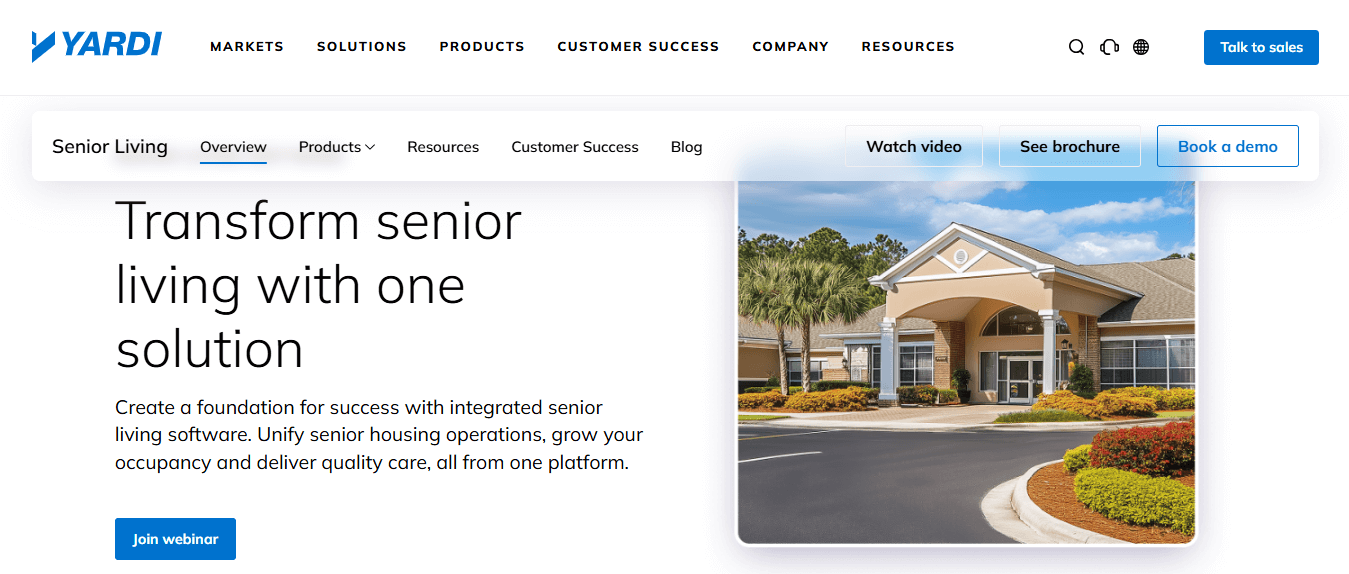
The Yardi Senior Living Suite manages resident care, staff performance, revenue, and risk using automated workflows and reporting. It uses a secure cloud-hosted database to bring together resident care, marketing, sales, finance, and business intelligence on one platform, reducing manual work and preventing data errors. Yardi provides a browser-based and mobile-friendly electronic health record system that handles intake processing, care planning, and wound treatment. The suite also includes Yardi eMar for easier pharmacy communication and Rent Café Senior CRM to help sales teams nurture prospects effectively.
Features
- Online payment processing for convenient resident payments
- Family portal to keep relatives informed and engaged
- Call center to capture and qualify phone leads
- Property management tools, including construction management and utility billing
Pros
- Combines financial, health, marketing, and billing functions in a single platform
- Lets users track processes from start to finish
- Provides responsive customer support with dedicated account managers
- Offers a user-friendly interface for organizing patient and resident records
Cons
- Creating custom rules can take time and has limited flexibility
- Certain features may not fully focus on senior housing compared to specialized solutions
Pricing
Contact the vendor for specific pricing.
Best for
Senior living operators who need property management tools integrated with resident care and financial management.
6. Aline

Aline connects residents, families, staff, and executives on a single platform designed specifically for senior living communities. It helps communities grow revenue, increase productivity, and enhance experiences for both residents and staff. The system combines sales, marketing, contact center, leasing and billing, payments, resident care, medication management, accounting, quality tracking, and business intelligence into one integrated platform.
Features
- Customizable CRM: Use lead scoring, AI and ChatGPT integration, one-click call/text/email, and real-time alerts to respond faster to leads and improve conversion rates.
- Contact Center: Support sales teams with live chat to engage leads quickly and drive more conversions.
- Pharmacy Integrated eMAR: Manage medications safely with a controlled substance safeguard system.
- Aline Intelligence: Gain AI-driven insights and guidance to make decisions faster while focusing on resident and staff needs.
- Business Intelligence: Access over 100 built-in reports, create custom reports, and monitor real-time executive dashboards.
Pros
- Access data quickly to make informed sales decisions
- Generate comprehensive reports that show traffic, follow-up activity, and occupancy metrics
- Choose from multiple training options, including virtual, on-site, and on-demand courses
Cons
- Resolving community issues can sometimes take longer than expected
- Initial setup and configuration require careful planning
- Teams new to comprehensive CRMs may face a learning curve
Pricing
Contact the vendor to get pricing tailored to your portfolio size and the solutions you select.
Best For
Senior living operators who want to consolidate multiple systems into a single platform. Aline works especially well for mid-to-large portfolios aiming to increase occupancy, boost revenue capture, and make operational decisions based on data.
7. ShiftCare
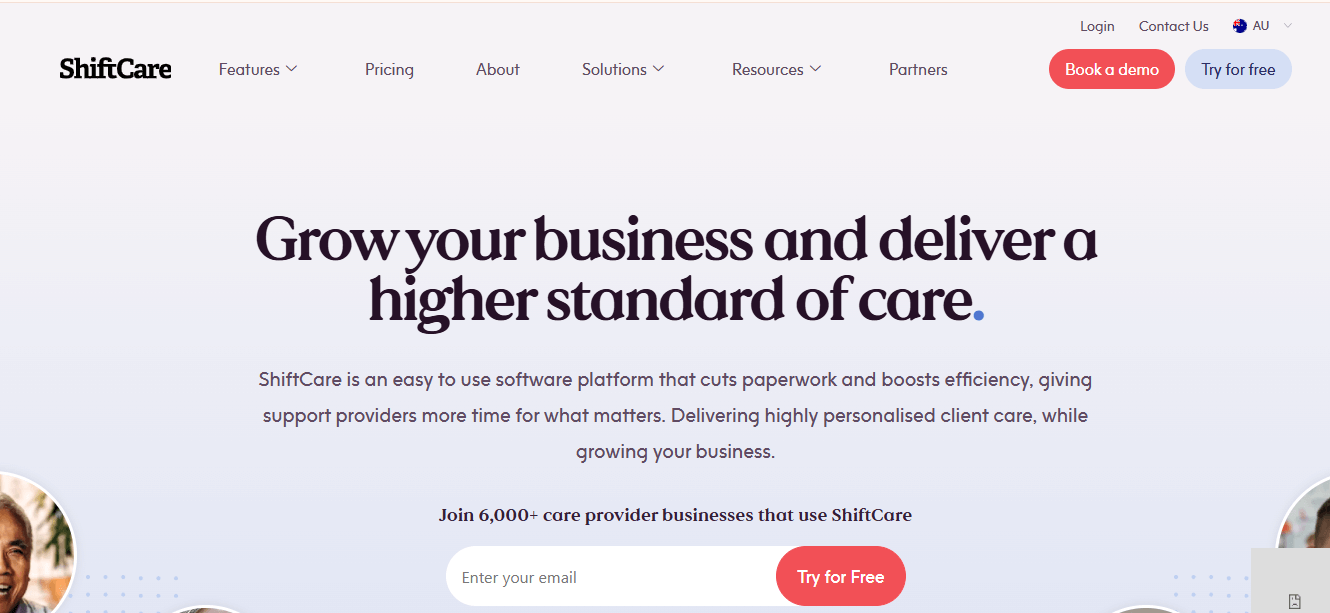
ShiftCare helps home care agencies, assisted living facilities, and regional center providers manage daily operations with ease. It improves how teams schedule shifts, coordinate staff, and handle essential care documentation. The platform also supports stronger communication with families, which often leads to better transparency and smoother service delivery.
Features
- Smart Scheduling: Drag-and-drop shift creation with AI assistance that matches caregivers to suitable shifts, manages leave, and fills gaps quickly.
- Care Documentation: Simple upload and sharing of care plans, voice-to-text notes, and editable document templates.
- Time and Attendance: GPS-verified clock-ins and clock-outs, automatic entry approvals, and mileage or expense tracking.
- ShiftCare Connect: A family portal where approved relatives can check care notes, billing information, and request additional services.
Pros
- Features built specifically for care organizations
- Flexible shift setup
- GPS verification available
- Easy for new users to learn
- Offers a client-facing app
Cons
- Costs can increase as teams grow
- Lacks auto-scheduling
Pricing
- Basic: $8 per user
- Professional: $13 per user
- Premium: $20 per user
Best For
ShiftCare works well for home care agencies, assisted living facilities, and regional center providers that want affordable, easy-to-use software with helpful tools for scheduling, documentation, and family communication.
8. Continuum CRM
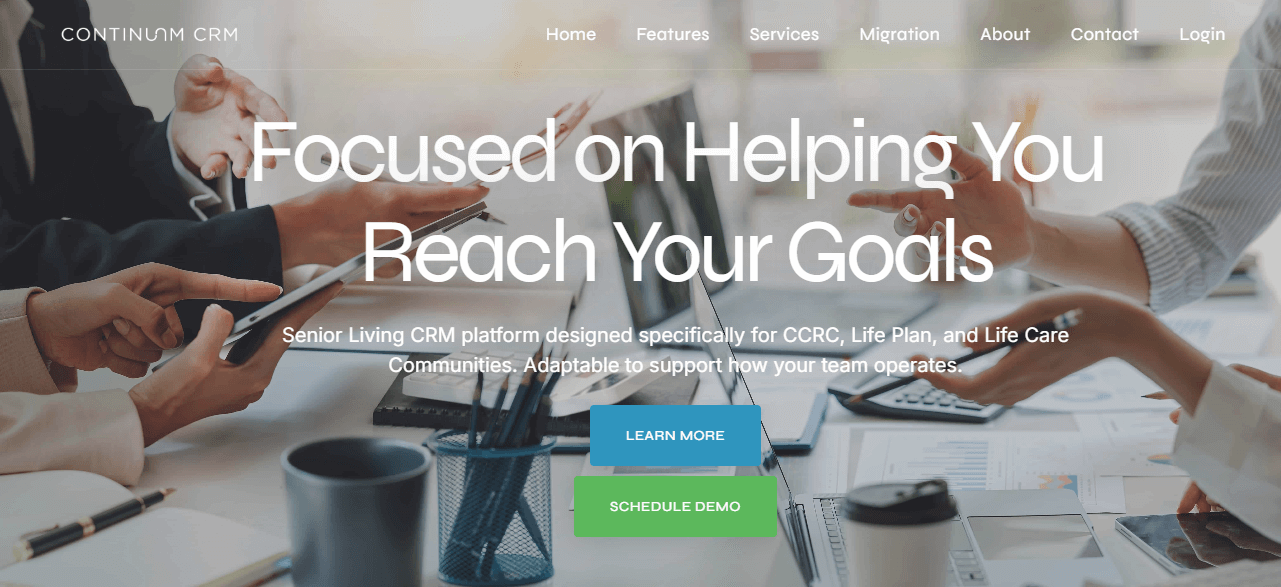
Continuum CRM helps senior living communities manage customer relationships efficiently. It tracks leads, monitors interactions, and automates follow-ups, supporting long-term engagement with residents and prospects. Its interface is intuitive, and reporting tools give clear insights into sales and marketing performance. The software also integrates smoothly with other systems, improving overall operational efficiency.
Features
- Prospect Readiness Lead Scoring: Automatically scores prospects based on education, awareness, fitness, need, desire, and means, tailored to senior living sales cycles.
- Inventory Management: Records the full history of each residence from move-in to move-out, providing details on occupancy, turnover, and marketability.
- Email Marketing Platform: Tracks and manages email campaigns while offering scheduling functions to simplify marketing automation.
- Customizable Workflow Engine: Supports your sales processes with pre-built workflows for residential and assisted living, inventory management, referral networks, events, and advertising.
Pros
- Users can switch from previous CRM systems easily thanks to a user-friendly interface.
- Offers industry-specific features and workflows designed for senior living.
- Manages complex fee and deposit structures and merges documents for agreements and contracts efficiently.
Cons
Some users find the initial learning curve steep.
Pricing
Starts at $99 per month, with customized plans available depending on organization size and requirements.
Best For
Continuing Care Retirement Communities (CCRCs), Life Plan Communities, assisted living, memory care, and skilled nursing facilities that need a CRM designed for their specific workflows.
9. Therap
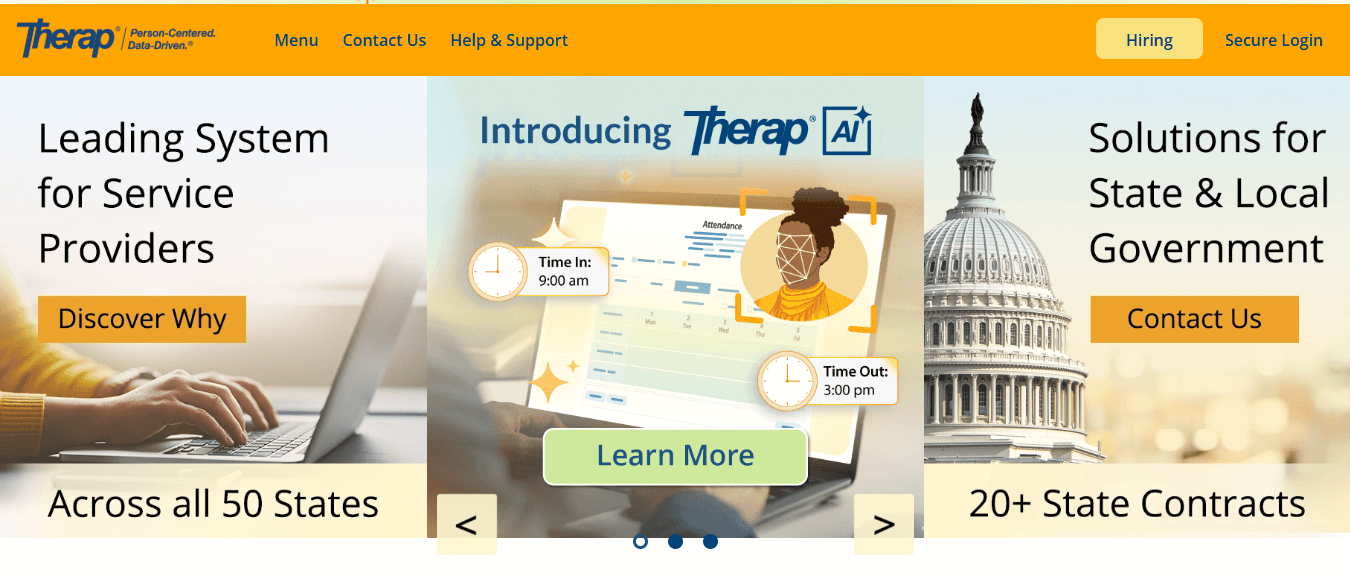
Therap is an online EMR solution that helps organizations manage compliance tracking, appointment scheduling, medical billing, and initial assessments all in one platform. It connects staff, clients, and families while keeping information secure. The software focuses on long-term care for individuals with developmental and intellectual disabilities, making documentation and reporting easier and more accurate. Therap offers a full software-as-a-service package that supports documentation, communication, reporting, electronic visit verification (EVV), and billing specifically for disability service providers.
Features
- Comprehensive EHR Modules: Track incidents, medications, goals, health records, nursing notes, progress notes, behavior tracking, supported employment notes, and customizable behavior plans.
- Electronic Visit Verification (EVV): Follows federal EVV compliance with scheduling, staff check-ins and check-outs, and automatic billing integration.
- Health Tracking Modules: Record medical events such as appointments, blood glucose readings, immunizations, seizures, vital signs, wound care, and therapy sessions.
Pros
- Strong EVV functionality simplifies verification and billing processes.
- Secure messaging and real-time updates improve communication among staff and families.
- Access to extensive training, including webinars, online courses, conferences, and module simulators, helps users get up to speed quickly.
Cons
EVV scheduling and billing can take time to learn and may feel complex for some users.
Pricing
Available upon request.
Best For
Organizations serving individuals with intellectual and developmental disabilities (IDD), including residential programs, day programs, community-based services, vocational rehabilitation, and home and community-based services (HCBS).
Groups that need HIPAA-compliant documentation, billing, and EVV tools in one solution.
10. WelcomeHome Software
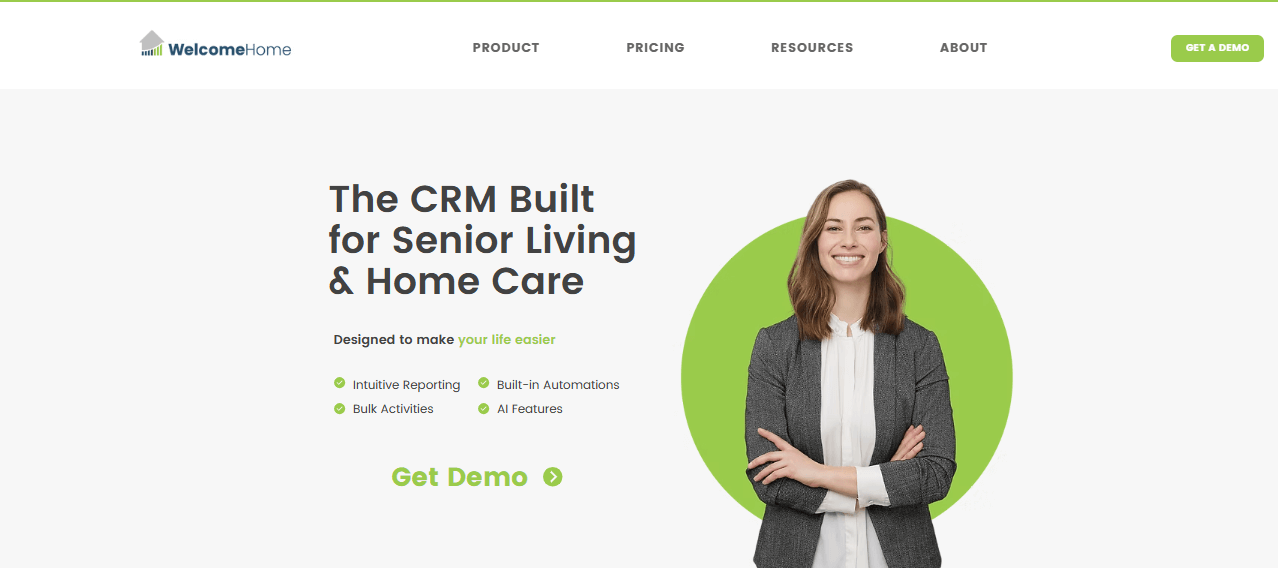
WelcomeHome is a CRM software built for senior living communities. It helps teams manage leads, follow up automatically, and access insights that improve resident engagement. The platform supports elder care and assisted living organizations by simplifying daily tasks and providing clear data to guide decisions. Its tools give staff more time to focus on residents while maintaining strong relationships with prospects and referral partners.
Features
- One-Touch Communication: Send emails, make calls, and send texts directly from the CRM, ensuring no lead is missed.
- Prospect Management: Track, nurture, and manage prospects with detailed records and automated follow-ups to increase conversion rates.
- Referrer Management: Monitor and improve business referrals to expand outreach and strengthen partnerships.
- Intuitive Reporting: Access clear, actionable reports and real-time dashboards to spot challenges, opportunities, and trends.
Pros
- Easy-to-use interface that requires minimal training
- Entire team can be trained and fully operational in 30 days
- Dedicated Customer Success Manager offers ongoing support and unlimited training
Cons
Monthly pricing may be high for smaller communities
Pricing
$500 per month per community
Best For
Senior living communities and home care agencies that want a CRM designed for their industry. It works well for organizations aiming to improve lead conversion, increase occupancy, and use automated workflows and AI insights to guide sales and marketing efforts.
Choosing the Right Assisted Living Software
When picking assisted living software for your facility, focus on these essential factors:
Integration Capabilities: Confirm that the software connects smoothly with your existing systems, including pharmacy tools, accounting programs, and payroll applications. This ensures staff spend less time on duplicate entries and more time caring for residents.
Growth: You don’t want to outgrow your software in a year. Pick a solution that can expand with your facility. The software should handle more residents, staff, and data without slowing anyone down.
Compliance Support: Find platforms that actively guide you through HIPAA requirements and state-specific regulations. Proper support reduces the risk of errors and protects resident information.
Mobile Access: Caregivers rarely sit at desks, so prioritize software with strong mobile functionality. This allows staff to update records, track tasks, and communicate in real time while moving throughout the facility.
Training and Support: Investigate the vendor’s training materials and customer service availability. Around-the-clock support can prevent disruptions in care, especially during emergencies or unexpected challenges.
Total Cost of Ownership: Look beyond subscription fees. Account for setup, training, and any optional customizations to avoid surprises in your budget.
The right assisted living software enhances daily operations, boosts staff satisfaction, and improves care quality. It also strengthens financial management and ensures residents receive coordinated, compassionate support at every step.