

Agriculture management software is a specialized tool for agricultural businesses that helps manage daily operations, improve efficiency, and increase profitability through features like task scheduling, record-keeping, and data analysis. Importantly, these solutions offer a range of functionalities, including crop and livestock tracking, inventory management, financial planning, and integration with precision agriculture tools like GPS and sensors to optimize every aspect of agricultural production.
This system emerged from the intersection of farm management needs and advancing technology. Initially, these systems focused mainly on record-keeping and basic accounting. However, modern platforms integrate significantly more diverse features, transforming how farmers approach operational management.
Core Functionalities of an Agriculture Management Software
Here are some key operational areas to consider when choosing agricultural management software.
- Financial management components: This feature will help you track costs associated with each enterprise or crop, monitor cash flow, generate a report for tax purposes, and help farmers understand profitability.
- Equipment and machinery management: These features enable farmers to track maintenance schedules, fuel consumption, repair costs, and equipment utilization across their entire fleet.
- Weather integration: This information drives decisions about irrigation scheduling, pesticide application timing, and harvest planning. However, historical weather data also helps contextualize crop performance.
- Financial management: Farmers can track costs associated with each crop or enterprise. They can also monitor cash flow, generate reports for tax purposes, and understand profitability by field or crop type
- Inventory management: This tracks seeds, fertilizers, pesticides, and other inputs, helping prevent shortages and excess purchases.
Top 10 Best Agriculture Management Software
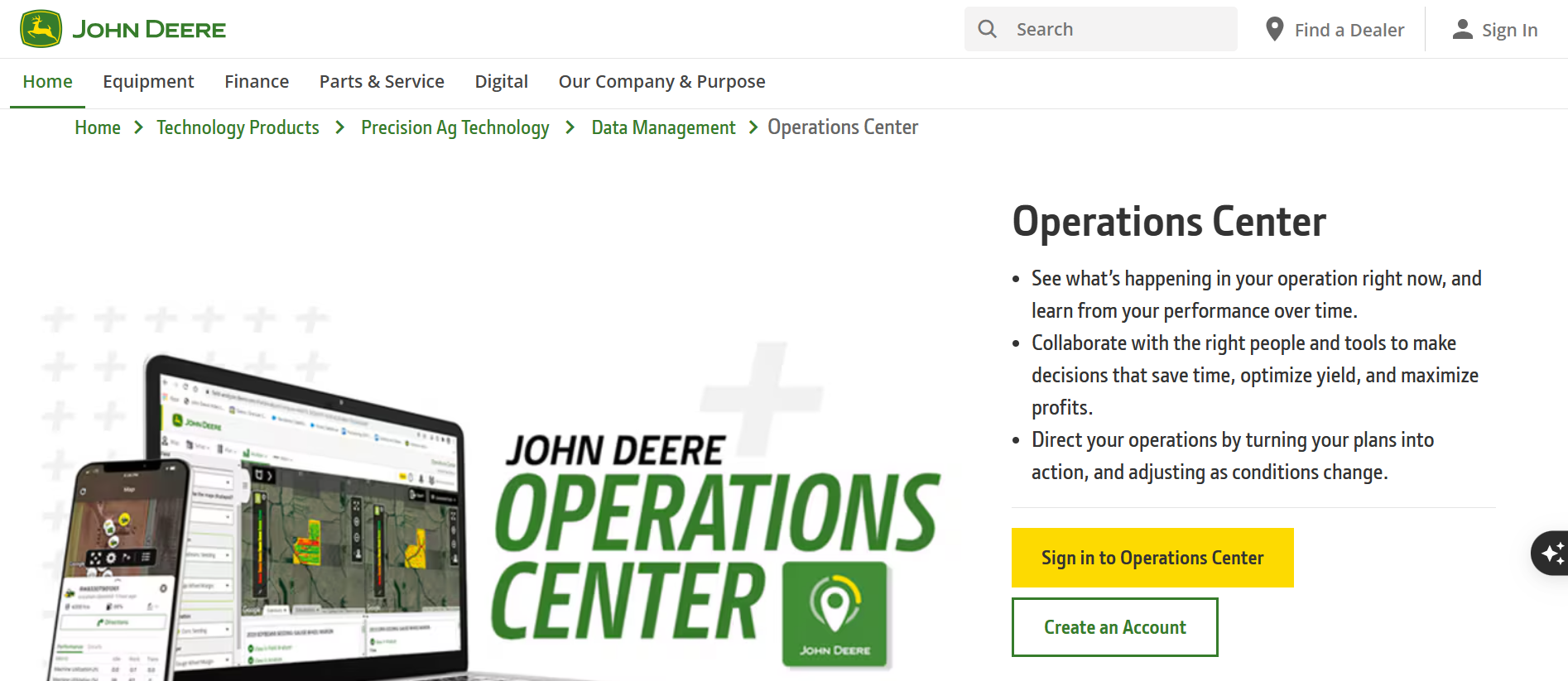
John Deere Operations Center (formerly Apex) represents the integration of one of agriculture’s largest equipment manufacturers into the software space. As a result, the platform extends the John Deere ecosystem with deep equipment connectivity and decades of agricultural expertise. Consequently, it positions itself as a comprehensive farm management solution that seamlessly integrates with John Deere machinery while remaining accessible to farmers using other equipment brands.
Features
- The financial management module tracks costs associated with specific fields and operations, therefore providing visibility into profitability by enterprise or geography.
- Notably, the platform integrates directly with John Deere equipment, automatically capturing application data, yields, and equipment performance metrics.
- Additionally, it provides real-time forecasts and historical data to inform decisions about irrigation, spraying, or harvest timing.
Pricing
John Deere Operations Center operates on a subscription model. Pricing typically ranges from $1,500 to $5,000 annually, depending on operation size and feature selection.
Best For
John Deere Operations Center is optimally positioned for mid to large-scale commercial farmers, in particular, those with significant John Deere equipment investments who want seamless machinery integration.
2. Farmbrite
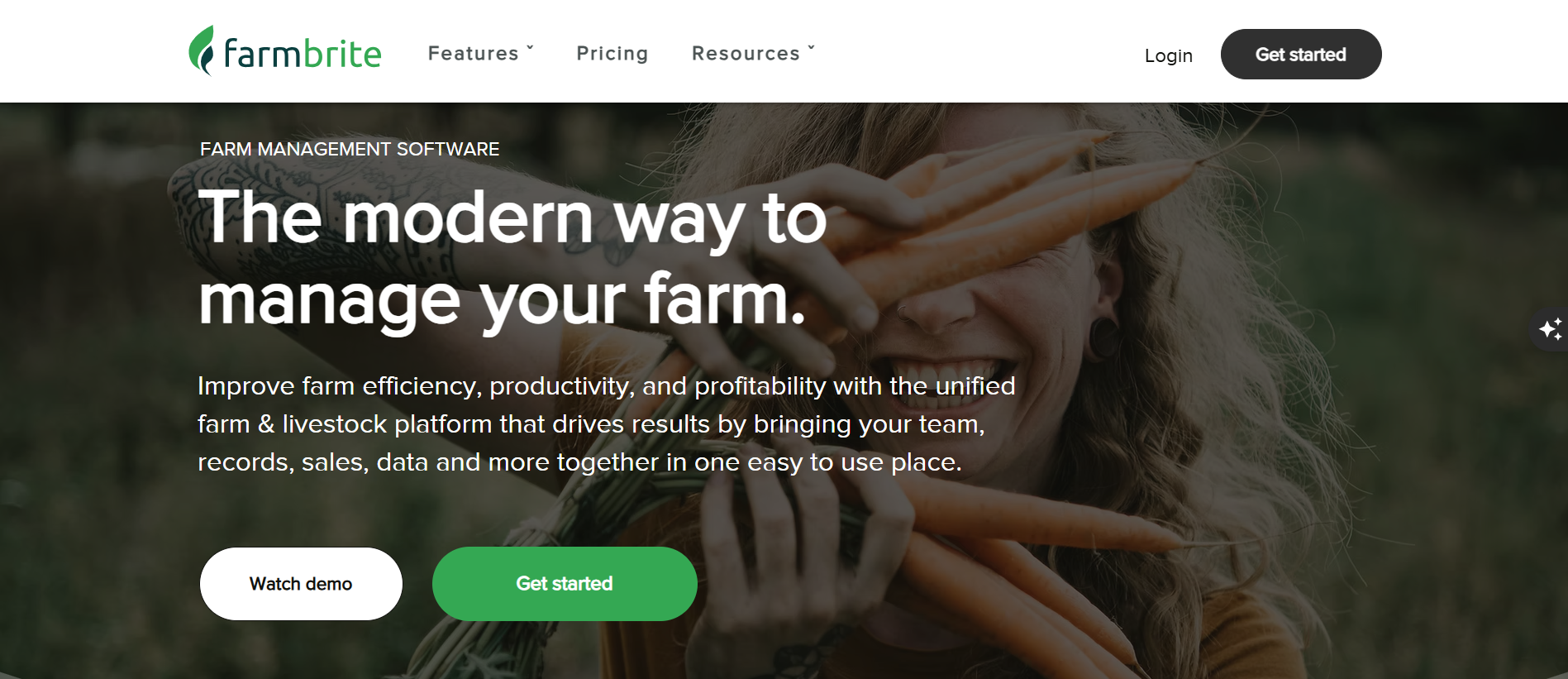
Farmbrite is a versatile agriculture management software designed to streamline your daily tasks. Accordingly, it offers a wide array of features like livestock record keeping, crop planning, farm sales tracking, inventory management, and much more. Additionally, its customizable reporting tools allow you to analyze production metrics and make informed decisions. As a bonus, the platform integrates with other tools, further enhancing overall efficiency.
Features
Integrated accounting and bookkeeping
Integrated accounting and bookkeeping
It aids crop management such as planting, harvest planning, yield, and income projections.
Pricing
- Starts $39 per month
Best For
Farmers seeking a user-friendly and holistic farm management solution will appreciate a platform that covers livestock, crops, and business operations while also offering insightful reporting. Moreover, it helps streamline day-to-day activities, making overall farm management easier.
3. Trimble Ag

Trimble Ag Software is designed to integrate seamlessly with precision agriculture tools, providing advanced field monitoring and operational control. Furthermore, it enables farmers to track yields, manage field inputs, and utilize GPS-guided equipment. As a result, operations run smoother and more efficiently.
Trimble’s approach emphasizes interoperability and data integration across multiple brands of equipment, therby avoiding the lock-in associated with manufacturer-specific platforms. Consequently , farmers maintain flexibility in their technology choices.
Features
- First and foremost, it consolidates information from multiple sources—equipment, weather services, soil tests, and satellite imagery—into a unified interface.
- Provides real-time mapping and field-level insights for informed decision-making
- Moreover, it offers weather tracking and soil health data for comprehensive crop planning
- The system generates profitability analysis by crop, field, or practice variation, enabling farmers to understand which management decisions ultimately drive their financial results.
Pricing
- $2,000 – $6,000 annually, depending on some factors and operation size.
Best For
Trimble Ag software is ideal for tech-savvy farmers who utilize precision agriculture tools and want to centralize farm data and operations.
4. Ag World

AgWorld represents a technology-native approach to agricultural management. As auch, the platform emphasizes user-friendly interface design, mobile-first functionality, and cloud-based accessibility. More importantly, it centralizes workflows and improves team efficiency while positioning itself as farmer-friendly. Notably, it incorporates direct feedback from users into product development. Consequently, this approach has built considerable loyalty among a specific farmer demographic—those comfortable with technology but wanting software that reflects farming realities rather than corporate complexity.
Features
- Field mapping and record keeping
- Weather integration provides forecasts and historical data for decision-making about timing field operations.
- Coordinate farm activities, with capabilities to assign tasks to employees and track completion.
- Provides cost monitoring by field and crop, with reporting on input expenses and labor costs.
- Importantly, its customizable alerts help farmers track important dates like replant deadlines or pesticide re-entry intervals.
Pricing
- Subscriptions typically range from $300 to $1,200 annually.
Best For
AgWorld is ideal for beginning farmers, smaller operations, and technology-saavy farmers wanting straightforward, intuitive software without steep learning curves. It serves farmers prioritizing simplicity and affordability.
5. Agrivi
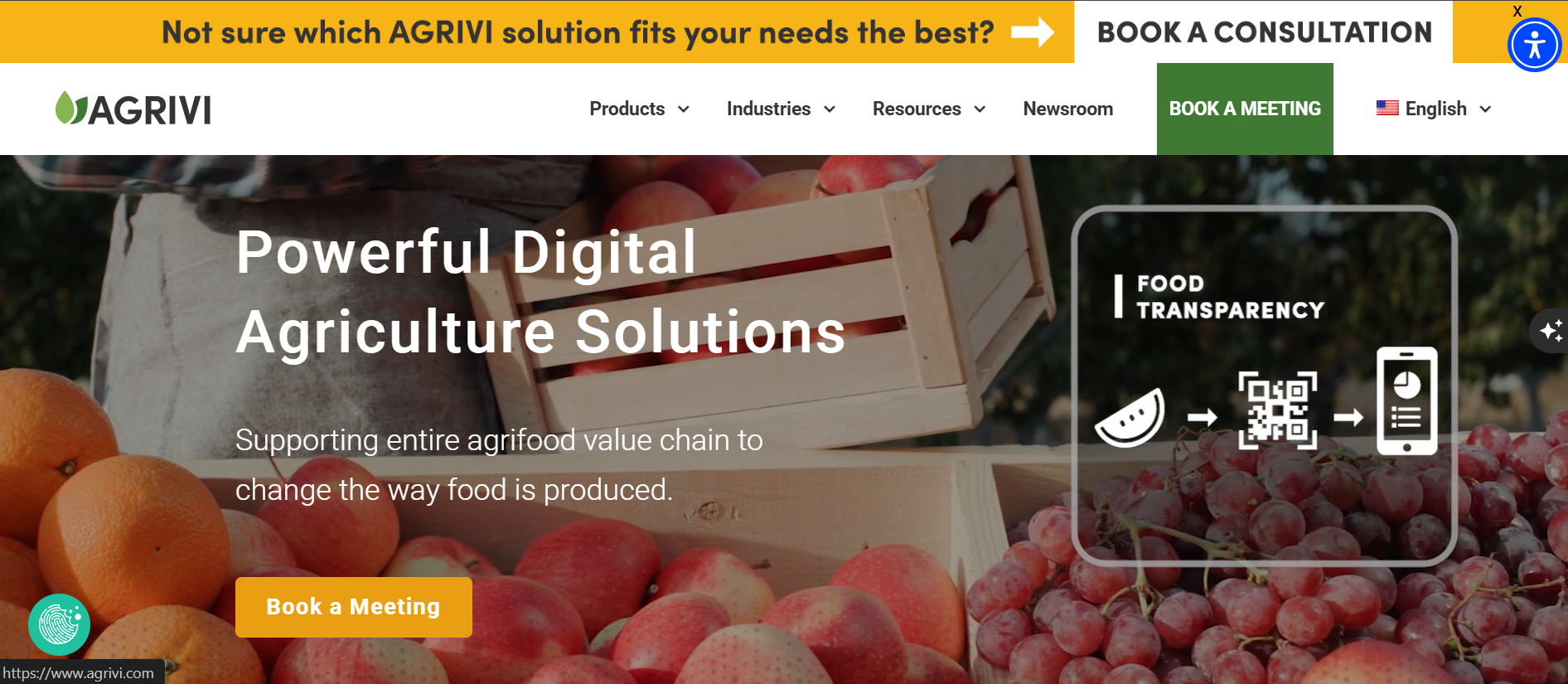
Agrivi is a comprehensive agricultural farm management solution that optimizes production at every stage. It offers robust tools for crop planning, field operations, and inventory management. As a result, the platform empowers growers by providing them with real-time analytics and data-based solutions with just a click of a button.
Features
- Analysis and reporting of the agriculture supply chain
- Crop planning with step-by-step task scheduling
- Detailed pest and disease management capabilities
- Inventory tracking for inputs like seeds, fertilizers, and chemicals
- Additionally, its integration with weather forecasts and alerts
Best For
Small to medium-sized farms need a centralized platform to manage daily operations efficiently. As such, Agrivi serves operations seeking tracking and crop planning capabilities. Most importantly, it eliminates manual errors and integrates seamlessly with tools like Picktrace and Power BI.
6. CropTracker

CropTracker is a specialized platform designed specifically for fruit and vegetable growers. It provides accurate tracking and crop planning. It eliminates manual errors and integrates seamlessly with tools like Picktrace and Power BI.
Features
- Streamlined processes through software integration.
- Tools for pesticide and spray tracking to ensure compliance
- Comprehensive traceability features for food safety and certifications
- Mobile app for real-time updates in the field
- Active tracking and communicating capabilities
Pricing
Starts at $450/user per year.
Best For
Produce growers who focus on quality control, traceability, and compliance in their operations.
7. AgriWebb
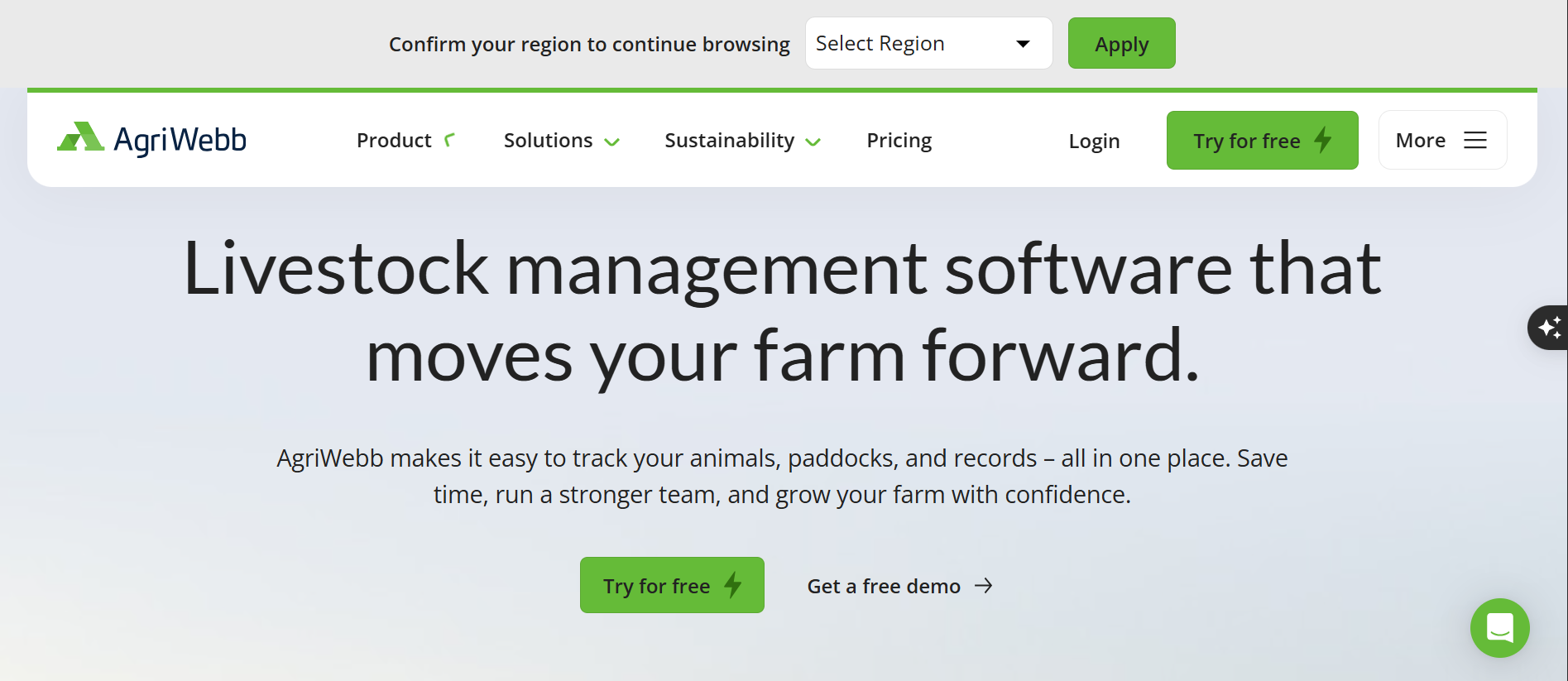
AgriWebb is a cloud-based platform focused on simplifying record-keeping for livestock farmers. More Specifically, it improves operational efficiency for small-scale farmers. Furthermore, the platform provides tools for tracking animal performance, pasture management, and compliance requirements.
Features
- Comprehensive compliance reporting and auditing tools
- Integrated financial and operational reporting
- Livestock tracking for health, breeding, and weight records
- Pasture management tools with rotation planning
- Mobile-friendly interface for on-the-go updates
Pricing
Best For
AgriWebb is best suited for livestock farmers needing detailed animal performance tracking and compliance tools.
8. AGCO Fuse
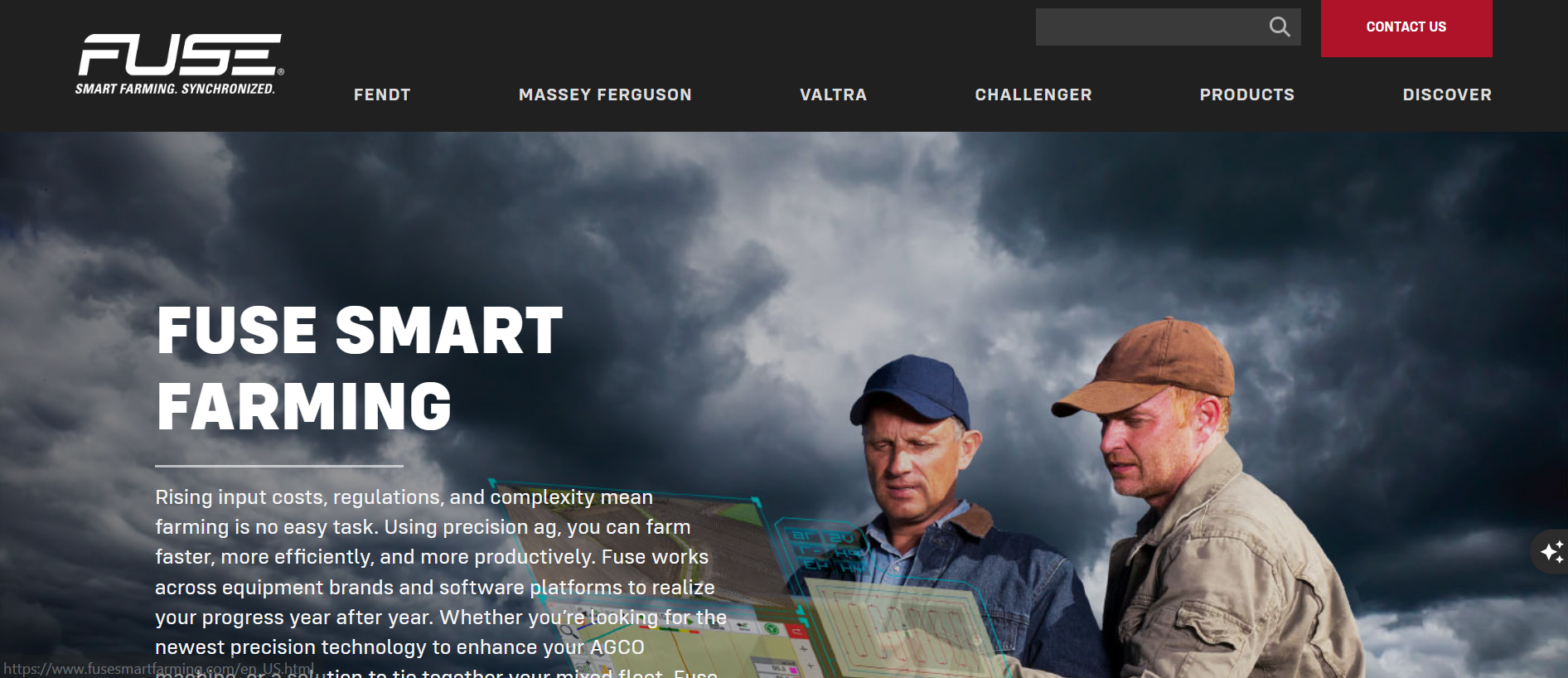
AGCO Fuse provides a comprehensive field mapping with the ability to plan operations, execute them via connected equipment, and analyze results. It integrates directly with AGCO machinery, which automatically capturing application data, yields, and equipment performance, eliminating manual data entry for its users.
Features
- Integration with third-party equipment
- Provides weather integration and forecasting to support operational timing decisions
- Additionally, compliance tool help manage regulatory requirements for pesticide use, chemical storage, and other regulated agricultural practices.
- Its financial management tracks costs by operation and field, with reporting on profitability and input efficiency
Pricing
AGCO Fuse pricing typically ranges from $1,800 to $5,500 annually
Best For
Fuse is best suited for farms operating AGCO equipment seeking deep machinery integration without lock-in to single-brand ecosystems
9. FarmLogic
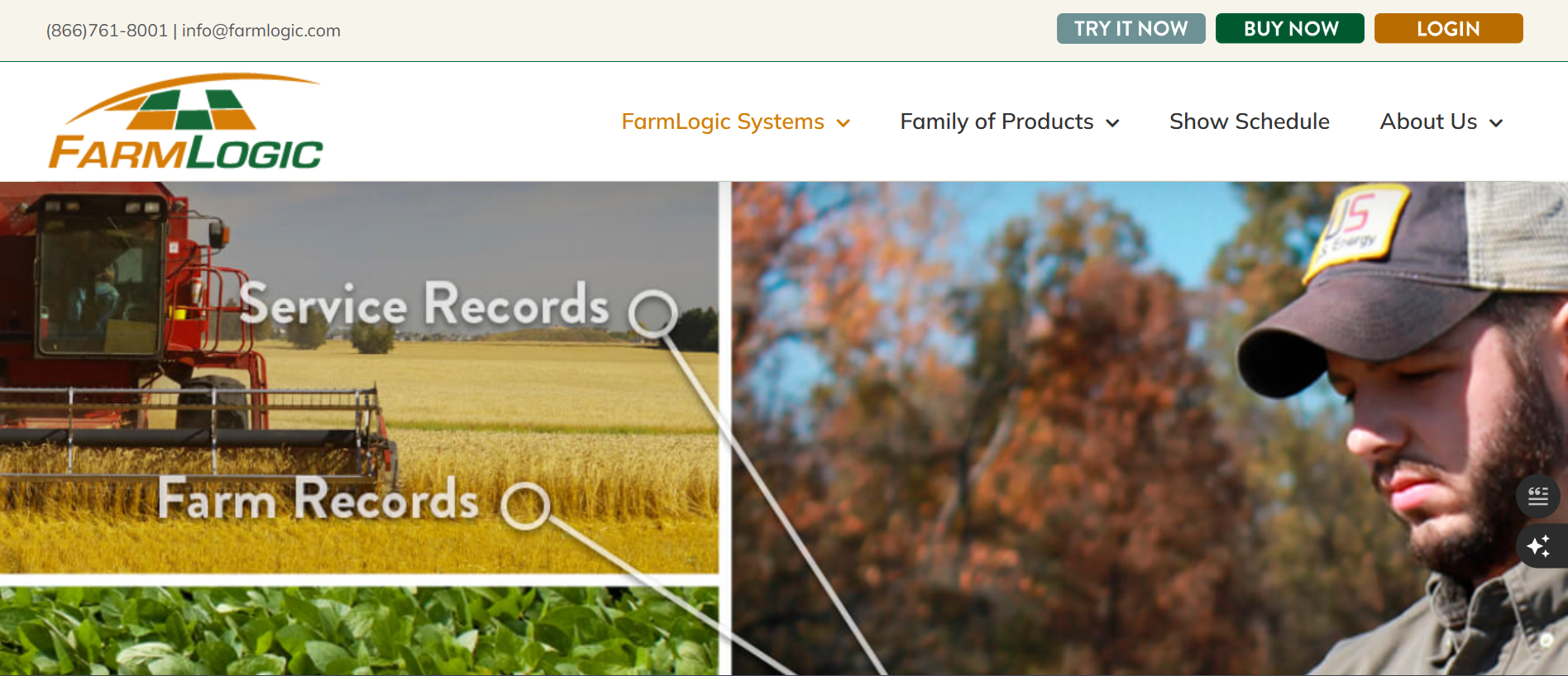
FarmLogic is a comprehensive cloud-native platform that serves as a bridge between traditional farming and modern technology. As a result, it delivers sophisticated capabilities in a way that remains accessible, while also avoiding overwhelming complexity. The platform provides field management with intuitive field mapping, task assignment, and activity logging.
Features
- First and foremost, it provides real-time data capture in the field, and as a result, it streamlines information collection while eliminating the need for office-based data entry.
- It integrates with other equipment and pulls data from compatible machinery, thereby reducing manual data entry.
- It tracks costs by field and operation, supporting profitability analysis and decision-making about resource allocation.
- Additionally, the platform supports multiple user access with role-based permissions, important for operations with employees needing specific data access.
Pricing
Subscription ranges from $1200 to $4,000 annually, depending on operation size.
Best For
FarmLogic works well for beginning farmers, smaller to mid-size operations, and technology-comfortable farmers.
10. Granular
Granular focuses on providing comprehensive farm management for mid-size operations. The platform has integrated with Corteva’s vast agricultural knowledge and product portfolio. This integration positions Granular within a comprehensive ecosystem of agricultural services.
Features
- Granular provides comprehensive field management, allowing farmers to plan and execute operations with detailed record-keeping.
- Integration with Corteva products and services means farmers can access seed selection tools, chemical compatibility information, and input purchasing through the platform
- The platform supports multi-year trend analysis, helping farmers understand how long-term management changes affect outcomes.
- Labor management tools help track time allocation and productivity across farm operations.
Pricing
- Granular typically costs between $3,000 and $10,000 annually, depending on operation size and features selected.
Best For
Granular serves mid to large commercial operations seeking comprehensive financial management alongside field management capabilities.