Choosing the right medical insurance for small businesses in Montana has become one of the most important decisions employers make today. Healthcare costs continue to climb, regulations shift often, and employees expect meaningful benefits, so small business owners must understand the landscape clearly to pick a plan that truly supports their teams. Health insurance remains one of the most appreciated benefits in the Big Sky state, and competition for skilled workers continues to push employers to offer coverage that stands out.
Meanwhile, the market for medical insurance for small businesses in Montana includes statewide insurers, regional nonprofit plans, national companies, and newer coverage models that help businesses control spending while staying attractive to current and future employees. Business owners want more than basic coverage; they want plans that match their workforce size, encourage preventive care, offer flexible provider access, and maintain dependable customer support.
This article highlights the top 13 best medical insurance options for small businesses in Montana and explains each provider’s key strengths, possible limitations, and reasons they may suit your organization’s needs.
Top 13 Best Medical Insurance for Small Businesses in Montana
1. Mountain Health CO-OP

Mountain Health CO-OP operates as a non-profit, member-governed health insurance cooperative that serves small businesses along with individuals and families in Montana, Idaho, and Wyoming. The cooperative began under the Affordable Care Act to introduce competitive, community-driven health coverage. It reinvests earnings into member benefits rather than sending them to shareholders. Small employers can choose from multiple group health plans that provide essential medical coverage and cost-saving perks. These plans work for businesses of different sizes and budgets, and companies can select options that fit their financial goals.
Features
- 100% Preventive Care Coverage: Employer plans cover in-network preventive services and screenings in full, so employees can get routine check-ups without paying copays or coinsurance.
- Telehealth Access: Members can reach healthcare professionals at any time, which supports employees who need quick or after-hours medical guidance.
- Prescription Drug Coverage: Many plans include zero out-of-pocket costs for thousands of prescription drugs and medical supplies, including medications used to manage chronic conditions such as insulin.
Pros
Lower costs and valuable member benefits
Strong preventive and wellness-focused coverage
Plan options that support small teams
Cons
Consumer feedback varies
Why Consider Mountain Health CO-OP
- Value-Focused Coverage: Businesses that want affordable plans with strong preventive and pharmacy support may find this cooperative appealing.
- Employee-Friendly Extras: Benefits such as reimbursements for dental, vision, and telehealth services can help companies attract and keep employees.
- Community-Driven Structure: Employers who appreciate local governance and reinvestment into members may prefer the cooperative model.
2. Blue Cross Blue Shield of Montana
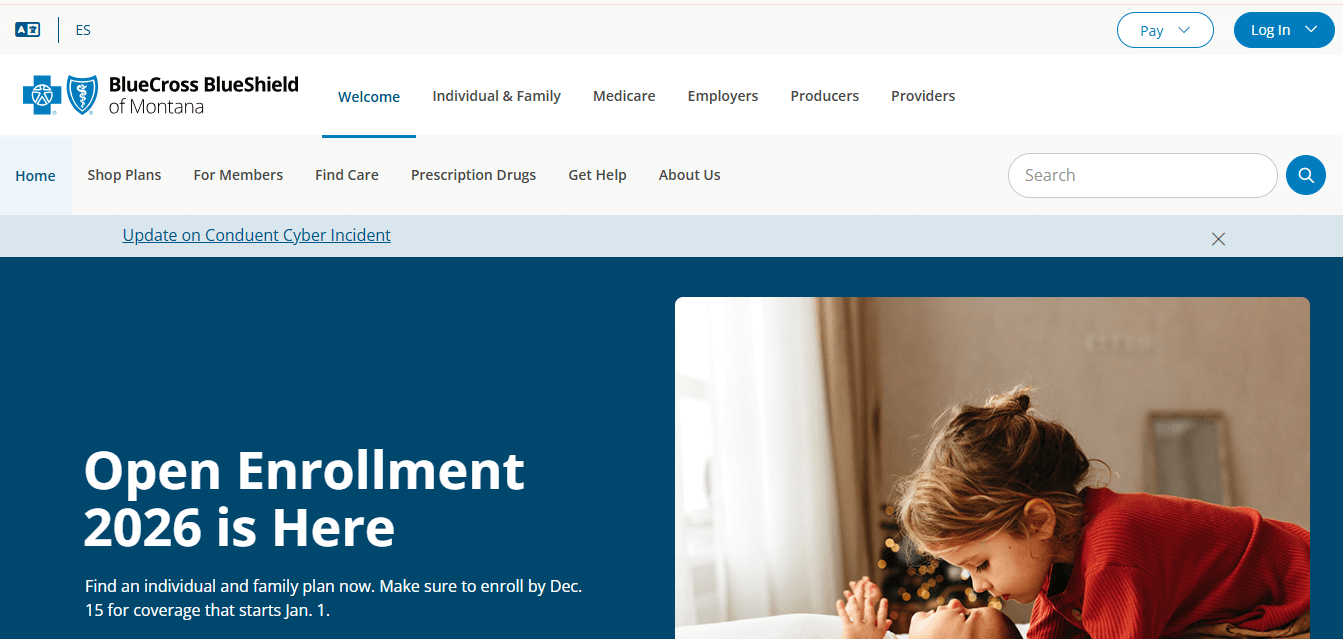
Blue Cross Blue Shield of Montana (BCBSMT) serves more than 300,000 members across the state, making it Montana’s largest and most experienced health insurer. For over 80 years, the company has provided coverage that includes in-network preventive care at no cost, pharmacy benefits, and wellness programs to help members stay healthy. Members can manage their plans using the Blue Access for Members portal or mobile app, which also allows them to search for providers and access virtual doctor visits any time.
Features
- Extensive Provider Network: Members can visit a wide range of doctors, hospitals, specialists, and pharmacies throughout Montana and, in many cases, nationwide.
- Small Group Health Plans: BCBSMT offers ACA-compliant plans for small businesses with 1–50 employees.
- Wellness and Support Programs: Members gain access to programs that encourage healthy habits and help manage long-term healthcare costs.
- Digital Access: The portal and mobile app provide plan management, provider search tools, and 24/7 virtual care.
Pros
- Offers multiple plan options suitable for small businesses
- Provides extra wellness and support programs
- Includes telehealth access for convenient care
Cons
Premiums may increase significantly from year to year
Why Choose BCBSMT
Choose BCBSMT if you need wide access to providers, especially in rural areas, and value a company with over 80 years of service in Montana. The insurer has offices in six Montana cities, maintains financial stability, and is widely recognized. Employees who travel often can use nationwide coverage through the Blue Cross Blue Shield network. In addition, the company provides convenient digital tools and responsive customer service to help manage healthcare needs effectively.
3. PacificSource Health Plans
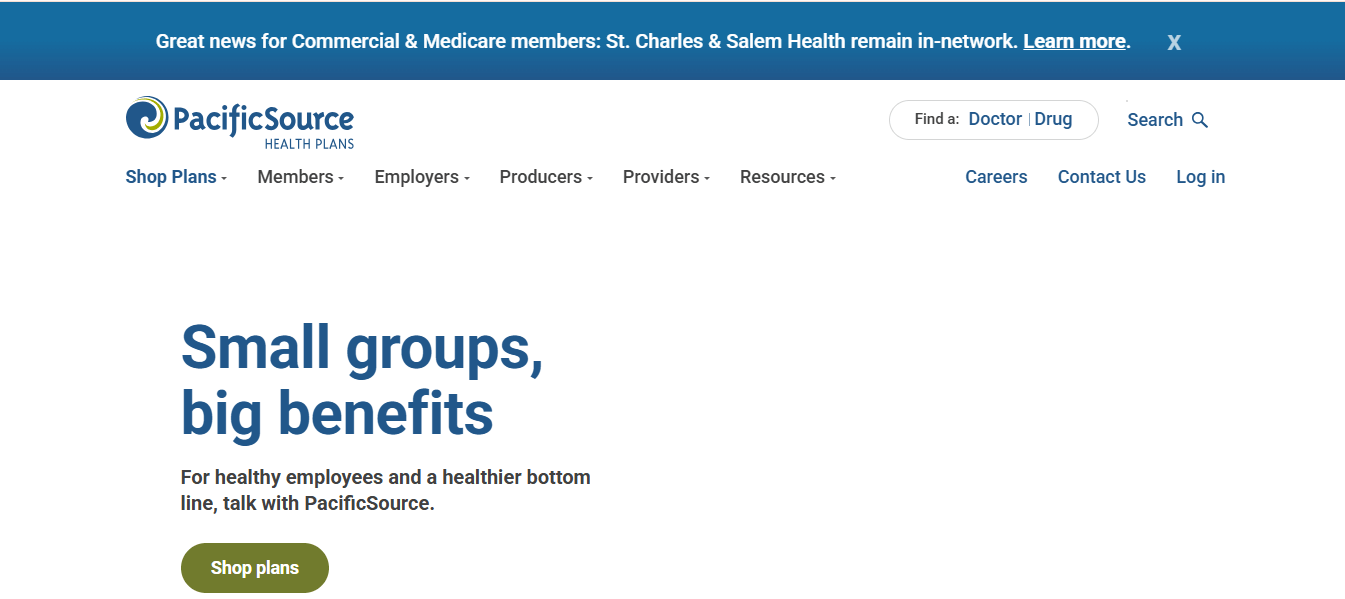
PacificSource Health Plans is a non-profit health insurer that operates in the Northwest, covering Montana, Idaho, Oregon, and parts of Washington. It offers Small Group medical plans for small businesses, generally those with 1 to 50 employees. The company focuses on providing comprehensive coverage, broad provider networks, and customer service that prioritizes human interaction.
Features
- Vision coverage is included with all small group medical plans.
- Options are available to add standalone dental or combine medical and dental benefits.
- Members can speak directly with real people, avoiding automated phone systems.
- Each employer is assigned a dedicated representative who focuses on their specific needs and cost control strategies.
- Telehealth services are offered, and no referrals are needed for specialist visits.
Pros
- Non-profit organization with a focus on community benefit rather than shareholder profits.
- Direct human customer service, eliminating the frustration of automated phone systems.
- Each employer gets a dedicated account representative for personalized support.
- Vision coverage is included in all small group plans, offering added value.
Cons
Rates may be higher compared to some other insurers.
Why Choose PacificSource Health
Opt for PacificSource if you prefer a non-profit company that puts community benefits ahead of profit. If human customer service is a priority for you, and you dislike automated phone systems, this plan could be a good fit.
4. UnitedHealthcare
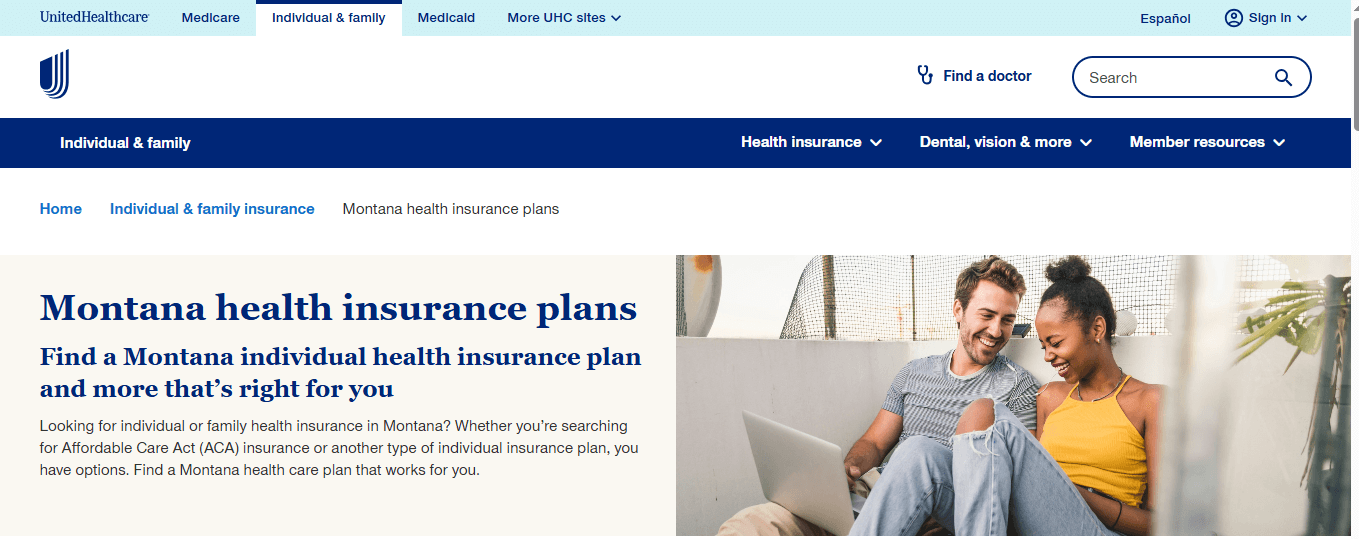
UnitedHealthcare (UHC) stands as one of the most recognized health insurers in the United States. It offers individual and family plans to people living in Montana. The company provides ACA-compliant options through the Health Insurance Marketplace, which helps residents compare plans with more confidence. In addition, UHC aims to expand access to affordable care across the state. It also focuses on coverage options that fit Montana’s medical and financial realities, helping families choose plans that support their long-term health.
Features
- Broad Coverage Options: UHC offers Bronze, Silver, Gold, and Platinum plans, allowing consumers to select coverage that fits their health needs and budgets.
- Extensive Network: Members can visit many in-network doctors, hospitals, and specialists throughout Montana, which often lowers personal expenses and strengthens access to care.
- Marketplace Availability: Shoppers can find UHC plans on the Health Insurance Marketplace, compare benefits easily, explore potential subsidies, and receive help from certified brokers.
Pros
- Offers ACA-compliant plans in 30 states and employer plans nationwide
- Covers 96% of Medicare-eligible counties in the United States
- Includes over 1.3 million providers and 6,700 hospitals in its network
- Provides emergency and routine care access in more than 130 countries
Cons
Some members continue to report concerns about claims decisions and billing clarity
Why Choose It
Many people choose UHC when they want a large national network that supports frequent travel. Others select it for its predictable-cost Surest plans without deductibles. The insurer also appeals to those who prefer strong digital tools and a user-friendly mobile app. Furthermore, it works well for individuals or employers who want to combine multiple benefit types under one provider.
5. Cigna
Cigna operates as a global health insurance provider and health services company. It offers medical plans for individuals, families, and employer groups, along with Medicare options and supplemental policies. The company focuses on helping members pay for medical care, access quality providers, and manage ongoing health needs. It also supports members through broad provider networks, digital tools, and wellness programs that encourage healthier decisions.
Features
- Offers PPO, HMO, and high-deductible health plans for eligible Montana employers
- Gives access to national provider networks that include hospitals, specialists, and primary care physicians
- Includes behavioral health integration that connects mental and physical care
- Supports employees with chronic condition management programs
- Provides telehealth services for easier access to non-emergency medical care
- Adds wellness initiatives that encourage routine checkups and preventive care
- Combines medical and pharmacy benefits to create smoother care coordination
Pros
- Comprehensive medical coverage options
- Broad provider network
- Helpful digital and telehealth tools
- Wellness and health-support programs
Cons
Carries one of the highest average monthly ACA premiums
Why Choose Cigna
Select Cigna when you want strong international coverage for employees who travel frequently. It also fits employers who prefer integrated medical and pharmacy benefits, appreciate behavioral health support, and need a carrier with extensive experience designing benefits for large organizations.
6. Molina Healthcare

Molina Healthcare is a Fortune 500 health insurer that operates across several U.S. states and focuses on government-sponsored medical coverage. It offers Medicaid, Medicare, and Marketplace (ACA) plans for income-eligible individuals, seniors, and families. The company serves communities that often face barriers to healthcare, and it continues to expand its options so members can access essential medical services with ease.
Features
- Medicaid Plans: Offers coverage for individuals and families who qualify for state Medicaid programs, with a focus on preventive and primary healthcare.
- Medicare Plans: Provides Medicare Advantage plans for older adults and people with certain disabilities, often with added benefits such as wellness support or prescription coverage.
- Provider Access: Gives members access to broad provider networks in the states where Molina operates, enabling them to find approved doctors and hospitals more easily.
- Digital Tools: Includes a mobile app and member portal that help users review benefits, check claims, locate providers, and manage their health information.
Pros
- Affordable coverage options for individuals and families.
- Strong background in administering government-supported health programs.
- Extra services in many plans, such as care coordination and wellness support.
Cons
Provider networks may be limited in some regions, which can make it difficult to find specialists or certain participating physicians.
Why People Choose Molina
Many people pick Molina Healthcare because it focuses heavily on communities that depend on public health programs. It offers cost-conscious plans, practical benefits, and support services that help members manage ongoing care needs. Even though regional limitations and mixed service reviews may influence the experience, members often appreciate the affordability and accessibility of its plans.
7. HealthSherpa

HealthSherpa is an online platform that helps individuals and businesses in Montana compare, enroll, and manage health insurance plans through the ACA marketplace. It offers a streamlined, user-friendly interface that simplifies the process of finding the right health insurance plan.
Features
- Plan Comparison: HealthSherpa allows users to compare ACA health plans based on premiums, out-of-pocket costs, coverage options, and provider networks.
- Eligibility Check: Provides an instant eligibility check for financial assistance programs like subsidies (Premium Tax Credits) and Cost-Sharing Reductions.
- Instant Enrollment: After selecting a plan, users can enroll immediately in individual or family health plans directly on the site.
- Real-time Assistance: Access to certified brokers who provide real-time help with plan selection, enrollment, and understanding benefits.
Pros
- Simplified Experience
- Quick Access to Subsidies
- Certified Help
Cons
- Dependence on Online Access: Being an online platform, HealthSherpa requires internet access.
Why Choose HealthSherpa
HealthSherpa simplifies the ACA enrollment process, making it ideal for individuals and small businesses who want to avoid dealing with complex paperwork and numerous insurer websites.
8. BBSI
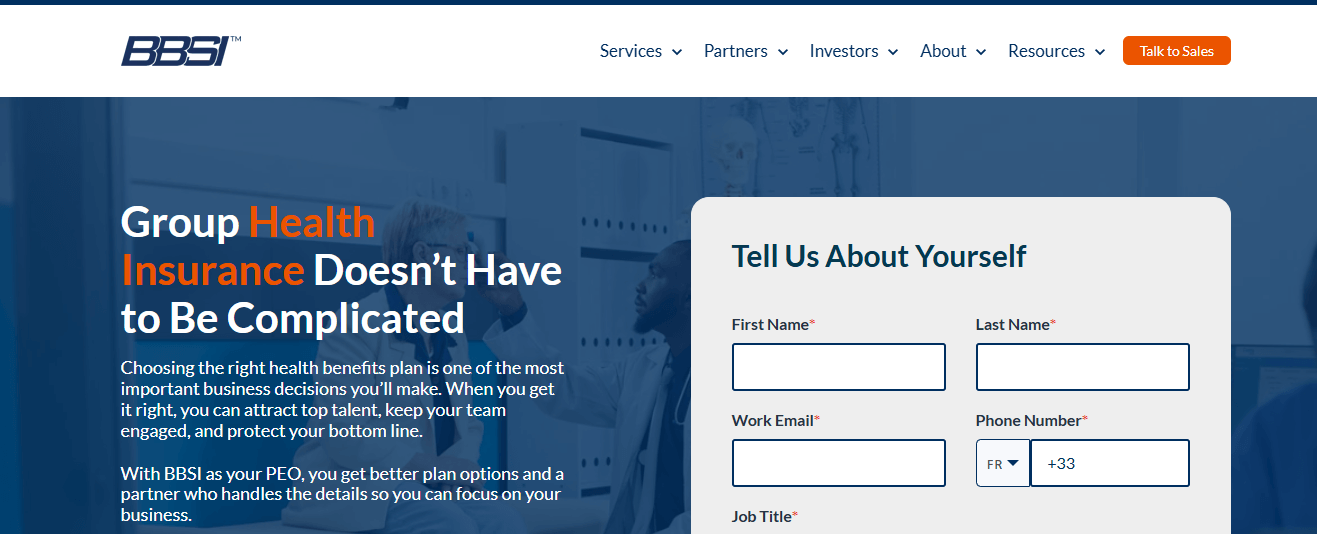
BBSI is a Professional Employer Organization (PEO) that helps small and medium-sized businesses offer complete employee benefits. Their programs include group health insurance, dental and vision coverage, ancillary benefits, and full administrative support. BBSI also provides broader business services such as HR, payroll, workers’ compensation, and risk management. Companies working with BBSI can manage benefits and other operational tasks more efficiently while giving employees access to valuable healthcare options.
Features
- Group health insurance plans designed for small and mid-sized businesses.
- Medical, dental, vision, and voluntary benefits like life and disability insurance.
- Access to national provider networks through partnerships with carriers such as Aetna and Kaiser Permanente where available.
- BBSI handles benefit administration, including enrollments, invoices, renewals, and COBRA compliance.
- Personalized communications and guides to help employees understand their options.
Pros
- Small businesses gain access to insurance options often reserved for larger companies.
- BBSI manages administrative tasks, which reduces back-end work for employers.
- Employees can reach healthcare providers across the country through national networks.
- Employers can create plans that combine medical, ancillary, and supplemental coverage to suit employee needs.
Cons
BBSI does not act as a standalone insurance carrier; plan details depend on third-party providers.
Why Choose BBSI Group Health Insurance
Businesses that want an all-in-one administrative solution can reduce effort and complexity by using BBSI for benefits, HR, and payroll.
Smaller companies gain access to competitive plans usually available only to larger employers.
9. Highmark Health
Highmark Health connects health plans and patient information into one system, making it easier for healthcare teams to communicate and coordinate care. Patients benefit because their providers have access to the same data, which supports faster and more informed decision-making. The organization also offers tools that allow users to manage appointments, prescriptions, and other healthcare needs digitally, improving overall convenience and engagement.
Features
- Individual and Family Plans: ACA-compliant marketplace plans that provide full coverage for medical, dental, and vision care.
- Medicare Plans: Offers Medicare Advantage options including HMO, PPO, and Part D prescription drug coverage.
- My Highmark App: Central hub for accessing health information, tracking claims, and managing appointments.
- Virtual Visit Scheduling: Allows patients to book telehealth appointments directly through the app.
Pros
- Digital tools guide users through a personalized healthcare experience with AI-driven suggestions.
- Combines medical, dental, vision, and prescription management in one platform, reducing confusion and time spent managing care.
- Offers flexible access through mobile and online channels, increasing convenience for busy patients.
Cons
Some plans may cost more than other local or regional providers.
Why Choose Highmark
Highmark Health provides a wide selection of plans through Healthcare.gov, and many options include financial support for eligible users. Additionally, the My Highmark app gives patients a single place to handle appointments, prescriptions, claims, and overall healthcare management, making it simpler to stay on top of health needs.
10. Humana
Overview
Humana provides health insurance coverage for small businesses in Montana, offering various plan options that focus on integrated care, preventive services, and wellness programs. While the company is well-known for its Medicare services, it also caters to small group markets with comprehensive commercial plans. Humana’s provider network spans across Montana and offers nationwide coverage for employees who travel.
Features
- Preventive care advantages: All group medical plans cover in-network preventive care appointments at no cost. This includes services like diabetic retinal eye exams, bone density tests for osteoporosis, and mammograms.
- Humana Neighborhood Centers: Members gain access to Neighborhood Centers, which provide various health programs, events, exercise classes, and other wellness services. These centers also help create a sense of community, offering most services for free. Some locations also provide on-site customer care to assist with benefit-related questions.
- Convenient plan features: Humana’s plans come with several user-friendly features designed to make managing healthcare easier for small businesses.
Pros
- A large, well-established national carrier with strong financial stability.
- Offers an extensive nationwide provider network, ensuring access to a broad range of healthcare facilities.
- Focuses on wellness and preventive care, with plans that prioritize healthy living.
- Provides advanced digital tools and resources for members to manage their plans efficiently.
Cons
- The administrative processes may be complicated for small businesses, requiring more time and effort to manage.
Why Choose Humana
Humana offers a variety of affordable health insurance plans for small businesses. Their options combine coverage, preventive care, and wellness programs, making them a strong contender for business owners seeking comprehensive health insurance solutions for their teams.
11. Aetna (CVS Health)
Aetna, a subsidiary of CVS Health, stands as one of the largest healthcare service providers in the U.S. It offers various health insurance options, such as medical, dental, and vision coverage. Aetna serves individuals, families, and employers and specializes in delivering integrated health solutions that combine medical, pharmacy, and behavioral health services. Additionally, Aetna gives customers access to a wide network of providers, emphasizing digital health tools and wellness programs to enhance care quality.
Features
- Medical, pharmacy, dental, and vision insurance options
- Individual and family plans, small group insurance, and Medicare Advantage plans
- Integrated telemedicine services and 24/7 nurse hotlines
Pros
- Comprehensive Coverage: Aetna offers an extensive selection of plans for individuals, families, and businesses.
- Nationwide Network: The CVS network provides access to millions of healthcare providers across the country.
- Integrated Services: Aetna combines various healthcare services, including medical, pharmacy, and behavioral health.
Cons
Cost: Premiums for comprehensive coverage can be expensive, particularly for individual plans.
Why Choose Aetna (CVS Health)?
Aetna provides an all-in-one health solution by combining medical, pharmacy, and wellness coverage. Its partnership with CVS Pharmacy gives easy access to prescription services, including delivery options. This makes Aetna a practical choice for those seeking convenience and comprehensive care in one package.
12. Wexford Insurance
Wexford Insurance operates as an independent insurance agency, serving Montana and over 25 states across the U.S. Unlike agencies tied to a single insurance carrier, Wexford works with multiple providers, allowing them to shop around for the best coverage and rates for their clients. They specialize in finding affordable and comprehensive insurance solutions for both individuals and small businesses. Their offerings span across personal, business, health, life, and specialty insurance lines.
Features
- Independent Agency Model: Works with multiple carriers, not tied to one insurance company
- Multi-State Operation: Serves clients in over 25 states, including Montana
- Comprehensive Coverage Options: Provides insurance for business, personal, trucking, contractor needs, health, life, and bonds
Pros
- Carrier Choice: Clients benefit from competitive pricing and a wider selection of coverage options by having access to several insurance companies
- One-Stop Shop: Clients can manage all their insurance needs—business, personal, health, and specialty—through a single agency
- Industry Specialization: Wexford has extensive expertise in high-risk industries like construction, trucking, and contracting
Cons
Indirect Carrier Relationship: Clients work with a middleman instead of directly with insurance carriers, which can sometimes complicate communication
Why Choose Wexford Insurance
- Best for comparing multiple carriers: As an independent agency, Wexford can access many providers, ensuring the best rates and coverage.
- Ideal for complex insurance needs: Small businesses with diverse insurance requirements, such as general liability, auto, workers’ compensation, and health, can bundle them through one agency.
13. PeopleKeep
PeopleKeep is a platform that enables Montana small businesses to offer health benefits through Health Reimbursement Arrangements (HRAs) instead of traditional group health insurance. The platform specializes in administering QSEHRA, ICHRA, and GCHRA plans, allowing employers to reimburse employees tax-free for individual health insurance premiums and medical expenses.
Features
- Three HRA Product Options: QSEHRA (for businesses with fewer than 50 employees), ICHRA (for businesses of any size), and GCHRA (an integrated HRA for group plans).
- Defined Contribution Model: Employers provide fixed monthly allowances, eliminating the unpredictability of group insurance premiums.
- Tax-Free Reimbursements: Employees are reimbursed tax-free for individual health insurance and qualified medical expenses.
- Employee Choice: Workers can choose their own individual health insurance plans, selecting the one that best suits their needs.
Pros
- Predictable Costs: Employers avoid unexpected cost spikes and annual premium increases common with traditional group health plans.
- Cost Savings: Defined contribution plans usually cost less for both employers and employees compared to group health insurance.
- No Minimum Participation Requirements: HRAs can accommodate businesses of any size, unlike group plans that require a minimum number of employees.
Cons
Employees may need substantial education on how HRAs function and how to select the right coverage.
Why Choose PeopleKeep
- Cost Control: PeopleKeep is perfect for small businesses in Montana aiming to control healthcare costs with predictable monthly budgets, rather than dealing with annual 10-20% premium increases.
- Flexibility: Ideal for companies with a diverse workforce, where employees have varying healthcare needs and provider preferences.
Conclusion
Small businesses in Montana have many options for offering medical insurance benefits to their employees. Businesses can choose traditional group insurance plans from carriers such as Blue Cross Blue Shield of Montana, Mountain Health CO-OP, and PacificSource, which continue to be a top choice for those seeking comprehensive coverage with shared premiums. To find the best fit, employers should work with licensed insurance brokers or benefits consultants who are familiar with the state’s healthcare system. These experts can guide them in evaluating the different options and selecting the right plan for their business needs.