

Finding the best medical insurance for small businesses in California requires careful consideration of coverage options, costs, and employee needs. In fact, health insurance represents a critical investment for California small businesses—whether mandated by law, used as a competitive advantage for recruiting, or leveraged for tax benefits, the right coverage directly impacts your company’s success and employee satisfaction.
Moreover, California’s healthcare landscape presents unique challenges for small business owners. The state’s vast geography, diverse population, and complex regulatory environment make selecting appropriate coverage more complicated than in many other states. Furthermore, with California’s tight labor market and high cost of living, comprehensive health benefits have evolved from a nice-to-have perk into an essential component of employee compensation packages.
When it comes to choosing the right health insurance plan, the process involves more than just comparing prices. Instead, Small businesses must evaluate their workforce’s healthcare needs, the extent of coverage, network access, and overall cost implications. Small businesses in California have several high-quality health insurance providers to choose from. The best option depends on factors like network size, affordability, and coverage flexibility.
Ultimately, the best medical insurance for small businesses in California depends on your specific circumstances: company size, employee demographics, geographic location, budget constraints, and coverage priorities. Each provider in this comprehensive guide offers distinct advantages, whether that’s nationwide coverage flexibility, culturally competent care, competitive pricing, or seamless care coordination.
Explore the following 13 top medical insurance options to identify which provider best serves your small business and employees’ healthcare needs.
Top 13 Best Medical Insurance for Small Businesses in California
Kaiser Permanente stands as California’s largest integrated healthcare system, combining insurance coverage with its own network of hospitals, clinics, and medical professionals. Notably, this unique model provides small businesses with comprehensive care coordination and streamlined services throughout the state. Specifically, Kaiser operates under an HMO model, meaning members receive care within the Kaiser network, which spans most major metropolitan areas in California.
Features
- Members access care through Kaiser’s extensive network of owned facilities and employed physicians
- Additionally, the system integrates medical records across all Kaiser locations for seamless care coordination
- Small businesses can choose from Bronze, Silver, Gold, and Platinum tier plans
- Furthermore, employers have access to dedicated small business support teams for enrollment and ongoing assistance
- Importantly, the provider offers preventive care services at no additional cost to members
Pros
- First, the integrated system eliminates the need for referrals in most cases, speeding up care access
- As a result, members benefit from coordinated care with shared medical records across all providers
- Moreover, Kaiser facilities typically offer shorter wait times compared to traditional healthcare systems
- In addition, the organization maintains strong financial stability and high customer satisfaction ratings
- Finally, employers find administrative processes streamlined through Kaiser’s single-system approach
Cons
- Members must stay within the Kaiser network, limiting flexibility for out-of-network care
- The HMO model doesn’t work well for employees who live in rural areas without Kaiser facilities
- Employees who prefer choosing their own specialists may find the system restrictive
2. Blue Shield of California
Blue Shield of California operates as a nonprofit health plan serving California exclusively for over 80 years. The company offers medical insurance for small businesses in California with flexible plan designs with both HMO and PPO network options, making it suitable for diverse workforce needs. Blue Shield maintains one of California’s largest provider networks, giving members extensive choice in selecting healthcare providers while maintaining competitive premium rates for employers.
Features
- Small businesses select from HMO, PPO, and EPO network configurations
- The carrier provides access to over 80,000 physicians and 400 hospitals statewide
- Employers customize plan designs with various deductible and copayment structures
- Members receive 24/7 telemedicine services through the Teladoc platform
- The company offers wellness programs, including gym membership discounts and health coaching
- The carrier integrates prescription drug coverage with pharmacy benefits management
Pros
- The extensive provider network gives employees flexibility in choosing doctors and specialists
- PPO options allow out-of-network care, which benefits employees who travel frequently
- Blue Shield’s nonprofit status often translates to more stable premiums year-over-year
- Small businesses appreciate the carrier’s strong presence and reputation throughout California
Cons
- Some members report challenges navigating the claims process for out-of-network care
- Prescription drug costs may run higher compared to integrated systems like Kaiser
- PPO plans typically cost significantly more than HMO alternatives
3. Health Net
Health Net operates as a major California health insurance carrier offering small businesses comprehensive medical coverage with a strong emphasis on cost management and preventive care. The company provides HMO, PPO, and EPO plan options with competitive pricing for employers seeking to balance coverage quality with budget constraints. Health Net’s network spans California with particular strength in Southern California markets.
Features
- The carrier provides access to approximately 60,000 providers across California
- Employers receive personalized service from dedicated small business account teams
- Members have access to preventive care services with zero copayments or deductibles
- The company offers integrated behavioral health services through Beacon Health Options
- Health Net provides wellness programs, including fitness incentives and chronic disease management
Pros
- Competitive premium rates make Health Net attractive for budget-conscious small businesses
- The carrier’s disease management programs help employees with chronic conditions control costs
- Strong provider networks in Southern California give members excellent access to care
- Small businesses appreciate responsive customer service and dedicated account support
- The company offers flexible plan designs that accommodate diverse employee needs
Cons
- Some members report narrower specialist networks compared to larger carriers
- The company’s digital tools and mobile app receive mixed reviews for user experience
- Premium increases can be steeper than nonprofit competitors in some years
4. UnitedHealthcare
UnitedHealthcare brings its national scale and resources to the California small business market, offering comprehensive medical insurance with extensive networks and innovative healthcare management tools. As the nation’s largest health insurer, UnitedHealthcare provides small businesses with sophisticated technology platforms, wellness programs, and access to one of the broadest provider networks available. The company serves California small businesses through multiple plan types designed for flexibility and cost control.
Features
- The carrier provides access to over 100,000 California healthcare providers
- UnitedHealthcare provides pharmacy benefits with specialty medication management
- Members access virtual visits through the company’s telehealth platform
- The company offers comprehensive wellness programs, including the Rally Health engagement platform
- Employers receive detailed reporting and analytics on healthcare utilization and costs
Pros
- The massive provider network ensures employees can find participating doctors almost anywhere
- National presence benefits businesses planning expansion beyond California
- Sophisticated technology platforms simplify administration and improve employee experience
- The company offers innovative programs like Motion for fitness tracking and rewards
- Strong financial resources provide stability and comprehensive member services
Cons
- Premium costs generally exceed regional nonprofit competitors for comparable coverage
- The company’s enormous size can make customer service feel impersonal
- Provider network quality varies significantly by California region
5. Aetna
Aetna operates in California as part of CVS Health, combining traditional health insurance with integrated pharmacy benefits and retail healthcare access. The company serves small businesses with comprehensive medical plans backed by national resources while maintaining California-specific networks and expertise. Aetna’s integration with CVS pharmacies and MinuteClinic locations provides members with convenient access to basic healthcare services and prescription management.
Features
- The carrier maintains extensive provider networks throughout California
- Employers access sophisticated online platforms for administration and reporting
- Members receive integrated prescription benefits through the CVS Pharmacy network
- The company provides virtual care through Teladoc and CVS MinuteClinic video visits
- Aetna offers chronic disease management programs for high-cost conditions
- The carrier includes mental health services through comprehensive behavioral health networks
Pros
- Integration with CVS pharmacies provides convenient prescription access and cost savings
- MinuteClinic locations offer accessible urgent care for minor conditions
- National carrier strength delivers financial stability and comprehensive resources
- Digital health tools and mobile apps receive positive reviews for functionality
- The company offers innovative programs combining medical and pharmacy benefits
Cons
- Premium costs typically exceed regional nonprofit carriers for similar coverage
- The CVS merger created some customer service disruptions that continue periodically
- Provider networks can vary in quality across different California regions
6. Covered California for Small Business (CCSB)

Covered California for Small Business serves as the state’s official health insurance marketplace for companies with 1-100 employees. This exchange platform allows small businesses to offer employees a choice among multiple carriers and plan types while potentially qualifying for federal tax credits. CCSB partners with major California insurers to provide standardized plan options that simplify comparison shopping and administration.
Features
- Employers offer employees a choice among plans from multiple insurance carriers
- The platform standardizes benefit designs, making plan comparison straightforward
- Small businesses access all enrollment and management tools through a single online portal
- Employers may qualify for the federal Small Business Health Care Tax Credit, worth up to 50% of premiums
- The platform integrates with payroll systems for streamlined premium payment
- Employers can change coverage levels or carriers annually during open enrollment
Pros
- The employee choice model helps businesses attract and retain talented workers
- Standardized plans eliminate confusion when comparing coverage options across carriers
- Small businesses potentially save thousands through federal tax credits
- The single platform simplifies administration when employees choose different carriers
Cons
- Not all California insurance carriers participate in the CCSB marketplace
- Businesses with fewer than 25 employees benefit most from tax credits, limiting the value for larger small businesses
- Employees must make choices during enrollment, which can feel overwhelming for some workers
7. Anthem Blue Cross
Anthem Blue Cross ranks among California’s largest health insurers, offering small businesses extensive provider networks and diverse plan options backed by the resources of a national carrier. The company combines local California expertise with Anthem’s nationwide infrastructure, providing small businesses with comprehensive medical coverage and strong provider relationships. Anthem serves small businesses through traditional HMO and PPO products, plus innovative healthcare solutions.
Features
- The carrier maintains one of California’s largest provider networks with over 90,000 providers
- Small businesses access dedicated account management and employee enrollment support
- Members use the Sydney Health mobile app for claims, ID cards, and healthcare services
- The company provides 24/7 nurse advice lines and virtual care options
- Employers receive wellness program resources, including health risk assessments
- The carrier provides transparency tools showing quality ratings and cost estimates for procedures
Pros
- The extensive provider network gives employees maximum flexibility in selecting doctors
- National carrier strength provides financial stability and comprehensive resources
- PPO plans work well for businesses with employees across multiple California regions
Cons
- Premium costs typically run higher than nonprofit competitors for similar coverage levels
- The company’s size can make personalized customer service challenging for small businesses
- Provider directories sometimes contain outdated information requiring verification
8. Sharp Health Plan
Sharp Health Plan operates as a nonprofit insurer affiliated with Sharp HealthCare, serving San Diego County and surrounding areas with integrated healthcare delivery. This regional carrier offers small businesses the advantages of an integrated system similar to Kaiser but with a more localized focus and community orientation. Sharp combines health insurance with coordinated care through Sharp’s extensive hospital and physician network in Southern California.
Features
- Small businesses access plans through Sharp’s integrated healthcare delivery system
- The carrier provides seamless coordination between insurance and Sharp’s medical facilities
- Employers choose from HMO and PPO network configurations
- Members receive care through Sharp’s owned hospitals and affiliated physician groups
- The company offers preventive care programs with wellness incentives
- The carrier includes mental health and substance abuse services through specialized programs
Pros
- The integrated model provides excellent care coordination for members in the San Diego area
- SMembers benefit from streamlined access to specialty care within the Sharp system
- The company’s Nonprofit status often results in more stable premiums compared to for-profit carriers
- Small businesses appreciate personalized service from local account representatives
- The network includes highly-rated hospitals and medical centers
Cons
- The geographic limitation to San Diego County makes Sharp unsuitable for businesses with a broader California presence
- Employees living outside San Diego face significant access challenges
- The HMO model restricts out-of-network care, similar to other integrated systems
9. Sutter Health Plus

Sutter Health Plus operates as a nonprofit health plan affiliated with Sutter Health, one of Northern California’s premier healthcare systems. This regional carrier serves small businesses primarily in the greater Sacramento area and Bay Area with integrated healthcare delivery combining insurance coverage with Sutter’s extensive hospital and physician network. Sutter Health Plus offers small businesses coordinated care delivery with a strong emphasis on quality outcomes and patient experience.
Features
- Employers’ access plans integrated with Sutter Health’s medical facilities and providers
- The carrier provides HMO and EPO network options tailored to Northern California
- Small businesses receive personalized service from local account representatives
- Members coordinate care through Sutter’s electronic medical record system
- The company offers wellness programs and preventive care through Sutter facilities
Pros
- Integration with Sutter Health facilities provides excellent care coordination in covered regions
- The nonprofit model often delivers more competitive premium rates
- Small businesses benefit from Sutter’s strong reputation for quality healthcare
- Members have access to highly-rated hospitals and medical centers throughout the network
- Local focus results in more responsive customer service for Bay Area businesses
Cons
- Geographic coverage limits the carrier to Northern California markets only
- Employees outside the primary service area face significant access limitations
- The network, while high-quality, offers less provider choice than statewide carriers
10. Western Health Advantage
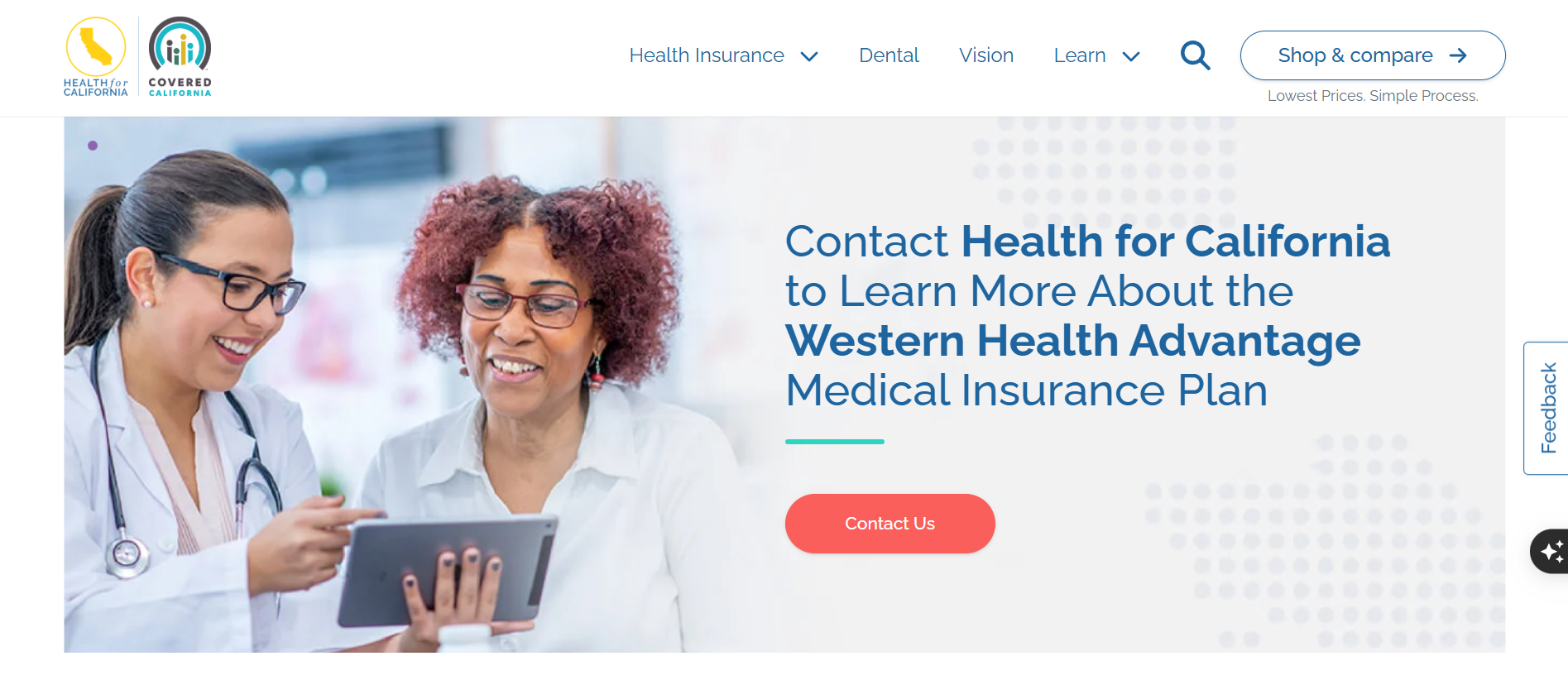
Western Health Advantage operates as a nonprofit HMO serving small businesses primarily in Northern and Central California with a focus on community-based healthcare delivery. This regional carrier emphasizes personalized service, preventive care, and strong relationships with local providers to deliver quality healthcare at competitive rates. Western Health Advantage serves small businesses seeking an alternative to large national carriers with a more localized focus and attention.
Features
- Small businesses access HMO plans with competitive pricing for Northern California markets
- The carrier maintains carefully curated provider networks, emphasizing quality
- Employers receive personalized service from dedicated small business representatives
- Members have access to preventive care services with comprehensive
- The company offers wellness programs, including fitness membership reimbursements
- Western Health Advantage provides care coordination services for members with complex needs
Pros
- Competitive premium rates make Western Health Advantage attractive for budget-conscious employers
- The nonprofit model prioritizes member service over profit maximization
- Small businesses appreciate responsive, personalized customer service
- Strong relationships with local providers often result in better member experiences
- Members benefit from comprehensive preventive care and wellness programs
Cons
- Geographic coverage limited to Northern and Central California reduces applicability
- Smaller provider networks offer fewer choices compared to statewide carriers
- The HMO-only model doesn’t work for businesses needing PPO flexibility
11. Oscar Health
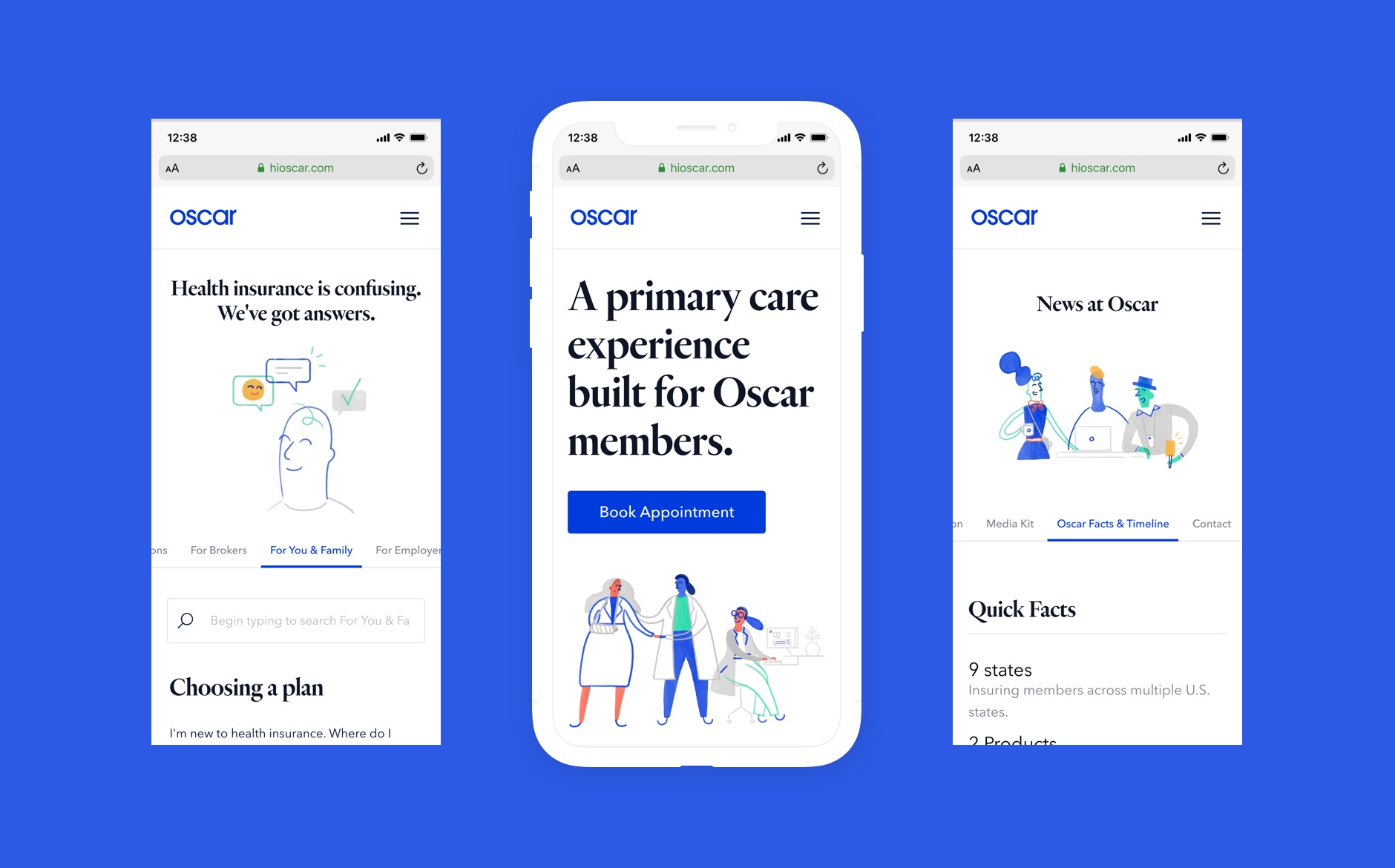
Oscar Health operates as a technology-focused health insurance carrier bringing innovative digital tools and customer experience to California’s small business market. The company emphasizes user-friendly technology, transparent pricing, and personalized member support to differentiate itself from traditional insurers. The company serves small businesses seeking modern healthcare solutions with a strong emphasis on telemedicine and digital engagement.
Features
- Small businesses access EPO and POS plan designs with modern benefit structures
- The carrier provides intuitive mobile apps for all member interactions
- Employers receive concierge teams for personalized member support
- Members have unlimited free telemedicine visits with Oscar’s virtual care team
- The company offers step-tracking programs with financial rewards for healthy behaviours
- Oscar provides transparent pricing tools showing cost estimates before receiving care
Pros
- Industry-leading mobile app and digital tools make healthcare navigation simple
- Unlimited free telemedicine provides convenient care access for minor conditions
- Concierge teams offer personalized support that larger carriers can’t match
- Transparent pricing tools help members make informed healthcare decisions
Cons
- Newer company with a limited track record compared to established California carriers
- Provider networks are narrower than traditional insurers in many California regions
- Premium costs may not always compete favorably with established regional carriers
12. Chinese Community Health Plan (CCHP)
Chinese Community Health Plan operates as a nonprofit HMO serving California with particular expertise in providing culturally competent care to diverse Asian and Pacific Islander communities. Founded in San Francisco, CCHP serves small businesses throughout California seeking coverage that addresses language barriers and cultural healthcare preferences. The carrier maintains strong relationships with providers offering multilingual services and an understanding of diverse cultural health practices.
Features
- Small businesses access HMO plans designed for cultural competency
- The carrier provides customer service in Cantonese, Mandarin, Spanish, and English
- Employers receive support from representatives who understand diverse cultural needs
- Members access providers offering services in multiple Asian languages
- The company offers care management programs tailored to cultural health beliefs
Pros
- Unmatched cultural competency for Asian and Pacific Islander employee populations
- Multilingual services eliminate communication barriers in healthcare settings
- The nonprofit model delivers competitive premium rates
- Provider networks include specialists who understand cultural health practices
- Small businesses with diverse workforces appreciate the specialized focus
Cons
- Geographic coverage primarily concentrates on the Bay Area and Southern California
- Provider networks, while culturally competent, offer a limited size compared to major carriers
- The specialized focus may not appeal to businesses without significant Asian employee populations
13. Valley Health Plan

Valley Health Plan operates as a public nonprofit HMO affiliated with Santa Clara County’s public healthcare system, serving small businesses primarily in Silicon Valley and surrounding areas. This regional carrier combines affordable premiums with access to quality healthcare through Santa Clara Valley Medical Center and an extensive network of community providers. Valley Health Plan focuses on serving small businesses seeking cost-effective coverage with strong ties to public health infrastructure.
Features
- Small businesses access competitively priced HMO plans in the Santa Clara County region
- The carrier provides care through county facilities and extensive contracted provider networks
- Employers receive personalized service from local account representatives
- Employers utilize online portals for enrollment and benefits management
- Valley Health Plan includes comprehensive mental health and substance abuse services
Pros
- Public nonprofit status ensures focus on community service over profit
- Integration with the county health system provides a quality care infrastructure
- Strong commitment to serving diverse, underserved populations
- Small businesses appreciate responsive local customer service
- The carrier offers comprehensive benefits despite lower premium costs
Cons
- The geographic limitation to the Santa Clara County area restricts broader applicability
- Association with the public health system may affect perception among some employers
- Provider networks, while adequate, offer less choice than major statewide carriers