

Chemical manufacturing software uses specialized digital systems to support the unique needs of chemical producers, from small specialty firms to large petrochemical plants. Whether you manage a small-scale or large-scale operation, this software helps you streamline processes, maintain regulatory compliance, and boost productivity. As a result, manufacturers can improve efficiency and ultimately increase profitability. Moreover, unlike generic manufacturing tools, chemical manufacturing solutions address the complex realities of chemical production, including formulas (recipes), hazardous materials, strict regulations, batch processing, and full traceability.
What does Chemical Manufacturing Software do?
At its core, chemical manufacturing software delivers end-to-end support for manufacturing operations. Furthermore, it manages key areas like inventory management, recipe formulation, batching instructions, quality control, production scheduling, waste management, and regulatory reporting. As a result, chemical companies can easily plan, execute, monitor, and optimize their manufacturing processes. In addition, it helps them maintain high safety standards, ensure product quality, and meet all regulatory requirements.
This typically involves:
- ERP (Enterprise Resource Planning) — to run core business operations (production planning, inventory, finance, purchasing).
- Process Simulation / Optimization — for modeling chemical reactions, optimizing processes, or designing plants.
- Quality / Lab Management / Compliance — to handle quality control, lab tests, regulatory reporting (like SDS / GHS), traceability, etc.
- Asset Management / Maintenance — to maintain equipment, schedule preventive maintenance, and optimize plant uptime.
Key Features to Look For in Chemical Manufacturing Software
When evaluating chemical manufacturing software, there are several essential features to consider:
- Formulation / Recipe Management: Ability to store, version, and scale chemical formulas.
- Batch Processing & Lot Traceability: Track every batch from raw materials to finished goods, and manage recalls if needed.
- Regulatory Compliance: Compliance with chemical-industry regulations (GHS, OSHA, SDS, REACH, etc.).
- Quality Control: In-process QC checks, lab integration, Certificate of Analysis (CoA) generation.
- Inventory & Storage Management: Handling hazardous chemicals, safe storage, and container tracking.
- Production Planning / Scheduling: MRP (Material Requirements Planning), demand planning, and production scheduling.
- Costing & Financials: Cost of raw materials, by-products, overheads; integration with finance.
- Traceability & Recall: End-to-end traceability and tools to support recall scenarios.
Top 12 Best Chemical Manufacturing Software

Datacor is a leading provider of a fully integrated enterprise resource management (ERP) solution that connects people, processes, and departments across all operations to integrate the business environment.
Moreover, Datacor’s enterprise resource planning solution includes a comprehensive suite of applications that focus on all the unique requirements of chemical manufacturers and chemical distributors, from any automation needed to back-end operations. In addition to robust CRM functionality, the platform also offers ERP features like MRP, MES, product lifecycle management, supplier and supply chain management, business intelligence, and more. Additionally, the solution offers accounting tools with both multi-language and multi-currency support for streamlined operations.
Features
- Automated regulatory compliance tools for managing SDSs, labeling, reporting, etc.
- Integrated quality management with lot tracking, COA production, and testing workflows.
- Flexible recipe management handling multiple formulas, ingredients, and customers.
- Shop floor automation with electronic batch tickets, dashboards, and mobile access.
- Advanced scheduling and material requirements planning optimized for process manufacturing.
- Integrated maintenance management via CMMS for managing assets and repairs.
- Costing and profitability analysis tools for recipes and inventory.
Pricing
- Per user: $250 per month
Best For
Mid to large process manufacturers who want a single-vendor, unified ERP system without “bolted-on” modules.
2. BatchMaster

BatchMaster Software solution helps emerging and growing formula-based manufacturers worldwide bring their products to market faster and cheaper while reducing business costs and complying with customer demands and ever more stringent regulatory mandates. Notably, it adds critical process manufacturing capabilities to these leading financial platforms: SAP Business One, Microsoft Dynamics GP, Sage 100/300 ERP, and QuickBooks. Furthermore, it can be deployed either on-premise or in the cloud with monthly subscription programs.
Features
- Maintains regulatory compliance by managing labeling, lot traceability, and audit trails.
- Calculates real and theoretical costs—including fixed, tiered, and scalable costs.
- Builds a complete QA program, from vendor inspections to in-process and finished-good testing, to ensure consistent product quality.
- Production Scheduling capabilities
- Handles formulation management, costing, inventory, production, quality (QC/QA), planning & scheduling, traceability & recall, SDS / GHS compliance, and mobile warehousing.
Best For
Specialty chemical manufacturers, as well as small to mid-sized chemical companies that need rigorous SDS/GHS compliance and robust lot traceability.
3. Infor M3

Infor is another powerful cloud-based ERP solution for global manufacturers and distributors with complex value chains. Consequently, it uses the latest technologies to provide an exceptional user experience and powerful analytics in a multi-company, multi-country, and multi-site ERP cloud solution platform. Specifically, it is tailored for industries such as chemicals, equipment, fashion, food and beverage, and industrial manufacturing. Moreover, it includes planning, scheduling, quality management, and traceability tools for compliance.
Feature
- A cloud-native ERP suite specifically for chemical manufacturing
- Part of Infor’s “Industry Cloud Platform”: the suite includes ERP, PLM, supply chain planning, MES, and ESG.
- Easily and effectively meet the evolving needs of manufacturing operations with a high degree of scalability
- Predictive maintenance & AI-driven analytics for asset productivity.
- Integrated PLM (Product Lifecycle Management) for process manufacturing: supports “what-if” formulation, regulatory compliance
Pricing,
Infor M3 does not have a free version and does not offer a free trial.
Per user: $200 per month
Best For
Large chemical manufacturers and companies with multi-site operations or a global footprint.
4. SAP S/4HANA

SAP S/4HANA Cloud is a complete on-premises enterprise resource planning (ERP) system for manufacturers with built-in intelligent technologies, including AI, machine learning, and advanced analytics.
Additionally, the SAP Business Suite enables manufacturers to adopt new business practices, manage change at speed, orchestrate internal and external resources, and leverage the predictive power of AI.
Features
- Finance performance measurement
- Supply chain management
- Production cost management and accounting
- Supports global operations, multi-plant coordination, and advanced asset management
- Integration with SAP’s EHS (Environment, Health & Safety) systems
Pricing
Per user: $200 per month
Best For
Suitable for small, midsize, and large businesses in industries such as automotive, engineering, construction, mining, research and development, retail, wholesale, public sector, and utilities.
5. Microsoft Dynamics
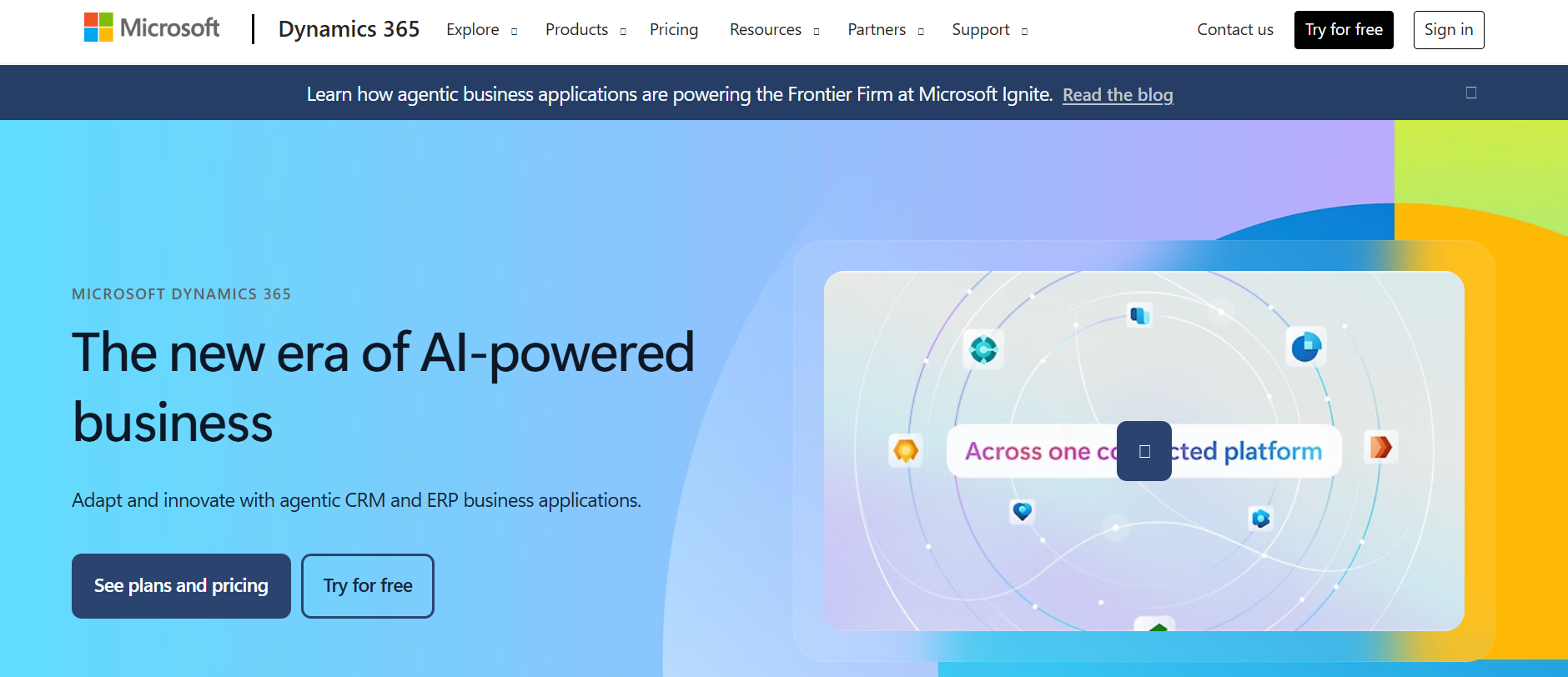
MS Dynamics 365 is a powerful and flexible solution implemented both in the cloud and on-premises. Specifically, it is designed for small- to medium-sized manufacturing companies seeking an all-in-one ERP system. Therefore, MS Dynamics 365 enables manufacturing companies to gain increased productivity by consolidating multiple systems into a single solution via automated processes and workflows.
Features
- Cloud-based ERP from Microsoft, focused on SMB to mid-market
- Supports manufacturing, inventory, sales, purchasing, and finances
- With appropriate extensions, it can handle batch production, lot tracking, and formula-based manufacturing
- Good integration with Microsoft Power BI (analytics) and Microsoft 365 (productivity)
- Modular architecture allows businesses to pick what they need
Pricing
Per user: $175 per month
Best For
Small to mid-sized chemical manufacturers and companies that want cloud ERP with moderate chemical-specific needs.
6. Syspro
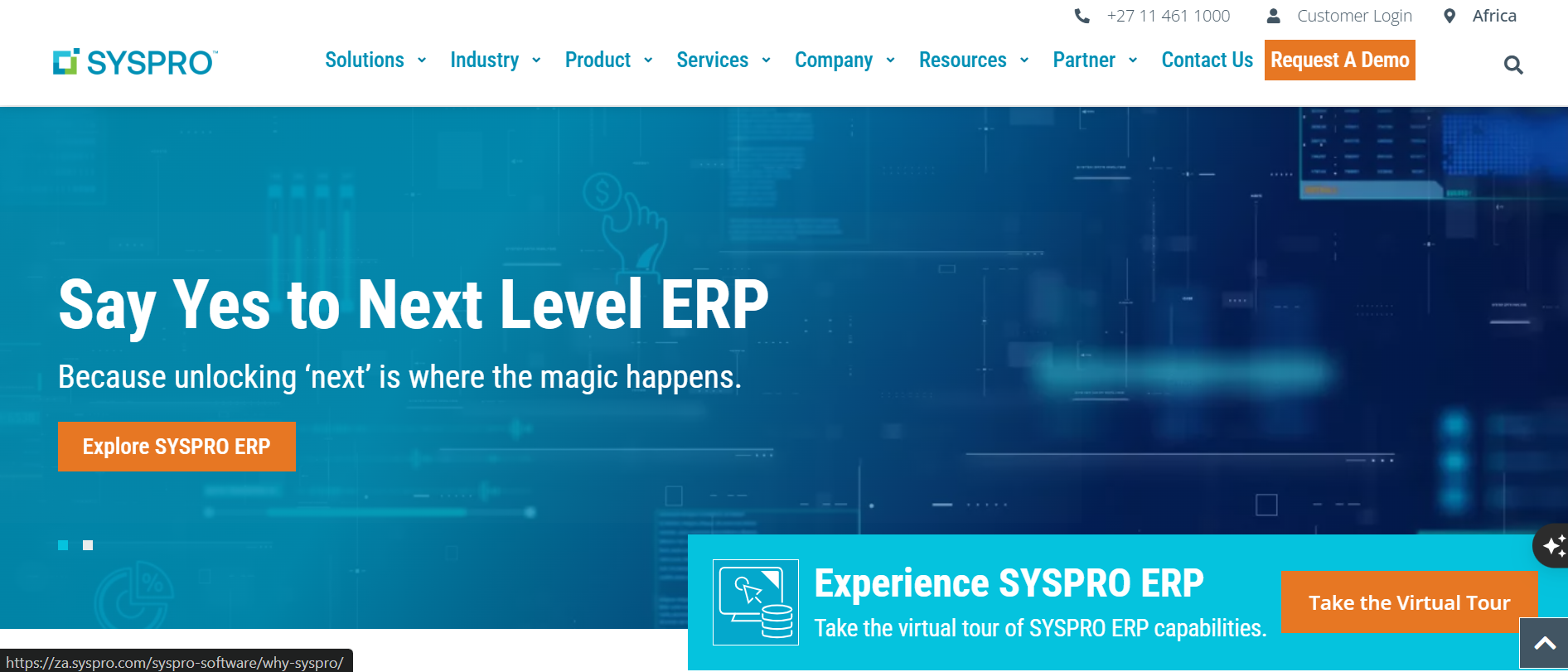
Syspro provides a solution that is focused on the Manufacturing and distribution sectors. Essentially, the software provides you with a comprehensive overview of all operational activities, encompassing Financials, Warehouse, and Inventory Management throughout your Supply Chain and Business Operations. Additionally, the solution is scalable and can be deployed in the cloud, on-premise, or hybrid, and accessed via the web or Windows applications to provide customers with choice and flexibility.
Features
- Supports integration with third-party applications and connectors like AI, ML, and IoT
- Provides business intelligence solutions with ERP-embedded analytics
- A mature ERP system that supports both discrete and process manufacturing
- Provides you with the ability to tailor your system to suit your unique business requirements
- Built-in SYSPRO Point of Sale module to allow your business to share key data
Pricing
SYSPRO does not have a free version but does offer a free trial. SYSPRO paid version starts at USD 50.00/month.
Best For
Ideal for manufacturers with moderate complexity (formulas, batches) as well as firms that need reliable QC and traceability but don’t require ultra-specialized chemical-compliance modules.

Sage X3, formerly known as Sage Business Cloud Enterprise Management, is an ERP software suite that includes integrated functionality for financial management, sales, customer service, distribution, inventory, manufacturing, and business intelligence.
Furthermore, Sage X3 ERP is web-based, browser-agnostic, and responsive on mobile devices. At the same time, it is also available to be deployed on-premises and as a service in the AWS cloud managed by Sage or a partner-provisioned cloud. Moreover, this solution can be configured to company’s requirements, user roles, and preferences.
Features
- Has a management control function with the calculation of forecast and actual costs
- Availability of various performance indicators to ensure optimum industry production quality
- Provides real-time inventory status monitoring
- Sage Business Cloud X3 solutions can be faster, more flexible, and cost-effective than traditional ERP systems
- Enables both forward and backward traceability for raw materials and finished goods
Pricing
Sage X3 does not have a free version but does offer a free trial. Pricing typically depends on factors like the number of users, modules, deployment model (cloud vs on-premise), and required customizations.
Best For
Ideal for companies that have outgrown basic ERP systems and need more advanced capabilities such as formulation management, batch production, and complex costing.

Intelex is a leading EHSQ initiative that delivers a unified software system for overseeing Environmental, Health, Safety, and Quality (EHSQ) initiatives. Notably, its expandable platform is crafted to consolidate, oversee, and scrutinize EHS and Quality data comprehensively. Additionally, the solution works on any device to meet the realities of your workplace.
Features
- Supports PSM regulatory frameworks to reduce risk and improve process safety visibility
- Centralizes audit scheduling, checklists, findings, and follow-ups
- Tracks all relevant regulatory requirements from permits, legal obligations, to compliance tasks
- Safety Risk Assessment capabilities
- Environmental Risk Assessment tools
Pricing
Pricing depends on factors like the number of modules, number of users, deployment (cloud), and level of customization needed. However, they have a free trial.
Best For
Chemical manufacturers that need to manage PSM, PHAs, MOC, SOPs, and incident investigations, as well as companies that need to manage permits, environmental compliance, audits, and regulatory obligations in a centralized system.
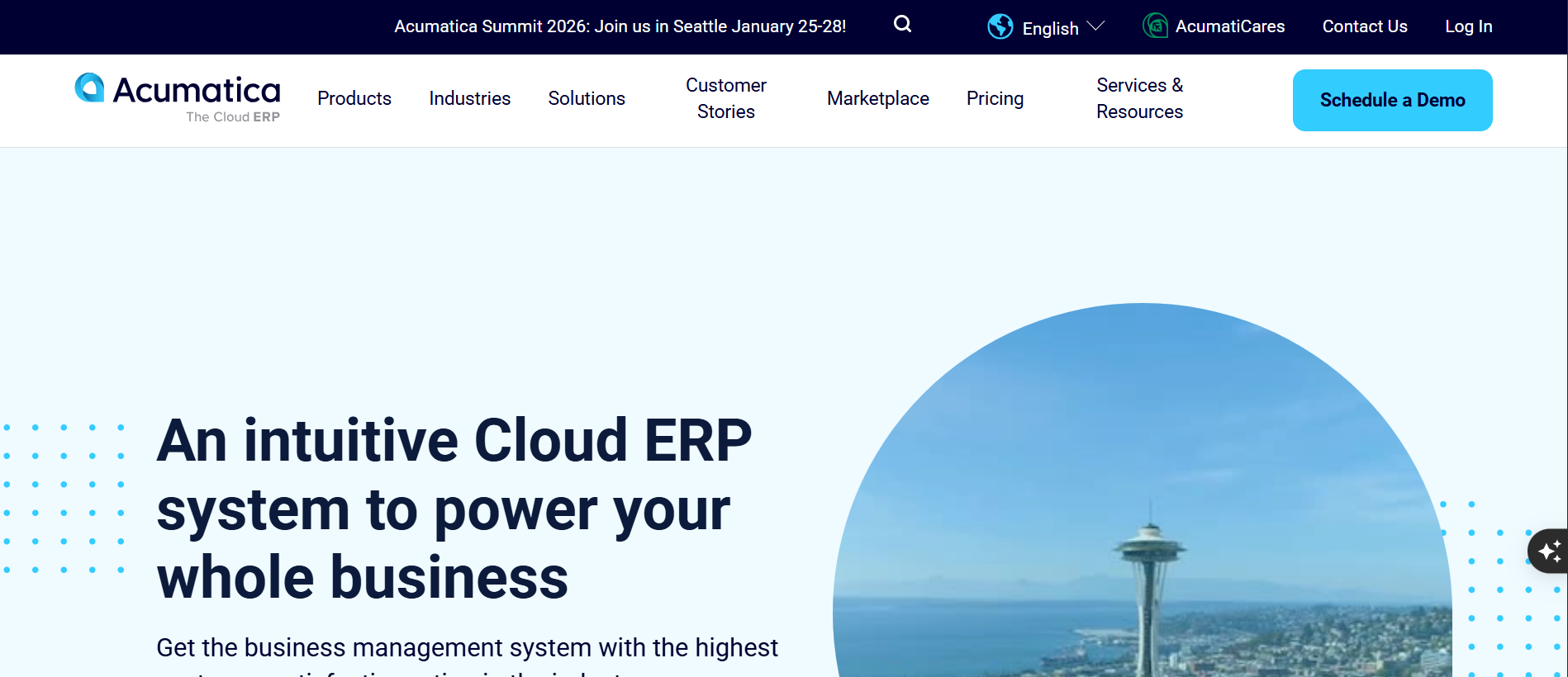
Acumatica Cloud ERP software provides unparalleled breadth across an extensive accounting, sales, project, case, and customer management application suite. Essentially, this software serves as a centralized data repository, gathering information from every department under a single pane of glass. Consequently, all business processes are clearly organized, and authorized employees have access to the same, real-time data, anytime, anywhere, from any web-enabled device.
Features
- Real-time dashboards and analytics
- Configure Acumatica Cloud ERP software with extended business applications for commerce, point of sale, construction
- Deployment: SaaS, private cloud, or on-premises
- Can manage formula-based production, lot tracking, and quality checks
- Modern, cloud-first ERP with strong flexibility
- Supports manufacturing, distribution, accounting, inventory, and project accounting
Pricing
Offers a free trial and free version
Best For
Startups in the specialty chemical space and growing chemical manufacturers (especially mid-market).
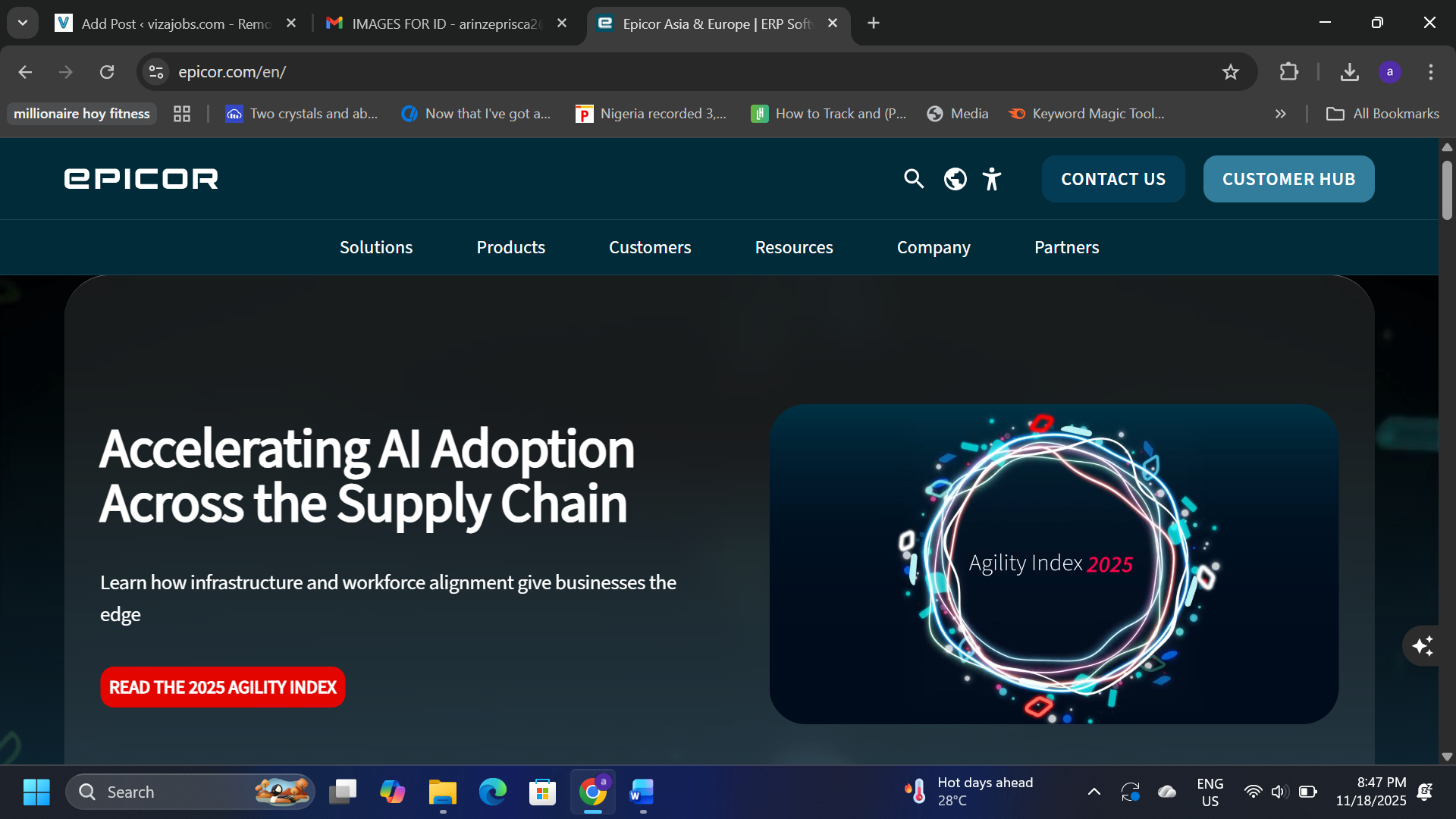
Epicor is a robust, modular ERP that supports chemical manufacturing well, thanks to its batching, MES, quality, and compliance features. In particular, its architecture supports complex production flows, batch processing, quality control, regulatory compliance, and supply chain management. Therefore, the software helps process manufacturers “drive efficiency & compliance” by bringing together real-time operational data, regulatory tracking, and adaptive production workflows.
Features
- In process manufacturing, it supports recipe management, batch production, and co-products / by-products
- Quality management: integrates QC checks into production
- Inventory control, costing, and supply chain planning are core parts of the system
- Good reporting and business intelligence, plus modular design
- Epicor supports both cloud (SaaS) and on-premises deployment, giving flexibility based on your IT strategy
Pricing
Implementation costs vary widely based on business complexity.
Best For
Chemical manufacturers with bespoke or complex production flows and mid to large companies that want to standardize operations but also need flexibility.

Features
- Has formula/recipe management capabilities
- Supports lot tracking, traceability, and batch documentation
- Absolut is a Cloud-based, more lightweight ERP (compared to large enterprise systems)
- Covers procurement, production planning, inventory, quality control, and accounting
- Simplified and user-friendly interface
Pricing
Absolut’s pricing is based on custom requirements; however, they offer a free trial and
Best For
Absolute is ideal for Small to medium chemical manufacturers and Startups producing specialty or niche chemical products
12. Oracle NetSuite
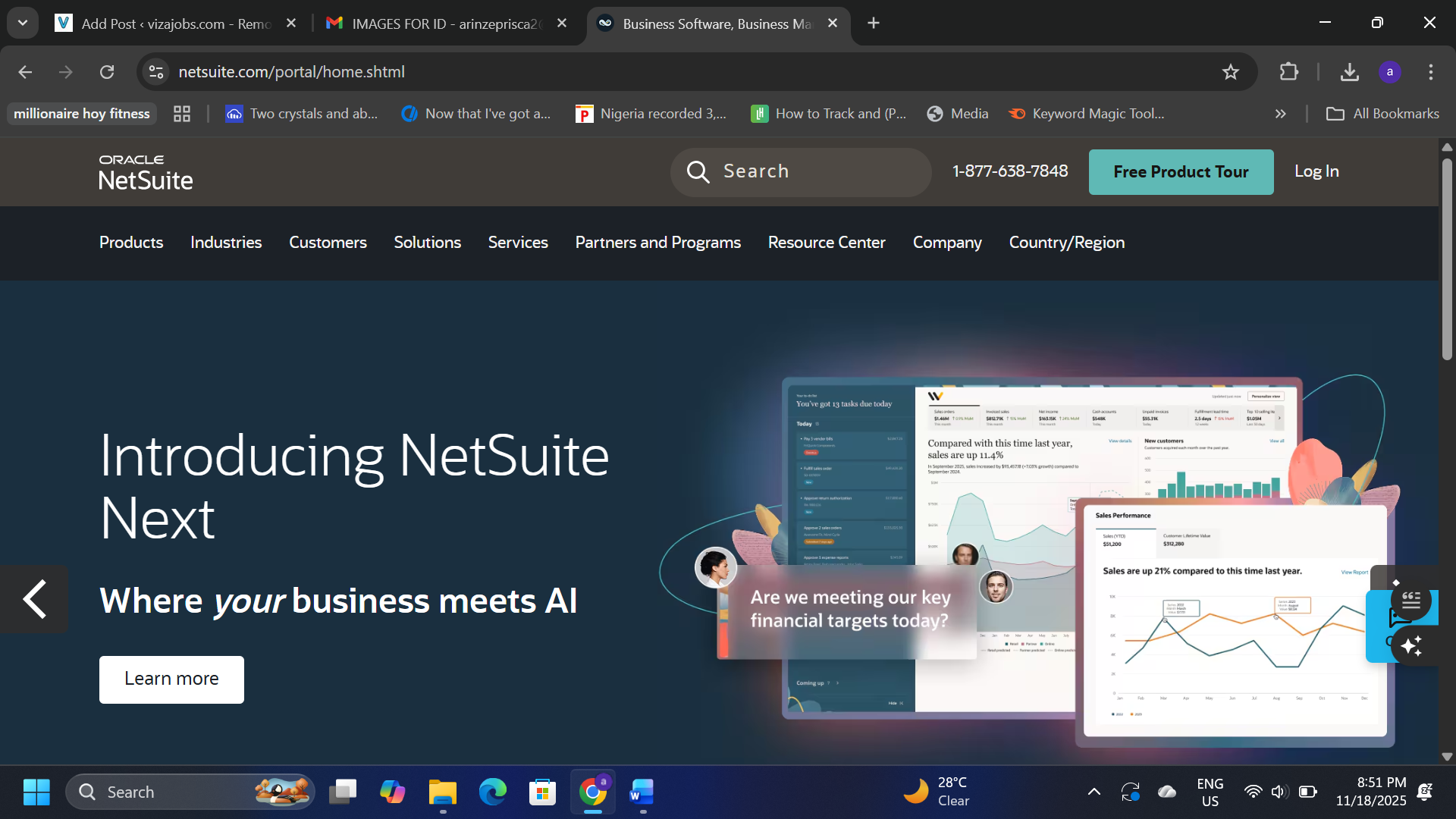
Oracle NetSuite delivers an all-in-one cloud business management solution that currently helps more than 29,000 organizations operate more effectively. Specifically, the platform automates core processes and provides real-time visibility into operational and financial performance. Furthermore, it offers full-service ERP solutions for businesses of all sizes. As a result, companies can streamline their processes and gain greater visibility into both operational and financial performance.
Features
- Automated manual processes
- Access to real-time and accurate data
- Inventory Management
- Unified General Ledger (GL), Accounts Payable / Receivable, multi-subsidiary accounting, and multi-currency support.
- Professional Services Automation (psa)
Pricing
NetSuite’s pricing depends heavily on your modules, users, deployment, and customization.
Best For
Firms with operations in multiple locations need multi-currency, multi-entity consolidation, and global supply chain visibility. Especially businesses with batch processing, lot traceability, and quality control needs.