

Managing compensation sits at the heart of running a business, and it often carries more weight than people admit. Employees want to feel appreciated, trust the fairness of their pay, and understand how decisions affect them. Yet many HR teams still use spreadsheets, long email exchanges, and rushed approvals. As these tasks pile up, errors slip in, budgets drift off course, and employees begin to question the system. Although managing pay structures and maintaining fairness can feel overwhelming, the right compensation management software makes the entire process clearer, faster, and far more dependable.
What is Compensation Management Software
Compensation management software helps companies organize and manage employee pay in one central system. It automates salary decisions, bonuses, stock options, and other rewards, reducing manual work and errors. The software also supports budgeting, cost planning, and compliance with company policies and regulations. Overall, it helps HR teams make fair, consistent, and informed compensation decisions.
However, choosing the right compensation management software can be a hassle, especially when every option promises something different. Even so, you can make a confident decision when you know what features to look for and how each platform supports your goals. That’s why our comprehensive guide highlights the 12 best compensation management software in 2025, helping you find the one that truly fits your needs.
Top 12 Best Compensation Management Software
1. Pave

Pave gives companies a complete compensation management platform that supports HR teams, finance teams, and managers. It helps them plan budgets, compare salaries across the market, and communicate total rewards in a clear way. The cloud-based system reduces confusion around pay by offering tools for benchmarking, planning, budget control, performance tracking, and reward communication. Many businesses rely on Pave to improve fairness, attract talent, and keep employees informed. Its easy interface and helpful data insights make compensation decisions more transparent, while automated steps ease the workload for teams.
Features
- Compensation Benchmarking: Shows side-by-side comparisons of job levels with market pay data.
- Budget Management: Supports multiple budgeting methods to help you pick the best plan for your review cycle while maintaining employee satisfaction.
- Total Rewards Communication: Builds clear statements that display salary, equity, and benefits in one place.
Pros
- Easy interface
- Strong data insights
- Better compensation decisions
- High transparency
- Lower administrative effort
Cons
- Limited customization
- Basic reporting
- Occasional minor bugs
Pricing
- Modular pricing based on selected features.
Best For
Companies that need benchmarking for salary and equity, detailed planning tools, and clear total-rewards communication. It suits teams that manage complicated compensation tasks, ensure pay fairness, and rely on up-to-date market data to guide their decisions.
2. PayScale
PayScale provides organizations with detailed market data and tools to plan compensation effectively. HR teams use it to benchmark roles, design pay structures, manage merit increases, and maintain internal equity. The platform combines salary surveys with analytics, helping companies make informed decisions and justify pay choices to leadership and employees. It connects smoothly with existing HRIS systems, allowing data to flow across departments efficiently.
Features
- Market Pricing: Access millions of salary data points across industries and regions
- Compensation Planning: Manage merit cycles, promotions, and equity adjustments
- Job Matching: AI-powered matching of internal roles to market data
- Pay Equity Analysis: Detect and address pay gaps across demographics
Pros
- Extensive market data coverage
- Strong analytics for decision-making
- Easy-to-use dashboards
- Excellent customer support
- Frequent data updates
Cons
- Advanced features require a learning curve
- Limited equity management tools
Pricing
Custom, based on company size and selected features
Best For
Mid-to-large enterprises needing detailed market intelligence, companies committed to pay equity, and HR teams that rely on data-driven compensation insights
3. Lattice
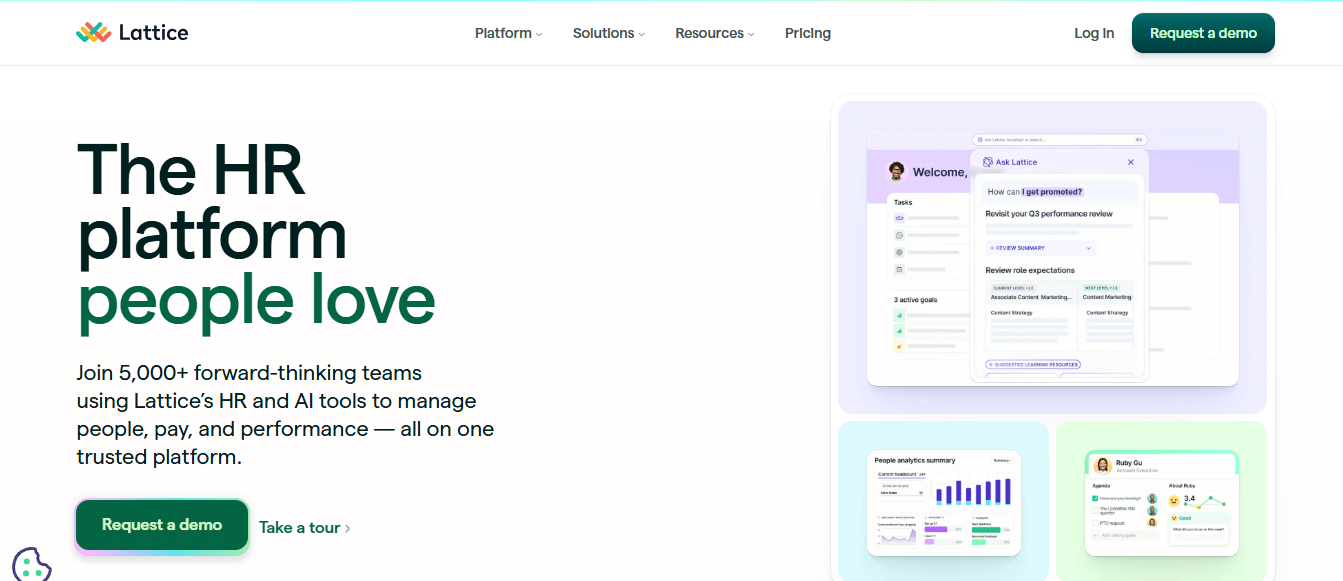
Lattice combines performance management with compensation planning to help organizations link employee development to rewards. Managers connect pay decisions to performance reviews, goals, and feedback cycles. HR teams manage merit increases and bonuses while keeping transparency across the organization. The platform’s intuitive design encourages adoption, and analytics help leaders understand compensation trends.
Features
- Integrated Performance Reviews: Links compensation to performance cycles
- Compensation Cycles: Manage merit increases, bonuses, and equity grants
- Analytics Dashboard: Gain insights into compensation trends and budget use
- Manager Guidance: Receive recommendations and guardrails for pay decisions
Pros
- Connects performance and pay seamlessly
- Modern, user-friendly interface
- Encourages employee engagement
- Strong mobile experience
- Supports collaboration
Cons
- Best suited for organizations already using Lattice for performance management
- Limited as a standalone compensation tool
Pricing
Starts at $11 per person per month, depending on modules
Best For
Companies seeking a combined people management platform, organizations linking performance to pay, and teams prioritizing employee engagement.
4. OpenComp
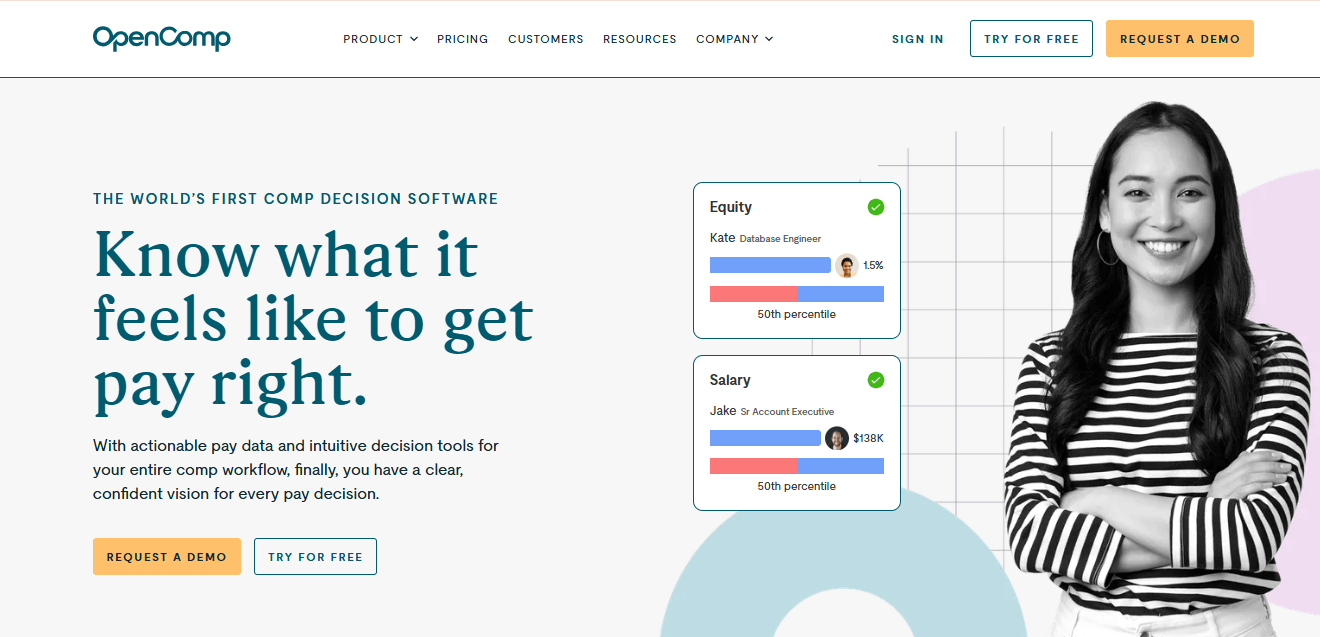
OpenComp helps companies make confident pay decisions by giving them dependable compensation data and clear insights. It supports fair and competitive pay practices, and it works especially well for businesses that want to benchmark employee salaries or analyze the market. The platform also sorts employees into the right job roles and levels automatically, which saves time and improves accuracy. It also lets you run market analyses using its data or your own.
Features
- Merit and bonus cycles that guide performance-based pay adjustments
- Pay equity tools that highlight and help address potential gaps
- Job role and level mapping for consistent evaluations
- Market analyses using internal or external data sources
- Range Manager for creating and updating salary ranges
- Data visualization to support clearer decision-making
Pros
- Real-time market benchmarking with global data
- Proprietary range builder aligned with company compensation strategies
- Offer, merit, and bonus cycle workflows that make approvals faster
- Total reward statements that improve employee clarity
- Integrations with 12+ HRIS systems plus a public API
Cons
Some users report the absence of two-way sync with certain HRIS tools
Pricing
Pricing available upon request
Best For
Companies that want accurate market benchmarking. It removes guesswork from salary comparisons, range creation, and compensation cycles, making it especially helpful for teams without in-house compensation specialists.
5.PayReview
PayReview supports compensation reviews by automating calculations and presenting clear reports that help HR teams work faster. Although the first setup demands thoughtful workflow and approval mapping, the tool’s audit-ready logic and structured compensation grid deliver dependable results. Because of these strengths, it fits companies that want an organized and consistent salary review process. PayReview also enhances salary reviews and benchmarking, helping HR teams create fair and competitive pay. As a result, it supports stronger decision-making and reduces employee turnover through useful analytics and automation.
Features
- Talent Analytics: Uses predictive insights to highlight attrition risks, spot high performers, and improve compensation choices.
- Annual Planning: Compares headcount with unspent budget so companies can adjust labor costs more accurately.
- Hiring Guidance: Helps hiring teams make offers that reflect market standards while keeping internal fairness in check.
Pros
- Collects organizational, performance, and market data in a user-friendly interface.
- Helps HR teams study market compensation accurately for different job roles.
Cons
Depends heavily on external companies to provide complete and reliable data.
Pricing
Charges a monthly subscription fee and may include one-time costs for setup and system integrations.
Best For
Suits organizations that need a complete solution for workforce planning and compensation management.
6. Deel
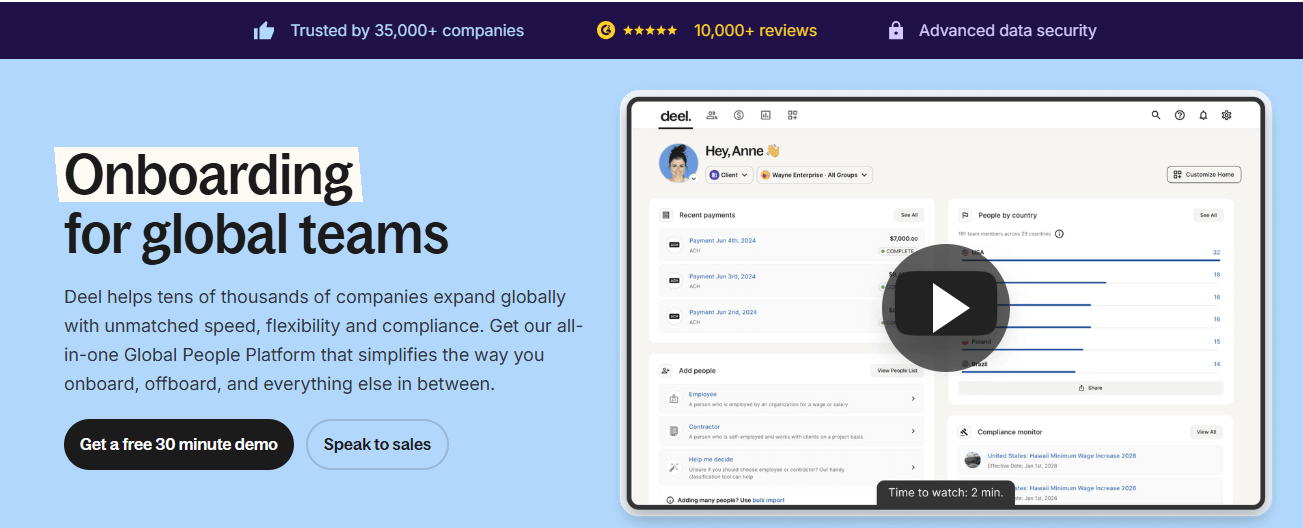
Deel provides an all-in-one payroll and compensation management solution built for international teams. It helps HR professionals track employees and contractors in multiple countries, and it supports salary structures, pay equity initiatives, and compensation reviews across more than 150 regions. Because it includes multi-currency support and local market insights, teams can make fair and consistent pay decisions. Deel also offers communication tools and shared workspaces that keep HR, finance, and managers aligned from planning to payout, while its payroll connection turns approved plans into actual payments.
Features
- Salary analysis tools that help teams compare and adjust pay
- Compensation review cycles for periodic evaluations
- Pay transparency options that promote clarity
- Compensation band management for consistent salary ranges
- Total rewards portals that show workers their full benefits
- Merit cycles for performance-based adjustments
Pros
- Ready-made templates help users complete tasks quickly
- Strong authentication and security features protect sensitive data
- Users can work in the platform without exposing compensation information to others
Cons
- Reporting and personalization options may feel limited for some organizations
- Navigating to specific contract details could be easier
Pricing
Deel Compensation costs $15 per employee each month.
Best For
Global teams that need multi-currency support and unified compensation management.
7. Compease
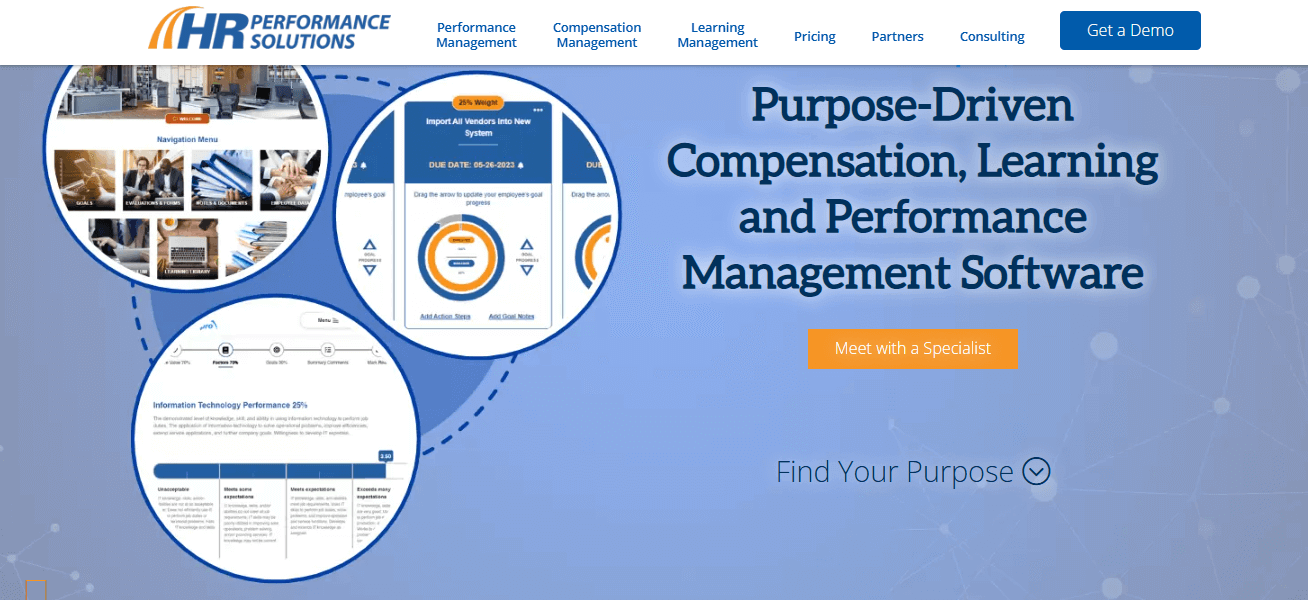
Compease is a cloud-based salary administration tool that helps HR teams manage compensation with clarity. It supports organizations in retail, manufacturing, and other sectors by helping them analyze, design, and carry out their compensation strategy. The system updates its salary data every year, which helps companies balance internal fairness with current market pay levels. It evaluates each position using multiple factors, assigns a grade, and places it within a pay structure. It also models different merit increase options and shows how each scenario may affect the company’s budget.
Features
- Job Evaluation System: Uses eight clear criteria to compare employee roles and supports comparisons for hybrid job positions.
- Merit Increase Planning: Creates and predicts merit-increase guidelines for individuals. It also helps companies plan adjustments for senior employees who move through pay levels quickly.
- Salary Grades and Ranges: Uses 24 salary grades and provides detailed pay data based on industry, company size, and location.
- Compensation Management: Presents detailed reports on current and projected salaries and compa-ratios for each employee.
- Job Descriptions: Provides complete job descriptions that support hiring and recruitment decisions.
Pros
- Easy to use with dependable support
- Speeds up time-consuming tasks like budgeting
- Offers flexible reporting options
- Customer service responds quickly and helps users effectively
- Integrations cut down task time
Cons
- Report customization options feel limited
- Job evaluation system may feel too strict for some users
Pricing
$2 – $6 per employee/month
(Based on employee count; minimum pricing applies)
Best For
Credit unions, financial service providers, and SMBs that want built-in market data and consulting support.
8. CompUp 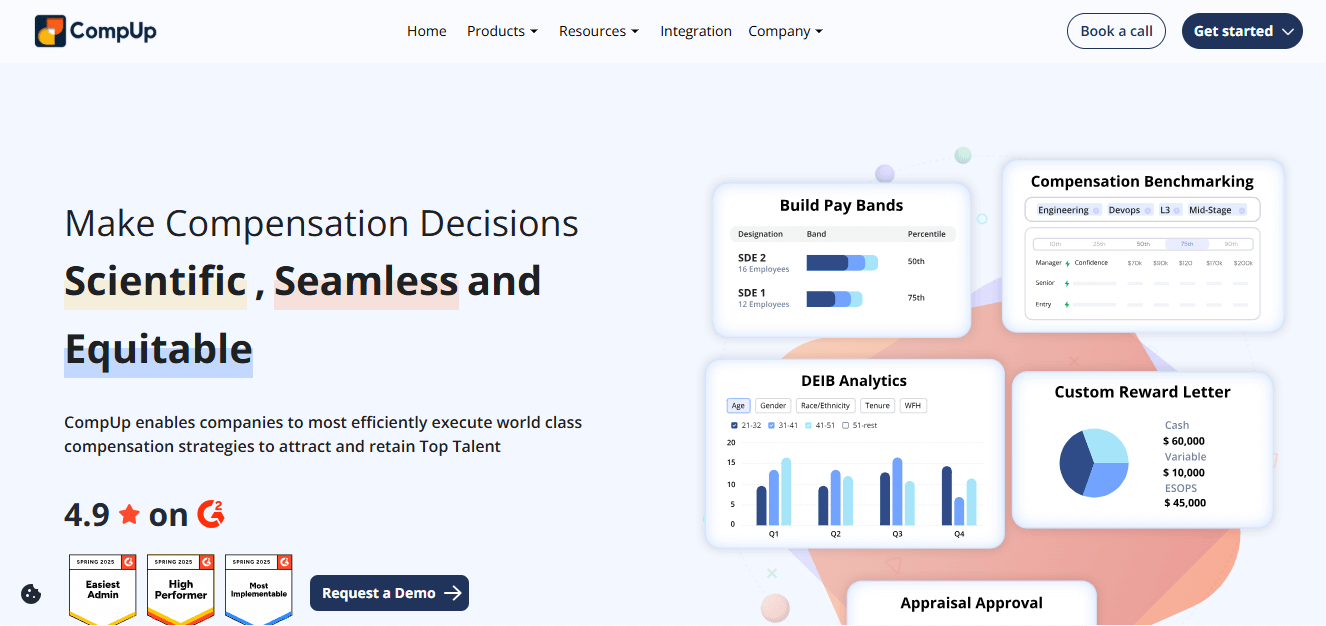
CompUp is an all-in-one compensation management platform that supports everything from salary benchmarking to communicating total rewards. It runs on insights from a community of compensation experts who supply real-time data, which boosts both participation and accuracy. The platform also allows you to share your compensation data and gain useful benchmarking insights at no cost.
Features
- Compensation Bands: Build a clear, unified view of compensation levels so planning becomes easier and more consistent across teams.
- Total Rewards Communication: Help employees understand the full value of their rewards package, which often improves engagement.
- Pay Equity Analysis: Review compensation information to spot and resolve gaps, supporting fair and transparent pay decisions.
- Survey Management: Distribute surveys and track responses with ease, enabling more informed decisions that support organizational goals.
Pros
- Supports flexible bonus and compensation structures.
- Can simulate appraisal cycles and budget scenarios for better planning.
Cons
- Some backend dependencies can slow down updates.
- Access to compensation benchmarks can be limited.
Pricing
Custom pricing
Best For
Organizations that want accurate salary benchmarks, clear communication of total rewards, and tools that support fair and transparent pay decisions.
9. Salary.com
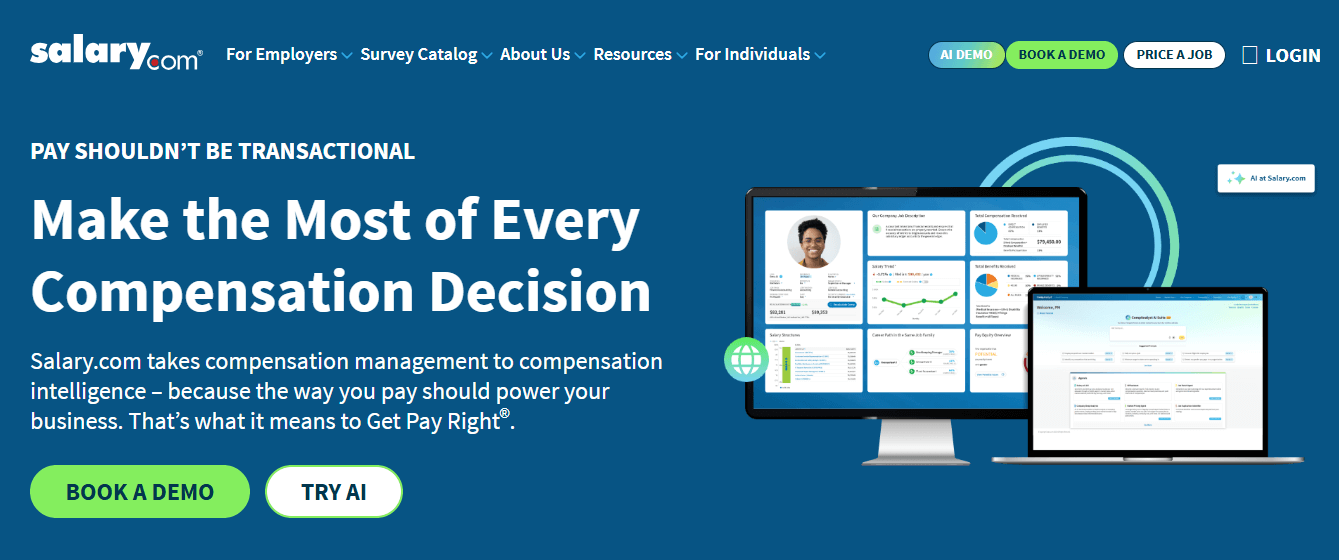
Salary.com combines decades of compensation expertise with a software platform. HR teams access one of the largest compensation databases to design pay structures, conduct equity analyses, and communicate compensation strategies. The platform’s CompAnalyst tool combines market data with planning features to support evidence-based decisions.
Features
- CompAnalyst: Provides in-depth compensation analysis and planning
- Salary Structures: Build and maintain pay grades and ranges
- Job Descriptions: Library of positions linked to market data
- Pay Equity Module: Detect and resolve pay gaps
Pros
- Extensive compensation database
- Strong job matching capabilities
- Educational resources included
- Effective and detailed reporting
Cons
- Complex interface for new users
- Full features come at higher cost
- Implementation requires time investment
Pricing
Custom, based on company size and modules
Best For
Organizations needing extensive market data, companies designing or updating salary structures, and HR teams focused on analytical compensation strategies
10. BambooHR
BambooHR extends its popular HRIS platform with compensation management capabilities designed for small to mid-sized businesses. The system makes it easy to plan merit increases, manage bonuses, and track compensation history. HR teams appreciate BambooHR’s simplicity it removes unnecessary complexity while still providing essential compensation tools. The platform includes basic market data, supports approval workflows, and generates compensation reports. Because many smaller companies already use BambooHR for core HR functions, adding compensation management feels natural and requires minimal additional training.
Features
- Compensation Planning: Simple tools for managing raises, bonuses, and adjustments
- Approval Workflows: Routes compensation decisions through appropriate stakeholders
- Compensation History: Tracks all pay changes over time for each employee
- Integration: Works seamlessly with BambooHR’s time tracking, performance, and benefits modules
Pros
- Very user-friendly interface
- Quick implementation
- Affordable for small businesses
- Good customer support
- All-in-one HR solution
Cons
- Limited advanced analytics
- Fewer benchmarking options
- Not ideal for complex organizations
- Basic reporting compared to specialized tools
Pricing
BambooHR starts at $10 USD/mo per employee, with a flat rate from $250/month for 25 or fewer employees. Compensation features are included in higher-tier plans
Best For: Small to mid-sized companies seeking an integrated HR and compensation solution, organizations prioritizing ease of use over advanced features, and teams new to compensation management software.
11. CaptivateIQ
CaptivateIQ focuses on commission and incentive compensation management, serving sales-driven organizations with complex variable pay structures. The platform automates commission calculations, eliminates spreadsheet errors, and provides sales reps with visibility into their earnings. Finance and sales operations teams use CaptivateIQ to model different commission plans, track performance against quotas, and ensure accurate payouts. The software handles sophisticated scenarios including splits, overrides, and tiered structures. Its flexibility allows companies to quickly adjust plans as business needs change.
Features
- Commission Automation: Calculates complex commission structures accurately and quickly
- Sales Performance Tracking: Links earnings to individual and team performance metrics
- Plan Modeling: Tests new commission structures before implementation
- Rep Dashboard: Gives salespeople transparent access to their earnings and performance
Pros
- Excellent for complex commission structures
- Strong automation capabilities
- Good transparency for sales teams
- Flexible plan design
- Reduces manual calculation errors
Cons
- Specialized for sales compensation
- Limited traditional compensation features
- Learning curve for configuration
Pricing: Custom pricing based on number of payees and complexity of plans
Best For: Companies with large sales teams, organizations with complex commission structures, and businesses seeking to automate variable compensation while providing transparency to sales representatives.
12. Decusoft Compose
Decusoft Compose gives HR teams complete control over compensation management. The platform handles base pay, bonuses, equity, and benefits in one place. It allows teams to test different compensation scenarios before implementing them. Companies rely on Compose to manage merit increases, plan long-term incentives, and conduct pay equity analyses. The software enforces budget controls and approval workflows to ensure compliance. Additionally, its reporting features help communicate strategies to leadership and show the impact of compensation decisions.
Features
- Scenario Modeling: Enables HR teams to try multiple compensation strategies before final decisions.
- Equity Planning: Handles stock options, RSUs, and other long-term incentives.
- Pay Equity Analysis: Detects potential disparities across employee groups.
- Workflow Management: Manages approval processes and maintains detailed audit trails.
Pros
- Offers strong scenario modeling capabilities, which help reduce errors and improve planning.
- Includes a wide array of compensation tools in one platform.
- Provides effective management for equity-based compensation.
- Generates flexible reports for leadership communication.
- Maintains a solid presence in the HR software market.
Cons
- The interface feels outdated compared with newer solutions.
- Teams may face a steep learning curve when starting.
- Implementation demands careful planning.
Pricing
Custom, depending on company size and chosen modules
Best For
Mid-to-large enterprises managing multiple types of compensation, HR teams that need scenario planning, and organizations seeking detailed pay equity insights.
How to Choose the Right Compensation Management Software
- Identify your pain points, such as budget overruns, lack of market data, or communication challenges.
- Consider company size and complexity.
- Evaluate integration needs. Ensure the software connects smoothly with HRIS, payroll, performance, and financial systems.
- Match software to your compensation strategy
- Factor in costs beyond the purchase price, including implementation, training, and support.
- Test software through demos or trial periods, involving HR, finance, and managers who will use it.
- Check vendor stability and support quality to ensure long-term reliability.
Conclusion
Compensation management software improves pay decisions, increases transparency, and reduces administrative work. It helps organizations of all sizes manage budgets, justify pay, and connect compensation to performance or equity. Each platform in this guide serves different needs: Pave excels at benchmarking and communication, BambooHR fits smaller companies, and CaptivateIQ specializes in sales compensation. Assess this priorities carefully and you can select a solution that enhances fairness, efficiency, and employee satisfaction.