Choosing among the best SOC 2 providers for influencer marketing platforms has become a genuine business priority, not a back-office formality. As creator marketplaces scale, they collect an expanding pool of sensitive data, including creator banking details for payouts, brand contract terms, campaign performance analytics, and direct API connections into platforms like Instagram, TikTok, and YouTube.
Consequently, brands and agencies now routinely ask for a SOC 2 report before they sign a media spend agreement, and platforms without one risk losing deals to better-prepared competitors. Meanwhile, the compliance software market has grown crowded, so narrowing down a shortlist without wasting weeks on demo calls requires a clear side-by-side comparison.
This guide walks through twelve leading compliance automation vendors, evaluating each one’s overview, core features, pros and cons, and pricing, so that founders and compliance leads can quickly identify the best SOC 2 providers for influencer marketing platforms and move forward with confidence.
Top 12 Best SOC 2 Providers for Influencer Marketing Platforms
Scytale differentiates itself with a concierge-style service model, pairing automated evidence collection with hands-on compliance experts. This combination suits influencer marketing platforms that operate lean marketing and operations teams but still need someone to translate audit jargon into plain language. Additionally, Scytale’s niche focus on cloud-native companies aligns well with the API-driven architecture common across creator marketplaces.
Features
- Dedicated compliance success manager assigned to each account
- Automated evidence collection across common cloud and SaaS tools
- Policy generation tailored to startup-sized teams
- Support for SOC 2, ISO 27001, and GDPR readiness in parallel
Pros
- Strong human support layer reduces confusion for first-time audits
- Reasonable mid-market Pricing compared to enterprise-focused rivals
- Fast onboarding for cloud-native SaaS products
Cons
- Smaller integration ecosystem than the market leaders
- Less brand recognition, which occasionally raises questions during vendor due diligence
Pricing
Scytale’s Pricing sits in the mid-range, generally comparable to Sprinto and Secureframe once support services are included.
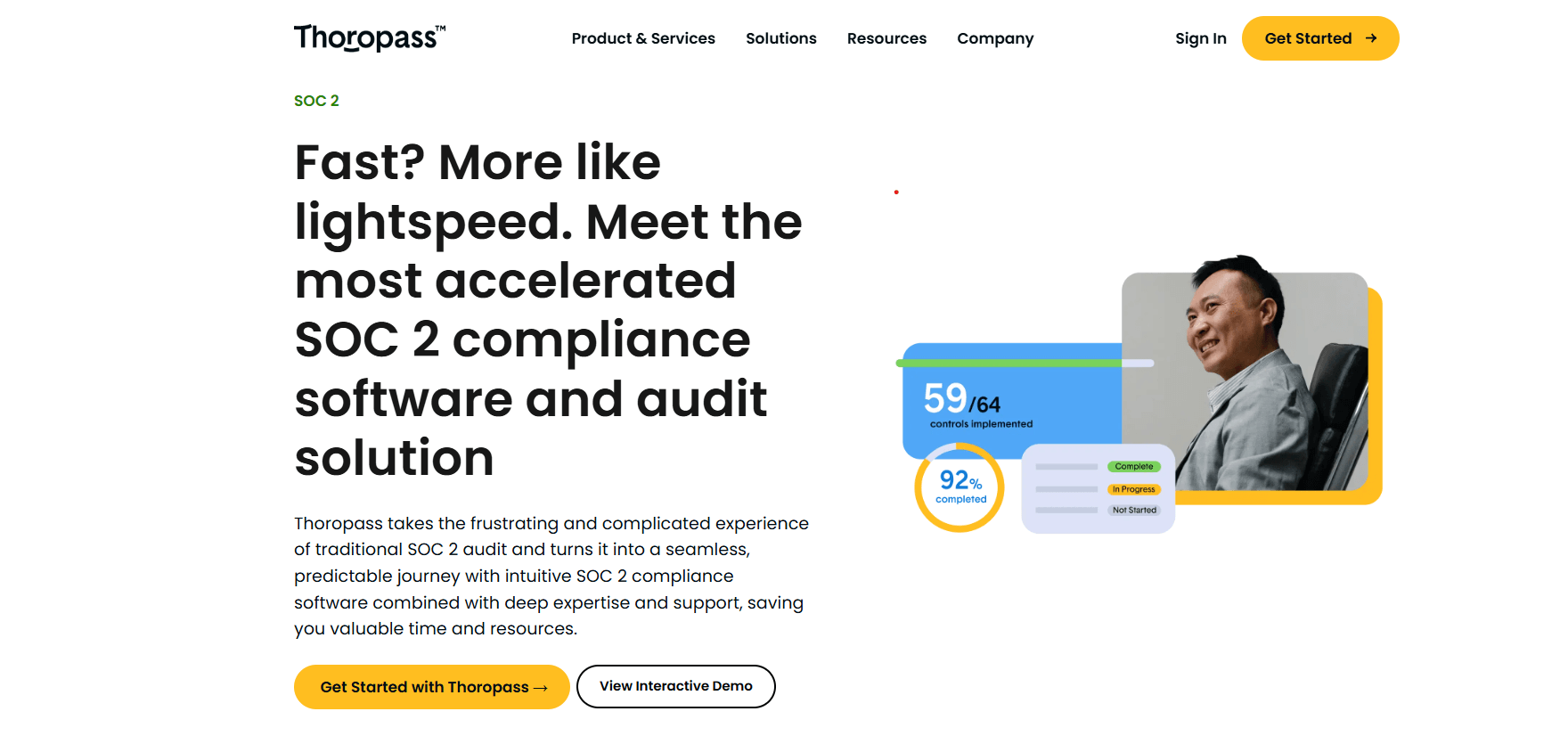
Thoropass bundles its software with an in-house audit firm, which removes one of the biggest headaches in the compliance process: coordinating between separate tool and auditor vendors. Influencer marketing platforms that would rather manage one relationship instead of two often choose Thoropass for this reason. Furthermore, because the audit team already knows the platform’s interface, review cycles tend to move faster than with a third-party auditor unfamiliar with the tool.
Features
- In-house CPA firm that performs the actual SOC 2 audit
- Unified dashboard covering evidence collection, policy management, and audit scheduling
- Support for multiple frameworks under one subscription
- Real-time gap analysis before formal audit fieldwork begins
Pros
- One vendor for both software and audit simplifies procurement
- Fewer handoff delays between platform and auditor
- Transparent audit timelines since both functions live under one roof
Cons
- Higher upfront cost than software-only competitors
- Less flexibility if a company wants to switch auditors later
Pricing
Because Thoropass bundles audit fees into its packages, total cost typically runs higher than top others.
3. Hyperproof

Hyperproof targets organizations managing several compliance frameworks at once, which makes it a natural fit for influencer marketing platforms operating across multiple regions with different privacy and advertising regulations. Rather than treating SOC 2 as an isolated project, Hyperproof maps controls across frameworks so that a single piece of evidence can satisfy multiple requirements simultaneously. Consequently, larger creator marketplaces with dedicated GRC staff tend to prefer its enterprise-oriented workflow.
Features
- Cross-framework control mapping that reduces duplicate evidence work
- Risk management module built for enterprise governance teams
- Workflow automation for recurring compliance tasks and control owners
- Detailed reporting suited to board-level and enterprise stakeholders
Pros
- Excellent for multi-framework, multi-region compliance programs
- Strong reporting tools for enterprise governance teams
- Flexible enough to support custom, non-standard control frameworks
Cons
- Steeper learning curve than startup-focused tools
- Less cost-effective for companies pursuing only a single framework
Pricing
Hyperproof Pricing is quote-based and generally targets mid-market and enterprise budgets rather than early-stage startups.
Scrut Automation has carved out a reputation for combining compliance automation with continuous cloud security monitoring, which appeals to influencer platforms handling sensitive creator payment and identity data. Because Scrut ties vulnerability scanning directly into its compliance workflow, security and audit readiness improve together rather than as separate workstreams. As a result, platforms that want one dashboard for both risk and compliance often shortlist Scrut early.
Features
- Continuous cloud configuration and vulnerability monitoring alongside compliance evidence
- Support for SOC 2, ISO 27001, GDPR, and HIPAA within one platform
- Automated risk assessments tied directly to control gaps
- Vendor risk management tools for tracking third-party payment and analytics providers
Pros
- Combines security monitoring with compliance evidence in one place
- Competitive Pricing relative to Vanta and Drata
- Responsive support team, according to user reviews
Cons
- Smaller brand footprint than the market’s biggest names
- Integration depth on legacy or custom tools can be inconsistent
Pricing
Scrut Automation typically prices below the market leaders, making it an attractive mid-tier option for cost-conscious teams.
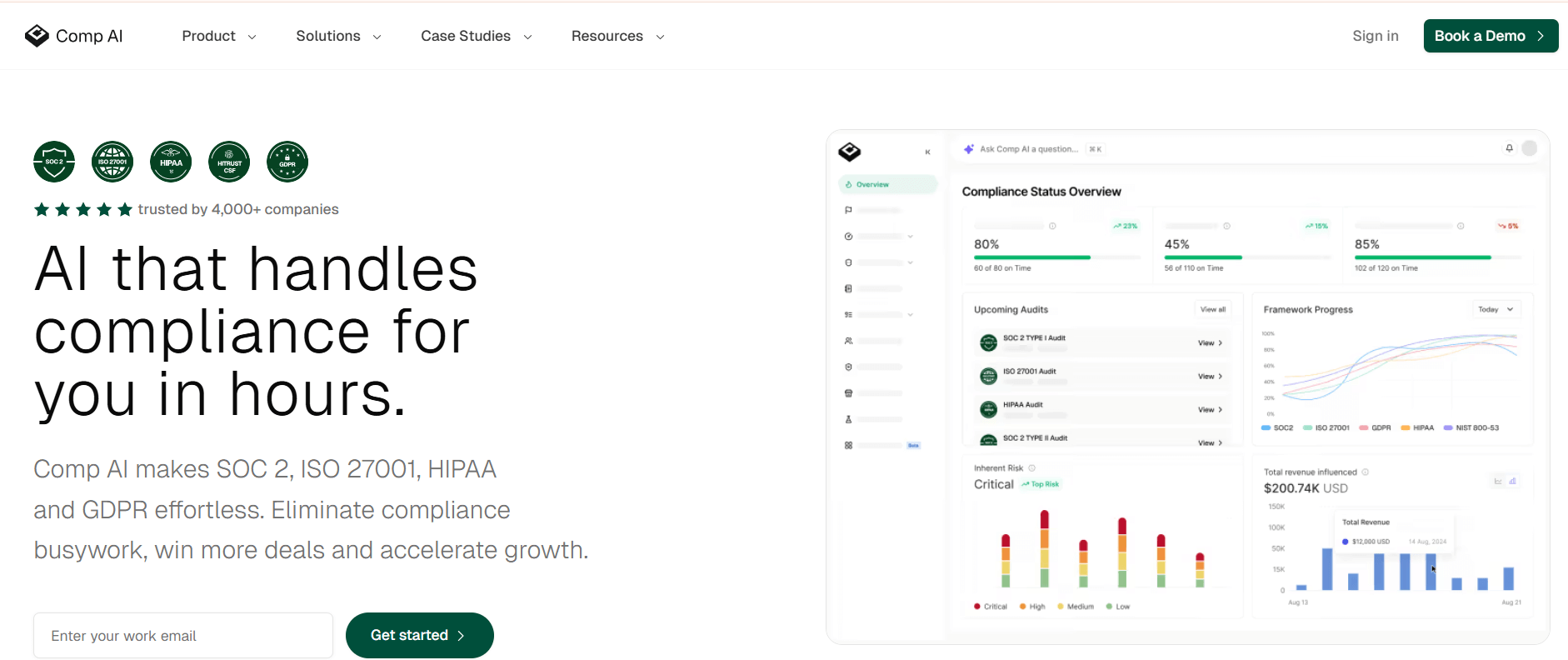
Comp AI takes an open-source, self-hostable approach that appeals to engineering-first influencer platforms wary of vendor lock-in. Since the platform can run on a company’s own infrastructure, teams retain full control over how creator and campaign data gets processed during the compliance workflow. This transparency, paired with a notably lower price point, has made Comp AI a fast-growing alternative to the established players.
Features
- Open-source core (AGPLv3) with an optional managed cloud tier
- Self-hosting option for teams with strict data residency requirements
- Automated evidence collection comparable to closed-source competitors
- Active community development that ships new integrations quickly
Pros
- Dramatically lower cost than most competitors
- Full transparency into how the platform handles compliance data
- Self-hosting appeals to security-conscious engineering teams
Cons
- Auditor familiarity is still growing compared to Vanta or Drata
- Self-hosting requires internal engineering resources to maintain
Pricing
Comp AI’s managed cloud tier runs at roughly two hundred dollars a month, with a free self-hosted option available for teams willing to manage their own infrastructure.

Vanta remains one of the most widely adopted compliance automation platforms, and it consistently ranks among the best SOC 2 providers for influencer marketing platforms because it connects directly to the cloud infrastructure, HR systems, and identity providers that creator marketplaces already run on. Since influencer platforms typically store creator banking details, engagement analytics, and brand contract data across multiple SaaS tools, Vanta’s broad integration library makes it straightforward to pull continuous evidence without pulling engineers off product work. As a result, teams move through their first Type II audit faster than they would with a manual spreadsheet-based approach.
Features
- Connects to 375+ tools, including AWS, GCP, Azure, and common HR and identity platforms used by influencer marketplaces
- Runs automated, continuous control monitoring instead of one-time evidence snapshots
- Provides a public-facing trust page that brands and agencies can review before signing a partnership agreement
- Includes built-in risk assessment and vendor management modules for tracking third-party creator payment processors
Pros
- Fast setup, often within days rather than weeks
- Large integration catalog that fits fast-moving marketing tech stacks
- Strong reputation with auditors, which shortens review cycles
Cons
- Pricing climbs quickly once headcount and integrations grow
- Deeper technical monitoring on niche tools can lag behind Drata
Pricing
Vanta prices annually based on company size and framework count, with most growth-stage influencer platforms paying in the low-to-mid five figures per year once add-ons are included.
Drata takes a slightly more technical approach than Vanta, and it appeals to influencer platforms that run custom infrastructure to manage campaign tracking, affiliate links, and real-time engagement dashboards. Because Drata monitors cloud configurations and CI/CD pipelines in granular detail, engineering-heavy creator marketplaces often prefer it. Consequently, platforms that treat security as a product differentiator, rather than a checkbox, gravitate toward Drata’s dashboard-first workflow.
Features
- Agentic, AI-assisted evidence collection across cloud and code repositories
- Deep monitoring of CI/CD pipelines, which matters for platforms shipping frequent product updates
- Multi-framework support that lets a company layer ISO 27001 or GDPR onto an existing SOC 2 program
- A dedicated auditor collaboration portal that reduces email back-and-forth during fieldwork
Pros
- Excellent for engineering teams that want granular infrastructure visibility
- Strong auditor portal that speeds up fieldwork
- Flat, predictable per-user Pricing in many contracts
Cons
- Entry Pricing starts in the high four figures and scales with scope
- The depth of features can feel like overkill for very small teams
Pricing
Drata’s published Pricing tends to fall between roughly seven and fifty thousand dollars a year, depending on framework count, integrations, and company size.
Secureframe positions itself as a guided, structured option, which suits influencer marketing platforms that lack a dedicated in-house security team. Since many creator-economy startups grow their marketing and partnerships functions faster than their security headcount, Secureframe’s templated policies and onboarding walkthroughs fill an important gap. Moreover, the platform’s former-auditor staff can pre-review control implementation, which reduces surprises once the formal audit begins.
Features
- More than 300 integrations spanning cloud infrastructure, HR tools, and ticketing systems
- Built-in security awareness training for employees who handle creator and brand data
- Support for over 35 frameworks, useful for platforms expanding into new markets
- A trust portal for sharing real-time compliance status with agency and brand partners
Pros
- Guided onboarding suits teams without a compliance specialist on staff
- Former auditors on staff help pre-empt common audit findings
- Wide framework coverage supports future growth into HIPAA or PCI DSS
Cons
- Software and audit fees are billed separately, which can complicate budgeting
- Some integrations offer less granular configuration than Vanta’s equivalents
Pricing
Secureframe generally runs from around ten thousand to fifty thousand dollars annually before audit fees, depending on scope and framework count.
Sprinto focuses on speed, and it markets itself directly to early-stage companies racing to close their first enterprise brand contract. Influencer marketing platforms often face this exact pressure, since a single large advertiser may require SOC 2 attestation before signing a media spend agreement. Because Sprinto automates test cases tightly and limits manual evidence gathering, disciplined teams can reach audit readiness in a matter of weeks rather than months.
Features
- More than 200 integrations aimed at fast-moving startups
- Automated compliance checks that run continuously in the background
- Built-in audit management that connects the platform directly to approved auditors
- Risk register and policy templates tailored to lean teams
Pros
- One of the fastest routes to audit readiness on the market
- Sub-$10,000 entry Pricing that fits early-stage budgets
- Hands-on support that keeps non-technical founders on track
Cons
- Smaller integration library than Vanta or Secureframe
- Less suited to companies already running complex, multi-framework programs
Pricing
Sprinto typically starts under ten thousand dollars per year, making it one of the more affordable entries in this comparison of the best SOC 2 providers for influencer marketing platforms.
Oneleet was built by penetration testers rather than compliance generalists, so it leans heavily into active security testing alongside standard evidence automation. Influencer marketing platforms that process significant creator payment volume, and therefore attract more attention from potential attackers, benefit from Oneleet’s built-in penetration testing rather than needing to hire a separate firm. This bundled approach can shorten the path from initial gap assessment to a clean Type II report.
Features
- In-house penetration testing included as part of the core offering
- Automated SOC 2 evidence collection integrated with security findings
- External partner auditors who work directly within the Oneleet workflow
- Remediation guidance tied to each identified vulnerability
Pros
- Strong reputation for genuine security depth, not just paperwork
- Combines pentesting and compliance evidence, saving a separate vendor relationship
- High user satisfaction scores from verified reviewers
Cons
- Pricing sits higher than most software-only platforms
- Newer to the market, with a shorter enterprise track record
Pricing
Oneleet’s reported Pricing ranges from roughly twelve thousand to sixty thousand dollars or more annually, depending on the scope of testing and compliance work required.
LogicGate approaches compliance through the lens of enterprise risk management, offering highly configurable workflows rather than a rigid, templated process. Large influencer marketing networks that operate more like enterprises than startups, with dedicated legal, risk, and procurement teams, often need this level of flexibility. Because LogicGate lets administrators build custom workflows around unique business processes, it adapts well to complex organizational structures.
Features
- Highly configurable, no-code workflow builder for custom risk processes
- Support for multiple frameworks and internal risk registers simultaneously
- Integration with existing enterprise GRC and ticketing systems
- Detailed audit trails suited to legal and procurement review
Pros
- Extremely flexible for complex, multi-department organizations
- Strong fit for enterprises already running a broader risk program
- Detailed reporting for legal and executive stakeholders
Cons
- Steep learning curve for teams without dedicated GRC staff
- Overkill, and likely overpriced, for small or early-stage platforms
Pricing
LogicGate uses custom, quote-based enterprise Pricing that typically exceeds what smaller SOC 2 automation platforms charge.
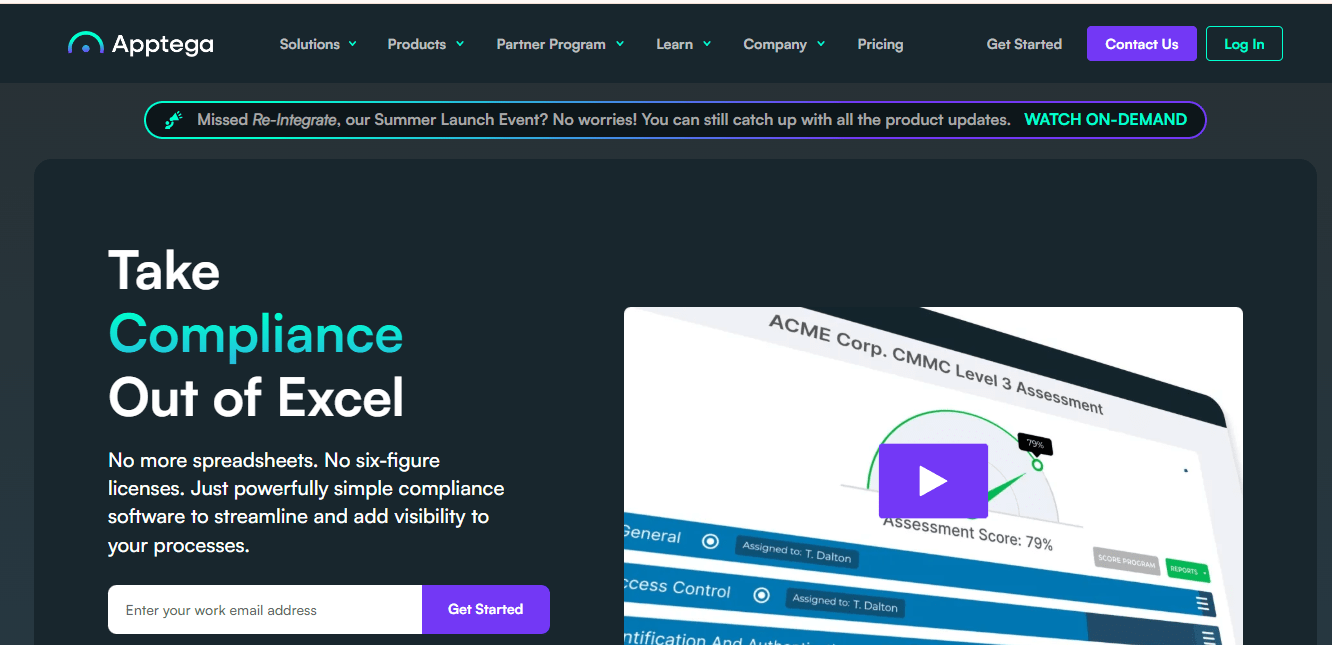
Apptega rounds out this list with a focus on simplifying cybersecurity and compliance management for mid-sized organizations that juggle several frameworks at once. Influencer marketing platforms expanding into new advertising verticals, such as retail media or political advertising, often need to track additional regulatory requirements alongside SOC 2. Apptega’s visual framework-mapping tools make it easier to see how one control satisfies multiple overlapping requirements.
Features
- Visual dashboard that maps controls across multiple frameworks at once
- Budget and roadmap planning tools for long-term compliance strategy
- Vendor and third-party risk tracking
- Integration with common ticketing and cloud infrastructure tools
Pros
- Clear visual mapping makes multi-framework compliance easier to explain internally
- Useful budgeting tools for planning future compliance spend
- Solid mid-market Pricing relative to enterprise-only competitors
Cons
- Automation depth trails behind Vanta and Drata on some integrations
- Smaller user community means fewer public reviews to reference
Pricing
Apptega’s Pricing generally lands in the mid-market range, positioned between startup-focused tools like Sprinto and enterprise platforms like LogicGate.