Stock trading platforms handle some of the most sensitive data in the digital economy, from account credentials and trade histories to real-time market feeds and payment details. As a result, brokerages face constant pressure from regulators, institutional clients, and everyday investors to prove that this data stays protected around the clock. This is exactly why SOC 2 compliance solutions for stock trading platforms have become essential rather than optional: they give firms a structured, auditor-verified way to demonstrate that their security controls actually work, not just that they exist on paper.
Meeting SOC 2 requirements manually, however, quickly becomes unsustainable. Trading platforms generate enormous volumes of logs, access records, and infrastructure changes every single day, and gathering evidence by hand drains engineering hours that firms simply cannot spare during active trading cycles. Consequently, most brokerages now turn to dedicated compliance automation platforms that continuously monitor controls, collect evidence in real time, and streamline collaboration with auditors. Furthermore, because trading firms often need to satisfy overlapping frameworks such as ISO 27001, PCI DSS, and internal risk requirements, choosing a platform with strong integration depth and cross-framework support matters just as much as choosing one with a recognizable name.
With so many vendors competing for attention, however, selecting the right fit can feel overwhelming. Therefore, this article breaks down the twelve leading platforms in the space, comparing their features, strengths, weaknesses, and pricing so that compliance leaders at trading firms can make a confident, well-informed decision.
Top 12 Best SOC 2 Compliance Solutions for Stock Trading Platforms
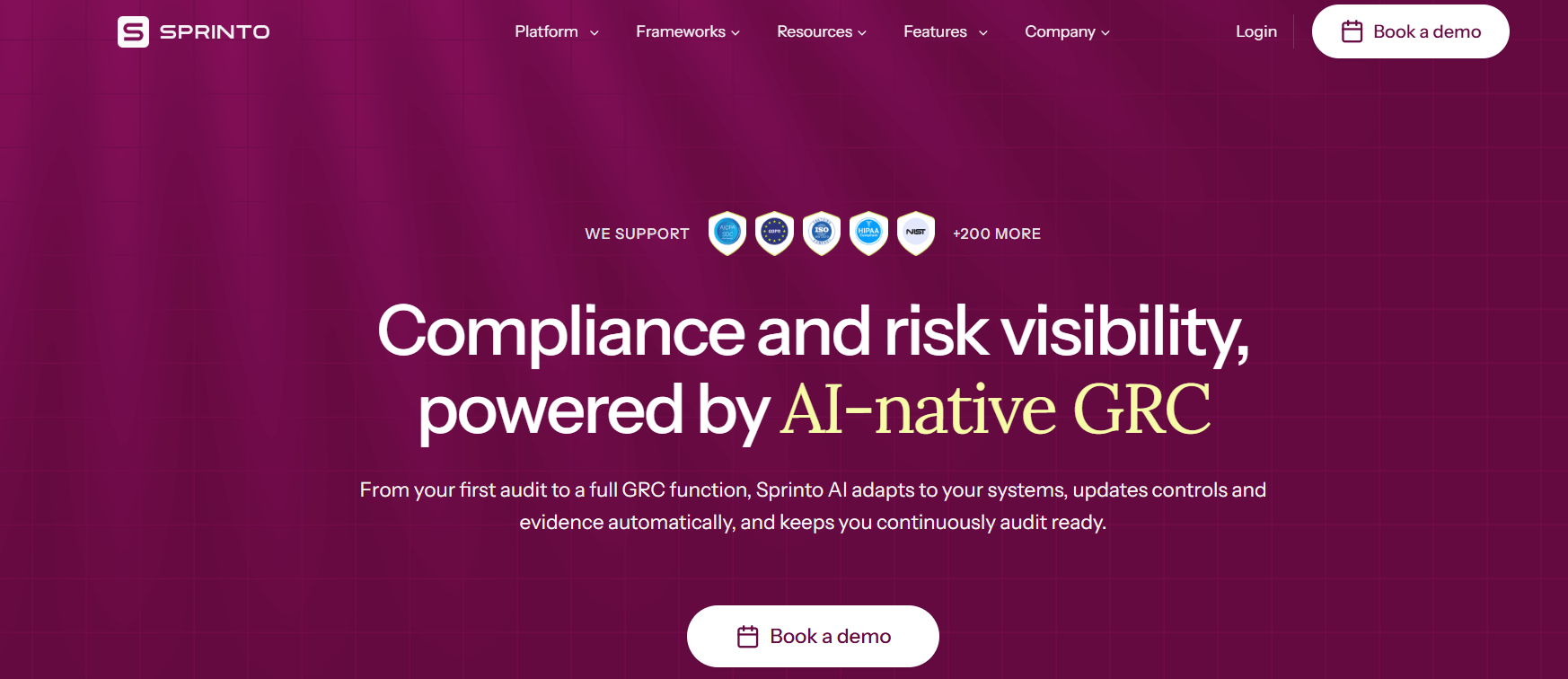
Sprinto has built a reputation for speed, and speed matters when a trading platform needs to close enterprise deals that hinge on a completed SOC 2 report. Among SOC 2 compliance solutions for stock trading platforms, Sprinto stands out for founder-friendly onboarding and pre-mapped control libraries that shorten the path from kickoff to audit. The platform continuously checks cloud configurations, monitors for policy violations, and automatically escalates issues to the right owner, which helps lean compliance teams at growing brokerages stay ahead of auditors instead of reacting to them.
Features
- Automated, continuous compliance checks across cloud and SaaS environments
- Guided workflows that map tasks directly to SOC 2 Trust Services Criteria
- Integrated auditor marketplace to connect firms with accredited CPA partners
- Real-time Slack and email notifications for control failures
- Entity-level tracking for firms managing multiple trading subsidiaries
Pros
- Rapid implementation, often completed within days for smaller teams
- Highly rated customer support that actively assists with remediation
- Transparent, structured task assignment that reduces internal confusion
Cons
- Less suited to very large enterprises with complex legacy systems
- Customization options are narrower than enterprise-grade GRC platforms
Pricing
Subscription pricing generally starts near $6,000–$10,000 annually for smaller platforms, with custom enterprise quotes for larger trading operations.
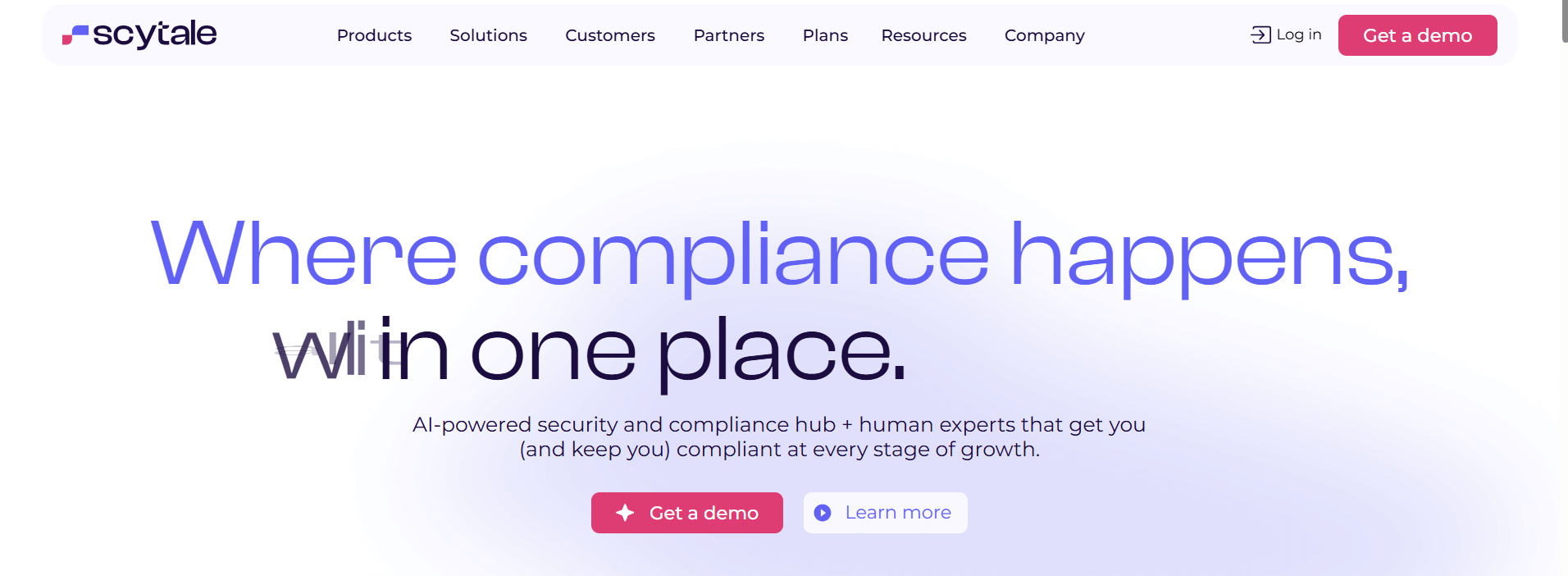
Scytale combines AI-driven automation with dedicated compliance advisory, which is why it frequently appears among recommended SOC 2 compliance solutions for stock trading platforms seeking white-glove guidance. Rather than leaving firms to interpret control requirements alone, Scytale pairs its software with compliance experts who help translate SOC 2 criteria into practical steps for trading infrastructure, order-management systems, and custodial data flows. This hybrid model appeals to brokerages that want automation without sacrificing human oversight during a high-stakes audit.
Features
- AI-powered evidence collection and gap analysis
- Dedicated compliance success manager assigned to each account
- Pre-built policy and control libraries tailored to fintech and trading environments
- Continuous monitoring dashboard with prioritized remediation guidance
- Support for parallel SOC 2, ISO 27001, and GDPR programs
Pros
- Strong hands-on support reduces the burden on internal compliance staff
- AI-driven gap analysis accelerates initial readiness assessments
- Positive customer feedback regarding audit success rates
Cons
- Advisory-heavy model may cost more than pure self-serve platforms
- Smaller integration marketplace compared to larger competitors
Pricing
Custom pricing based on scope; typically positioned in the mid-market range alongside Secureframe and Sprinto.
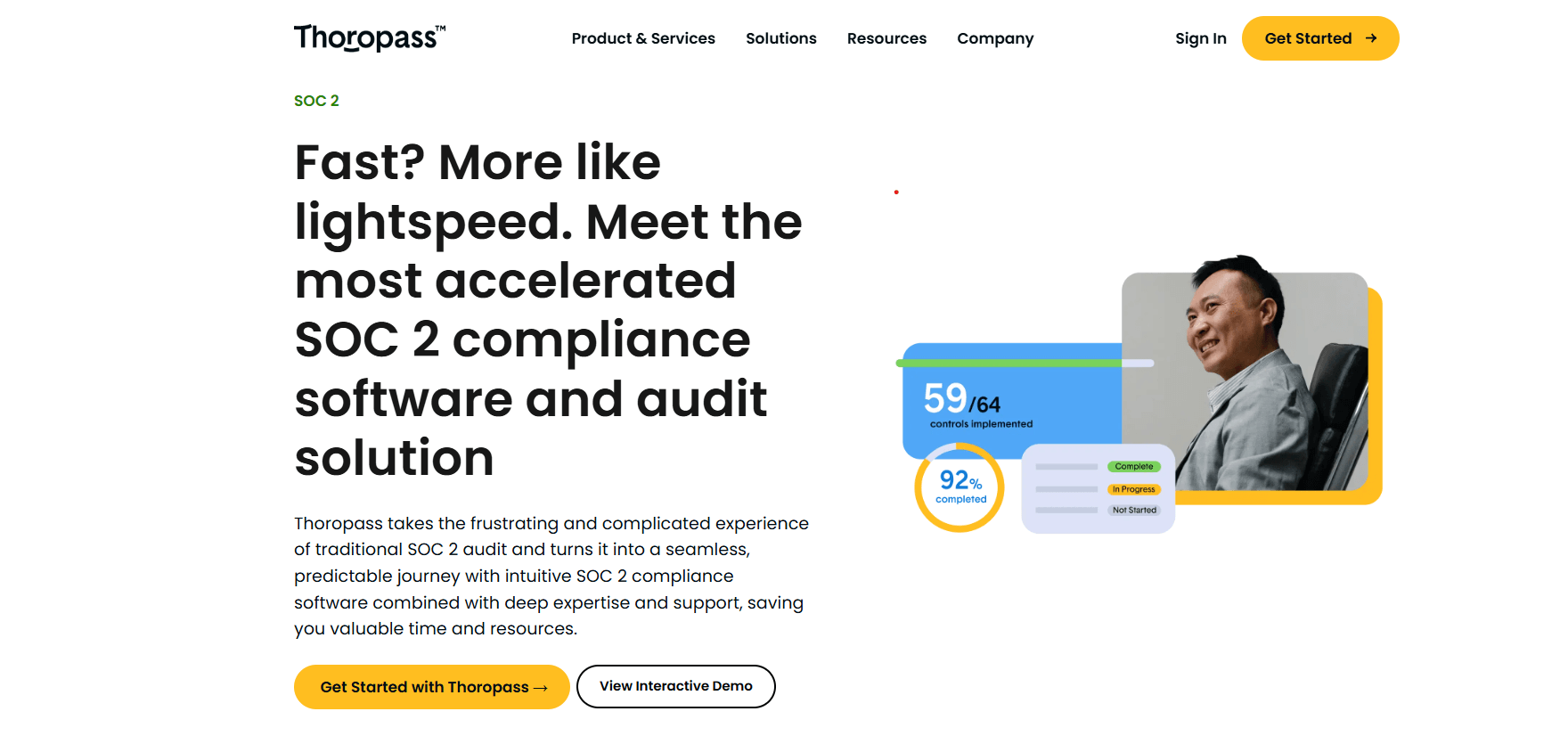
Thoropass takes an end-to-end approach, combining software automation with an in-house audit team, which makes it one of the more comprehensive SOC 2 compliance solutions for stock trading platforms that prefer a single vendor for both readiness and the audit itself. Because Thoropass employs its own licensed CPAs, trading firms can move from evidence collection straight into the audit without switching vendors midstream. This continuity is especially valuable for brokerages that need predictable timelines ahead of investor due diligence or major client onboarding.
Features
- Unified platform that manages readiness, gap remediation, and the audit itself
- In-house CPA audit team, eliminating the need to source an external auditor
- Automated evidence collection connected to cloud and DevOps tooling
- Policy builder with financial-services-specific templates
- Support for SOC 2, SOC 1, ISO 27001, HIPAA, and PCI DSS programs
Pros
- Single-vendor convenience for both software and audit services
- Transparent, predictable audit timelines and fixed-fee options
- Strong fit for firms pursuing multiple certifications concurrently
Cons
- Bundled audit services may cost more than a bring-your-own-auditor model
- Integration depth varies across less common trading-specific platforms
Pricing
Packages often bundle software and audit fees together, with typical annual costs ranging from $15,000 to $40,000 depending on audit scope.
Strike Graph focuses heavily on risk quantification, which resonates with trading platforms that must justify security investments to boards and regulators alike. As one of the more analytically driven SOC 2 compliance solutions for stock trading platforms, Strike Graph translates technical control gaps into business risk scores, helping compliance leaders prioritize remediation based on potential financial impact rather than a generic checklist. This risk-first philosophy suits brokerages operating in an environment where downtime or a data breach carries direct monetary consequences.
Features
- Risk-based control prioritization tied to quantified business impact
- Automated evidence collection across cloud, identity, and HR systems
- Custom control builder for unique trading-platform architectures
- Auditor marketplace with vetted, accredited CPA firms
- Centralized policy management with version history
Pros
- Risk quantification helps justify security spend to leadership
- Flexible control framework accommodates non-standard infrastructure
- Good balance between automation and manual configurability
Cons
- Learning curve for teams unfamiliar with risk-scoring methodologies
- Fewer pre-built integrations than category leaders like Vanta or Drata
Pricing
Starts in the low five figures annually, with enterprise pricing available for larger trading firms requiring custom risk models.
Hyperproof leans toward broader governance, risk, and compliance management rather than SOC 2 alone, which makes it appealing among SOC 2 compliance solutions for stock trading platforms that already run, or plan to run, a multi-framework compliance program. Trading platforms often need to satisfy SOC 2 alongside SEC, FINRA, and internal audit requirements simultaneously, and Hyperproof’s centralized control repository allows compliance teams to map a single control to several regulatory obligations at once, reducing duplicated effort across departments.
Features
- Centralized control repository mapped across multiple compliance frameworks
- Workflow automation for task assignment, evidence requests, and reminders
- Real-time compliance risk dashboard for executive reporting
- Integrations with cloud providers, ticketing systems, and identity platforms
- Audit trail and version history supporting internal audit functions
Pros
- Strong fit for firms managing SOC 2 alongside broader GRC obligations
- Highly configurable workflows suit complex organizational structures
- Solid reporting capabilities for board and executive audiences
Cons
- Steeper learning curve than lighter, startup-focused platforms
- Pricing sits toward the higher end for smaller trading firms
Pricing
Enterprise-oriented pricing, generally quoted individually; comparable programs range from $20,000 to $50,000+ annually.
A-LIGN differs from pure software vendors because it is both a licensed audit firm and a compliance automation provider, delivering its A-SCEND platform alongside direct auditor access. This dual role places A-LIGN among the more audit-native SOC 2 compliance solutions for stock trading platforms, since firms can move seamlessly from automated evidence collection into a formal SOC 2 examination performed by A-LIGN’s own assessors. For trading platforms that value working with a single, accredited partner from readiness through final report delivery, this integrated model removes a common point of friction.
Features
- Combined software-plus-audit model under one accredited provider
- Automated evidence collection integrated with A-LIGN’s audit methodology
- Support for SOC 1, SOC 2, ISO 27001, PCI DSS, and FedRAMP
- Dedicated audit project management and milestone tracking
- Global audit coverage suited to multinational trading operations
Pros
- Direct access to accredited auditors streamlines the certification process
- Broad framework coverage supports firms with international obligations
- Established reputation and long track record in regulated industries
Cons
- Generally positioned at a higher price point than startup-focused tools
- Software interface feels less modern than newer automation-first platforms
Pricing
Custom, audit-inclusive pricing; typically higher than software-only platforms due to bundled assessment services.
OneTrust’s Certification Automation module, built on the technology it acquired from Tugboat Logic, extends a broad privacy and security governance suite into the SOC 2 space. It appeals to larger, more established SOC 2 compliance solutions for stock trading platforms that already rely on OneTrust for privacy management, data mapping, or third-party risk. Because many trading platforms must also comply with data-privacy regulations affecting customer financial information, consolidating SOC 2 readiness within the same platform that manages privacy obligations can simplify vendor management and cross-team reporting.
Features
- Unified platform spanning privacy, security, and SOC 2 certification workflows
- Automated policy and control mapping across multiple frameworks
- Integrated third-party and vendor risk assessment tools
- Executive-level reporting dashboards for enterprise stakeholders
- Extensive integration ecosystem across cloud and enterprise software
Pros
- Excellent choice for firms already invested in the OneTrust ecosystem
- Strong privacy-compliance overlap benefits customer-data-heavy trading platforms
- Enterprise-grade scalability across large, distributed organizations
Cons
- Can feel like overkill for smaller or early-stage trading platforms
- Pricing and implementation complexity exceed most standalone SOC 2 tools
Pricing
Enterprise licensing, quoted individually; typically among the higher-cost options in this category.

Trustero brings an AI-first approach to compliance, using machine learning to interpret evidence, flag anomalies, and recommend remediation steps automatically. Among emerging SOC 2 compliance solutions for stock trading platforms, Trustero stands out for its emphasis on reducing manual review time through intelligent evidence classification. This matters for brokerages generating large volumes of system logs and access records, since Trustero’s AI engine can surface the specific artifacts an auditor needs without requiring staff to sift through raw data manually.
Features
- AI-driven evidence classification and control-gap detection
- Continuous monitoring across cloud infrastructure and SaaS applications
- Guided compliance roadmap tailored to company maturity level
- Auditor-ready reporting with automatically generated narratives
- Support for SOC 2, ISO 27001, and custom internal control frameworks
Pros
- AI automation meaningfully reduces manual evidence review
- Flexible enough to support custom, non-standard control sets
- Competitive pricing relative to larger enterprise platforms
Cons
- Less brand recognition among institutional auditors compared to market leaders
- Newer platform, so some features remain less mature
Pricing
Generally positioned as a cost-effective option, with annual plans often below the industry average for comparable automation depth.
AuditBoard, whose SOC 2-focused capabilities are increasingly delivered under its Optro branding, targets large organizations with dedicated internal audit and risk functions. It rounds out this list of SOC 2 compliance solutions for stock trading platforms as the heavy-duty option built for enterprise-scale trading firms and financial institutions that require deep integration between SOC 2 compliance and broader enterprise risk management. Because large trading platforms often run internal audit, IT risk, and SOC 2 programs in parallel, AuditBoard’s connected risk architecture allows these teams to share data and avoid duplicative evidence requests across departments.
Features
- Connected risk platform linking SOC 2 controls to enterprise risk management
- Advanced workflow automation for large, multi-team compliance programs
- Real-time analytics and customizable executive dashboards
- Support for internal audit, SOX, and IT risk alongside SOC 2
- Extensive configurability for complex organizational hierarchies
Pros
- Best-in-class fit for large trading firms with mature risk functions
- Strong analytics and reporting suited to board-level presentations
- Scales effectively across multiple business units and subsidiaries
Cons
- Overly complex and costly for smaller or early-stage trading platforms
- Not optimized for teams seeking fast, lightweight SOC 2 readiness
Pricing
Enterprise pricing only, generally the highest tier among the platforms in this article, reflecting its broader risk-management scope.

Vanta is one of the most widely adopted names among SOC 2 compliance solutions for stock trading platforms, and it earns that position by automating the tedious evidence-collection work that once consumed weeks of engineering time. The platform connects directly to cloud infrastructure such as AWS, Azure, and GCP, as well as to identity providers, HR systems, and code repositories, so it can continuously verify that access controls, change-management practices, and encryption settings meet SOC 2 requirements. Because trading platforms handle sensitive financial data and operate under intense regulatory scrutiny, Vanta’s continuous monitoring approach helps compliance teams catch configuration drift before it becomes an audit finding, rather than scrambling to reconstruct evidence after the fact.
Features
- Continuous, automated evidence collection across 375+ integrations, including AWS, Okta, and GitHub
- Pre-built control mappings for SOC 2, ISO 27001, PCI DSS, and other overlapping frameworks
- Real-time risk dashboard that flags misconfigurations affecting trading infrastructure
- Built-in trust center and vendor questionnaire automation for institutional clients
- Policy templates tailored to financial services security requirements
Pros
- Fast time-to-readiness, often cited as weeks rather than months
- Deep integration library that suits complex, multi-cloud trading environments
- Intuitive interface that non-technical compliance staff can navigate confidently
Cons
- Costs can climb quickly as additional frameworks and integrations are added
- Some advanced financial-services integrations require custom configuration
Pricing
Custom pricing based on company size and integration count; industry estimates place annual plans in the $10,000–$30,000+ range for mid-sized trading platforms.
Drata positions itself as a highly automated, audit-ready platform, and it consistently ranks among the top SOC 2 compliance solutions for stock trading platforms that need to manage multiple frameworks simultaneously. Beyond SOC 2, Drata supports ISO 27001, PCI DSS, and NIST mappings, which matters because trading platforms frequently must satisfy several overlapping regulatory expectations at once. The platform’s workflow automation reduces the manual back-and-forth between compliance teams and auditors, while its risk management module helps brokerages document and remediate issues tied to market-data feeds, order-routing systems, and custodial infrastructure.
Features
- Automated control monitoring with real-time alerts for failed checks
- Cross-framework mapping so one control satisfies multiple compliance regimes
- Built-in auditor collaboration workspace that streamlines evidence handoff
- Risk register with quantitative risk scoring for financial infrastructure
- Personnel management workflows for background checks and security training
Pros
- Strong multi-framework support reduces duplicate compliance work
- Responsive customer success team familiar with regulated industries
- Granular permissioning suits large trading organizations with layered teams
Cons
- Initial setup can be time-intensive for legacy trading systems
- Reporting customization is more limited than some enterprise GRC tools
Pricing
Custom quotes only; most mid-market financial firms report annual costs between $12,000 and $35,000 depending on modules selected.
12. Secureframe
Secureframe blends automation with hands-on advisory support, making it a practical choice among SOC 2 compliance solutions for stock trading platforms that lack a dedicated in-house compliance department. The platform automatically pulls evidence from cloud providers, ticketing systems, and endpoint management tools, then organizes it into a structured, auditor-ready format. For trading firms, Secureframe’s built-in security awareness training and vendor risk management features are particularly useful, since brokerages must demonstrate that both employees and third-party technology providers meet strict data-protection standards.
Features
- Automated evidence collection with over 300 native integrations
- Employee security training modules mapped directly to SOC 2 criteria
- Vendor risk management for assessing third-party market-data and custody providers
- Continuous control monitoring with Slack and email alerting
- Trust page generation to share compliance status with institutional clients
Pros
- Strong customer support, including access to former auditors for guidance
- Competitive entry pricing relative to larger enterprise platforms
- Clean, straightforward interface that shortens onboarding time
Cons
- Fewer deep customization options for highly complex trading architectures
- Some integrations lag behind niche financial-services tools
Pricing
Plans typically start around $7,500–$15,000 per year, scaling upward with company size, framework count, and support level.